Artwork
Răst res
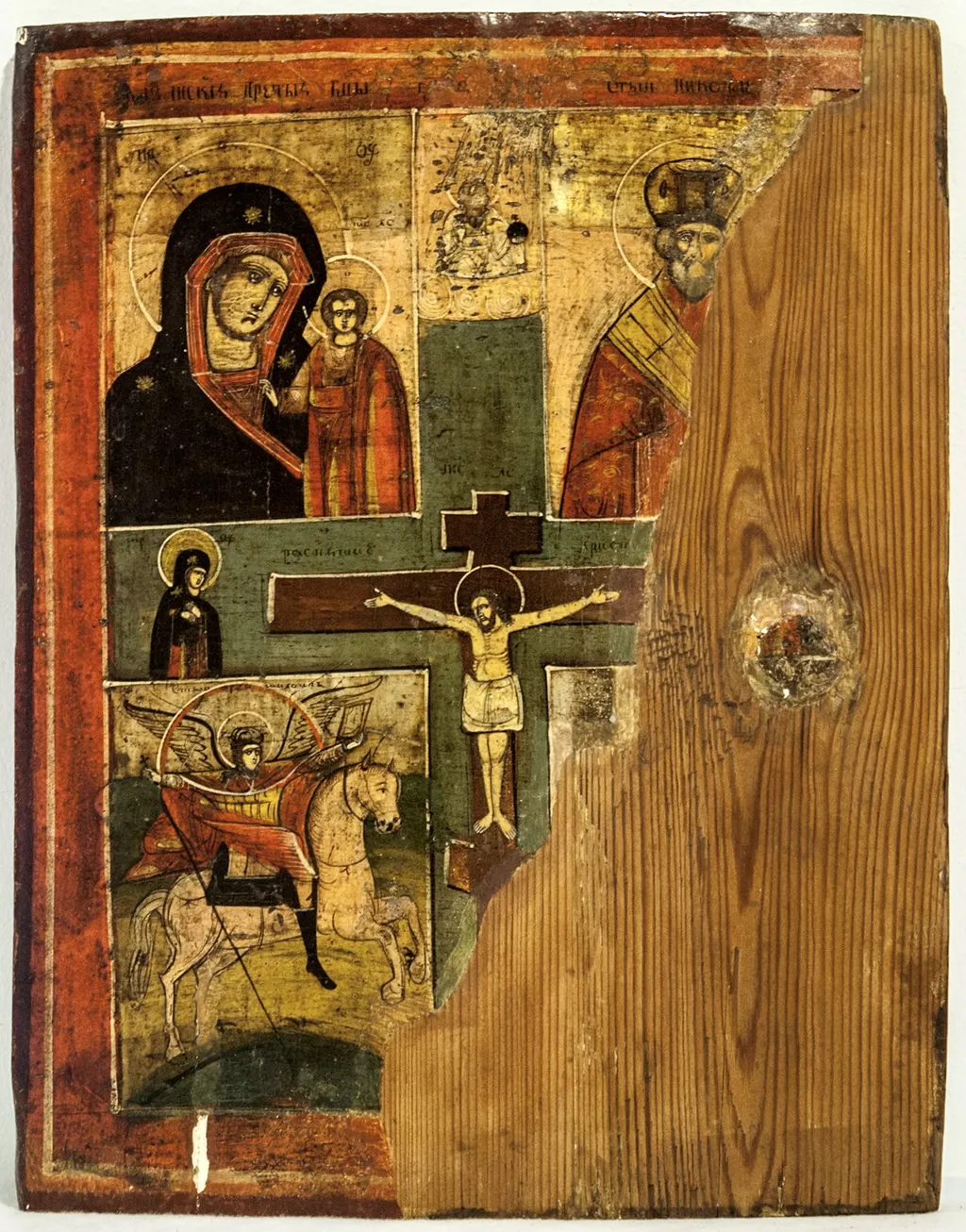
Răst res is a drawing by Hugo Kołłątaj. It dates from 1850 and is held in the collection of the "Dimitrie Gusti" National Village Museum.
About this work
Overview
The surface shows signs of age, including a cracked, glass-like element on the right edge, suggesting possible ritual use or environmental damage over time.
Răst res is a painted wooden panel dating to around 1850, attributed to Hugo Kołłątaj. It is part of the collection at the Museum of Ethnography. The composition is divided into four distinct narrative scenes, rendered in a stylized, non-naturalistic manner. The surface shows signs of age, including a cracked, glass-like element on the right edge, suggesting possible ritual use or environmental damage over time.
Subject & Meaning
The panel depicts religious imagery centered on sacrifice and divine presence. A robed woman with a halo holds a smaller, haloed figure, possibly the Virgin and Child. Below, an angel on horseback approaches a cross bearing a crucified form. These elements align with Christian iconography of redemption, though the arrangement and emphasis suggest a localized devotional tradition, possibly tied to folk practices in Eastern Europe.
Technique & Style
The painting employs flat, unmodulated colors—deep reds, muted greens, and gold accents—with rigid, angular forms and minimal spatial depth. Figures lack naturalistic proportion or shading, reflecting a folk or artisanal approach rather than academic training. The brushwork is deliberate but unrefined, emphasizing symbolic clarity over realism. The faded inscription at the top hints at liturgical or dedicatory text, now partially illegible.
History & Provenance
The panel was likely created for private or communal veneration, possibly in a rural church or home shrine. Its survival into the 19th century and eventual acquisition by the Museum of Ethnography suggest it was preserved as a cultural artifact rather than a liturgical object. The cracked glass element may indicate physical damage from ritual handling or environmental exposure over generations.
Context
Răst res reflects a blend of Orthodox Christian iconography and regional folk traditions common in parts of Eastern Europe during the 19th century. Such panels often served as devotional aids, combining sacred narratives with local artistic conventions. The presence of halos, angels, and crucifixion imagery points to a community maintaining religious identity through visual symbols, even amid limited access to formal ecclesiastical resources.
Legacy
The work contributes to the understanding of vernacular religious art in Eastern Europe, illustrating how theological themes were adapted through local aesthetics. Its preservation in a museum setting underscores its value as a record of everyday piety rather than elite artistic production. It remains a quiet testament to the persistence of symbolic imagery in domestic and communal spiritual life.
Artist & collection
Artist
This Polish folk painter worked in the late eighteenth and early nineteenth centuries, creating religious scenes with bold colors and simple shapes.
Museum
"Dimitrie Gusti" National Village Museum
Continue through works from the same source collection.
 Alexandru Ipsilanti
 Fecioara Maria cu Pruncul Isus (în Reg. Inv.: Maria cu copilul Isus)
 Regele Charles I Stuart al Angliei și soția sa Henrietta Maria de Franța (în Reg. Inv.: Carol I al Angliei și soția sa Henriette din Franța)
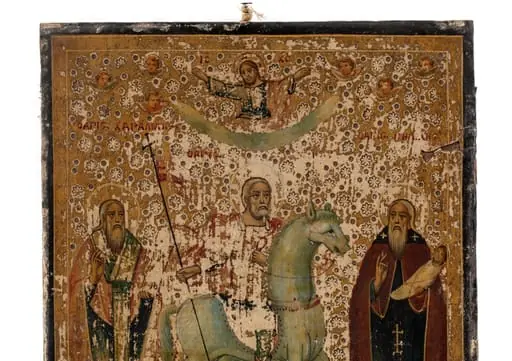 Sfântul Haralambie cu alți doi sfinți
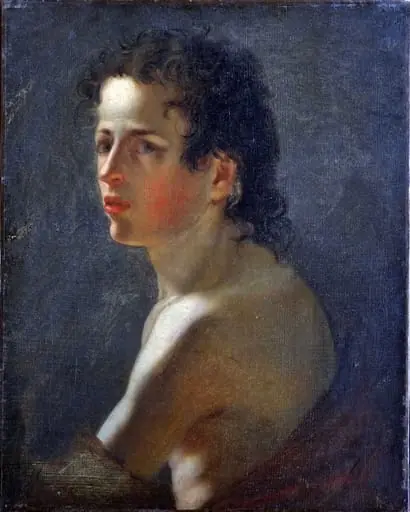 Portret de bărbat
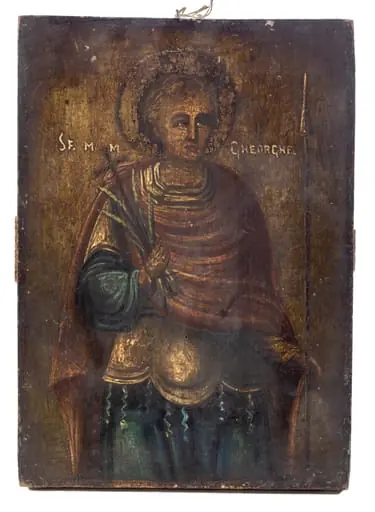 Sfântul Gheorghe
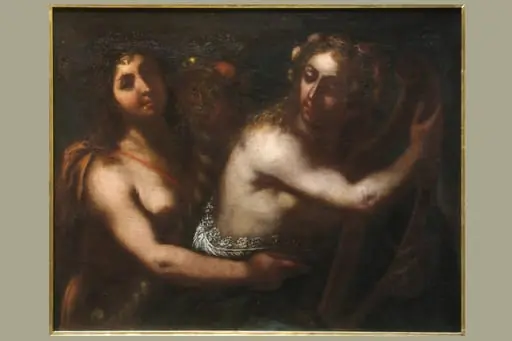 Vertumnus și Pomona (în Reg. Inv.: Vertumnus și Flora)
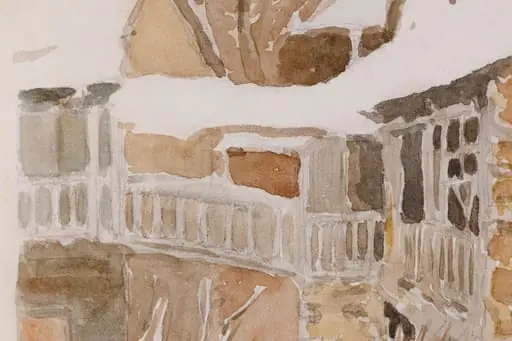 Iarnă
Iarnă
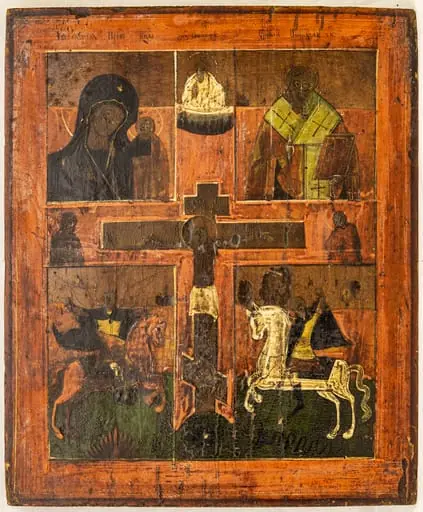 Icoană în patru registre, în centru Iisus Crucificat
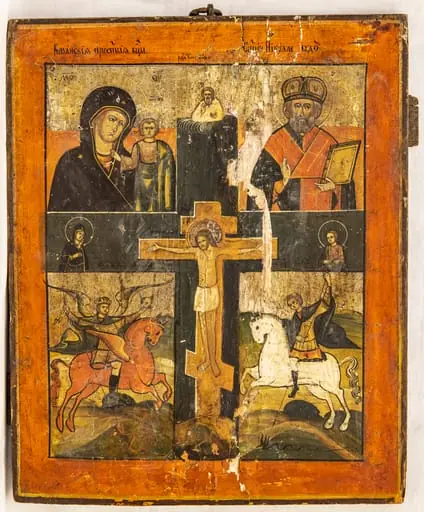 Icoană în patru registre, în centru Iisus Răstignit
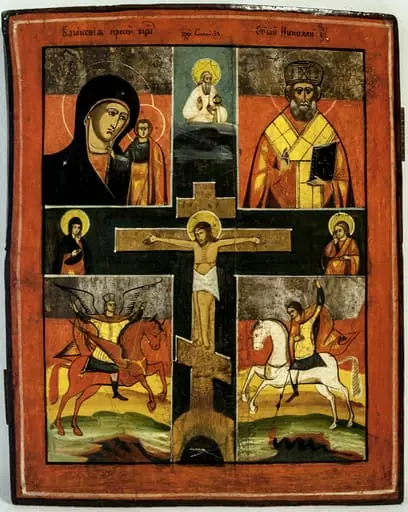 Răstrile
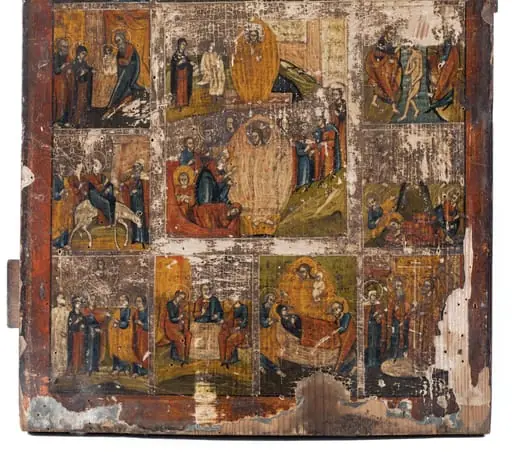 Scene biblice
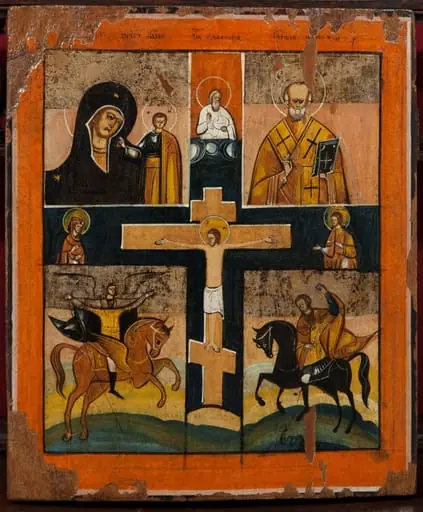 Prăznicar, "Răstignirea”
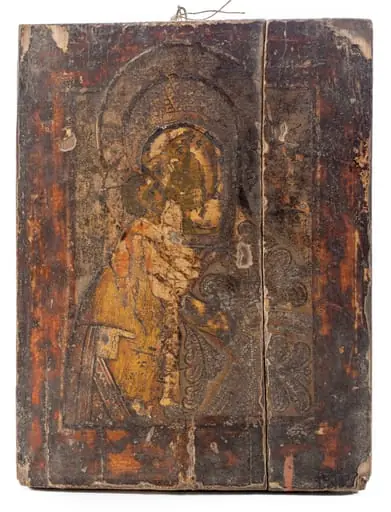 Maica Domnului cu Pruncul Iisus
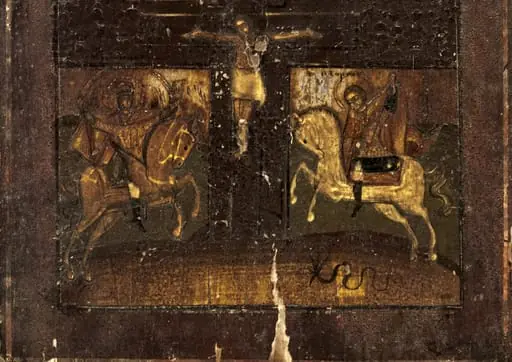 Răstignirea lui Iisus Hristos plasată pe un câmp central sub formă de cruce, împarte spațiul pictural în patru casete dreptunghiulare, Iisus Hristos răstignit pe crucea cu 6 brațe (specifică ortodoxiei ruse), cu un veșmânt alb în jurul mijlocului, ochii închiși, nimbul cu inscripțiile consacrate. Cele 4 casete conțin următoarele scene: Stânga sus Maica Domnului cu Pruncul tipul Kazanskaia. Este reprezentată până la piept, nu se văd mâinile. Are chipul îndurerat, privirea tristă, îndreptată în jos, capul ușor înclinat spre Prunc. Maforion negru. Iisus – Emanuel, binecuvintează cu dreapta, nimbul cruciger. Înveșmântat cu chiton verde și himation bej. Dreapta sus - Sf. Nicolae în veșminte de arhiereu, cărunt, cu barba rotundă și scurtă, capul descoperit. Înveșmântat cu sacos grena decorat cu șiruri de motive verticale de culoare galbenă, omofor verde cu cruci albe, binecuvântând cu mâna dreaptă, în stânga ținând Evanghelia închisă.; Stânga jos- Sf. Arh. Mihail, înaripat, purtând coroană, cu mantia în vânt, călare pe un cal roșu, de asemenea înaripat, în poziție cambrată. Dreapta jos - Sf. Gheorghe, oștean, călare pe un cal alb în poziție cambrată, înfigând, cu ambele mâini, sulița în gura balaurului, minimizat, redat schematic. Fondul: negru(scena centrală), scenele de sus: 3/4 grena, 1/4 foița metalică, nimburile cu linie discretă, la scenele de jos porțiune de relief redat printr-o zonă de brun care traversează spațiul cruciform și se continuă cu relief colinar în cele două casete. Chenarul marginal specific icoanelor tip krasnushka.Inscripții caligrafice cu negru.Vernis îmbătrânit, care acoperă inscripțiile.
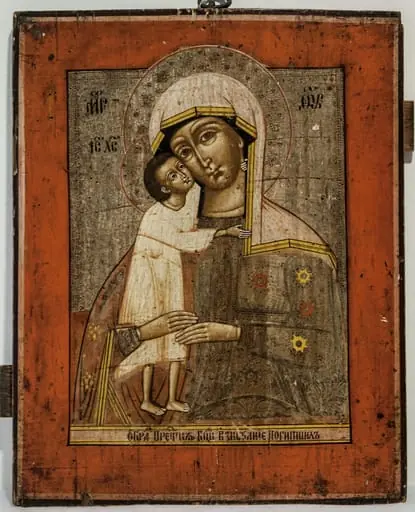 Maica Domnului, tipul Eleusa(dulcea sărutare, Mângâietoarea) îl ține strâns în brațe pe Iisus prunc, în picioare, cu obrazul lipit de cel al Maicii și o mână petrecută pe după gâtul ei. Iisus are nimbul cruciger, marcat cu motive florale punctate, Este înveșmântat într-o tunică 3/4 alb-gălbuie, care lasă să i se vadă picioarele. Maica poartă un maforion alb, bordat cu galben, partea din stânga a veșmântului din foiță metalică, decorată cu motive florale pictate cu roșu și galben, motive fitomorfe și geometrice incizate. În partea dreaptă veșmântul este roșu, decorat cu motive florale de culoare galbenă, foița fiind prezentă doar la mânecă. Nimbul decorat cu motive florale punctate în stratul de foiță metalică, Figurile modelate din culoare (alb, ocru) cu accente grafice fine, albe, sunt specifice icoanei rusești. Cromatica: alb, galben, roșu, auriu, brun, negru, foiță metalică, chenar roșu deschis, mărginit de două linii în nuanțe de roșu deschis și brun.Chenarul interior dublat de două șiruri de cercuri ștanțate în foiță. Inscripția dispusă pe o bandă dreptunghiulară în partea de jops a icoanei : Icoana Preacuratei Fecioare Prevăzând Jertfa (lui Iisus).
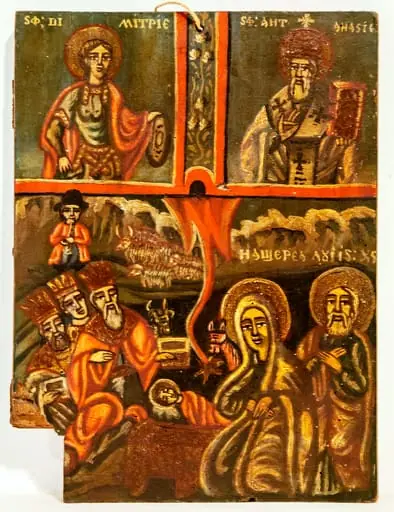 Câmpul icoanei împărțit în 2 registre orizontale inegale(cel de se 1/3 din suprafața icoanei, la rândul lui împărțit în 2 casete separate de o bandă verticală pe care este pictat un lujer cu flori albe. În registru inferior: Nașterea Domnului. În prim plan, Maria si Iosif îngenuncheați, central Pruncul Isus înfășat, așezat în iesle, în stânga lui cei trei magi, cu coroane împărătești pe cap, aducându-i daruri, în plan îndepărtat un cioban(în veșminte orășenești, cu pălărie neagră pe cap, cântând din fluier turmei de oi. În spatele Pruncului se văd capetele animalelor din grajd și o iesle. Steaua își revarsă razele asupra Pruncului(zonă incandescentă, terminată cu o stea deasupra acestuia). Pe fundalul întunecat, nori cu marginile albe. Sfinții din registrul superior sunt redați 3/4, sfântul Dimitrie tânăr, în veșminte militare, lorică, mantie roșie, scut în stânga, suliță în dreapta, Sfântul Atanasie, în veșminte arhierești, binecuvintează cu dreapta, în stânga ține cartea Evangheliilor ridicată. Părul și barba albe, mustățile lungi, veșmintele deschise la culoare, mitra înaltă, surmontată de o cruce albă. Cromatica: roșu, brun, alb, albastru, galben. Colț stânga jos lipsă. Stil naiv, popular.
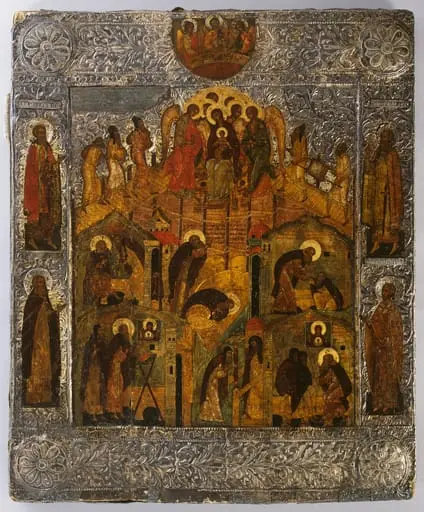 Neitsyt Marian ilmestyminen pyhittäjä Aleksanteri Syväriläiselle kirkon perustuksella