Artwork
Botezul
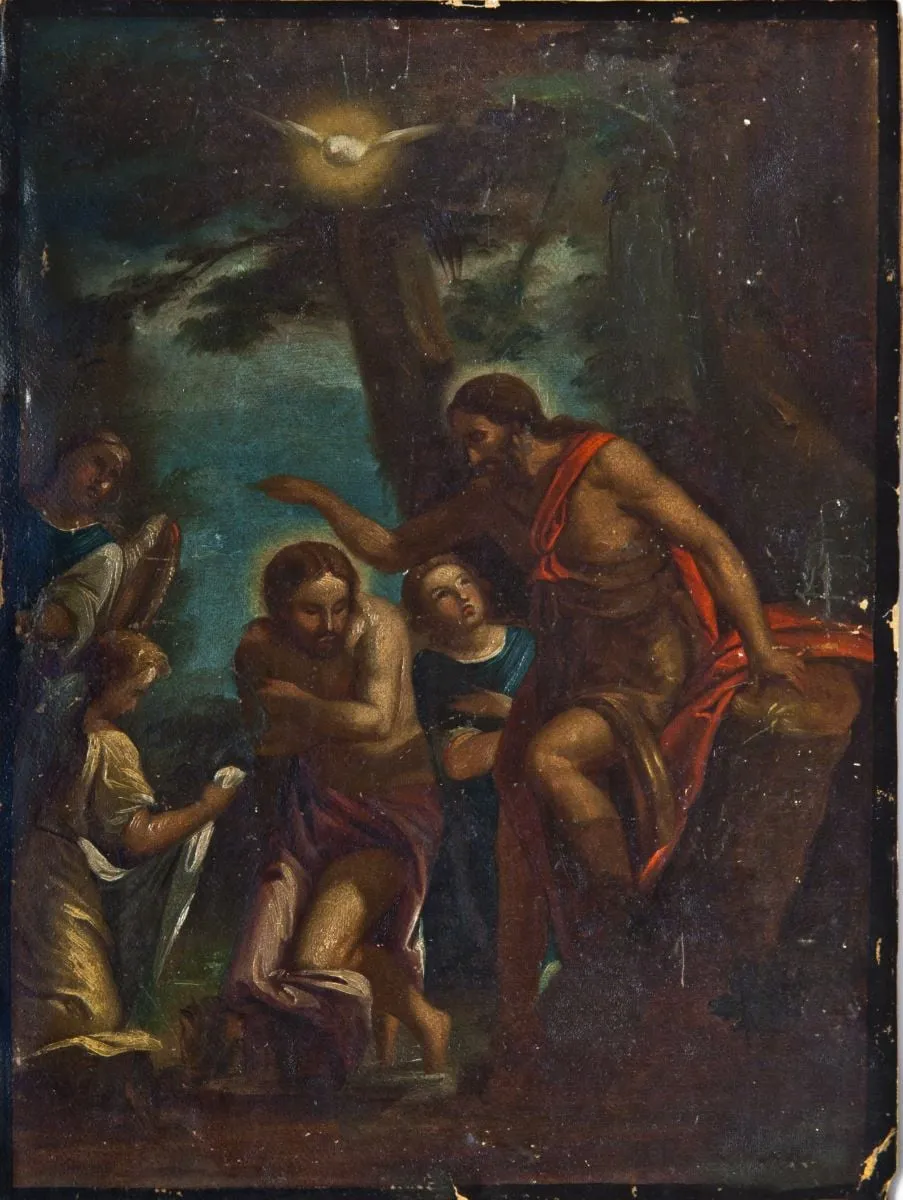
Botezul is an unspecified painting by Gheorghe Tattarescu. It is held in the collection of the Bucharest Municipality Museum.
About this work
Overview
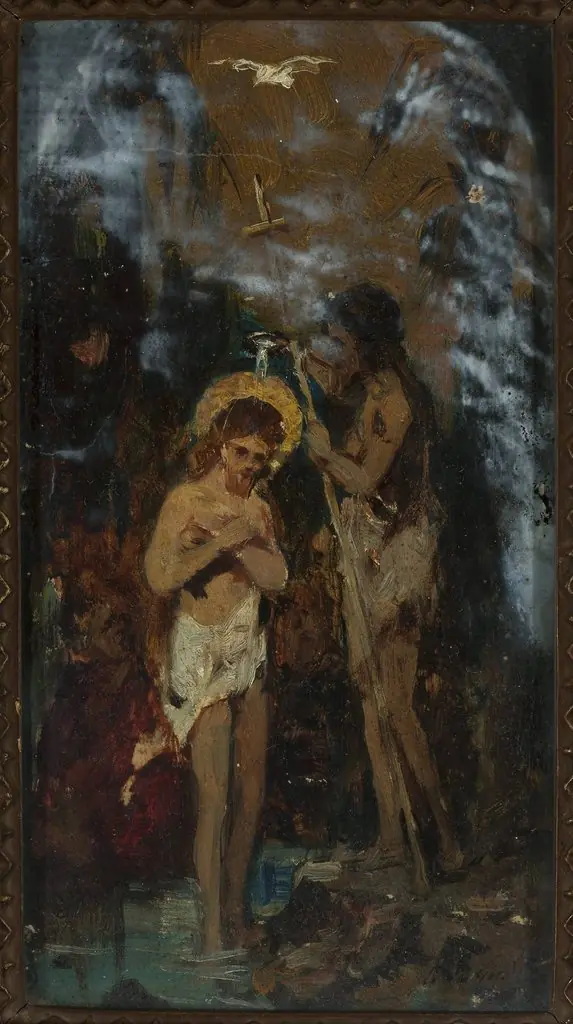
Botezul is a painted depiction of a baptismal ceremony, rendered with attention to spatial depth and emotional tone. Central to the composition are two figures engaged in the ritual, surrounded by observers. The background includes a sky with trees and a dove, reinforcing symbolic associations. The work is held in the collection of the Museum of Ethnography and is accessible to the public.
Subject & Meaning
The scene illustrates a moment of spiritual initiation, likely drawn from Christian tradition. The presence of the dove suggests divine presence, while the attentive onlookers imply communal witness. The figures’ robes and the natural setting ground the ritual in a specific cultural context, possibly reflecting local religious practices of the time.
Technique & Style
The artist employs chiaroscuro to model forms and direct focus toward the central figures. Subtle gradations of light and shadow enhance the three-dimensionality of the bodies and robes. The background, though simplified, provides atmospheric depth through color contrast and spatial recession, reinforcing the solemnity of the moment.
History & Provenance
The painting resides in the Museum of Ethnography, indicating its documentation as part of cultural heritage rather than purely religious art. Its acquisition history is not detailed here, but its inclusion in the museum suggests it was collected as an example of vernacular or regional artistic expression.
Context
Botezul aligns with 19th-century Romanian artistic trends that sought to depict folk and religious life with realism and emotional gravity. The influence of European academic painting, particularly in the use of light, points to broader artistic exchanges, while the subject matter remains rooted in local tradition.
Legacy
The work is referenced in studies of Gheorghe Tattarescu’s use of chiaroscuro, though its authorship is not confirmed. It contributes to the understanding of how religious themes were visually interpreted in Romanian art during a period of national cultural consolidation.
Artist & collection
Artist