Artwork
Kaiwan, Latif, and Sharif arrive at a house of worship, where they seek help from Khurshid who has become a mystical healer, from a Tuti-Nama (Tales of a Parrot): Thirty-second Night
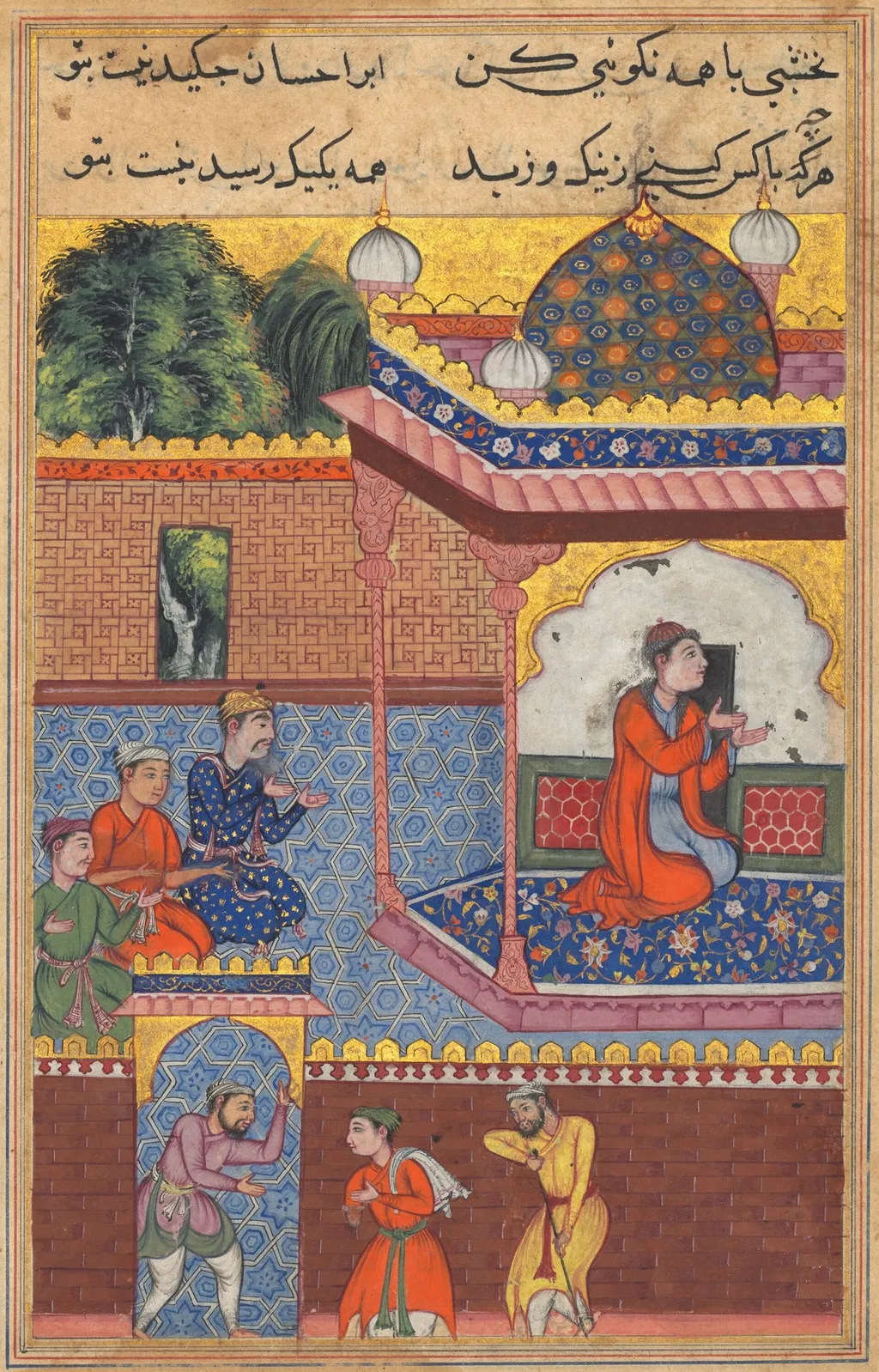
Kaiwan, Latif, and Sharif arrive at a house of worship, where they seek help from Khurshid who has become a mystical healer, from a Tuti-Nama (Tales of a Parrot): Thirty-second Night is an unspecified painting. It dates from 1560 and is held in the collection of the Cleveland Museum of Art. The work is a multi‑panel painting that divides a narrative scene into four distinct registers.
About this work
Overview
The work is a multi‑panel painting that divides a narrative scene into four distinct registers. A golden dome and foliage appear behind a red brick façade at the top, while the lower registers depict three figures in vivid blue, orange and green robes interacting near a doorway, accompanied by additional characters in secondary actions.
Subject & Meaning
The composition illustrates a moment from the Persian tale “Thirty‑second Night” of the Tuti‑Nama, in which the protagonists Kaiwan, Latif and Sharif arrive at a house of worship seeking the aid of the mystic healer Khurshid. The presence of a book, kneeling postures and the solemn setting convey themes of pilgrimage, supplication and spiritual guidance.
Technique & Style
Executed with bright, saturated pigments, the artist employs flat areas of color and decorative patterned tiles that evoke the interior of a palace or sacred space. The division into separate panels creates a narrative sequence, while the stylized figures and ornamental architecture reflect a Persian miniature tradition adapted to a larger painted format.
History & Provenance
The painting derives from a manuscript illustration tradition linked to Persian literary collections such as the Tuti‑Nama. Although specific details of its creation and ownership are not provided, its subject matter and visual language place it within the broader corpus of courtly storytelling art that circulated in the Islamic world.
Context
Set against a backdrop of Persian literary culture, the scene aligns with the 16th‑18th century practice of illustrating epic and romantic tales for elite audiences. The use of Persian script at the top reinforces the work’s function as a visual accompaniment to the written narrative, bridging text and image.
Artist & collection

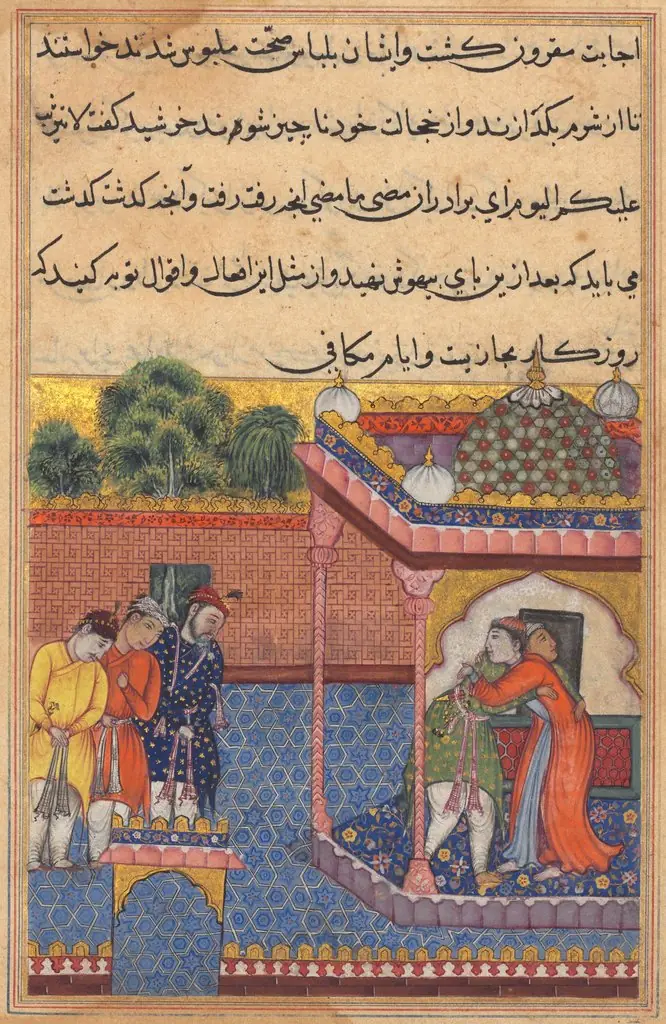 Khurshid reunited with her husband Utarid, from a Tuti-nama (Tales of a Parrot): Thirty-second Night
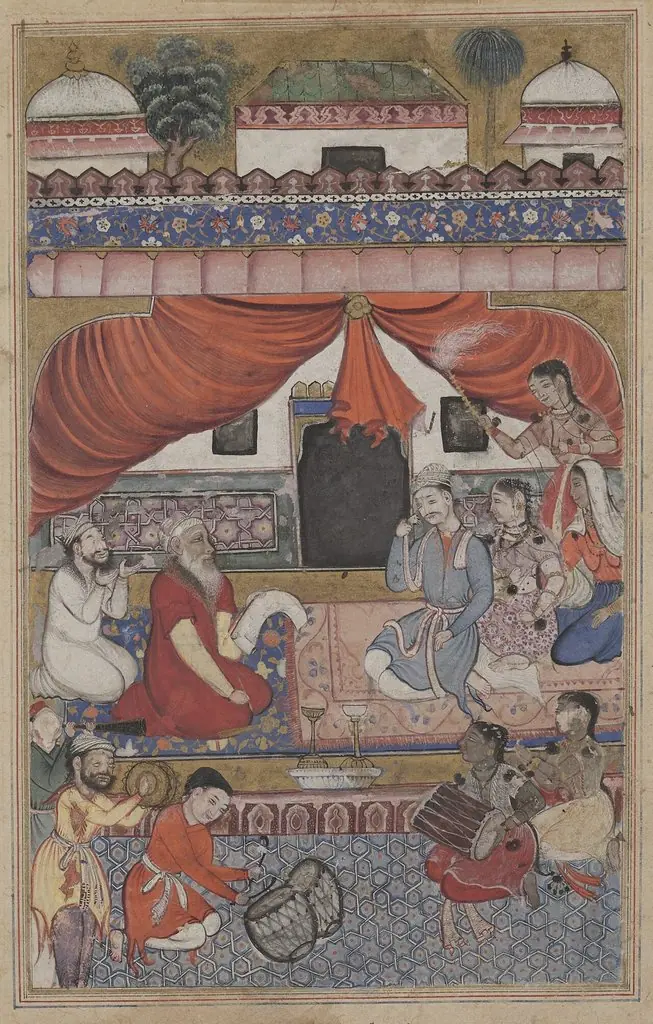 Preparation for the marriage of Mahmuda to the Young Vizier, from a Tuti-nama (Tales of a Parrot): Thirty-third Night
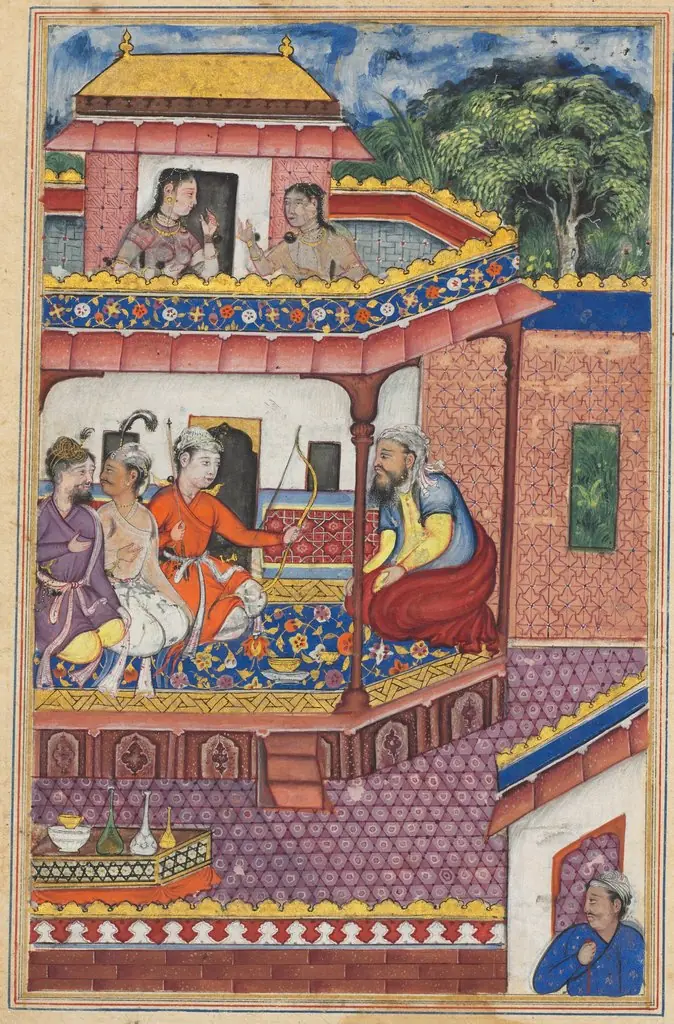 The three young men present themselves as suitors for the hand of Zuhra, the daughter of the merchant of Kabul, from a Tuti-nama (Tales of a Parrot): Thirty-fourth Night
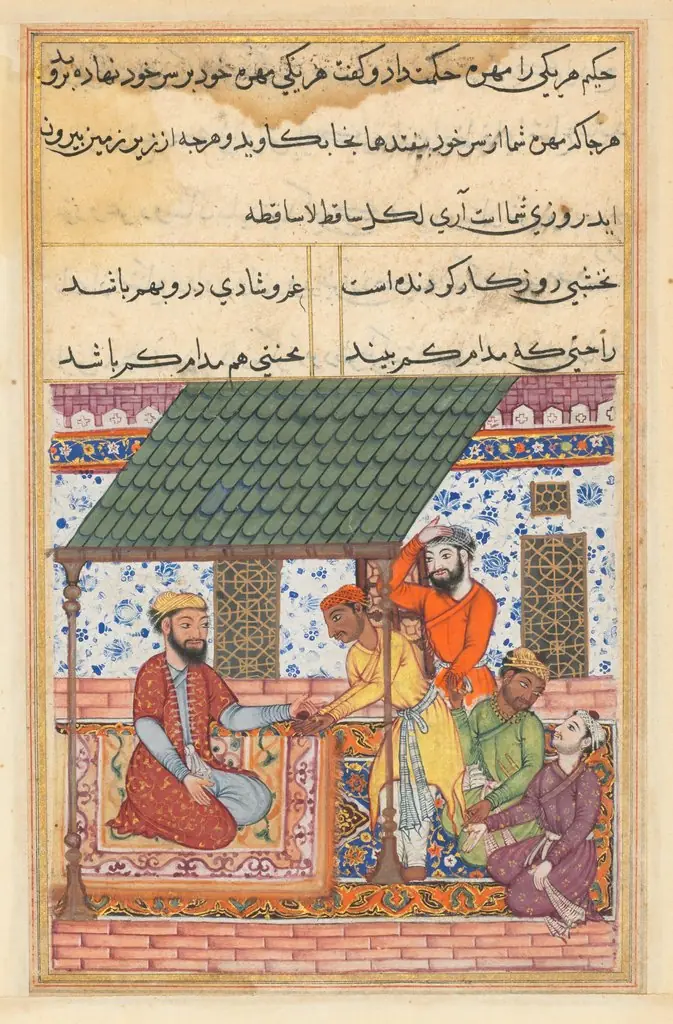 The four destitute friends go to a wise man who gives each one of them a magic shell to be placed on top of the turban, from a Tuti-nama (Tales of a Parrot): Forty-seventh Night
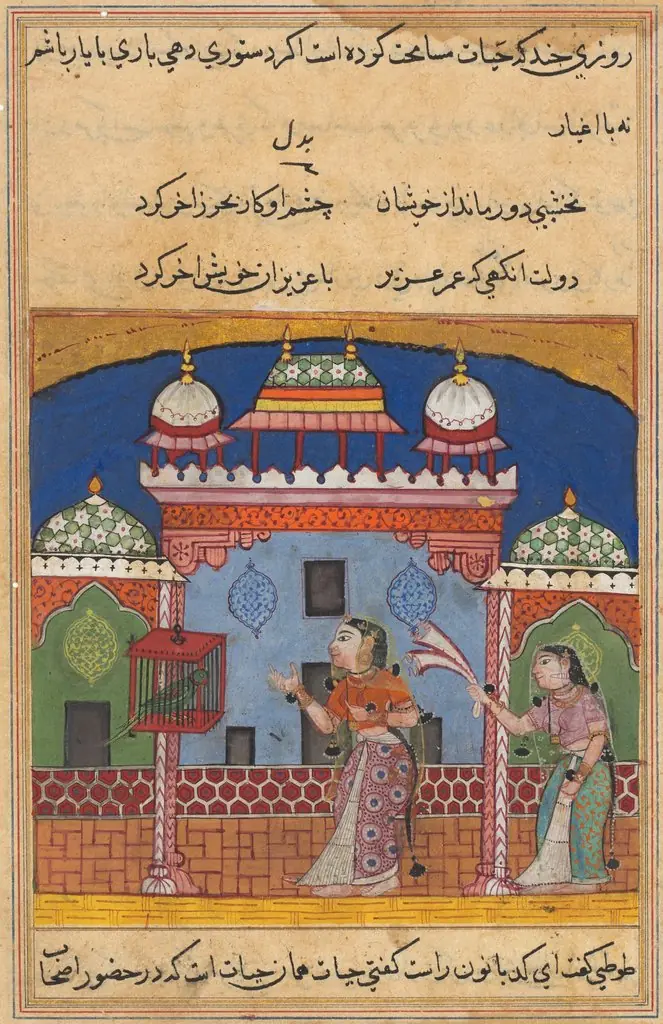 The Parrot Addresses Khujasta at the Beginning of the Twenty-second Night, from a Tuti-nama (Tales of a Parrot)
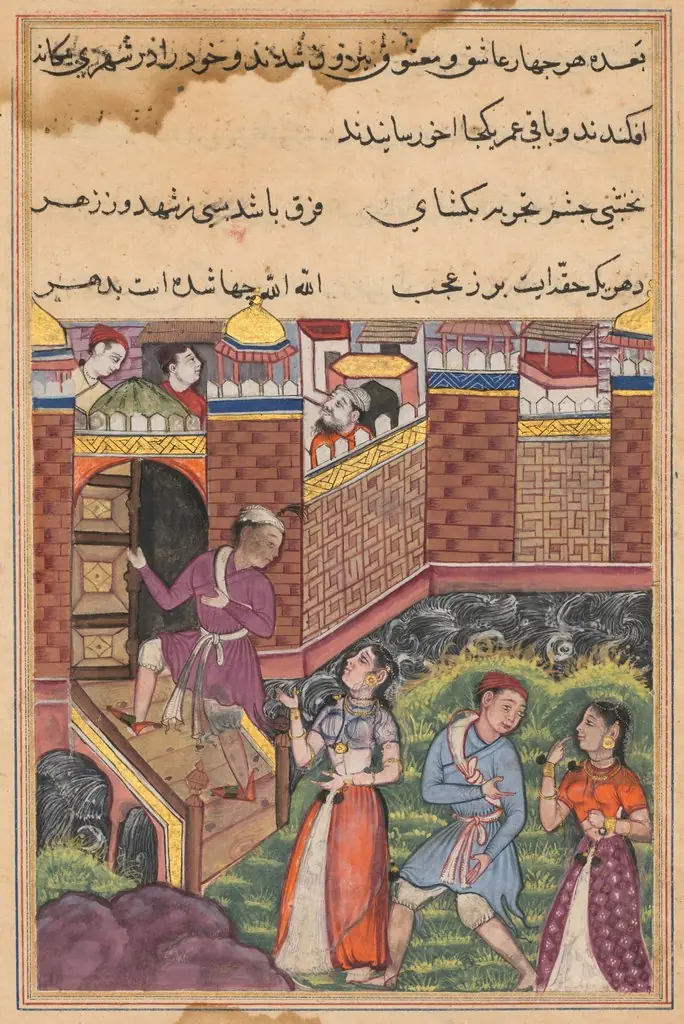 The two couples reach a foreign city where they make their home, from a Tuti-nama (Tales of a Parrot): Thirty-third Night
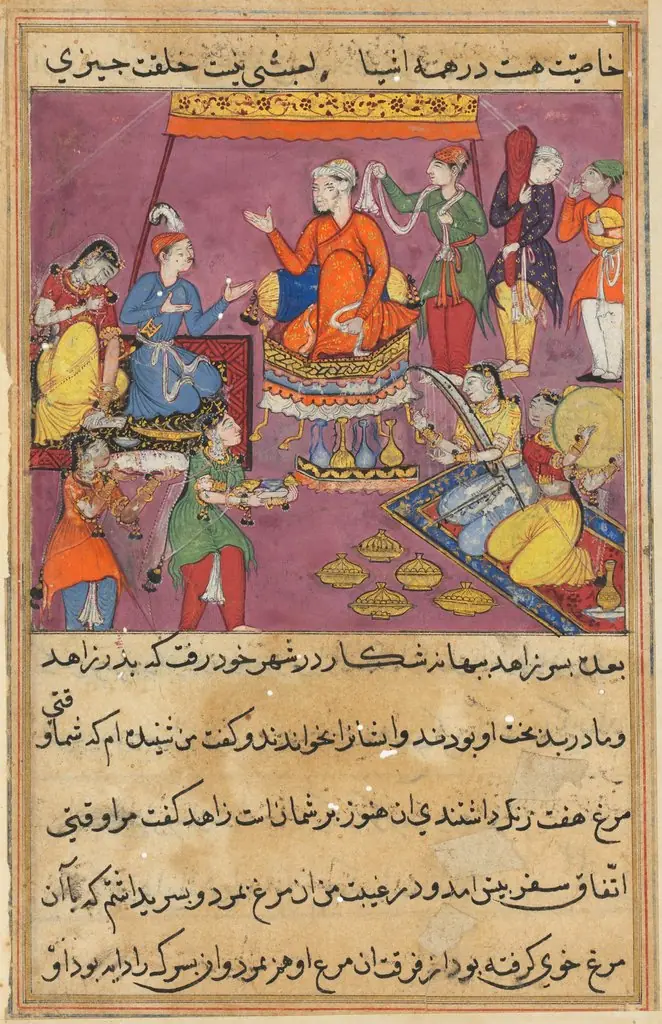 The king gives his daughter in marriage to the pious man’s son, from a Tuti-nama (Tales of a Parrot): Fifty-second Night
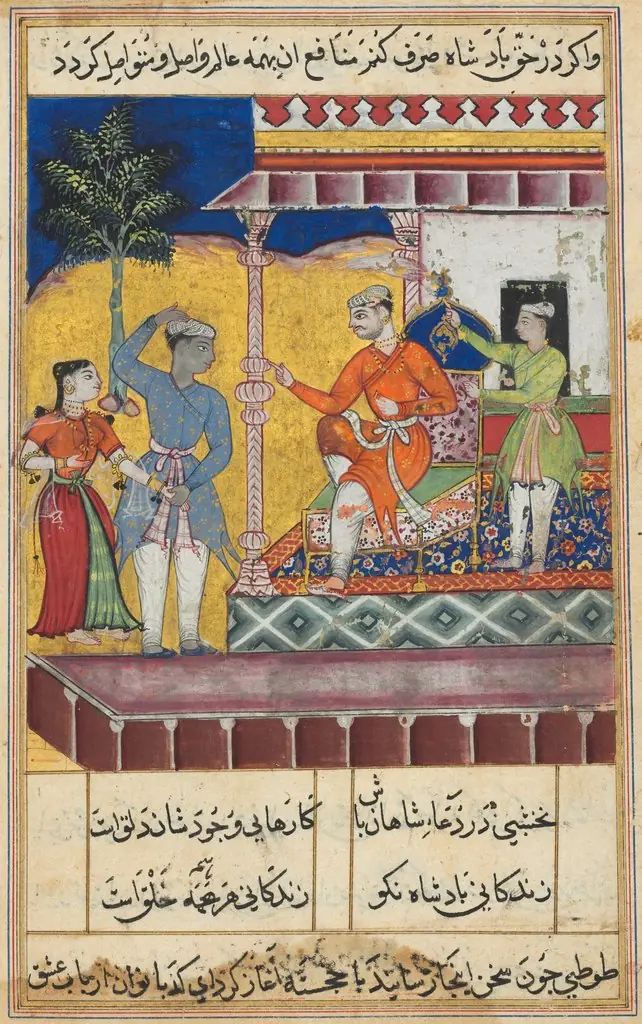 The rejuvenated old man and the daughter of the king of the jinns take leave of the King of Kings, from a Tuti-nama (Tales of a Parrot): Seventh Night
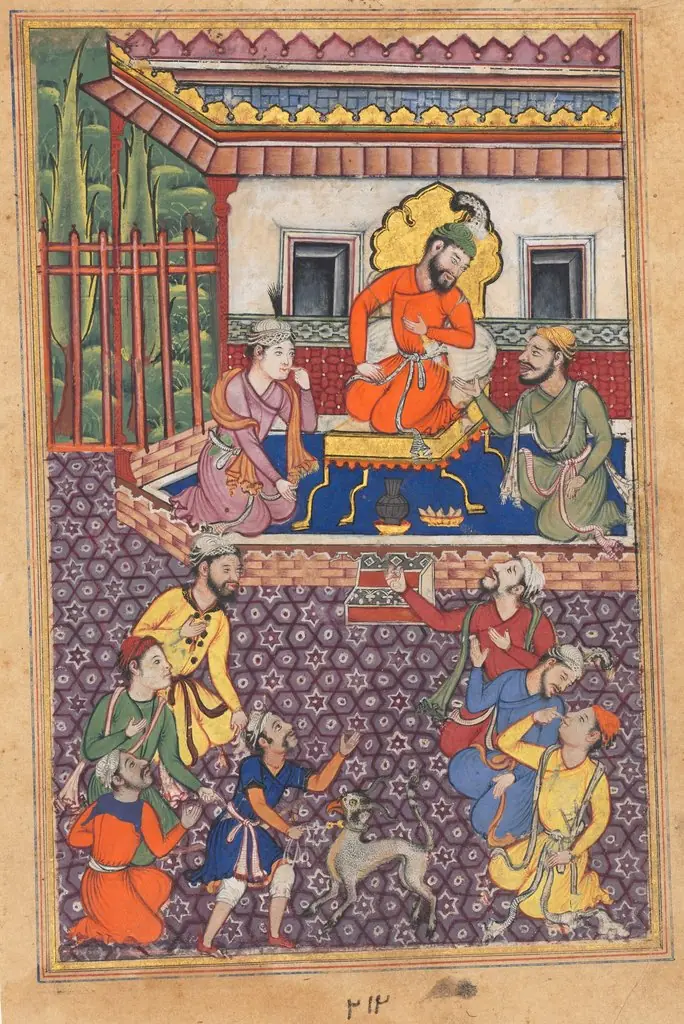 The court of the Raja of Ujjain, from a Tuti-nama (Tales of a Parrot): Forty-sixth Night