Artwork
Page from Tales of a Parrot (Tuti-nama): text page
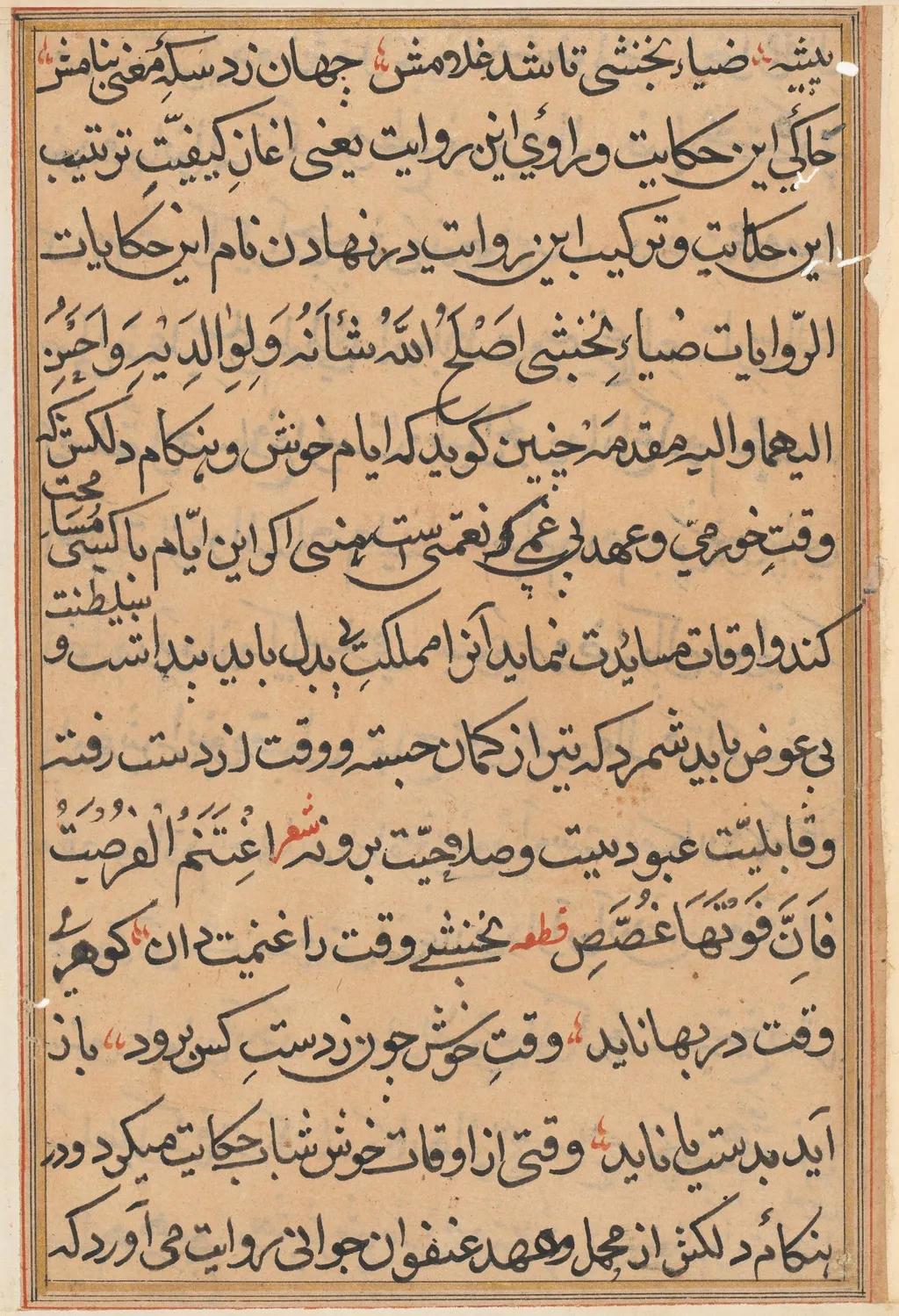
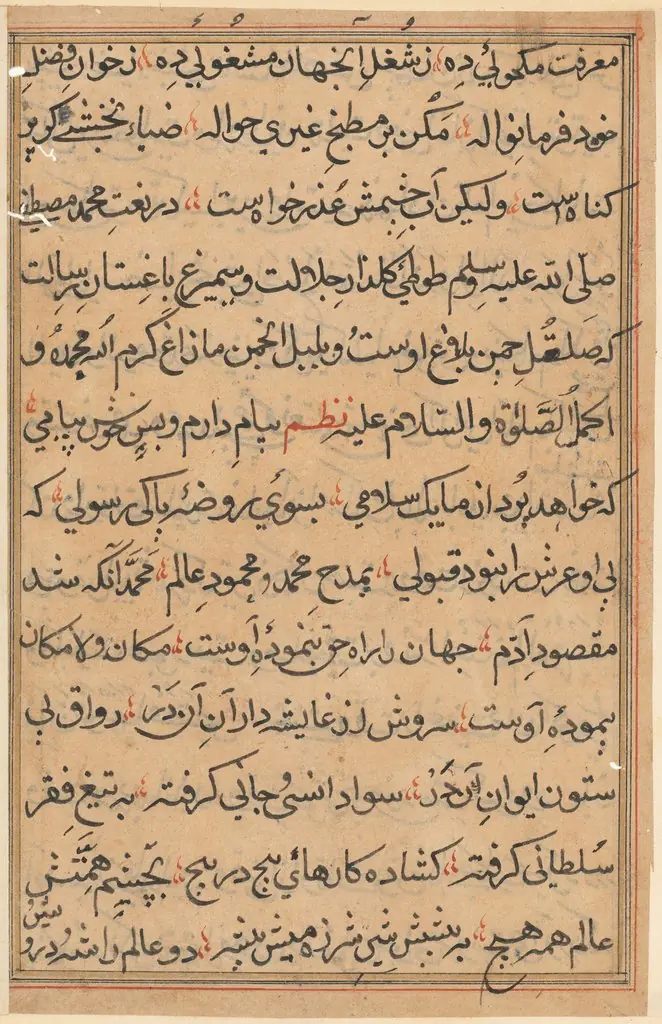
Page from Tales of a Parrot (Tuti-nama): text page is an unspecified painting. It dates from 1560 and is held in the collection of the Cleveland Museum of Art. This 1560 page originates from the manuscript known as Tales of a Parrot (Tuti‑nama).
About this work
The use of an unknown medium adds an air of mystery to the piece, inviting the viewer to explore and learn more about the techniques used to create it.
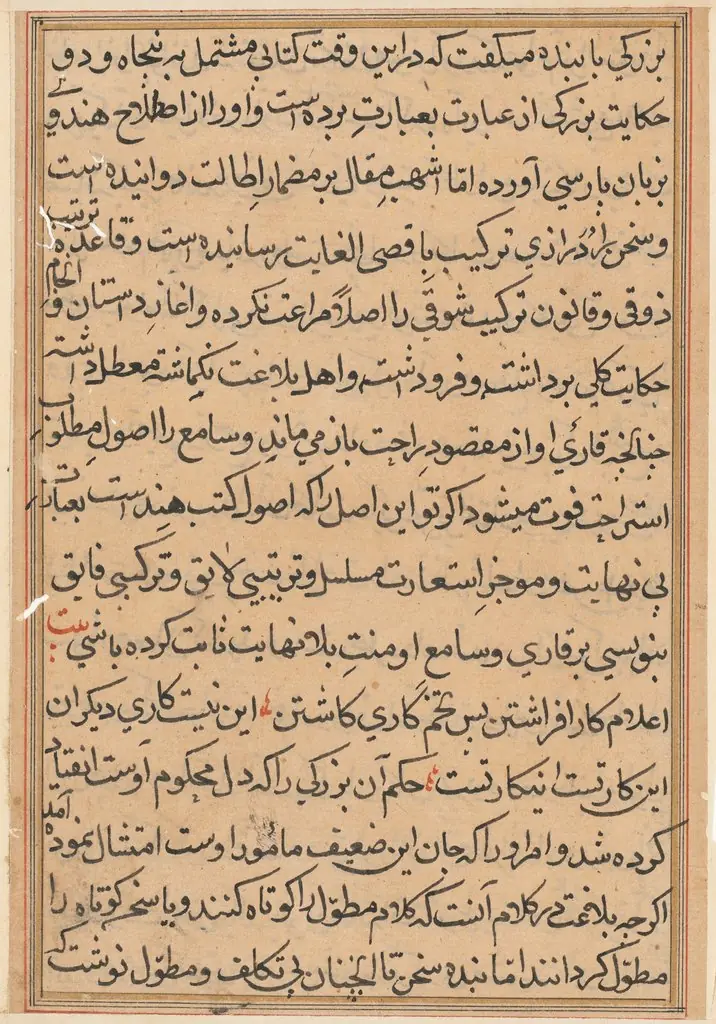
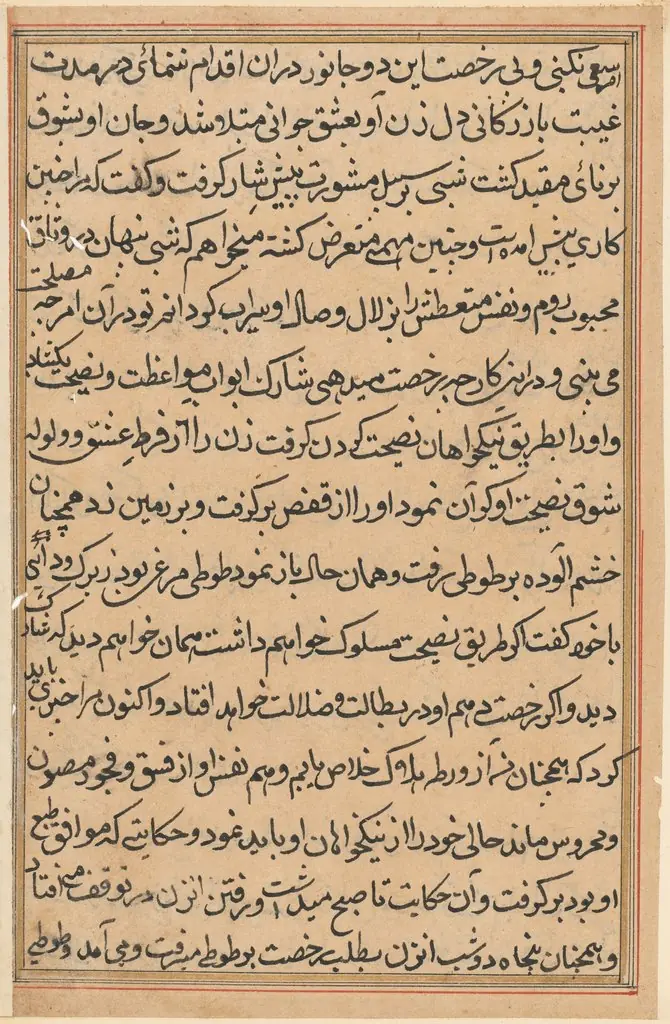
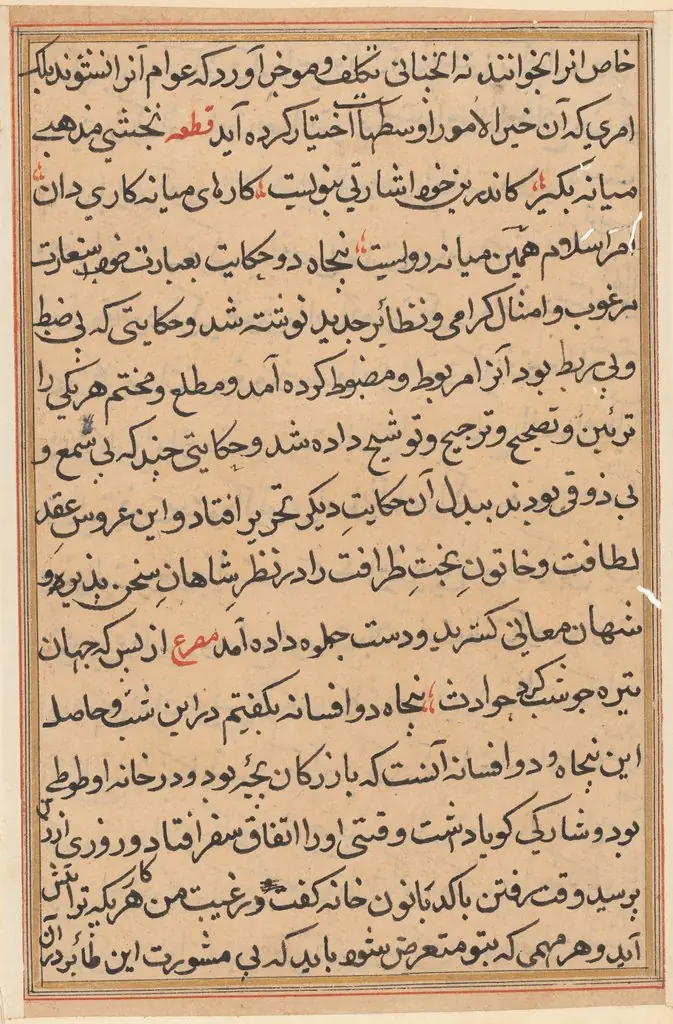
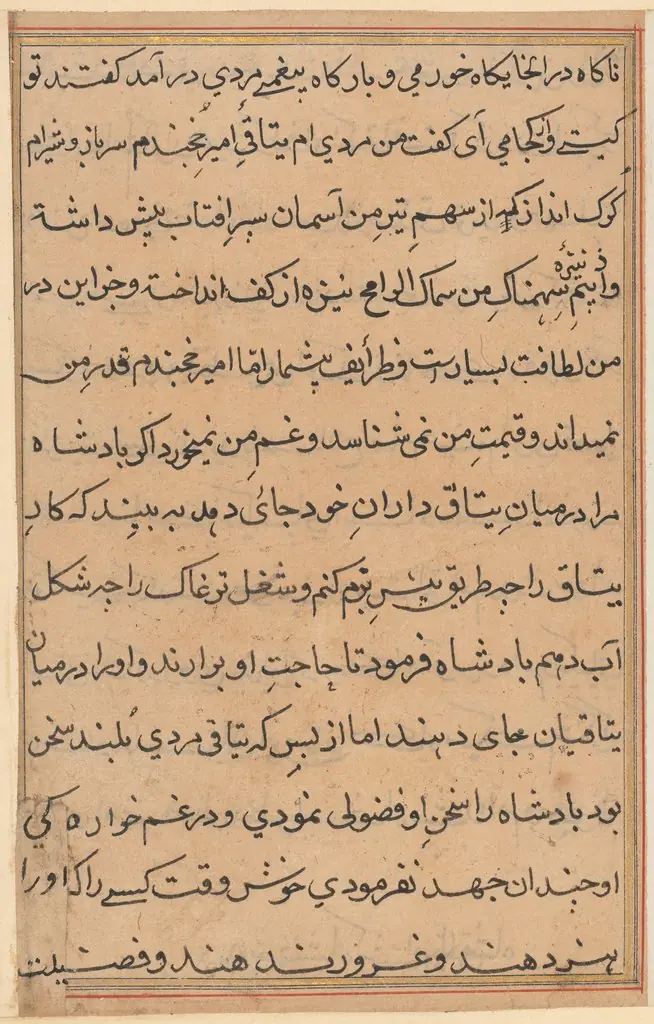
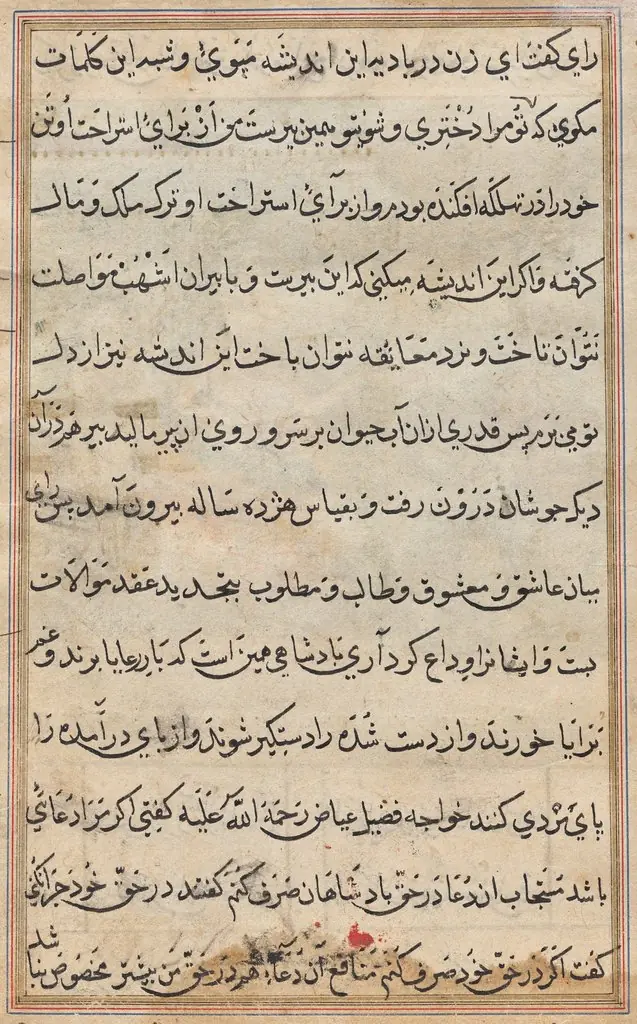
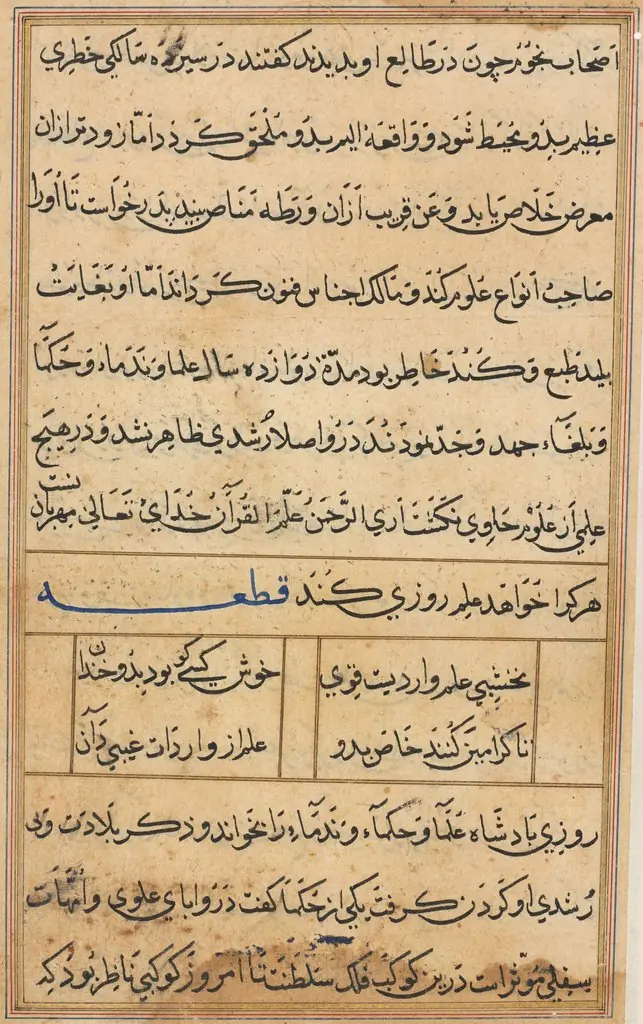
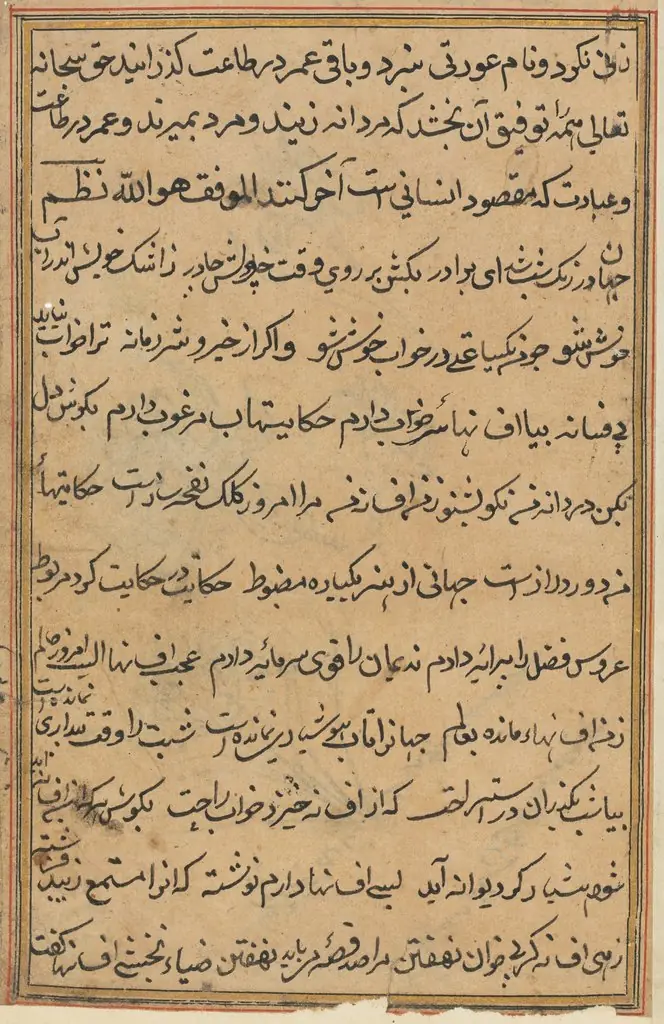
This painting is a page from the "Tales of a Parrot" (Tuti-nama), created in 1560. The page features a text written in an unknown medium, with the writing taking center stage. The text is written in a flowing script, with the words and phrases blending together to create a sense of movement and energy. The page is a beautiful example of the art of calligraphy, with the text being the main focus of the composition. The use of an unknown medium adds an air of mystery to the piece, inviting the viewer to explore and learn more about the techniques used to create it.
Overview
This 1560 page originates from the manuscript known as Tales of a Parrot (Tuti‑nama). The sheet is dominated by a continuous line of text, rendered in an elegant, flowing script that guides the viewer’s eye across the surface. The composition treats the written word as visual art, emphasizing rhythm and movement within the calligraphic form.
Subject & Meaning
The page presents a narrative excerpt from the Tales of a Parrot, a collection of stories that blend folklore and moral instruction. By allowing the script itself to become the central visual element, the work underscores the intimate relationship between literary content and its visual presentation, inviting contemplation of both story and the act of reading.
Technique & Style
Executed in an unidentified medium, the calligraphy displays a fluid hand that merges letters into a seamless cascade. The brushwork (or pen work) creates subtle variations in thickness, producing a sense of kinetic energy. The lack of decorative borders or illustration places the emphasis entirely on the typographic rhythm, a hallmark of mid‑16th‑century manuscript aesthetics.
History & Provenance
Created in 1560, the page forms part of a larger codex that circulated in Persian literary circles. Its survival as an individual sheet suggests it was either detached for study or collected as an example of exemplary script. The precise origin of the manuscript and its subsequent owners remain undocumented, adding to its enigmatic character.
Artist & collection

 Page from Tales of a Parrot (Tuti-nama): text page
 Page from Tales of a Parrot (Tuti-nama): text page
 Page from Tales of a Parrot (Tuti-nama): text page
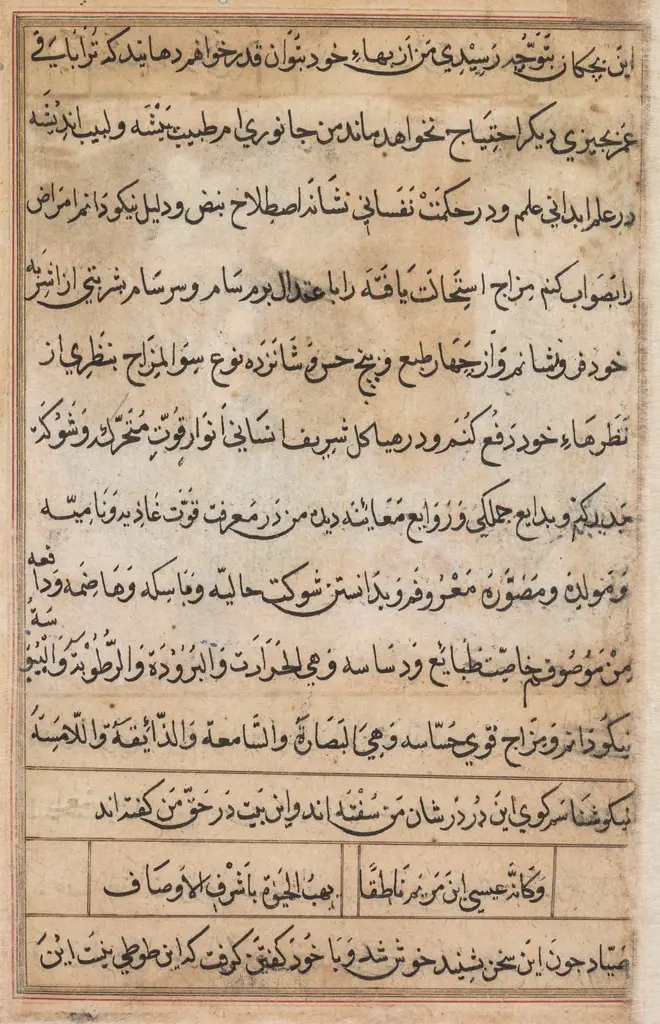 Page from Tales of a Parrot (Tuti-nama): text page
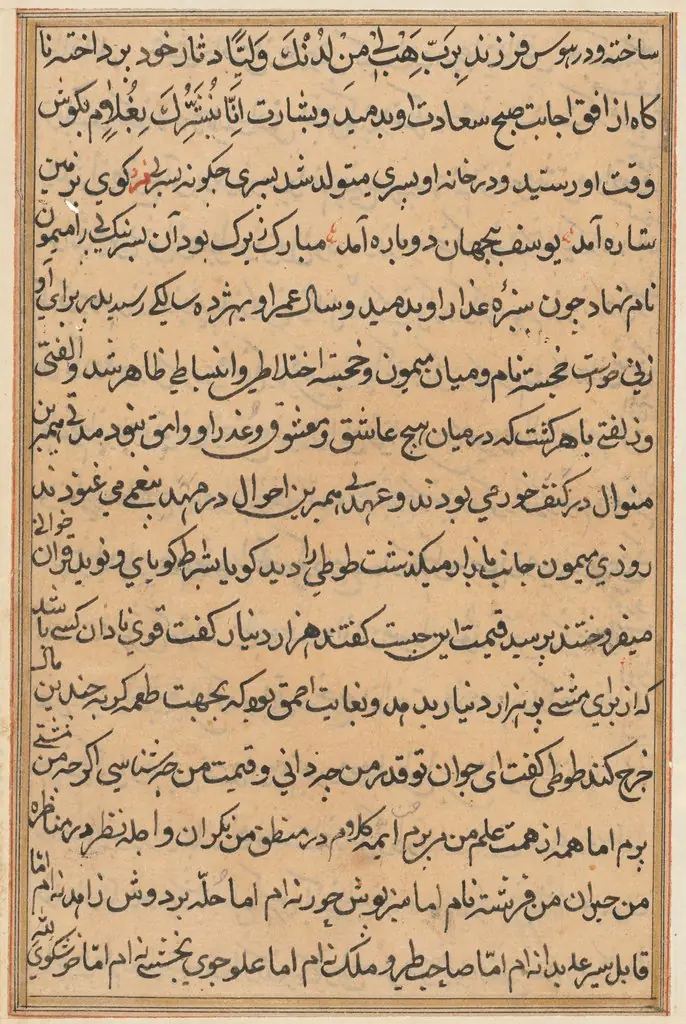 Page from Tales of a Parrot (Tuti-nama): text page
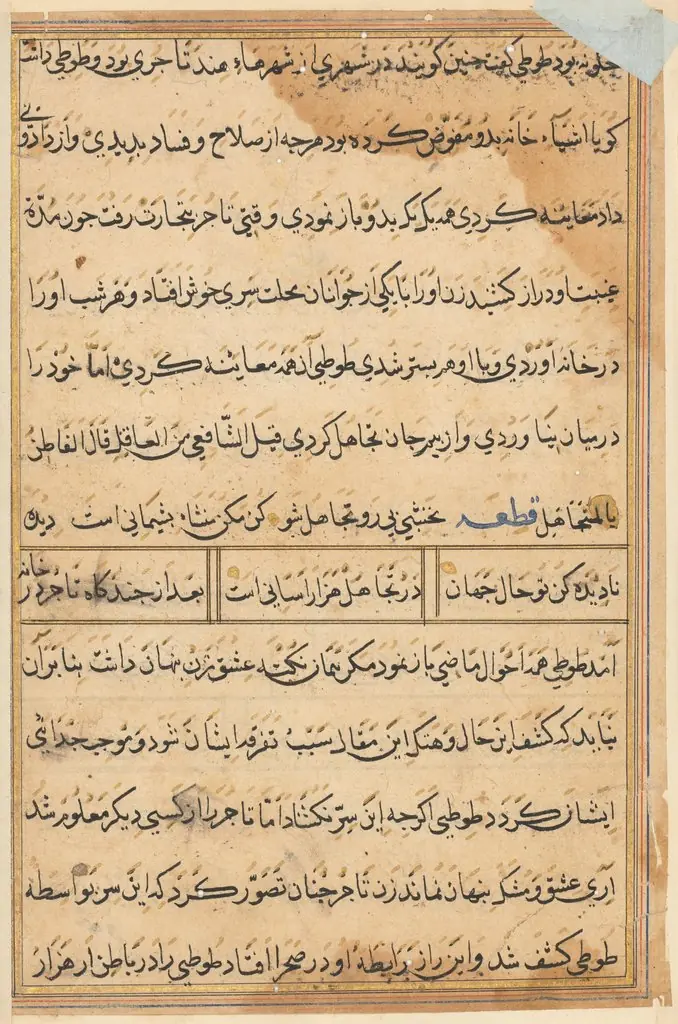 Page from Tales of a Parrot (Tuti-nama): text page
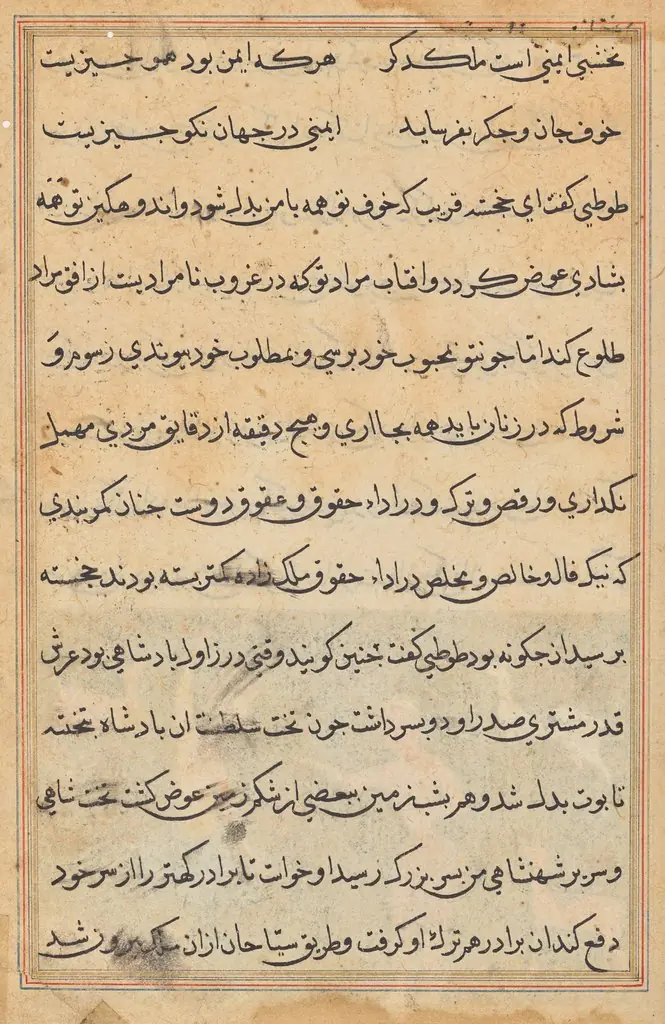 Page from Tales of a Parrot (Tuti-nama): text page
 Page from Tales of a Parrot (Tuti-nama): text page
 Page from Tales of a Parrot (Tuti-nama): text page
 Page from Tales of a Parrot (Tuti-nama): text page
 Page from Tales of a Parrot (Tuti-nama): text page
 Page from Tales of a Parrot (Tuti-nama): text page