Artwork
Crabs and Peonies
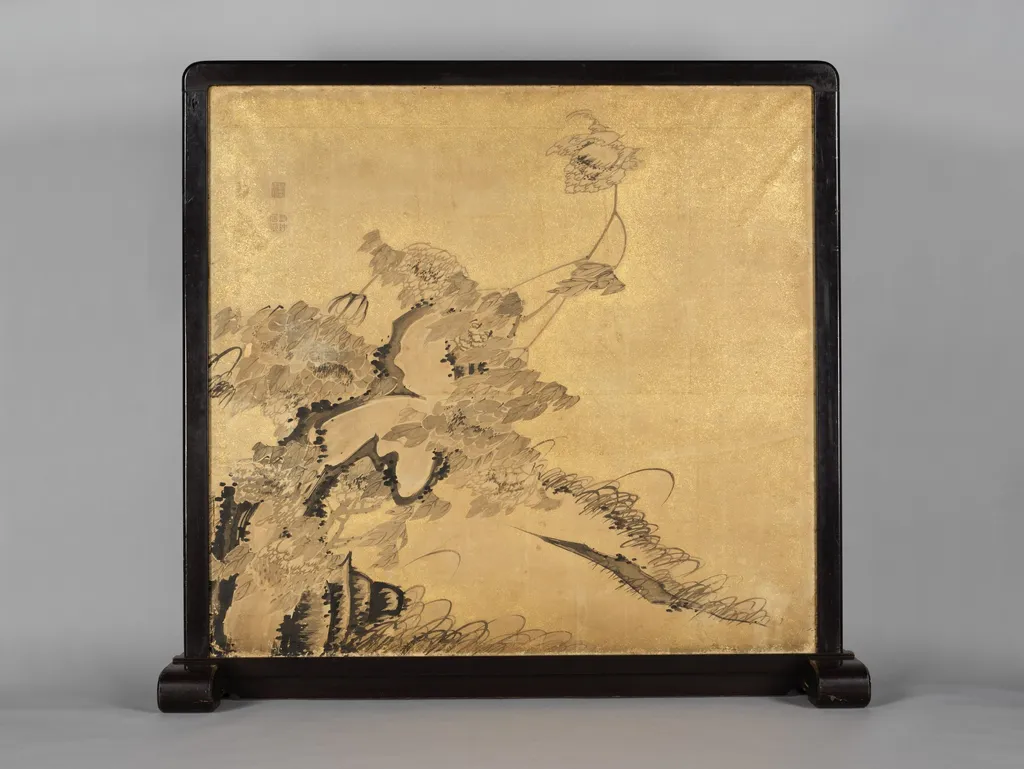
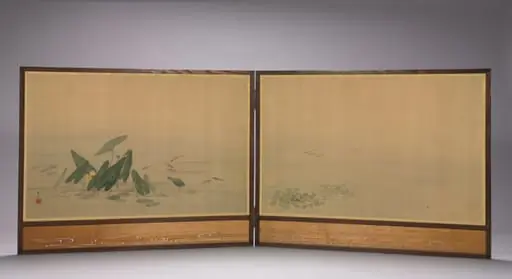
Crabs and Peonies is an unspecified painting by the Ukiyo-e artist Itō Jakuchū. It dates from 1749 and is held in the collection of the Metropolitan Museum of Art.
About this work
Overview
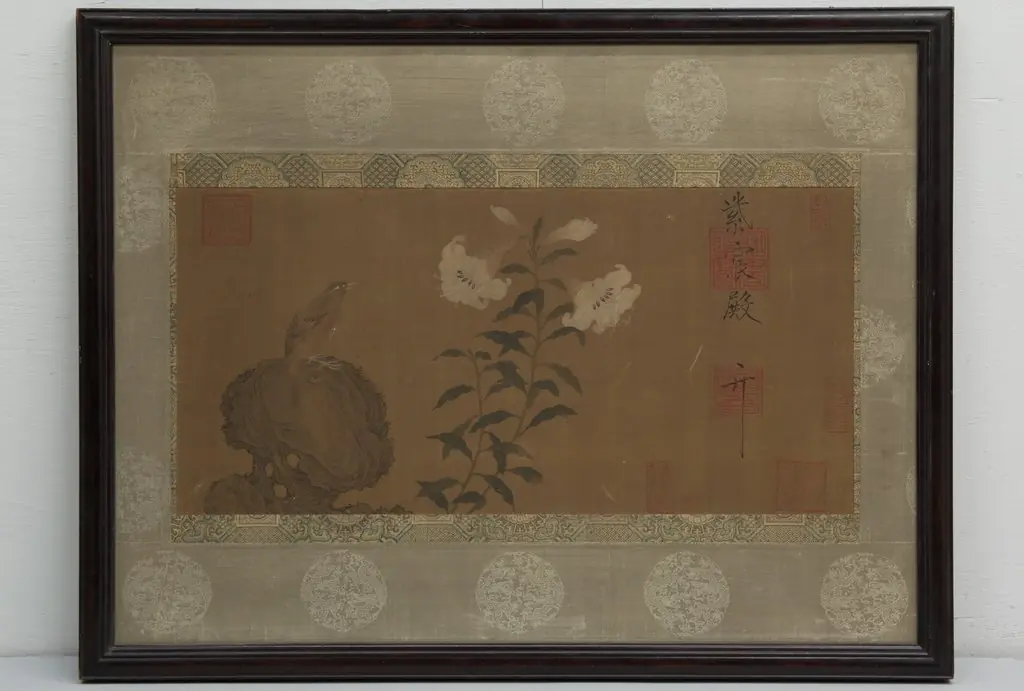
The work is part of the collection at The Metropolitan Museum of Art, where it is displayed in a traditional dark wooden frame.
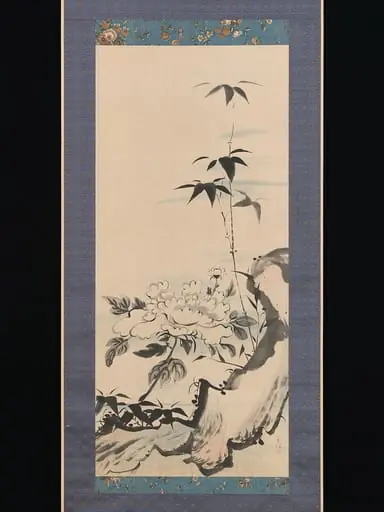
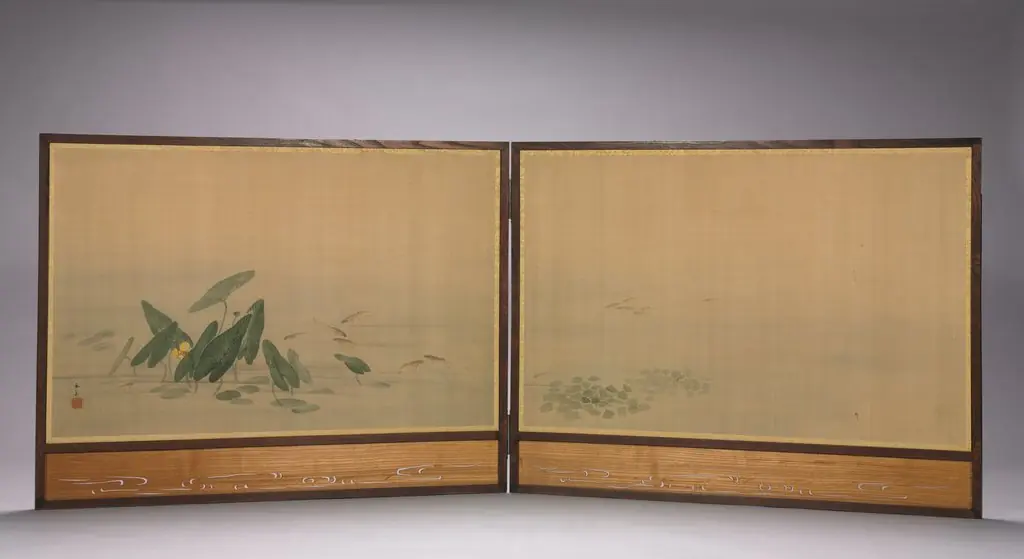
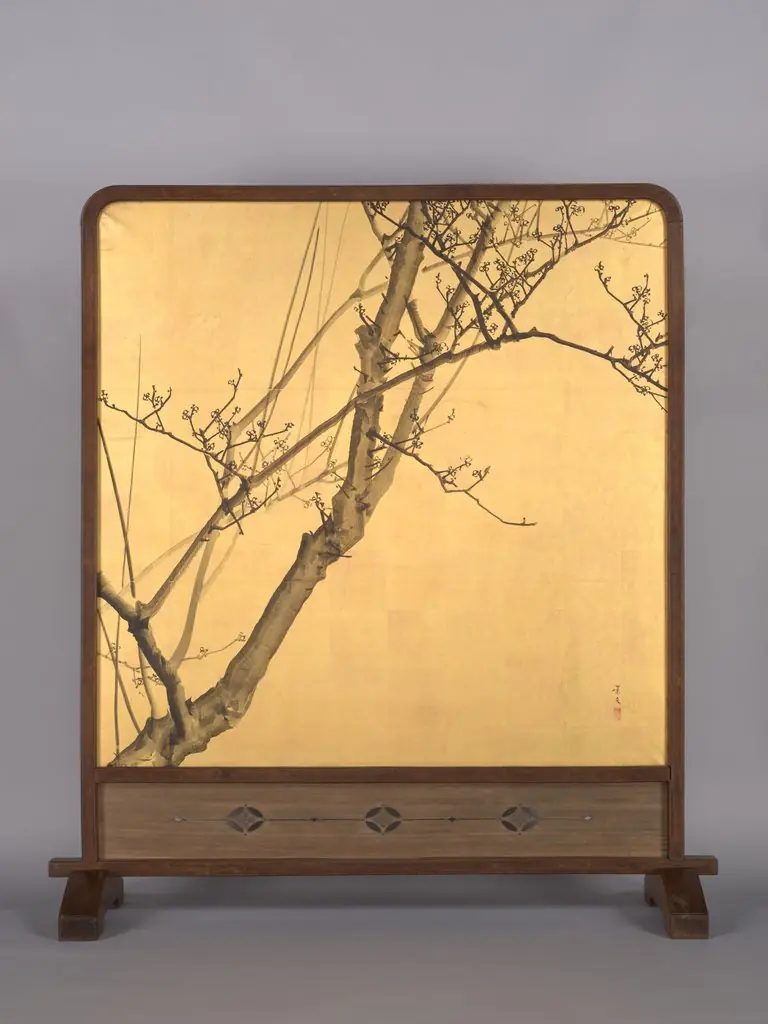
Painted in 1749 by Itō Jakuchū, Crabs and Peonies is a screen painting on silk with a gold-leaf background. It presents two natural subjects—crabs and peonies—arranged diagonally across the composition. The work is part of the collection at The Metropolitan Museum of Art, where it is displayed in a traditional dark wooden frame. Its restrained palette and deliberate spacing reflect a contemplative approach to nature.
Subject & Meaning
The painting juxtaposes crabs, associated with the sea and terrestrial movement, with peonies, symbols of earthly beauty and transience in East Asian tradition. Their placement—crabs in the lower left, peonies in the upper right—creates a dynamic balance. The pairing suggests a harmony between opposing elements: the rugged and the refined, the fleeting and the enduring, without overt narrative or symbolism.
Technique & Style
Jakuchū employed bold, precise brushwork to define the forms of crabs and peonies, using layered pigments to suggest texture and weight. The gold background, applied as leaf, enhances the subjects’ presence without competing with them. The style avoids decorative excess; instead, it emphasizes clarity and observation, rooted in close study of living specimens and a disciplined aesthetic grounded in Zen-influenced simplicity.
History & Provenance
Created during Jakuchū’s mature period, the painting was likely made for a private patron or temple setting, common for his nature-focused works. It remained in Japanese collections until the 20th century, when it entered the Metropolitan Museum of Art’s holdings. Its preservation in original condition, including the gold ground and silk support, offers rare insight into 18th-century Japanese studio practices.
Context
In mid-18th century Japan, Jakuchū worked outside mainstream schools, favoring direct observation over conventional formulas. His paintings of animals and plants, often commissioned by Buddhist patrons, reflected a growing interest in nature as a subject worthy of serious artistic attention. Crabs and Peonies aligns with this trend, merging scholarly reverence for the natural world with refined visual discipline.
Legacy
Though not widely known outside Japan during his lifetime, Jakuchū’s work gained recognition in the 20th century for its originality and technical rigor. Crabs and Peonies exemplifies his unique synthesis of naturalism and restraint, influencing later artists interested in non-Western approaches to botanical and zoological representation. The painting remains a touchstone for studies of Edo-period visual culture.
Artist & collection