Artwork
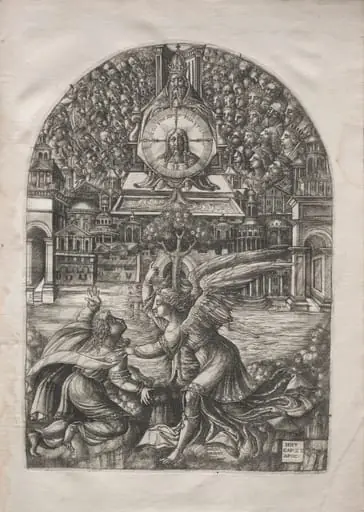
The Apocalypse: The Angel Shows St. John the New Jerusalem
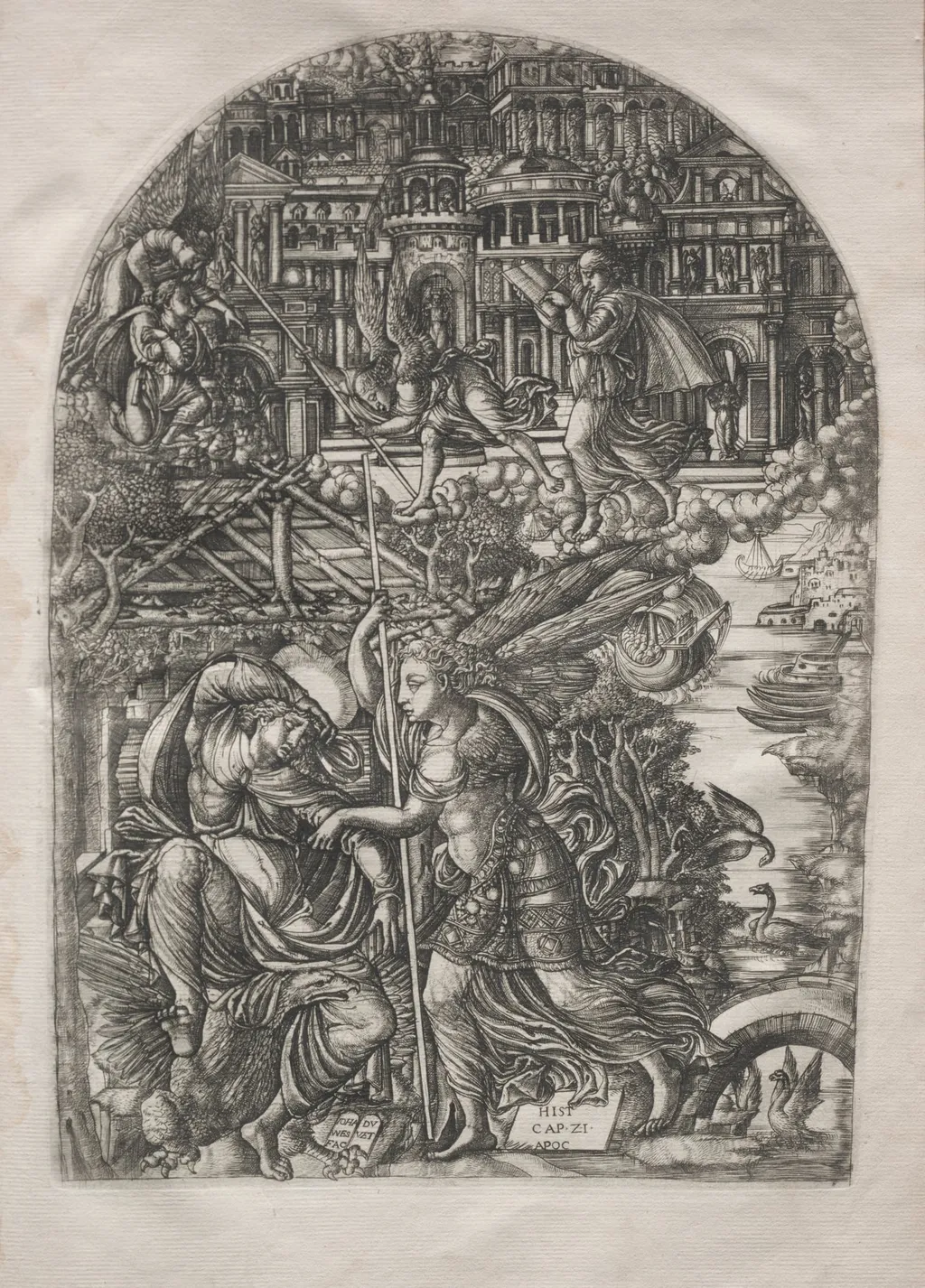
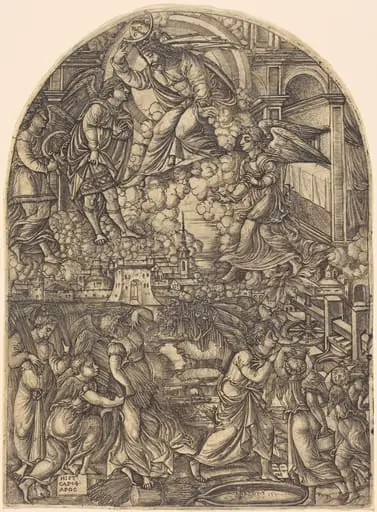
The Apocalypse: The Angel Shows St. John the New Jerusalem is a print by the Renaissance artist Jean Duvet. It dates from 1551 and is held in the collection of the Cleveland Museum of Art. The print depicts an angel presenting the vision of the New Jerusalem to Saint John, a scene drawn from the biblical Book of Revelation.
About this work
This painting shows an angel and St. John in a scene from the Bible.
The artist spent years working on a series of engravings like this one, which tells a story from the Apocalypse. This series was a big project for him.
You can learn more about this style by looking at the work of artist Jean Duvet (French, 1485–1561).
Overview
The print depicts an angel presenting the vision of the New Jerusalem to Saint John, a scene drawn from the biblical Book of Revelation. It forms part of a bound collection of twenty‑three engravings that together narrate the Apocalypse. The museum’s copy is one of only seven complete sets known to exist.
Subject & Meaning
The image illustrates the moment in Revelation when an angel reveals the heavenly city to John, symbolising the fulfillment of divine prophecy and the promise of eternal salvation. The composition emphasizes the transmission of sacred knowledge from the celestial messenger to the human witness.
Technique & Style
Executed as an engraving, the work shows densely packed figures rendered with solid modelling, a nod to the Italian High Renaissance. Yet Duvet’s personal idiom overrides classical perspective, favoring ornamental surface patterns and a crowded, almost decorative arrangement that creates a highly artificial visual space.
History & Provenance
Created by Jean Duvet (c.1485–1561), a pioneering French printmaker, the series occupied the artist for several years and is regarded as his most significant achievement. Although based in Langres, Duvet absorbed Italian influences through imported prints, especially those of Marcantonio Raimondi, before developing his distinctive style.
Context
The Apocalypse series reflects the 16th‑century fascination with apocalyptic themes and the spread of printed religious imagery. Duvet’s work bridges French provincial art and the broader currents of Renaissance print culture, illustrating how visual ideas circulated across Europe via prints.
Legacy
Duvet’s engravings remain key examples of early French printmaking, noted for their complex compositions and synthesis of Italian modelling with a uniquely French ornamental approach. The rarity of complete sets underscores their value for scholars studying the transmission of biblical narratives in early modern visual media.
Artist & collection

Artist
Jean Duvet (1485 – after 1562) was a French Renaissance goldsmith and engraver, now best known for his engravings.

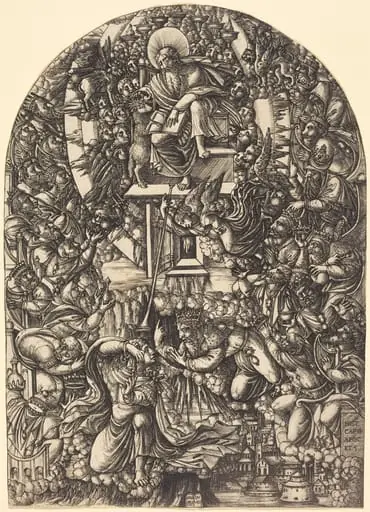
 The Apocalypse: The Angel Shows St. John the Fountain of Living Water
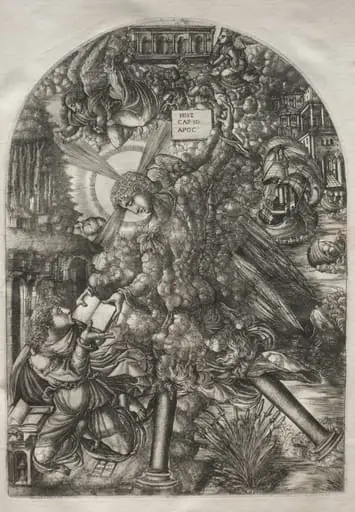 The Apocalypse: The Angel Gives St. John the Book to Eat
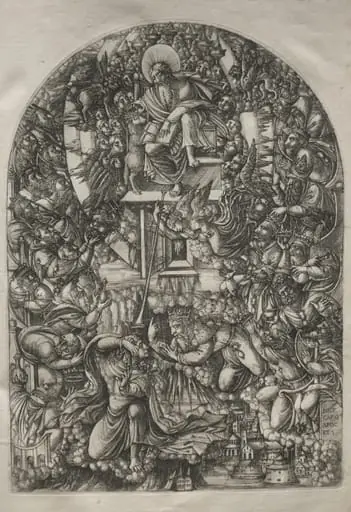 The Apocalypse: St. John Summoned to Heaven
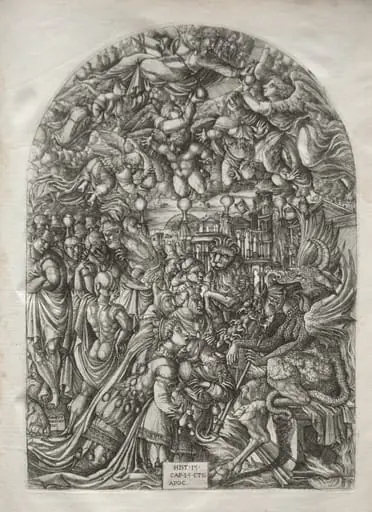 The Apocalypse: The Woman Clothed with the Sun
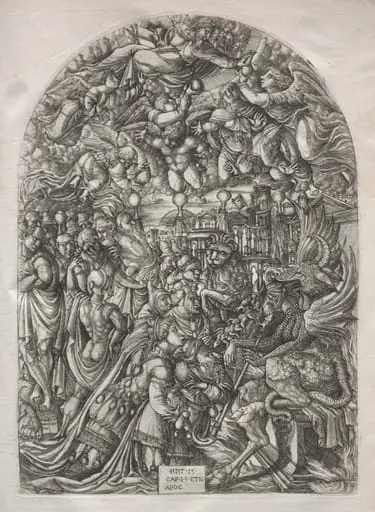 The Apocalypse: The Dragon with Two Horns and the Beast with Seven
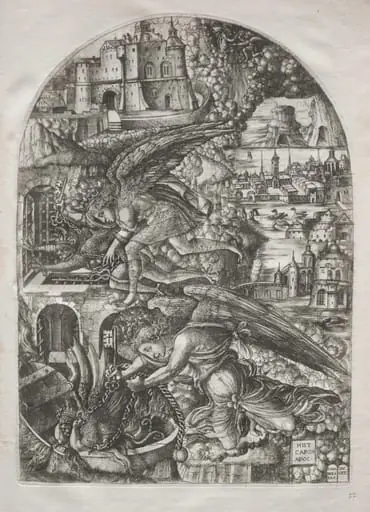 The Apocalypse: Satan Bound for a Thousand Years
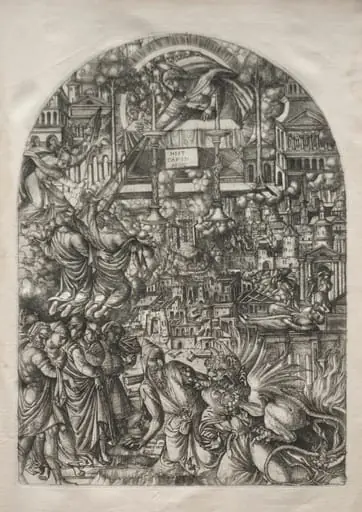 The Apocalypse: The Measurement of the Temple
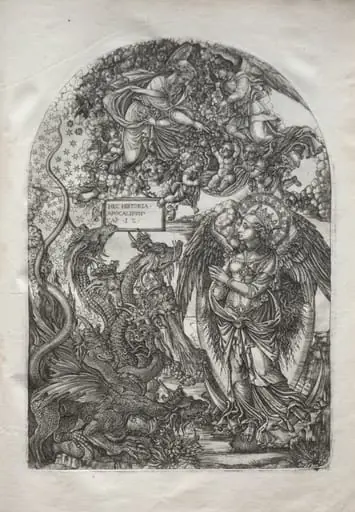 The Apocalypse: St. Michael and the Dragon
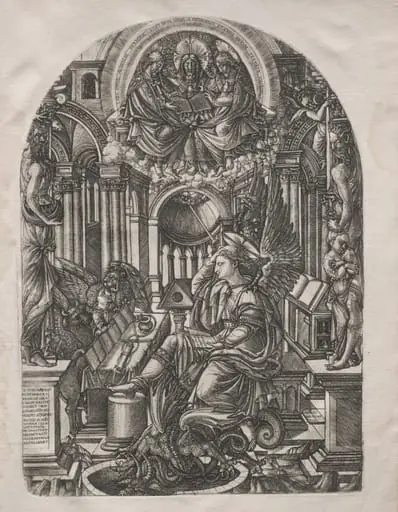 The Apocalypse: St. John on the Island of Patmos
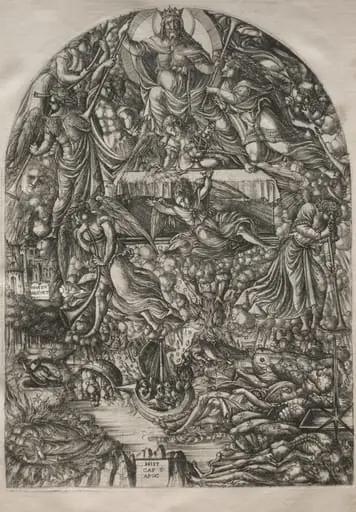 The Apocalypse: The Opening of the Seventh Seal
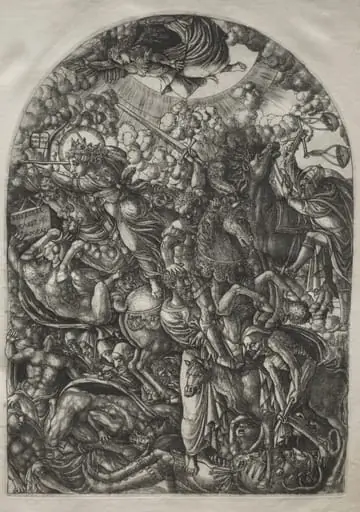 The Apocalypse: St. John Sees the Four Riders