Artwork
The Apocalypse: The Angel Gives St. John the Book to Eat
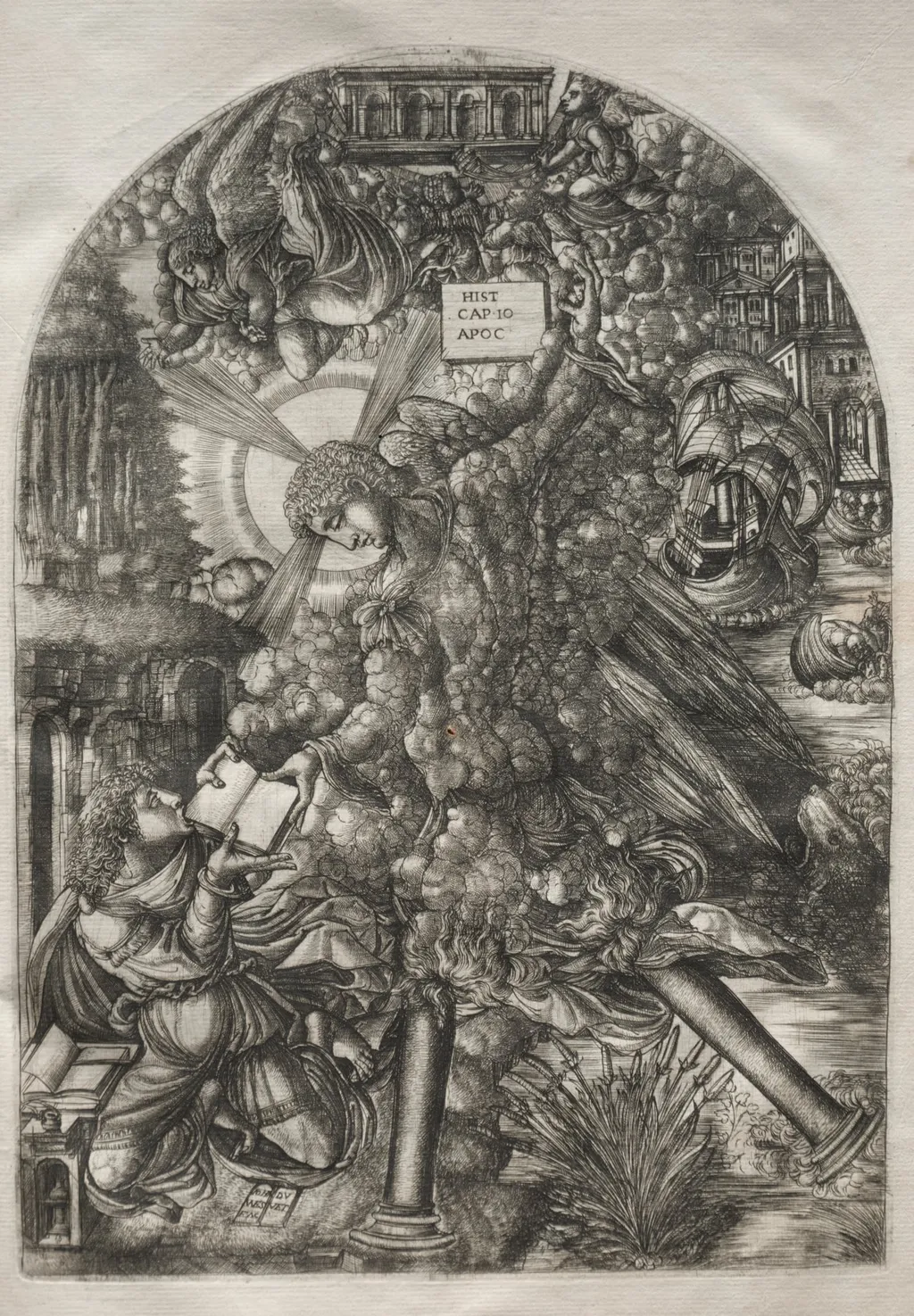
The Apocalypse: The Angel Gives St. John the Book to Eat is a print by the Renaissance artist Jean Duvet. It dates from 1551 and is held in the collection of the Cleveland Museum of Art.
About this work
This painting shows an angel giving a book to St. John.
The artist spent years creating a series of engravings based on the Apocalypse. He was one of the first major printmakers in France and worked on this project for a long time.
You can learn more about this style by looking at the work of artist: Jean Duvet (French, 1485–1561)
Overview
Duvet, a French artist based in Langres, dedicated his career to printmaking at a time when the medium was still emerging as a serious artistic form in France.
This engraving is one of twenty-three plates in a serialized depiction of the Book of Revelation, created by Jean Duvet over several years. The complete set, preserved in a single bound volume, is exceptionally rare—only seven full copies are known to survive. Duvet, a French artist based in Langres, dedicated his career to printmaking at a time when the medium was still emerging as a serious artistic form in France.
Subject & Meaning
The scene depicts the angel instructing Saint John to consume a scroll, a moment from Revelation 10:9–10 symbolizing the internalization of divine prophecy. Duvet renders the event with intense spiritual gravity, emphasizing the visionary nature of John’s mission. The act of eating the book signifies both the sweetness of revelation and its bitter burden, a theological theme central to the Apocalypse narrative.
Technique & Style
Duvet employed fine-line engraving to build dense, intricate compositions. His figures are sculpturally modeled after Italian Renaissance prototypes, yet arranged in compressed, non-perspectival spaces. Ornamental detail dominates—drapery, architecture, and celestial elements form rhythmic patterns that override spatial logic, creating a dreamlike, symbolic atmosphere distinct from contemporary Northern or Italian traditions.
History & Provenance
The volume held by the museum is among the seven known complete sets of Duvet’s Apocalypse series. Produced between the 1540s and 1560s, the prints were likely circulated among educated clergy and collectors. Their survival in full sets is uncommon, as individual plates were often separated or lost. The museum’s copy retains its original binding and sequence, offering rare insight into the artist’s intended presentation.
Context
Working in provincial Langres, Duvet had no direct access to Italian masterpieces but absorbed their influence through imported engravings, particularly those by Marcantonio Raimondi. His synthesis of Italian form with French medieval sensibility produced a unique visual language. This hybrid style emerged during a period of religious upheaval, when apocalyptic imagery resonated with anxieties over reform and divine judgment.
Legacy
Duvet’s Apocalypse series stands as the most ambitious print project by a French artist of the 16th century. Though overshadowed in his time by Northern European peers, his idiosyncratic vision influenced later generations interested in symbolic, non-naturalistic expression. The series remains a key reference for understanding how regional artists adapted international styles to express deeply personal theological visions.
Artist & collection

Artist
Jean Duvet (1485 – after 1562) was a French Renaissance goldsmith and engraver, now best known for his engravings.

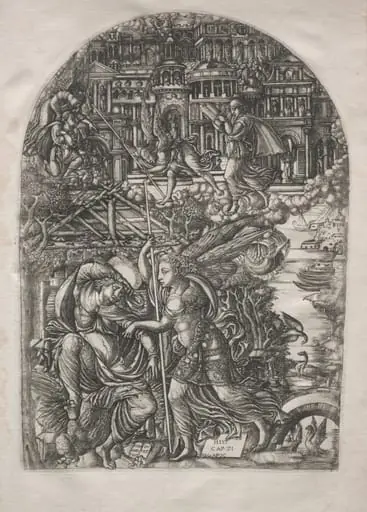 The Apocalypse: The Angel Shows St. John the New Jerusalem
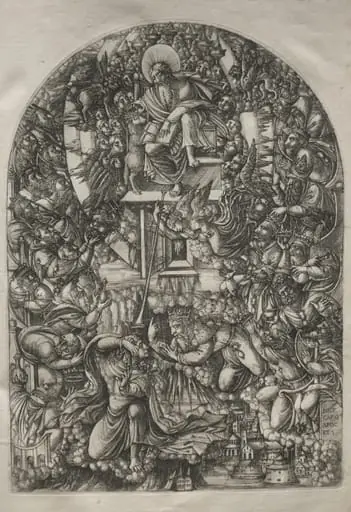 The Apocalypse: St. John Summoned to Heaven
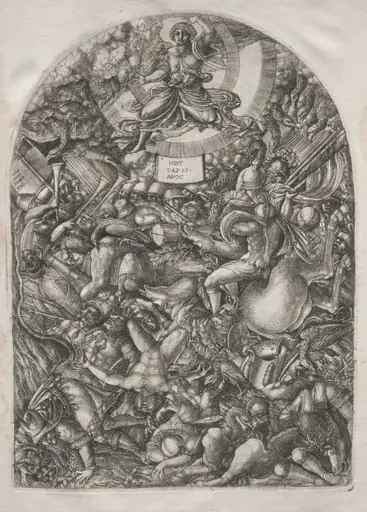 The Apocalypse: The Angel in the Sun Calling the Birds of Prey
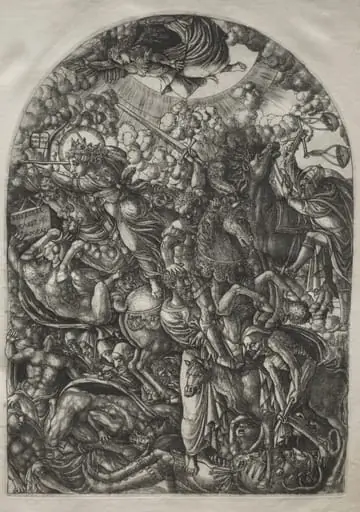 The Apocalypse: St. John Sees the Four Riders
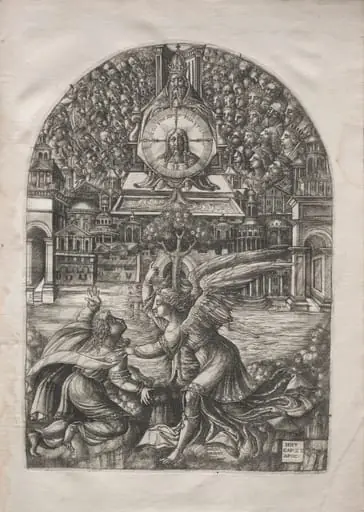 The Apocalypse: The Angel Shows St. John the Fountain of Living Water
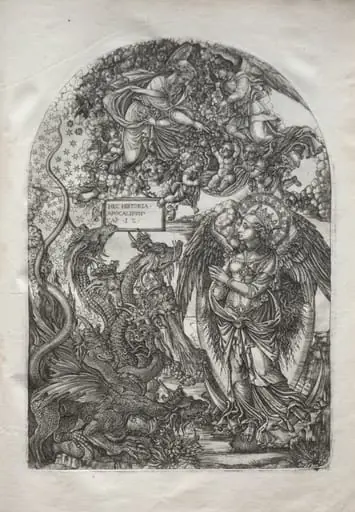 The Apocalypse: St. Michael and the Dragon
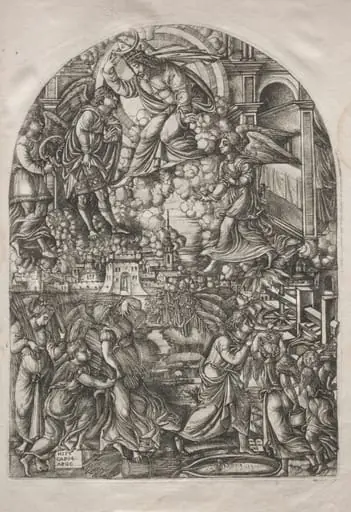 The Apocalypse: The Winepress of the Wrath of God
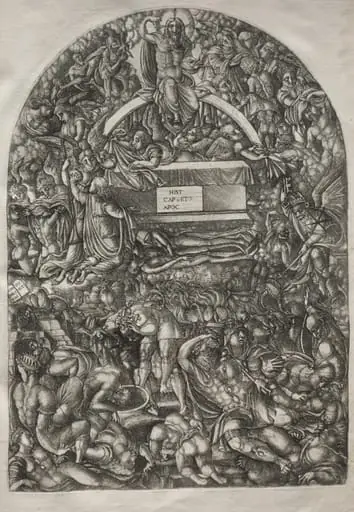 The Apocalypse: A Star Falls and Makes Hell to Open
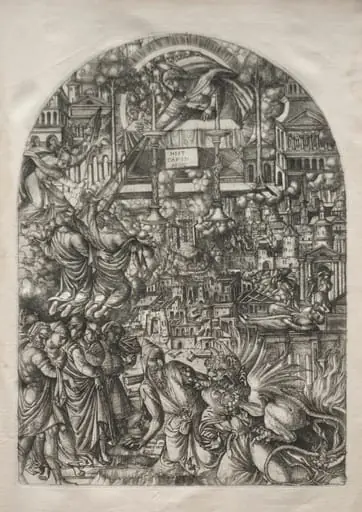 The Apocalypse: The Measurement of the Temple
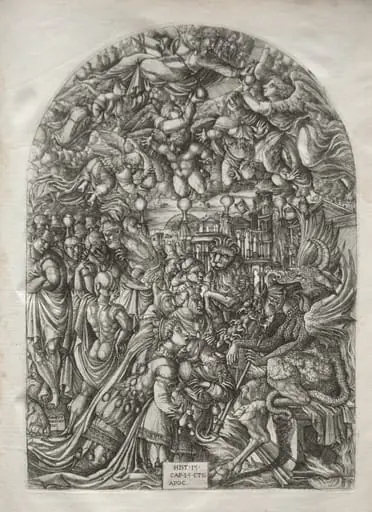 The Apocalypse: The Woman Clothed with the Sun
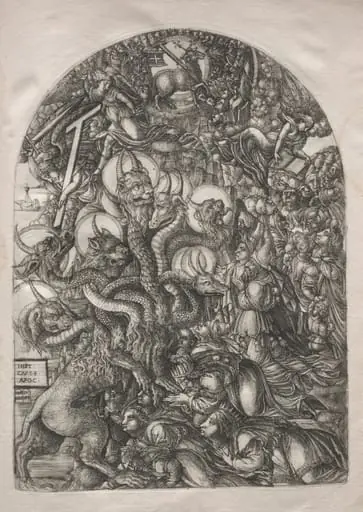 The Apocalypse: The Beast with Seven Heads and Ten Horns