Artwork
The Apocalypse: The Martyrdom of St. John the Evangelist
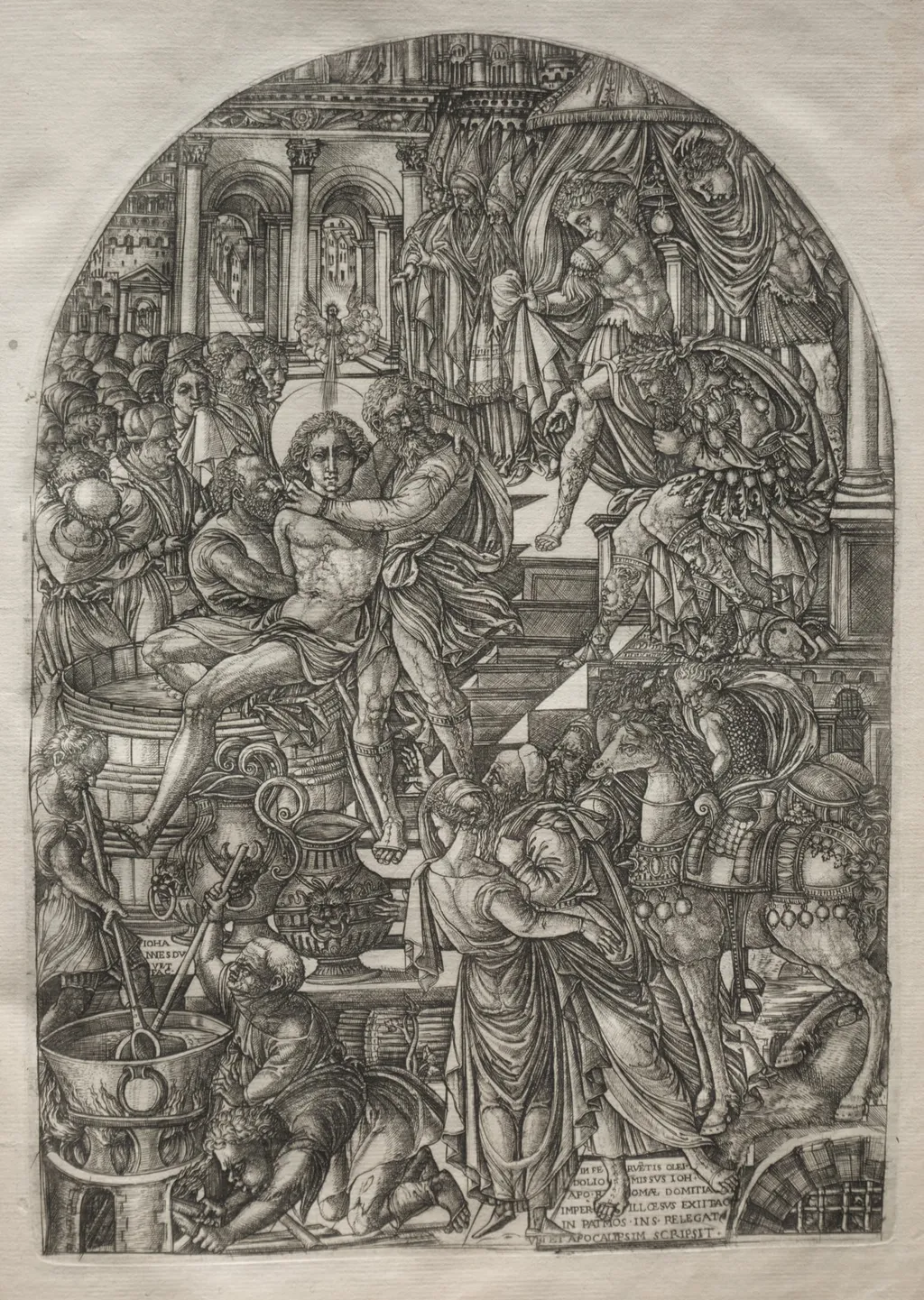
The Apocalypse: The Martyrdom of St. John the Evangelist is a print by the Renaissance artist Jean Duvet. It dates from 1551 and is held in the collection of the Cleveland Museum of Art.
About this work
You can learn more about this style by looking at the work of artist: Jean Duvet (French, 1485–1561).
This painting shows a dramatic scene of St. John the Evangelist being martyred.
The scene is intense and detailed, with many figures and objects.
It's interesting that this work is part of a series of 23 engravings illustrating the Apocalypse.
The artist spent many years creating these engravings, which are now rare and valuable.
You can learn more about this style by looking at the work of artist: Jean Duvet (French, 1485–1561).
Overview
This engraving is one of twenty-three plates in a serialized depiction of the Book of Revelation, created by Jean Duvet over several years. The complete set, of which only seven known copies survive, represents a rare and cohesive body of work from mid-16th century France. Duvet, based in Langres, produced these prints without direct access to Italian centers of artistic innovation, relying instead on circulating engravings and printed sources.
Subject & Meaning
The scene portrays the martyrdom of St. John the Evangelist, traditionally believed to have been subjected to boiling oil but miraculously unharmed. Duvet renders the moment with heightened drama: figures surge in chaotic motion around the vat, their gestures and expressions amplifying the tension between divine protection and human violence. The imagery aligns with apocalyptic themes of trial, endurance, and supernatural intervention.
Technique & Style
Duvet employed fine-line engraving to build dense, intricate compositions. His figures, though grounded in the volumetric modeling of Italian Renaissance precedents, are arranged in flattened, overlapping planes that reject perspectival logic. Ornamental detail—textiles, architecture, and drapery—dominates the surface, creating a rhythmic, almost tapestry-like texture that prioritizes symbolic intensity over spatial coherence.
History & Provenance
The volume held by the museum is among the seven known complete sets of Duvet’s Apocalypse series. Its survival reflects the work’s early prestige and careful preservation. Duvet’s prints were circulated in limited numbers, primarily among educated ecclesiastical and noble patrons. The rarity of intact sets underscores both the technical ambition of the project and the fragility of early printed materials.
Context
Working in provincial France, Duvet absorbed Italian artistic ideas through imported engravings, particularly those by Marcantonio Raimondi. Yet he transformed these influences into a personal idiom that diverged sharply from classical harmony. His work emerged during a period of religious upheaval, when visual narratives of divine judgment held renewed urgency, offering a visual counterpart to Reformation-era theological debates.
Legacy
Duvet’s Apocalypse series stands as a singular achievement in French printmaking, notable for its psychological intensity and stylistic independence. Though largely overlooked in later centuries, modern scholarship has recognized its role in expanding the expressive potential of engraving beyond mere illustration. His fusion of Northern detail with Italianate form prefigured later Mannerist tendencies in Northern Europe.
Artist & collection

Artist
Jean Duvet (1485 – after 1562) was a French Renaissance goldsmith and engraver, now best known for his engravings.

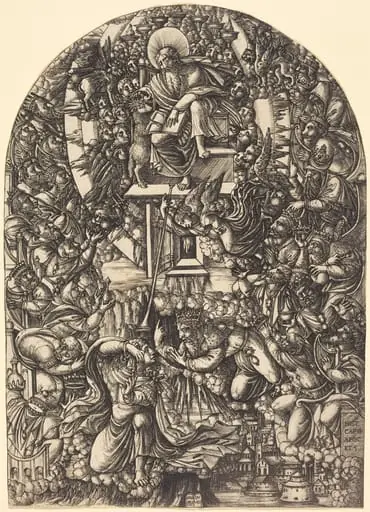
 The Apocalypse: St. John Summoned to Heaven
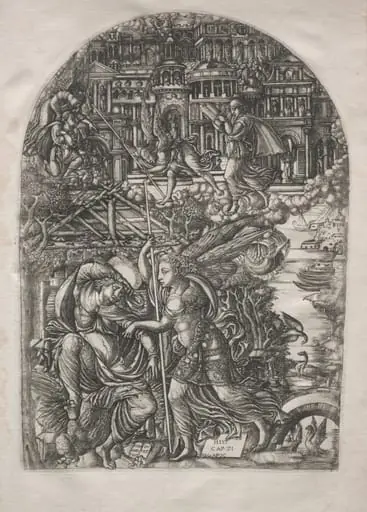 The Apocalypse: The Angel Shows St. John the New Jerusalem
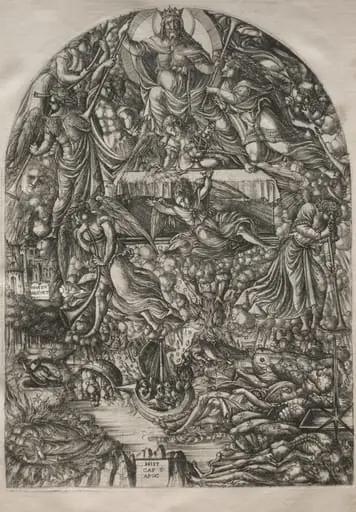 The Apocalypse: The Opening of the Seventh Seal
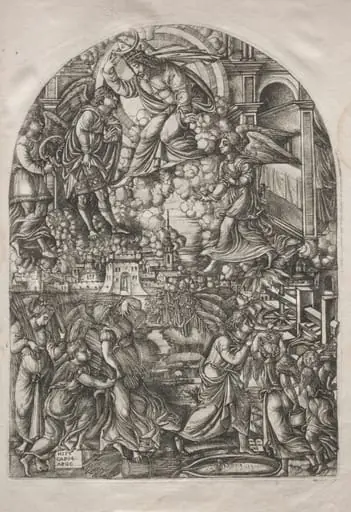 The Apocalypse: The Winepress of the Wrath of God
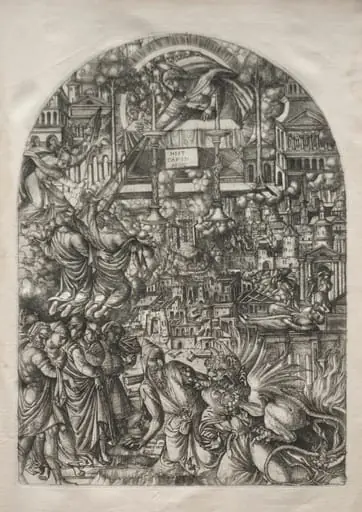 The Apocalypse: The Measurement of the Temple
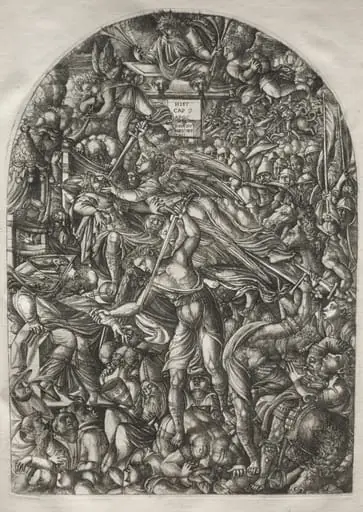 The Apocalypse: The Angel Sounding the Sixth Trumpet
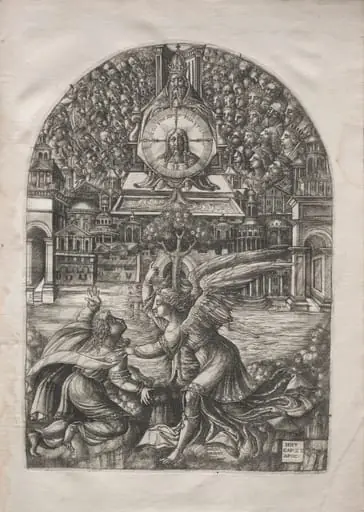 The Apocalypse: The Angel Shows St. John the Fountain of Living Water
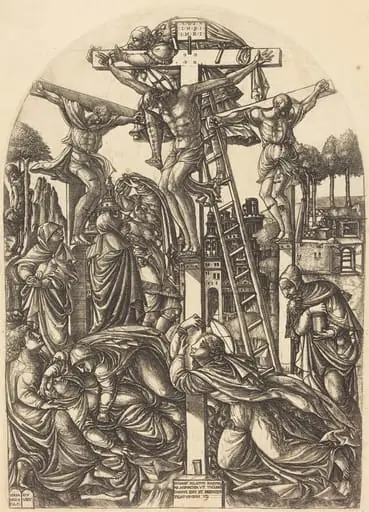
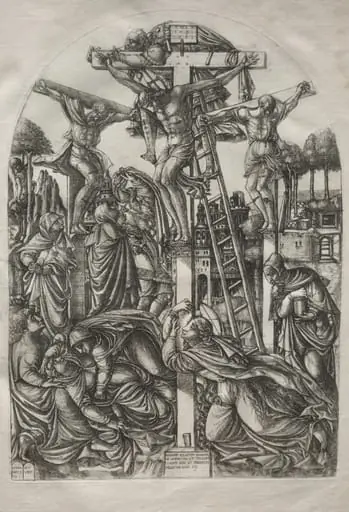 Christ on the Cross between the Two Thieves
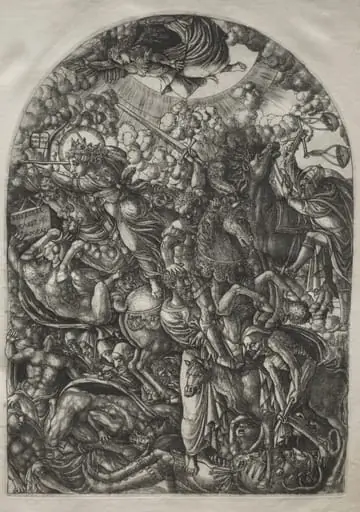 The Apocalypse: St. John Sees the Four Riders
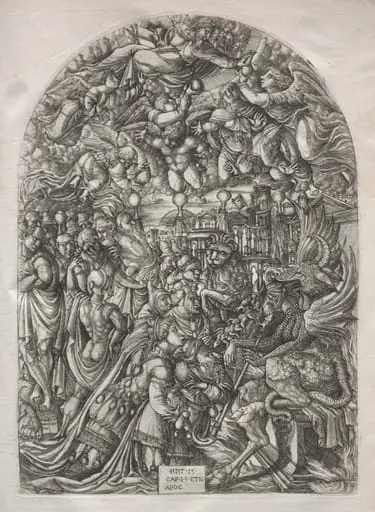 The Apocalypse: The Dragon with Two Horns and the Beast with Seven
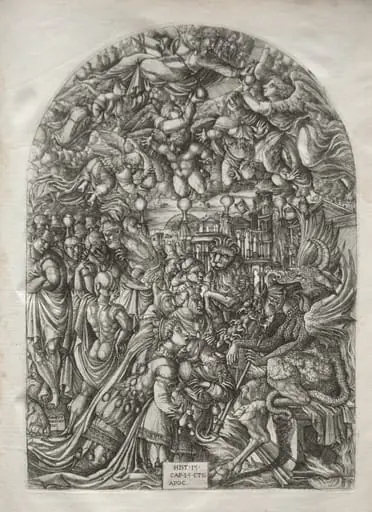 The Apocalypse: The Woman Clothed with the Sun