Artwork
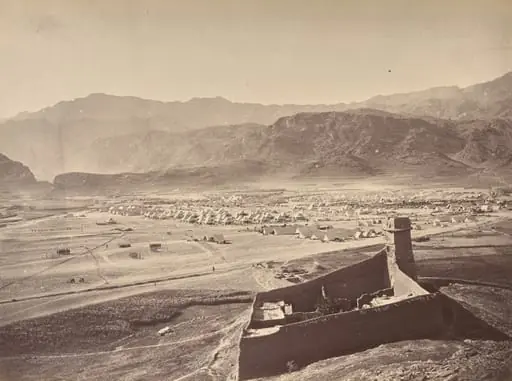
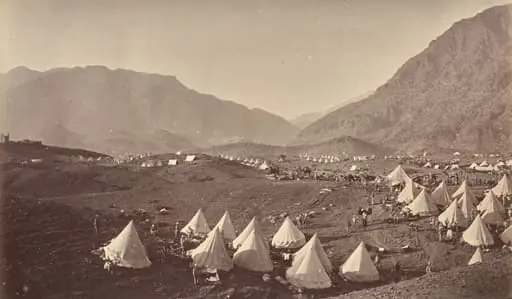
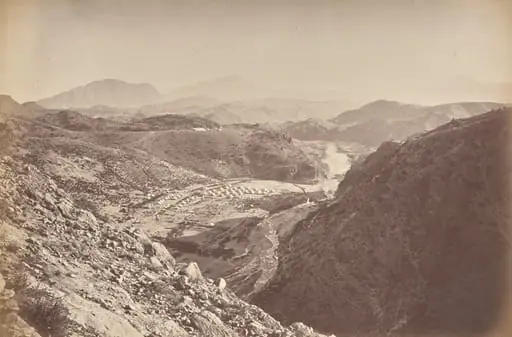
Landi Kotal, The Camp, Looking South
Landi Kotal, The Camp, Looking South is a photography by the Impressionist artist John Burke. It dates from 1879 and is held in the collection of the Cleveland Museum of Art.
About this work
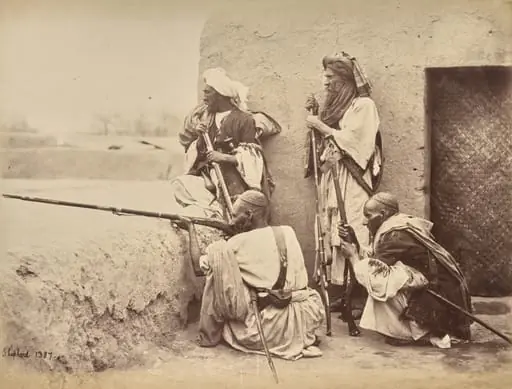
John Burke, an Irish photographer, followed troops during the Second Anglo-Afghan War, documenting the quiet moments between fights.
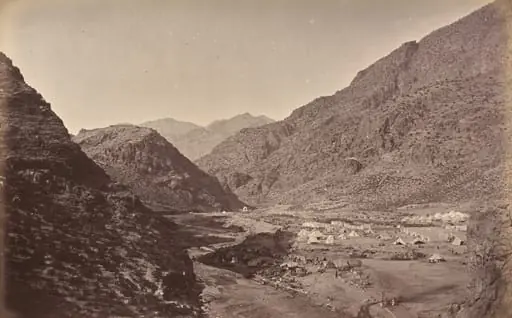
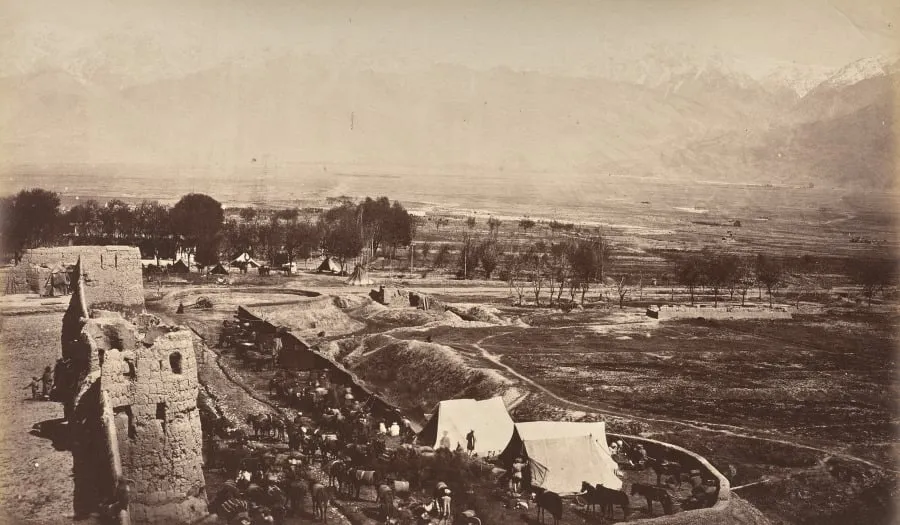
You see a black-and-white photo of a British army camp in a mountain pass, tents pitched in neat rows, soldiers standing around, and distant peaks under a hazy sky.
This isn’t a battle scene—it’s what war looked like when cameras were too slow to catch action. John Burke, an Irish photographer, followed troops during the Second Anglo-Afghan War, documenting the quiet moments between fights. His photos were some of the first to show Afghanistan to the world.
If you want to see more of his work, look up John Burke (Irish, 1845–1915).
Overview
This black-and-white photograph, titled Landi Kotal, The Camp, Looking South, captures a British army camp in a mountainous region. The image is one of many documenting the Second Anglo-Afghan War.
Subject & Meaning
The photograph shows a military encampment with orderly rows of tents and soldiers in the foreground, set against a backdrop of distant mountains under a hazy sky. It represents the more mundane aspects of war, rather than the conflict itself.
Technique & Style
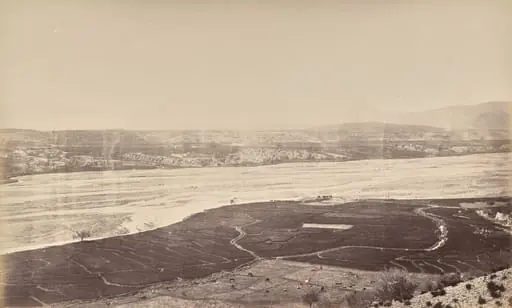
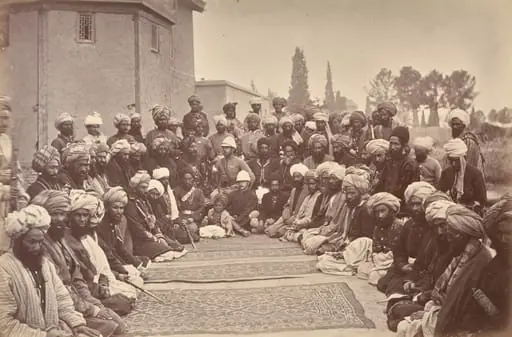
The image is characteristic of early conflict photography, where the technical limitations of the time precluded capturing action shots, instead focusing on landscapes, camps, and portraits.
History & Provenance
The photograph was taken by John Burke, an Irish photographer who extensively documented the Second Anglo-Afghan War, one of the first to do so.
Artist & collection