Artwork
Victorino Carmilo
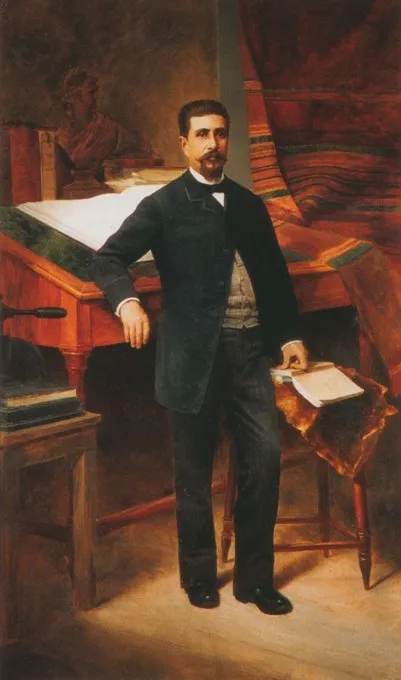
Victorino Carmilo is an oil painting by the Impressionist artist José Ferraz de Almeida Júnior. It dates from 1896 and is held in the collection of the Pinacoteca de São Paulo.
About this work
This painting is an example of a portrait from the late 19th century, showcasing the artist's skill in capturing a likeness.
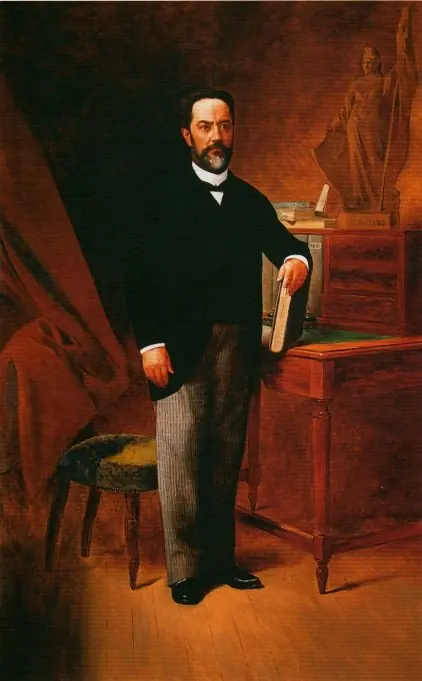
The painting depicts a man standing in front of a desk, dressed in a dark suit with a white shirt and black bow tie. He has short, dark hair and a mustache. His right hand rests on the desk, while his left hand holds a book.
The desk is cluttered with papers and books, and there's a chair to the right. The background is a warm, brown color, with a few indistinct objects visible.
This painting is an example of a portrait from the late 19th century, showcasing the artist's skill in capturing a likeness. To learn more about the artist's techniques and style, look up José Ferraz de Almeida Júnior.
Overview
Created in 1896, this oil portrait by José Ferraz de Almeida Júnior presents Victorino Carmelo standing before a cluttered desk. The figure is rendered in a muted palette, his dark suit and white shirt contrasting with a warm brown backdrop. The composition captures a moment of quiet concentration, with the subject’s left hand holding a book and his right hand resting on the desk surface.
Subject & Meaning
Victorino Carmelo is depicted as a professional or scholar, suggested by his formal attire, the presence of books, and the organized yet busy workspace. The portrait conveys a sense of intellectual engagement, emphasizing the sitter’s connection to written knowledge and perhaps his role within a bureaucratic or academic environment.
Technique & Style
Almeida Júnior employs a loose, impressionistic handling of light and texture while maintaining a realistic fidelity to facial features. Brushwork softens the background, allowing the figure to emerge with clear definition. The interplay of muted tones and subtle highlights reflects the artist’s training in both Brazilian academic circles and French realist traditions.
History & Provenance
The painting entered the collection of the Pinacoteca do Estado de São Paulo, where it remains on display. Almeida Júnior, born in 1850, studied in Brazil and later in France, bringing European realist influences back to his native country. This work exemplifies his early adoption of realist principles within a Brazilian context.
Context
Executed during a period when Brazilian art was negotiating European influences, the portrait aligns with the realist movement championed by figures such as Courbet and Millet. While the overall mood hints at impressionist sensibilities, the focus on accurate likeness and everyday subject matter reflects the broader cultural shift toward depicting contemporary Brazilian life.
Artist & collection
Artist
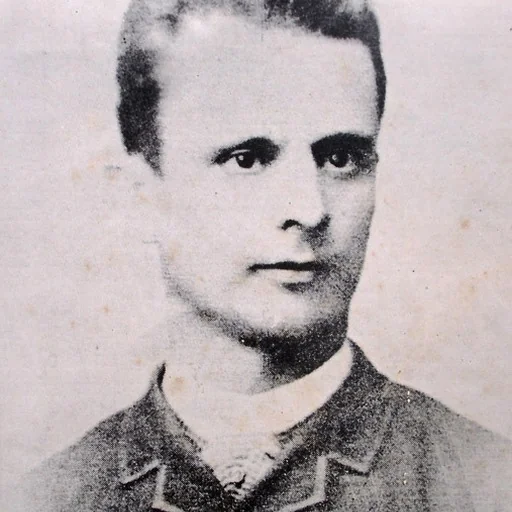
José Ferraz de Almeida Júnior (8 May 1850 – 13 November 1899) was a Brazilian artist and designer; one of the first there to paint in the Realistic tradition of Gustave Courbet and Jean-François Millet.

 Portrait of Dr. Manoel Lopes de Oliveira
 Dr. jur. Josef Bedeus von Scharberg
 Samuel H. Russell
 Portrait of Jean Léglise, Merchant, Mayor of Saint-Martin-de-Seignanx
 Portrait of Josep Puigcarbó
 Dr. W. Brukner
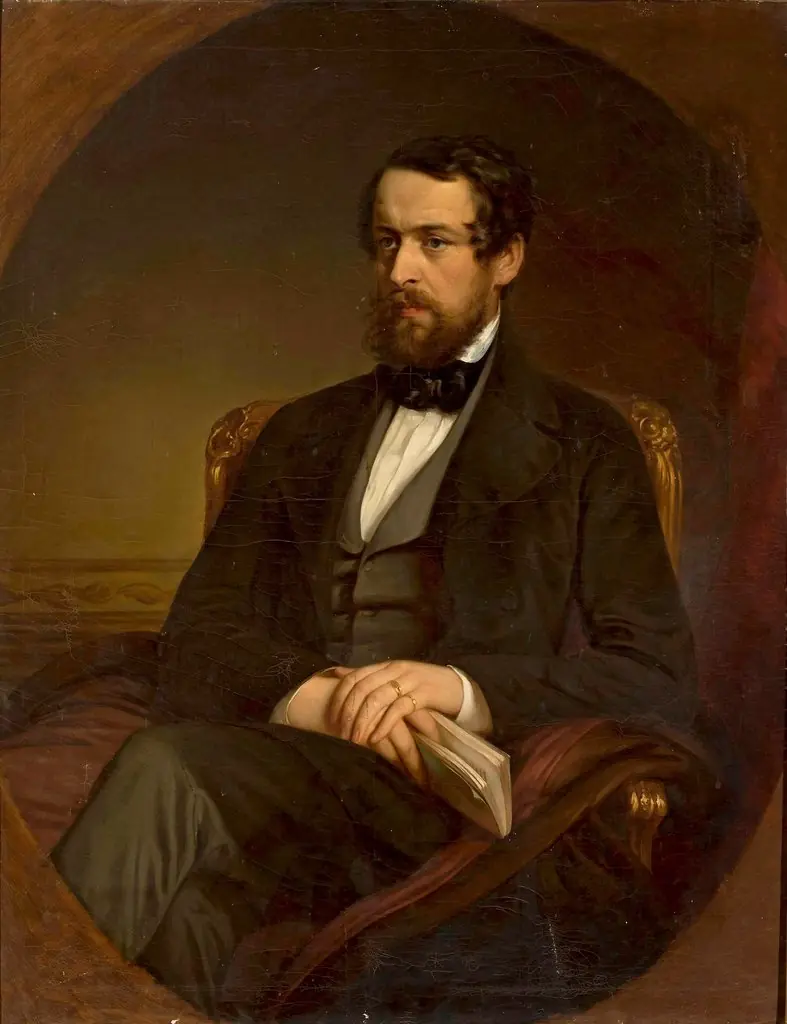 Portrait of Zdzisław Zamoyski
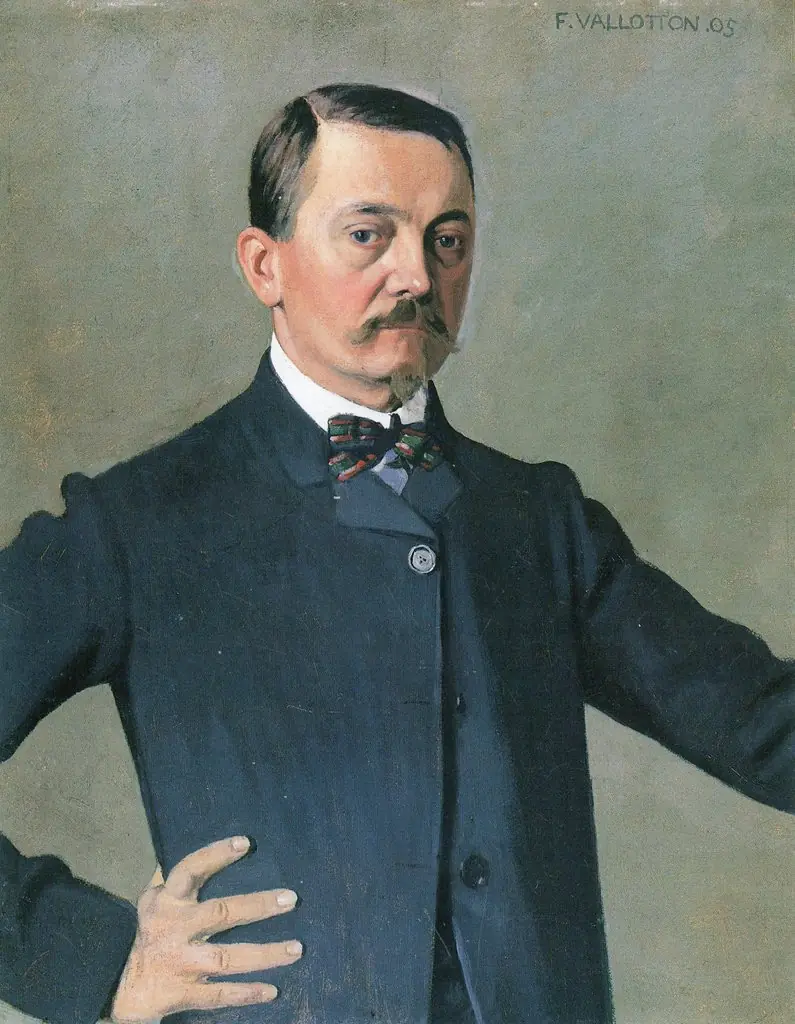 Autoportrait
 Autoportret
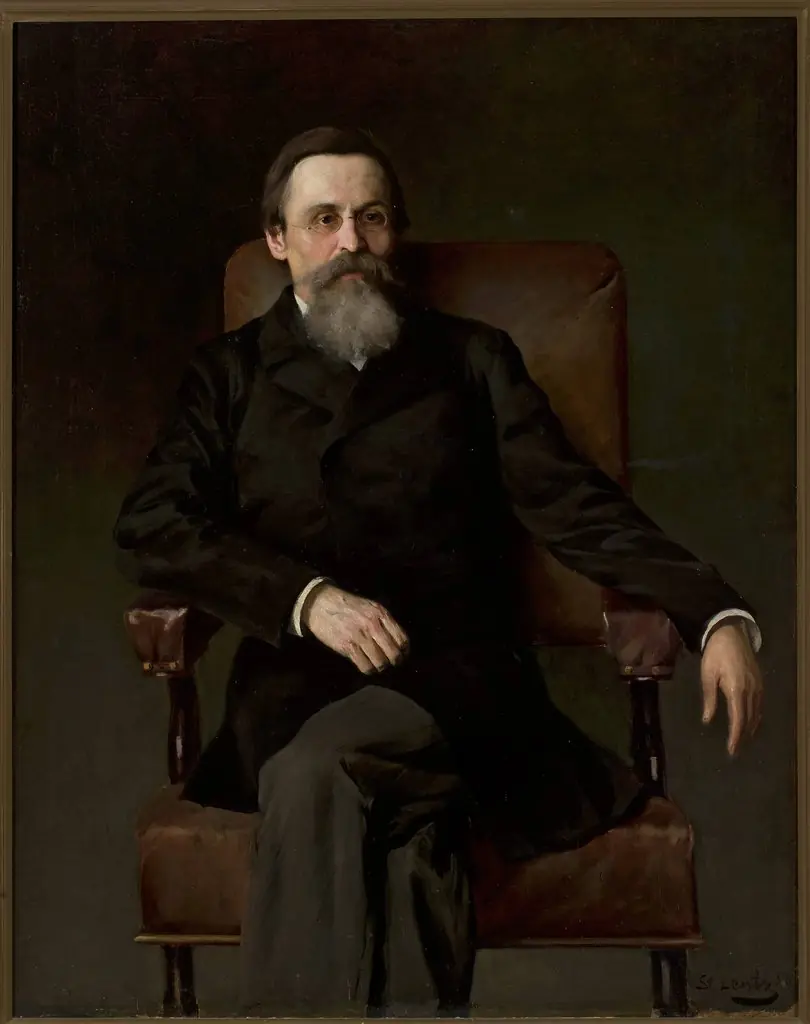 Portrait of Tadeusz Korzon
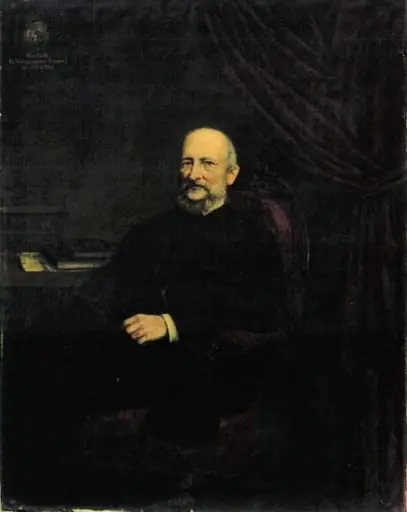 Hadadi Br. Wesselenyi Ferencz
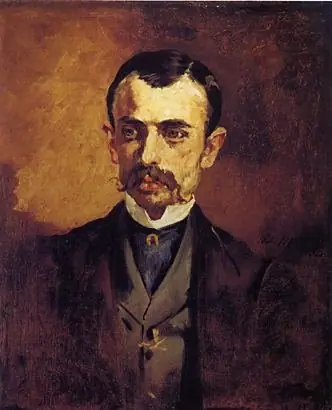 Portret van een man