Artwork
Christ presented in the Temple
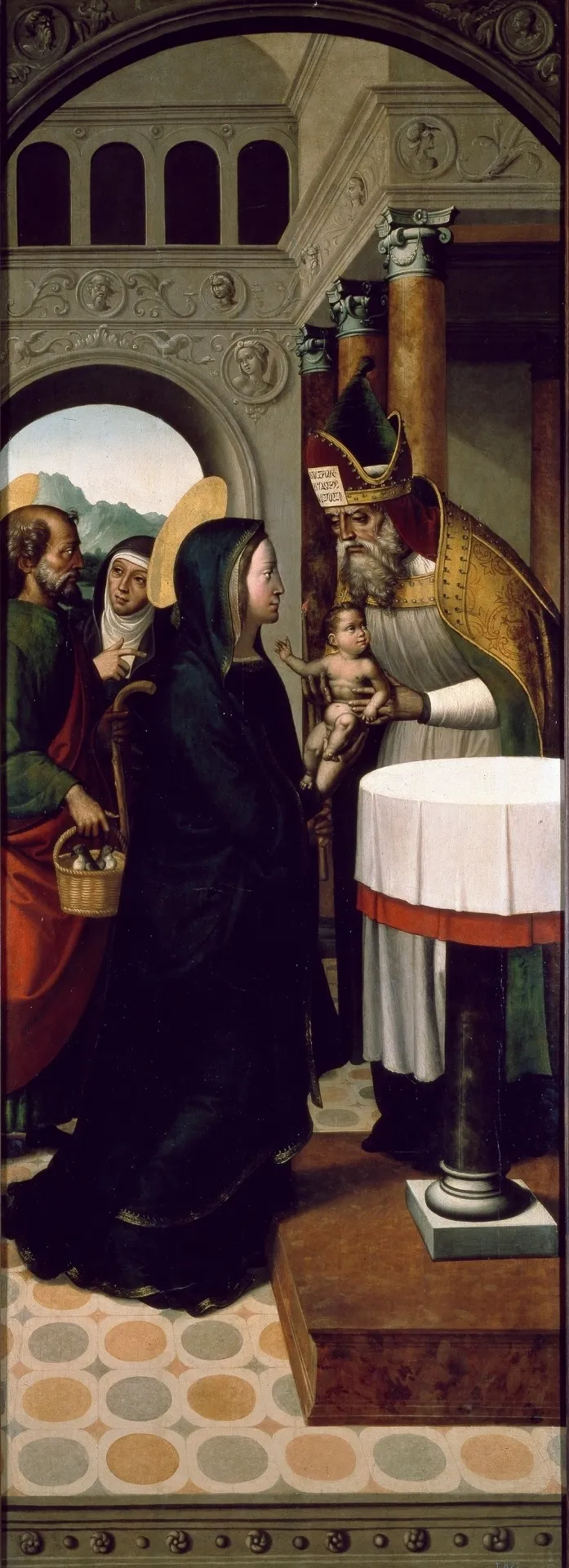
Christ presented in the Temple is an oil painting by the Mannerist artist Juan Correa de Vivar. It dates from 1530 and is held in the collection of the Museo del Prado.
About this work
Overview
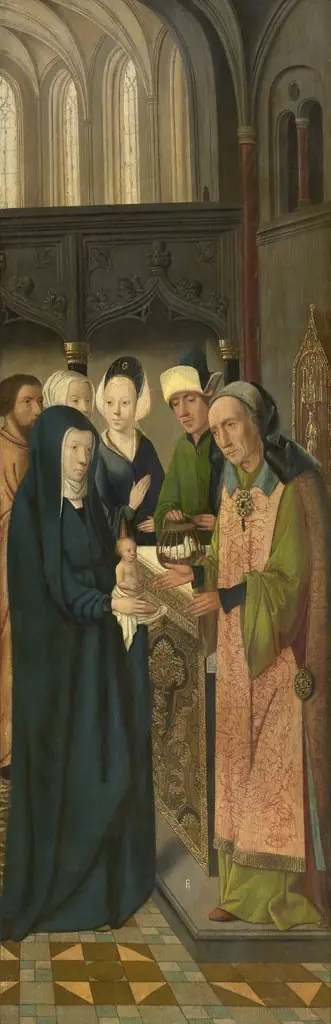
Juan Correa de Vivar’s oil on canvas, dated to 1530, portrays the biblical Presentation of Jesus at the Temple. The composition gathers several figures within an interior space that resembles a church, with a tiled floor, carved wall panels and an altar draped in white. The work is part of the collection of the Museo del Prado in Madrid.
Subject & Meaning
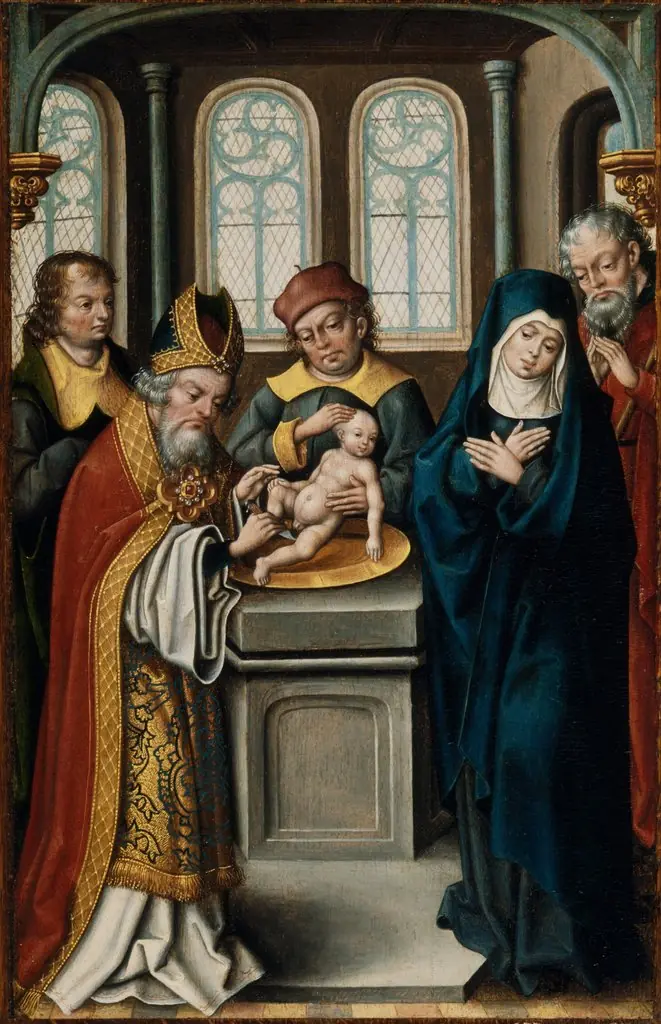
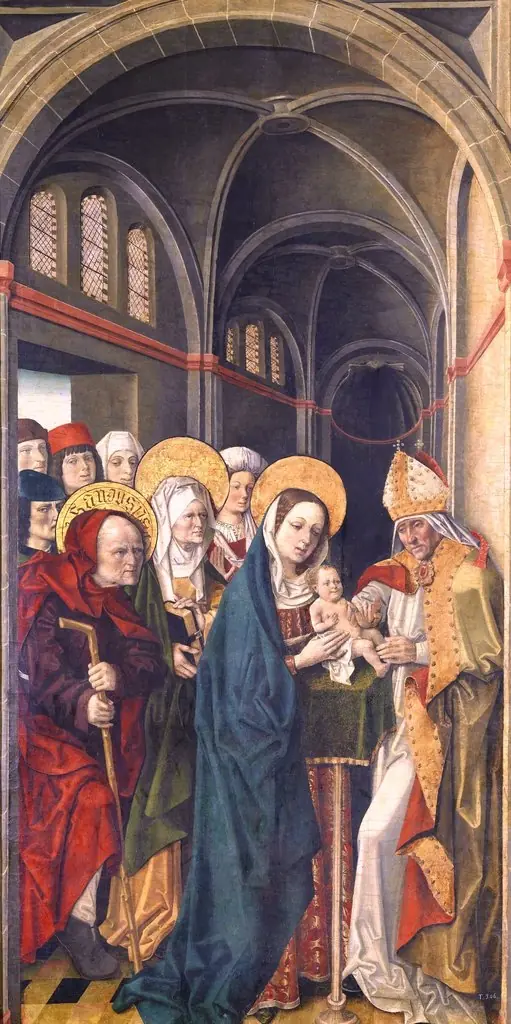
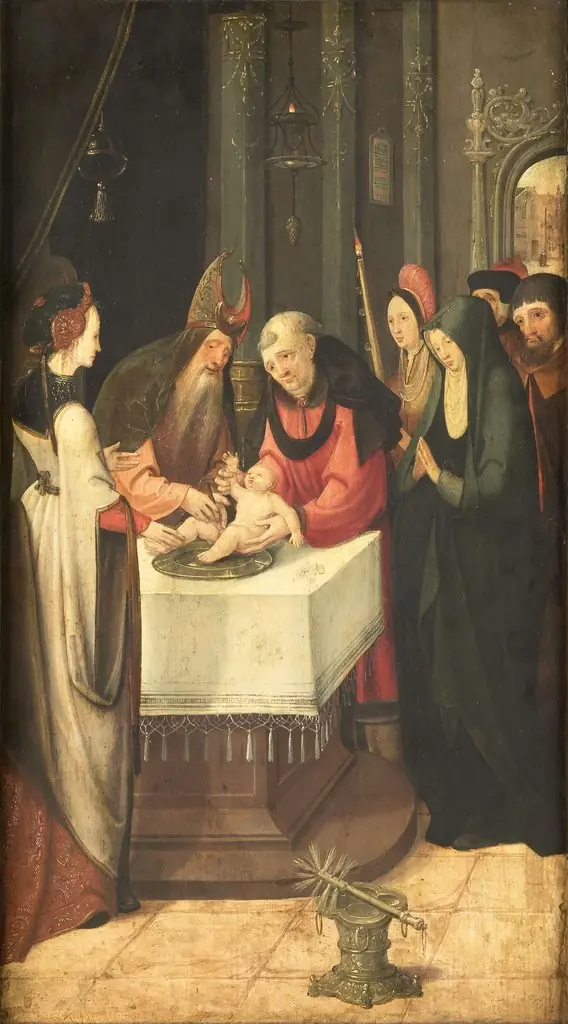
The scene captures the moment described in the Gospel of Luke when the infant Jesus is brought to the Temple for dedication. A man in a tall hat presents the child before two women in dark robes, emphasizing the ritual’s communal aspect. The inclusion of a basket, possibly containing doves, alludes to the sacrificial offerings traditionally associated with the ceremony.
Technique & Style
The painted tiles on the floor create a sense of depth, while the carved decorative motifs on the walls suggest a richly appointed sacred setting.
Correa de Vivar employs a balanced arrangement of figures, using chiaroscuro to model forms against the luminous altar cloth. The painted tiles on the floor create a sense of depth, while the carved decorative motifs on the walls suggest a richly appointed sacred setting. The brushwork is smooth, typical of early 16th‑century Spanish religious painting, allowing fine detail in clothing and accessories.
History & Provenance
Created in the early Renaissance period of Spain, the painting entered the royal collections before being transferred to the national museum. It has been catalogued by the Prado since the 19th century, where it remains on display as part of the institution’s holdings of 16th‑century devotional works.
Context
The Presentation of Jesus was a popular subject in Spanish art, reflecting Counter‑Reformation emphasis on biblical narratives that reinforced church doctrine. Correa de Vivar’s treatment aligns with contemporary devotional imagery, offering viewers a visual meditation on the themes of dedication, sacrifice, and the fulfillment of prophecy.
Artist & collection