Artwork
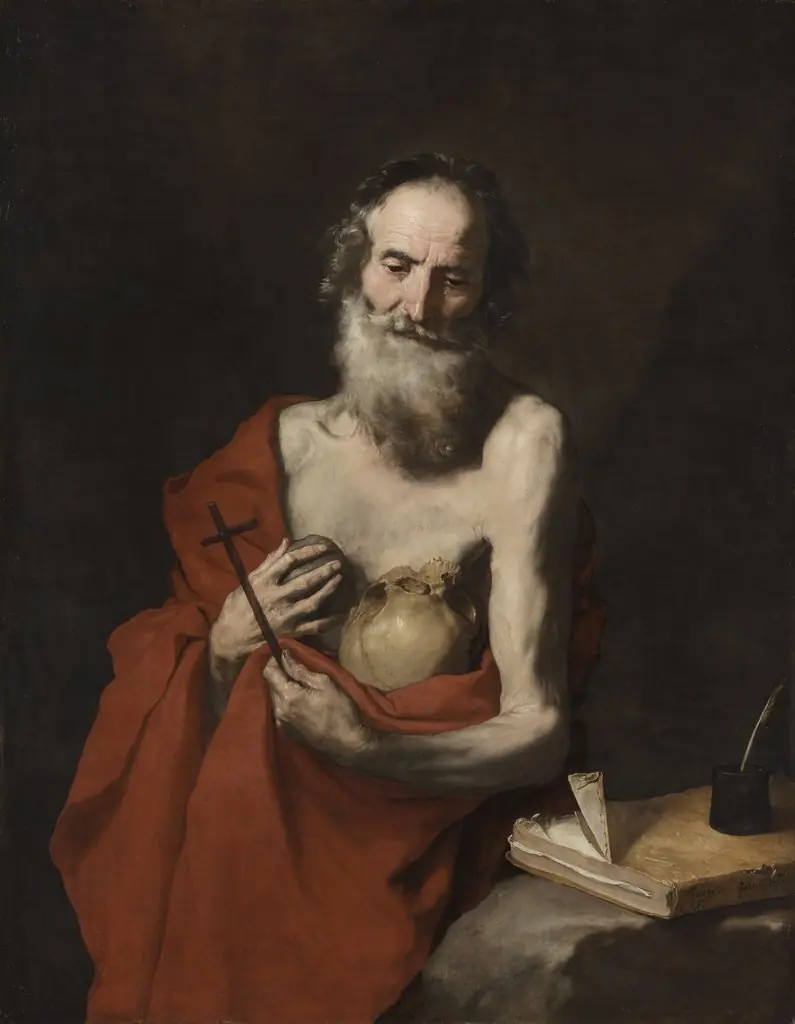
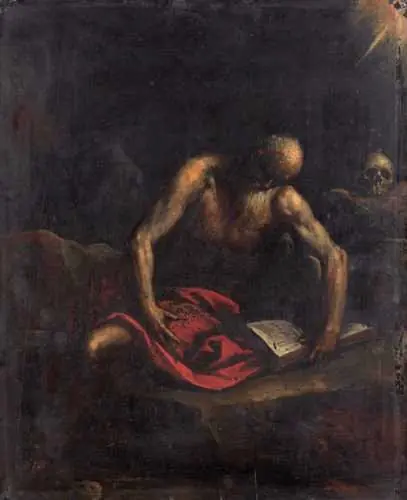
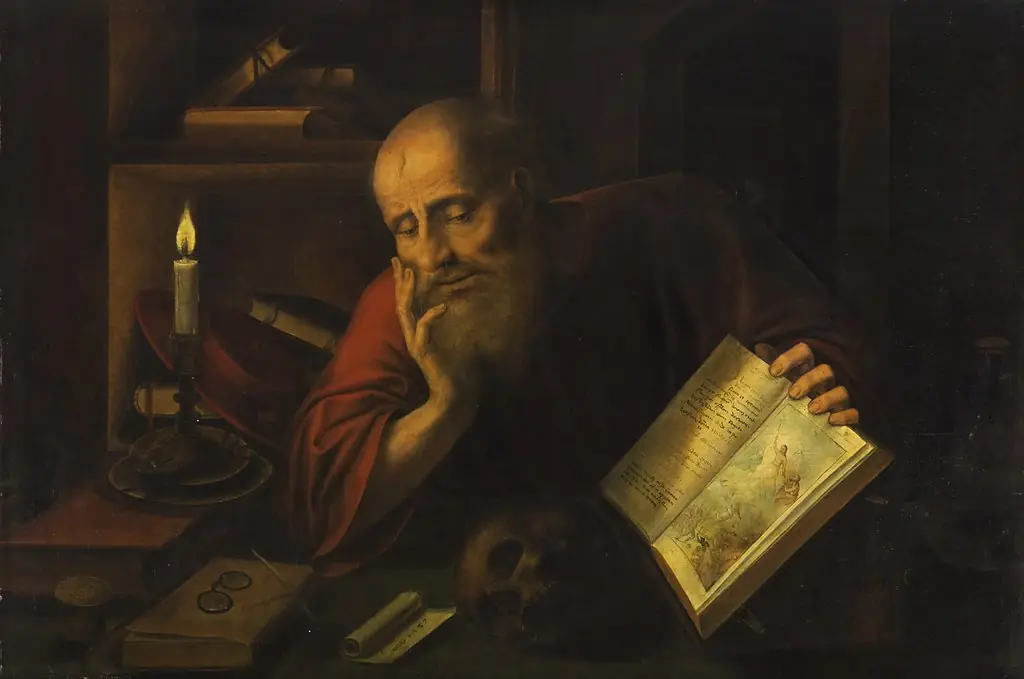
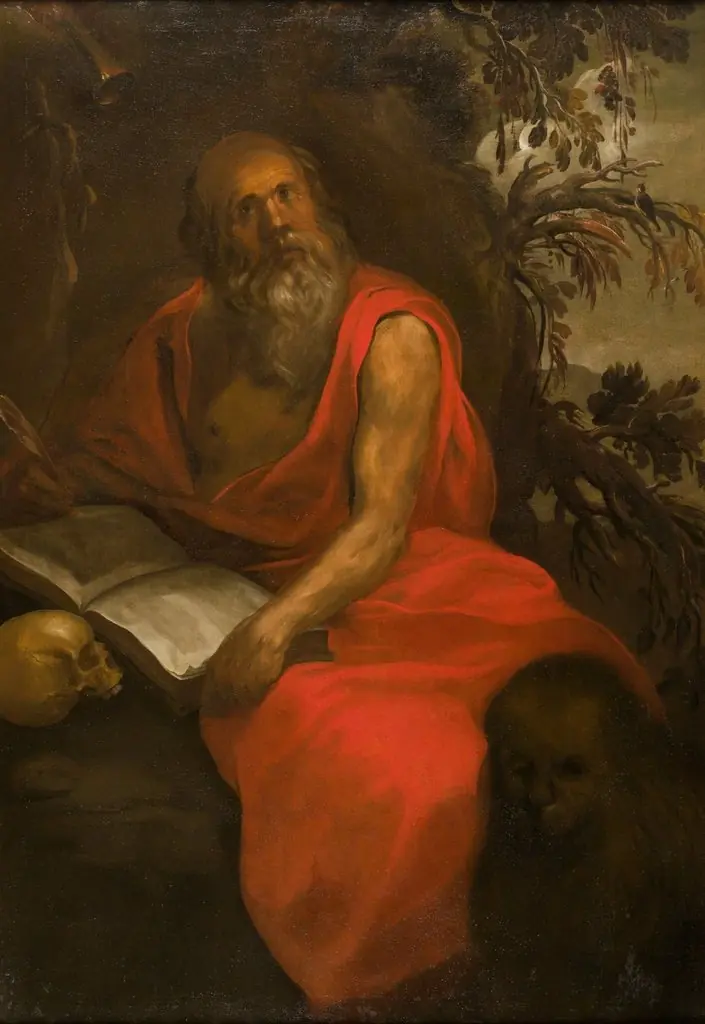
Saint Jerome writing
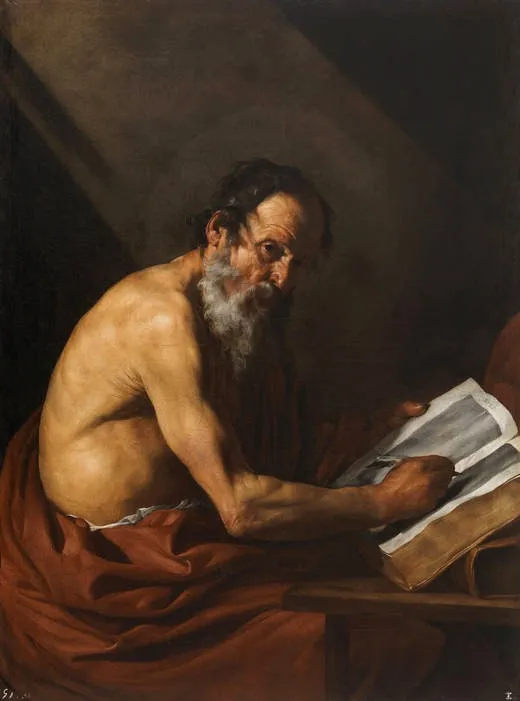
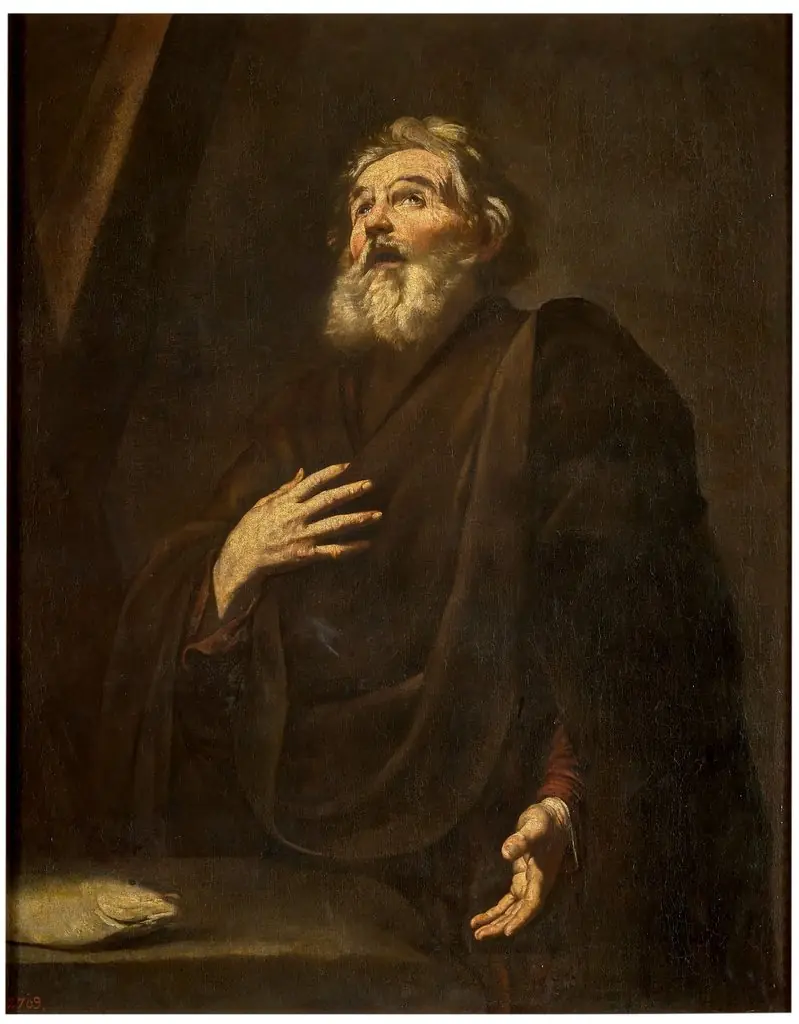
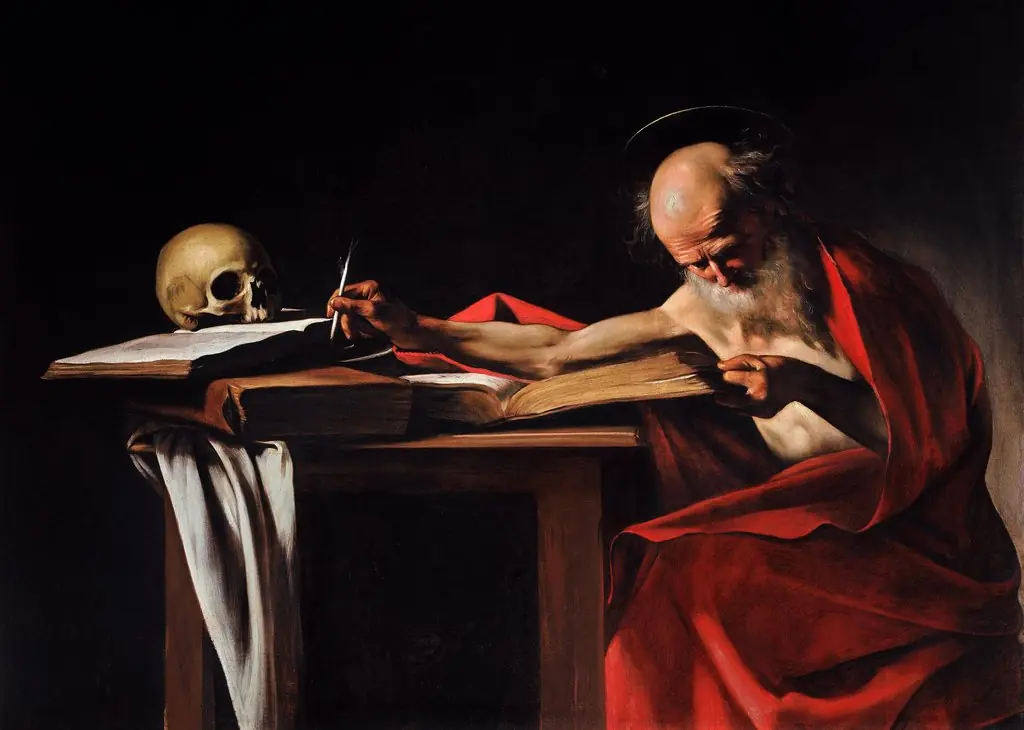
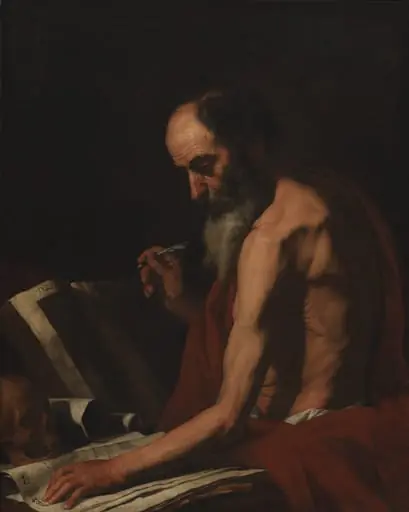
Saint Jerome writing is an oil painting by the Early Baroque Italian artist Jusepe de Ribera. It dates from 1615 and is held in the collection of the Museo del Prado.
About this work
Overview
Jusepe de Ribera’s oil painting *Saint Jerome Writing* was executed in 1615. The work presents the venerable scholar in a stark, nocturnal setting, his aged features illuminated against a near‑black background. The composition focuses on Jerome’s contemplative pose, emphasizing the act of translation and study that defines his legacy.
Subject & Meaning
The figure is Saint Jerome, traditionally portrayed as the translator of the Bible into Latin. Here he is shown shirtless, his torso wrapped only in a red cloth, his gaze fixed on an open book. The intense focus and the furrowed brow convey the intellectual rigor and spiritual devotion associated with his biblical scholarship.
Technique & Style
Ribera employs dramatic chiaroscuro, a hallmark of early Baroque art, to model the saint’s flesh and the pages of the manuscript. A single, strong light source creates deep shadows and luminous highlights on the face, hands, and the textured cloth, enhancing the tactile realism of skin, hair and paper.
History & Provenance
Created while Ribera was active in Naples, the painting reflects the Spanish Baroque influence that he shared with contemporaries such as Velázquez, Zurbarán and Murillo. It entered the Spanish national collection in the 19th century and is now housed in the Museo del Prado, Madrid.
Context
Ribera’s Naples period coincided with a broader Italian Baroque movement that favored emotional intensity and stark lighting. The work aligns with the Counter‑Reformation’s demand for clear, didactic religious imagery, using the solitary figure of Jerome to embody piety and scholarly devotion.
Artist & collection
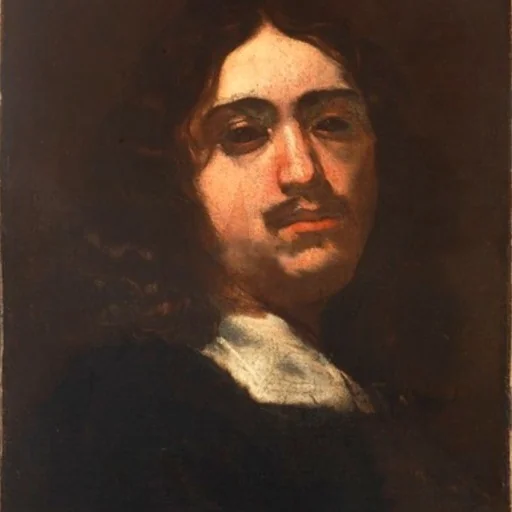
Artist
Jusepe de Ribera (Valencian: ; baptised 17 February 1591 – 3 November 1652) was a Spanish painter and printmaker.