Artwork
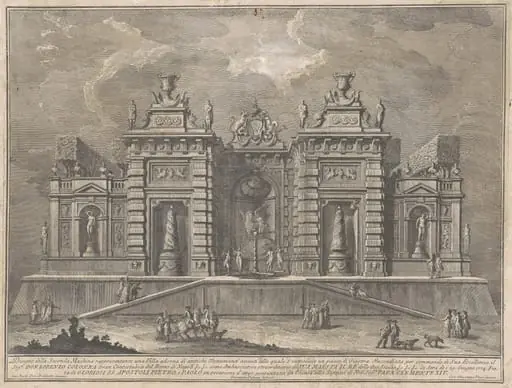
The Seconda Macchina for the Chinea of 1775: A Bull-fight
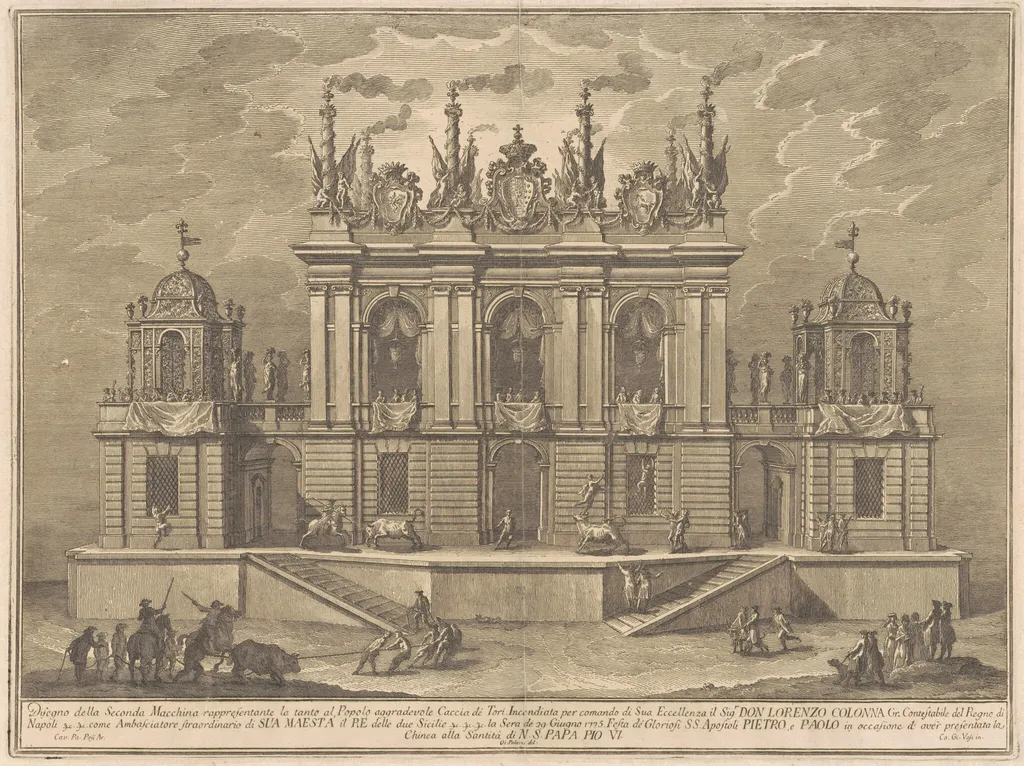
The Seconda Macchina for the Chinea of 1775: A Bull-fight is an ink print by the Romanticist artist Giuseppe Vasi. It dates from 1775 and is held in the collection of the National Gallery of Art.
About this work
Overview
Giuseppe Vasi’s 1775 etching titled *The Seconda Macchina for the Chinea* captures a bustling public spectacle. The print depicts a grand architectural façade—richly ornamented with statues and a ceremonial entrance—while a bull‑fight unfolds in the foreground, populated by riders, pedestrians, and several charging bulls beneath a cloud‑filled sky.
Subject & Meaning
The composition juxtaposes civic pageantry with the violent drama of the bull‑fight, reflecting the dual nature of the Chinea celebrations, which combined formal processions with popular entertainments. The presence of figures on the roof and at the doorway underscores the communal involvement in the event, suggesting a shared civic identity tied to both spectacle and architecture.
Technique & Style
Executed as an etching, Vasi employed acid‑etched lines on a copper plate, complemented by drypoint and possibly aquatint to achieve richer tonal variations. The intricate detailing of the building’s ornamentation and the dynamic movement of the animals demonstrate the artist’s mastery of line work and his ability to render complex scenes within a single print.
History & Provenance
Created in 1775, the print was part of a series documenting the annual Chinea—a diplomatic tribute from the Kingdom of Naples to the Pope—where elaborate machines (macchine) were displayed. Vasi, known for his vedute of Rome, produced this work to record the 1775 festivities, and it later entered collections of European print enthusiasts.
Context
The Chinea ceremonies blended religious, political, and popular elements, serving as a public display of loyalty to the papacy. Bull‑fighting, a staple of Italian popular culture, was incorporated into the festivities, making the event a focal point for both elite spectators and the broader populace.
Legacy
Vasi’s etching provides a valuable visual record of 18th‑century Roman public life, illustrating how civic rituals and entertainment intersected. Scholars cite the work for its detailed portrayal of urban architecture and for insight into the social dynamics of celebratory spectacles in pre‑modern Italy.
Artist & collection

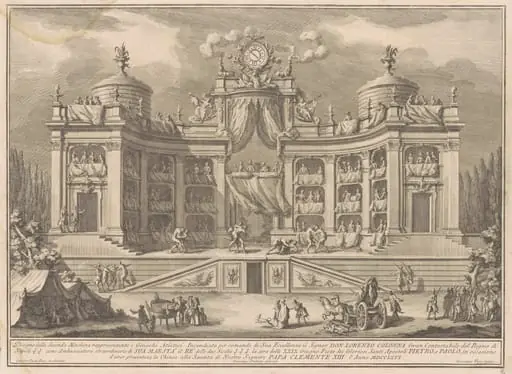 The Seconda Macchina for the Chinea of 1766: A Theater for Athletic Games
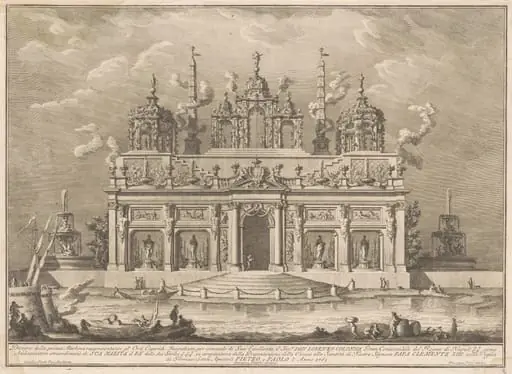 The Prima Macchina for the Chinea of 1765: The Garden of the Hesperides
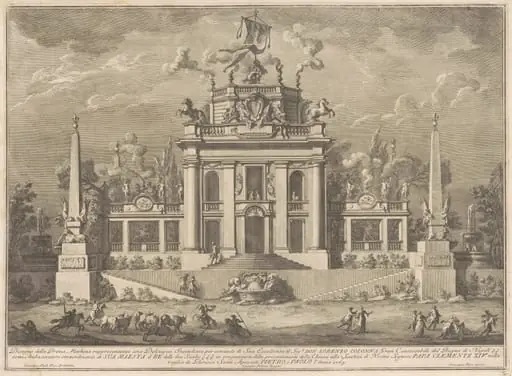 The Prima Macchina for the Chinea of 1769: A "Deliziosa"
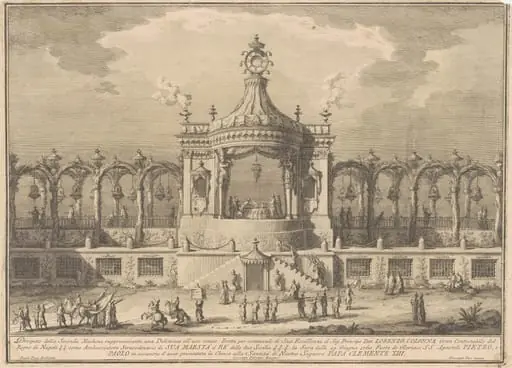 The Seconda Macchina for the Chinea of 1760: A Chinoiserie Pavilion
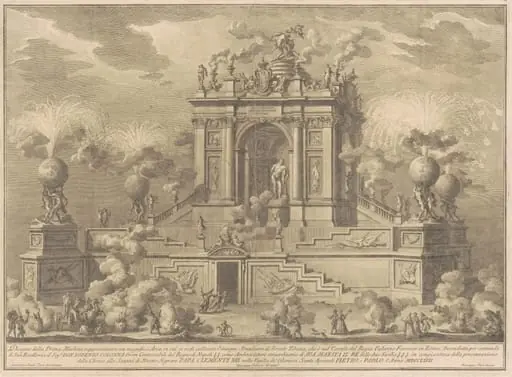 The Prima Macchina for the Chinea of 1767: A Triumphal Arch with the Farnese Hercules
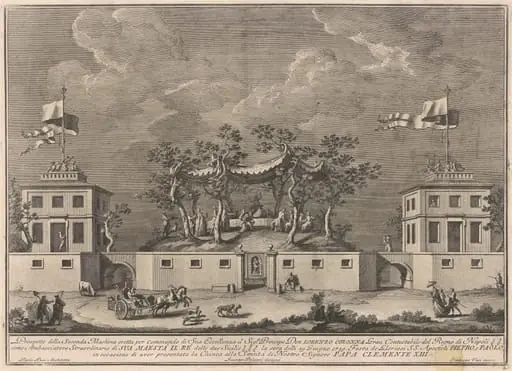 The Seconda Macchina for the Chinea of 1759: A "Deliziosa" with a Bacchanal
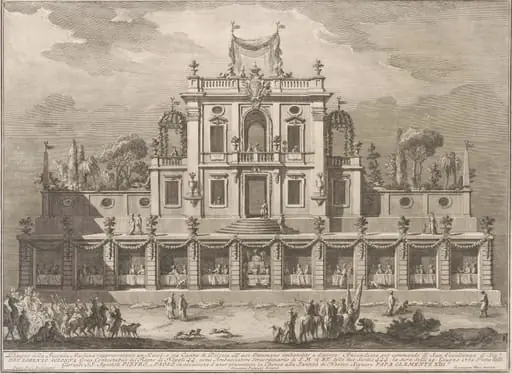 The Seconda Macchina for the Chinea of 1762: A Kiosk, or Pleasure-House in Ottoman Style
 The Seconda Macchina for the Chinea of 1763: The Grape Harvest
 The Prima Macchina for the Chinea of 1770: An Roman Building for Commerce
 The Prima Macchina for the Chinea of 1778: A Countryside Belevedere with Hercules and Antaeus
 The Seconda Macchina for the Chinea of 1765: A Decorated Building with Cockaigne Poles
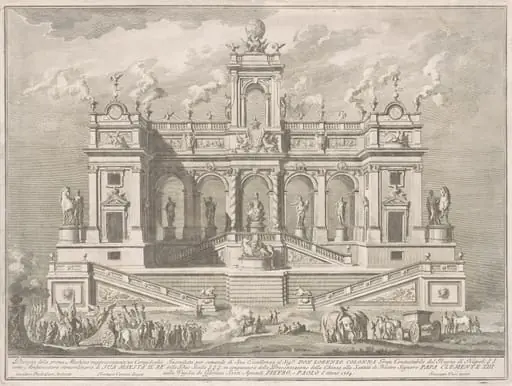 The Prima Macchina for the Chinea of 1764: A Capitol Building
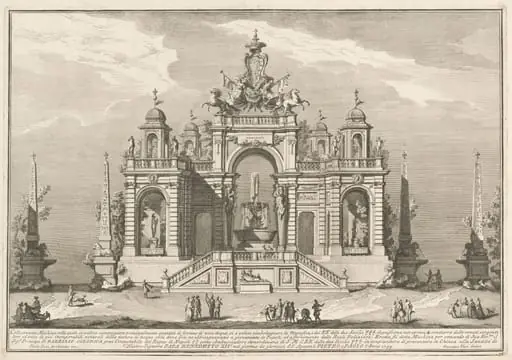 The Seconda Macchina for the Chinea of 1754: An Allegory of Waterworks
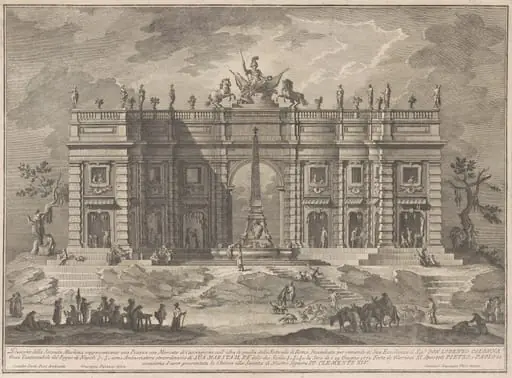 The Seconda Macchina for the Chinea of 1772: A Square with a Game Market and the Pantheon Fountain
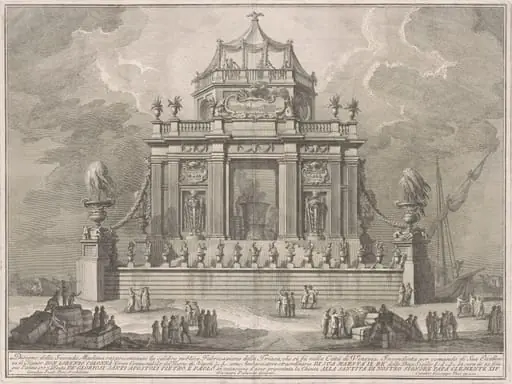 The Seconda Macchina for the Chinea of 1773: The Preparation of Theriac in Venice
 The Seconda Macchina for the Chinea of 1774: A Villa with Ancient Monuments and a Game of "Giostra"