Artwork
The Seconda Macchina for the Chinea of 1764: A Magnificent Gallery Illuminated at Night
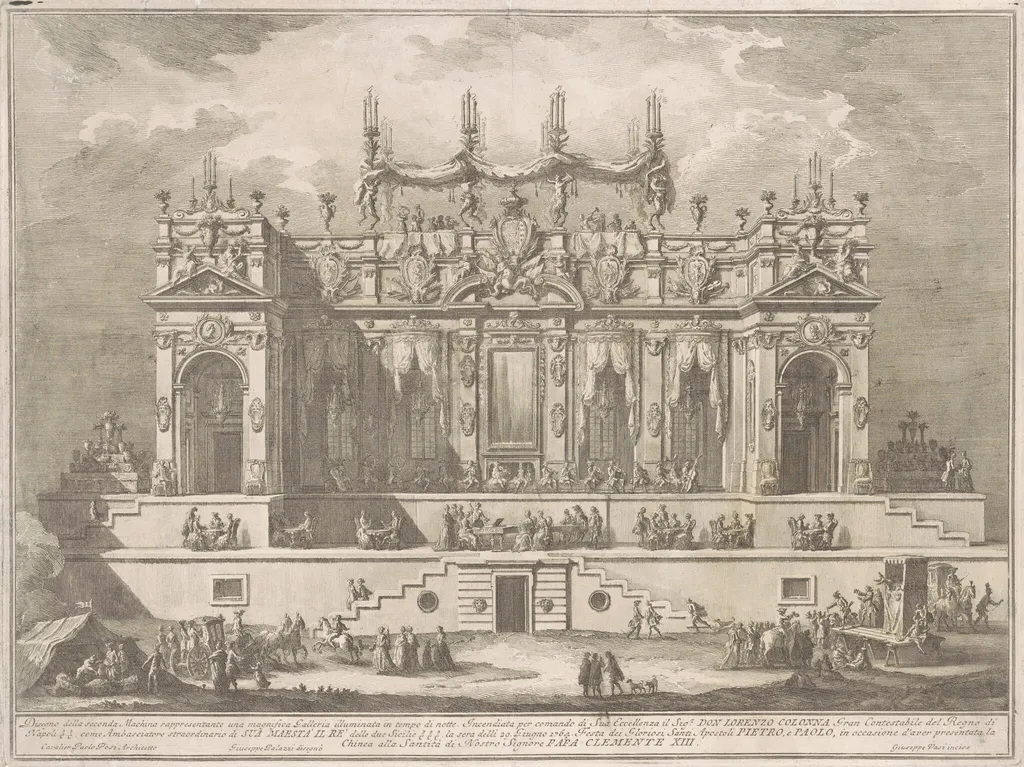
The Seconda Macchina for the Chinea of 1764: A Magnificent Gallery Illuminated at Night is an ink print by the Romanticist artist Giuseppe Vasi. It dates from 1764 and is held in the collection of the National Gallery of Art.
About this work
This etching shows a grand hall lit by dozens of candles. The walls curve up to a domed ceiling. People in fancy clothes stand below, looking up.
The artist used light and shadow to make the scene feel alive. He was a pro at prints and city views. This work shows a festival night in 1764 Rome.
Check out Vasi, Giuseppe for more like this.
Overview
It captures a moment of temporary spectacle: an interior gallery transformed by candlelight for a religious procession.
Created in 1764 by Giuseppe Vasi, this etching documents a ceremonial event in Rome known as the Chinea. It captures a moment of temporary spectacle: an interior gallery transformed by candlelight for a religious procession. Vasi, known for his detailed topographical prints, rendered the scene with precision, emphasizing architectural grandeur and the interplay of artificial illumination within a monumental space.
Subject & Meaning
The scene depicts the ceremonial presentation of the Chinea, an annual tribute offered by the Kingdom of Naples to the Pope. The gallery, adorned with candles, served as a symbolic stage for this ritual. Figures in contemporary dress observe the space with reverence, their presence underscoring the event’s social and ecclesiastical significance. The lighting directs attention upward, reinforcing the hierarchy between earthly observers and the sacred authority represented within.
Technique & Style
Vasi employed fine-line etching to render the curved architecture and the flickering effect of candlelight. Delicate hatching defines the vaulted ceiling and the textures of marble and fabric, while areas of deep shadow contrast with the warm glow of the lamps. His control of tone creates depth and atmosphere, transforming a static architectural space into a dynamic, lived-in environment. The composition is orderly yet alive with subtle movement.
History & Provenance
The print was produced as part of Vasi’s series documenting Roman festivals and monuments, commissioned to commemorate the 1764 Chinea ceremony. It circulated among collectors and foreign visitors to Rome, serving both as a record and a souvenir. Its survival in multiple institutional collections suggests it was widely appreciated for its documentary value and artistic refinement during the late 18th century.
Context
In mid-18th century Rome, public rituals like the Chinea reinforced papal authority and civic identity. Vasi’s prints captured these transient events before they faded from memory, offering a visual archive of Baroque ceremonial culture. His work aligned with a broader European interest in topographical accuracy and the documentation of urban spectacle, particularly among Grand Tour travelers seeking authentic impressions of the city.
Legacy
Vasi’s etching remains a key visual source for understanding Roman ceremonial life under the papacy. While not widely exhibited today, it continues to inform scholarly studies of 18th-century urban rituals and print culture. Its restrained elegance and technical precision distinguish it from more theatrical depictions of the era, offering a quiet yet enduring record of a moment designed to impress.
Artist & collection

 The Seconda Macchina for the Chinea of 1766: A Theater for Athletic Games
 The Prima Macchina for the Chinea of 1765: The Garden of the Hesperides
 The Prima Macchina for the Chinea of 1769: A "Deliziosa"
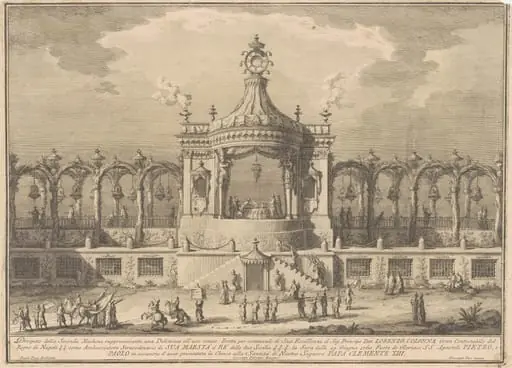 The Seconda Macchina for the Chinea of 1760: A Chinoiserie Pavilion
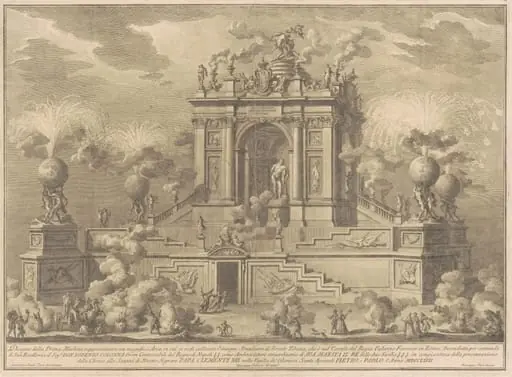 The Prima Macchina for the Chinea of 1767: A Triumphal Arch with the Farnese Hercules
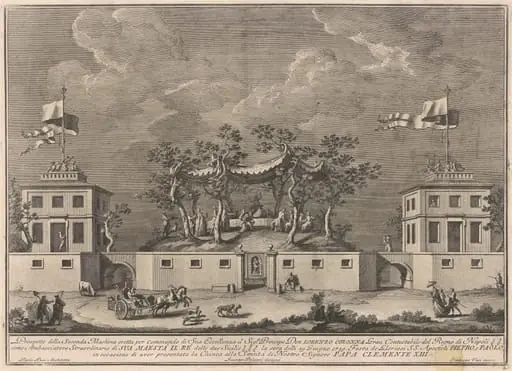 The Seconda Macchina for the Chinea of 1759: A "Deliziosa" with a Bacchanal
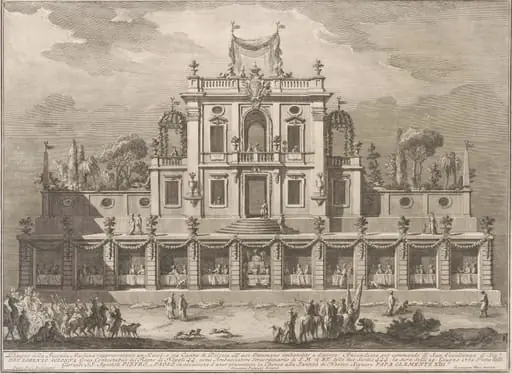 The Seconda Macchina for the Chinea of 1762: A Kiosk, or Pleasure-House in Ottoman Style
 The Seconda Macchina for the Chinea of 1763: The Grape Harvest
 The Seconda Macchina for the Chinea of 1765: A Decorated Building with Cockaigne Poles
 The Prima Macchina for the Chinea of 1764: A Capitol Building
 The Seconda Macchina for the Chinea of 1773: The Preparation of Theriac in Venice
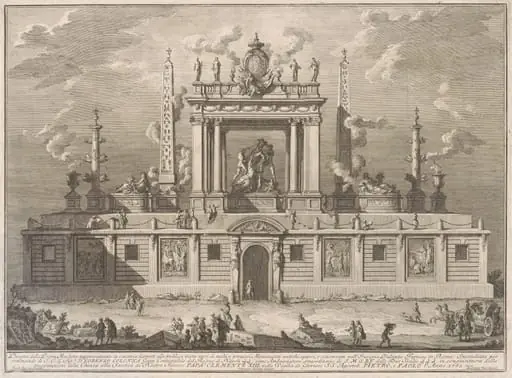 The Prima Macchina for the Chinea of 1762: The Farnese Bull and Other Antiquities from Palazzo Farnese
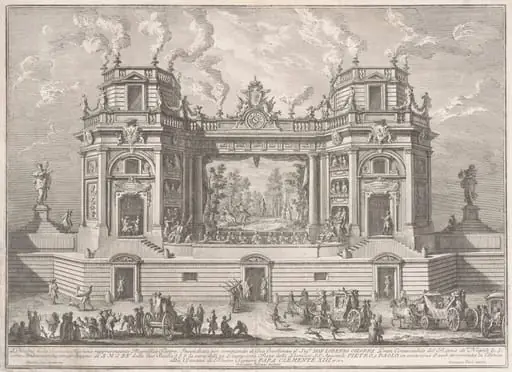 The Seconda Macchina for the Chinea of 1761: A Magnificent Theater
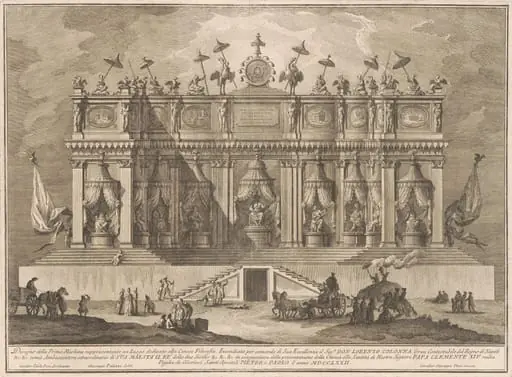 The Prima Macchina for the Chinea of 1772: A Building Dedicated to Chinese Philosophy
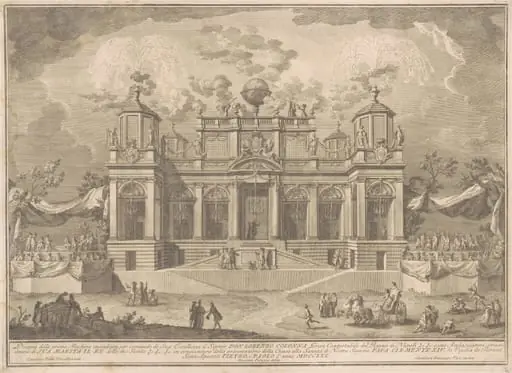 The Prima Macchina for the Chinea of 1770: An Roman Building for Commerce
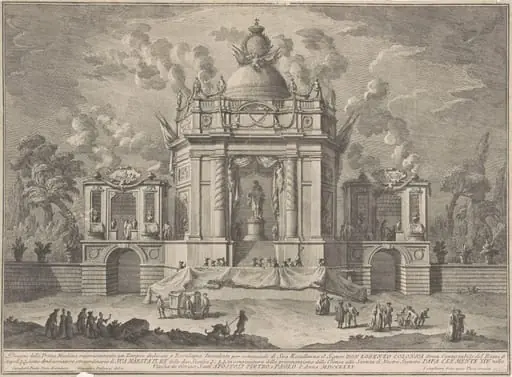 The Prima Macchina for the Chinea of 1771: The Temple of Asclepius
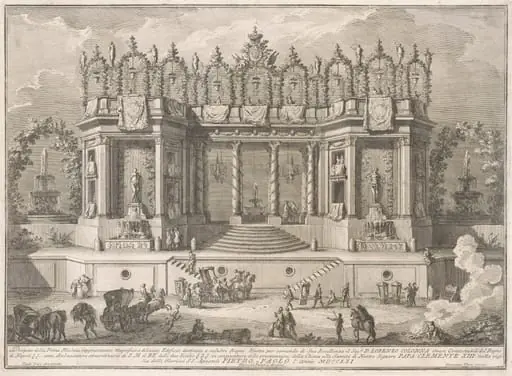 The Prima Macchina for the Chinea of 1761: The Salubrious Baths
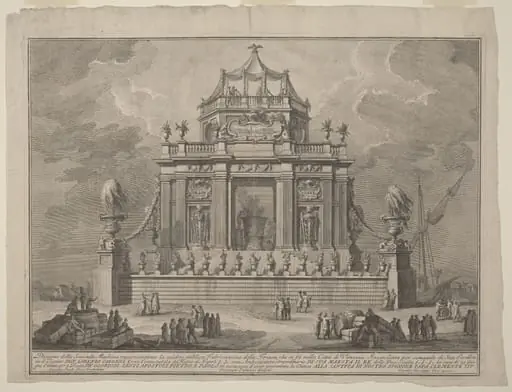 The Seconda Macchina for the Chinea of 1773: The Preparation of Theriac in Venice