Artwork
Untitled
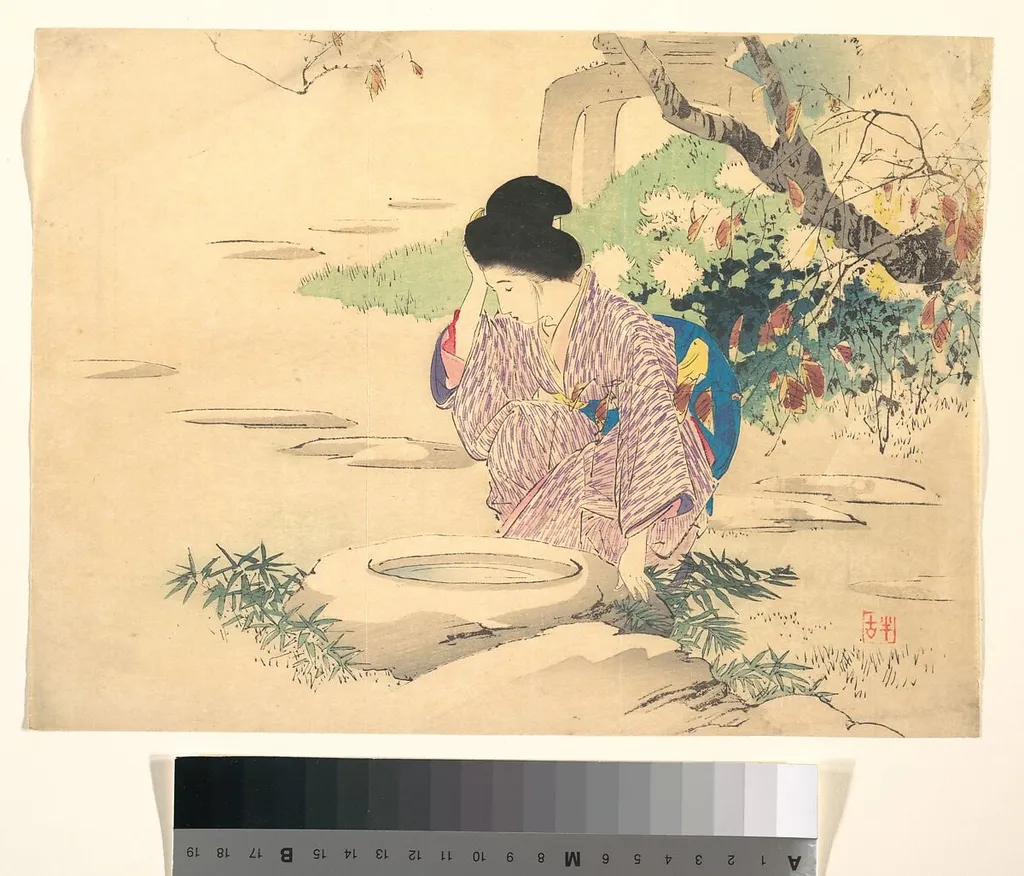
Untitled is an ink print by Kajita Hanko. It dates from 1901 and is held in the collection of the Metropolitan Museum of Art.
About this work
The background of the image is a light brown color, with some greenery and trees visible behind the woman.
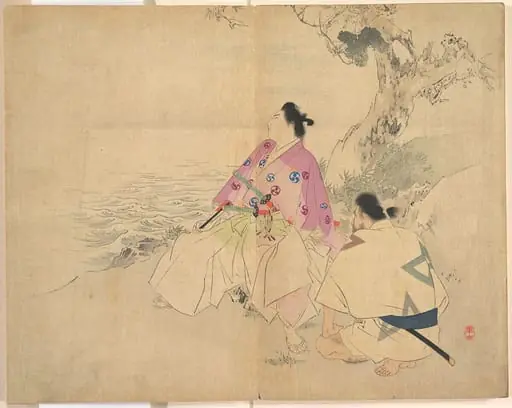
This image shows a woman in a kimono, sitting on the ground with her hand on her forehead. She is surrounded by plants and trees, with a large tree branch stretching across the top right corner. The woman's kimono is purple with pink and yellow accents, and she has a blue obi around her waist.
The woman appears to be looking down at something on the ground, possibly a bowl or plate. The background of the image is a light brown color, with some greenery and trees visible behind the woman.
The image is a woodblock print, created by Kajita Hanko in November 1901. It is held at The Metropolitan Museum of Art. You can also explore more of Kajita Hanko's work next.
Overview
Created in November 1901, this woodblock print by Japanese artist Kajita Hanko depicts a solitary woman seated on the ground amid a verdant setting. Rendered in ink and color on paper, the composition balances muted earth tones with vivid accents in the figure’s attire, offering a quiet, contemplative scene now part of the Metropolitan Museum of Art’s collection.
Subject & Meaning
The central figure wears a richly dyed kimono of purple, pink, and yellow, cinched with a blue obi, and rests her hand on her forehead while gazing downward at an unseen object on the floor. Surrounded by foliage and a prominent tree branch that arches across the upper right, the image suggests a moment of introspection or ritual within a natural environment.
Technique & Style
Executed through traditional woodblock carving, the print combines precise line work with layered pigments to achieve depth and texture. Hanko’s handling of color highlights the contrast between the bright kimono and the subdued background, while the delicate rendering of leaves and bark demonstrates the artist’s skill in balancing detail with the flatness characteristic of early 20th‑century Japanese prints.
History & Provenance
The work was produced during the Meiji period, a time when Japanese printmaking experienced both domestic innovation and growing Western interest. After its creation, the piece entered the collection of the Metropolitan Museum of Art, where it remains accessible to scholars and the public as an example of Kajita Hanko’s contribution to modern Japanese print art.
Artist & collection


 Untitled
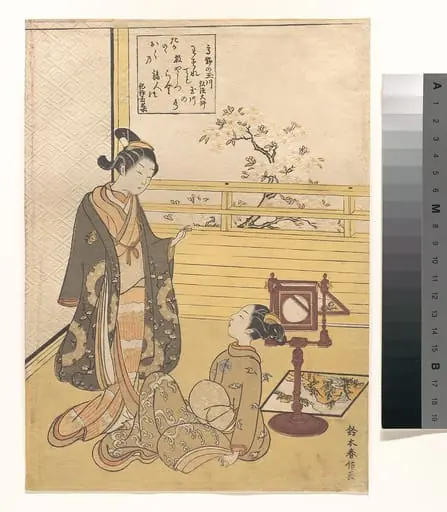 鈴木春信画 覗き絡繰り・「高野の玉川 弘法大師」|A Teenage Boy and Girl with a Viewer for an Optique Picture (Nozoki-karakuri); Kōbō Daishi’s Poem on the Jewel River of Kōya (Kōya no Tamagawa: Kōbō Daishi)
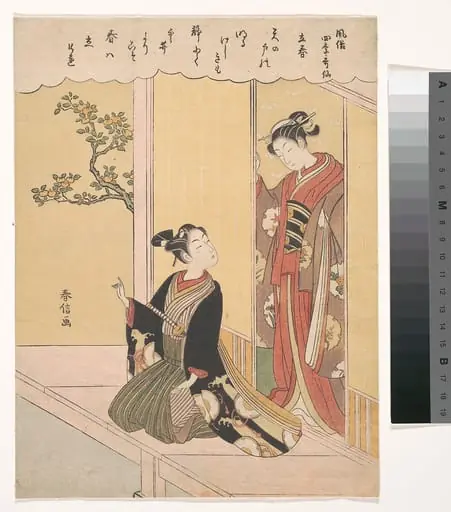 鈴木春信画「風俗四季歌仙 立春」|The First Day of Spring (Risshun), from the series Fashionable Poetic Immortals of the Four Seasons (Fūzoku shiki Kasen)
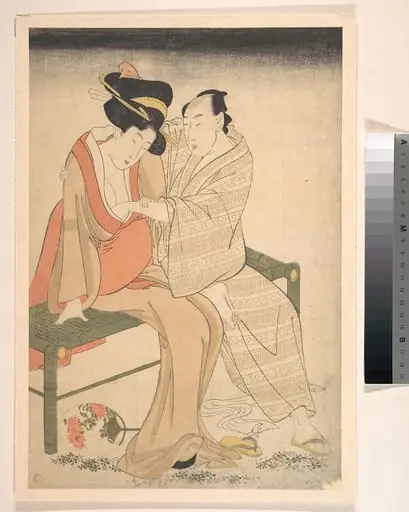 Untitled
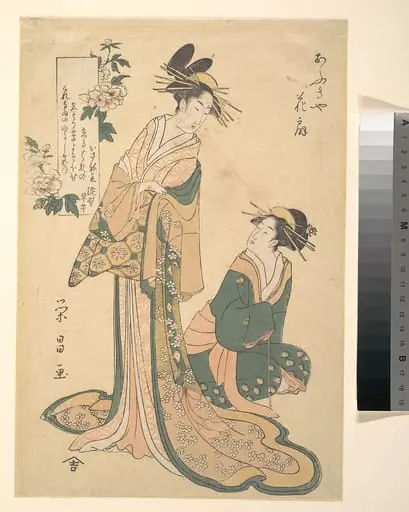 Untitled
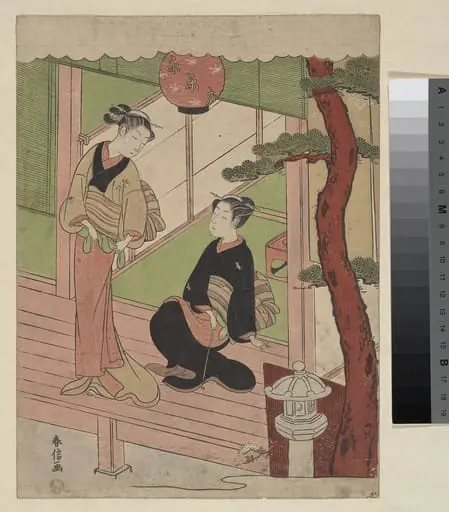 Untitled
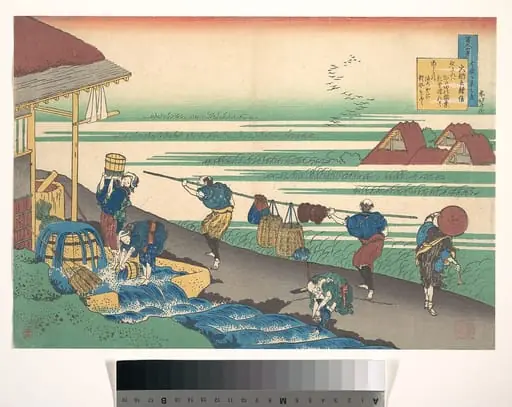 百人一首 うばがゑとき 大納言経信|Poem by Dainagon Tsunenobu (Minamoto no Tsunenobu, Katsura no Dainagon), from the series One Hundred Poems Explained by the Nurse (Hyakunin isshu uba ga etoki)
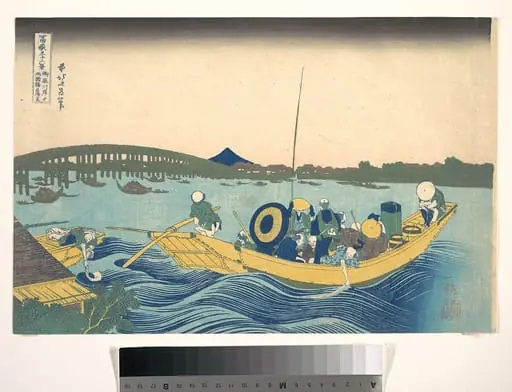 冨嶽三十六景 御厩川岸より両国橋夕陽見|Viewing the Sunset over Ryōgoku Bridge from the Onmaya Embankment (Onmayagashi yori Ryōgokubashi sekiyō o miru), from the series Thirty-six Views of Mount Fuji (Fugaku sanjūrokkei)
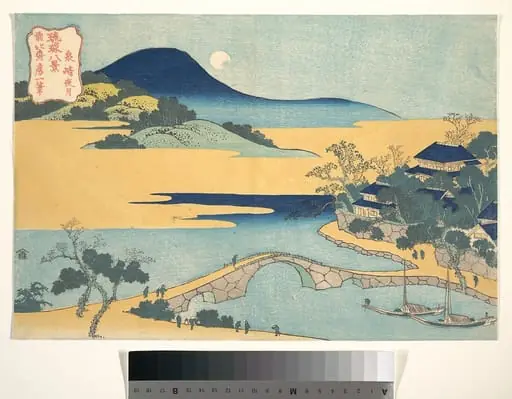 琉球八景 泉崎夜月|Evening Moon at Izumizaki (Izaumizaki yagetsu), from the series Eight Views of the Ryūkyū Islands (Ryūkyū hakkei)
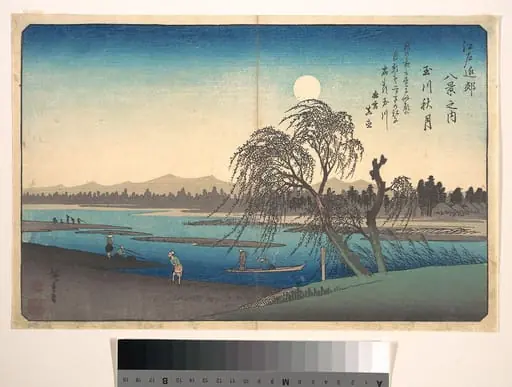 江戸近郊八景之内 玉川秋月|Autumn Moon on the Tama River
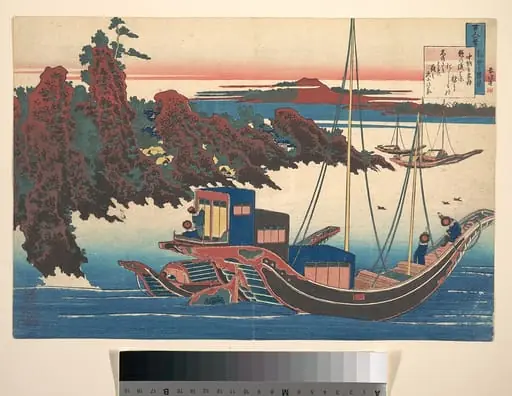 百人一首 乳母か縁説 中納言家持|Poem by Chūnagon Yakamochi (Ōtomo no Yakamochi), from the series One Hundred Poems Explained by the Nurse (Hyakunin isshu uba ga etoki)
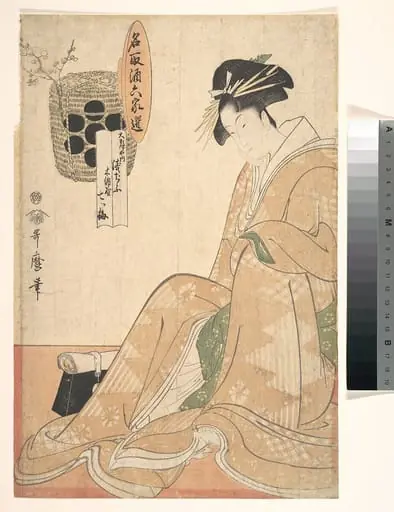 名取酒六家選 大もんぢや内浅じふ 木綿屋七ッ梅|A Courtesan