Artwork
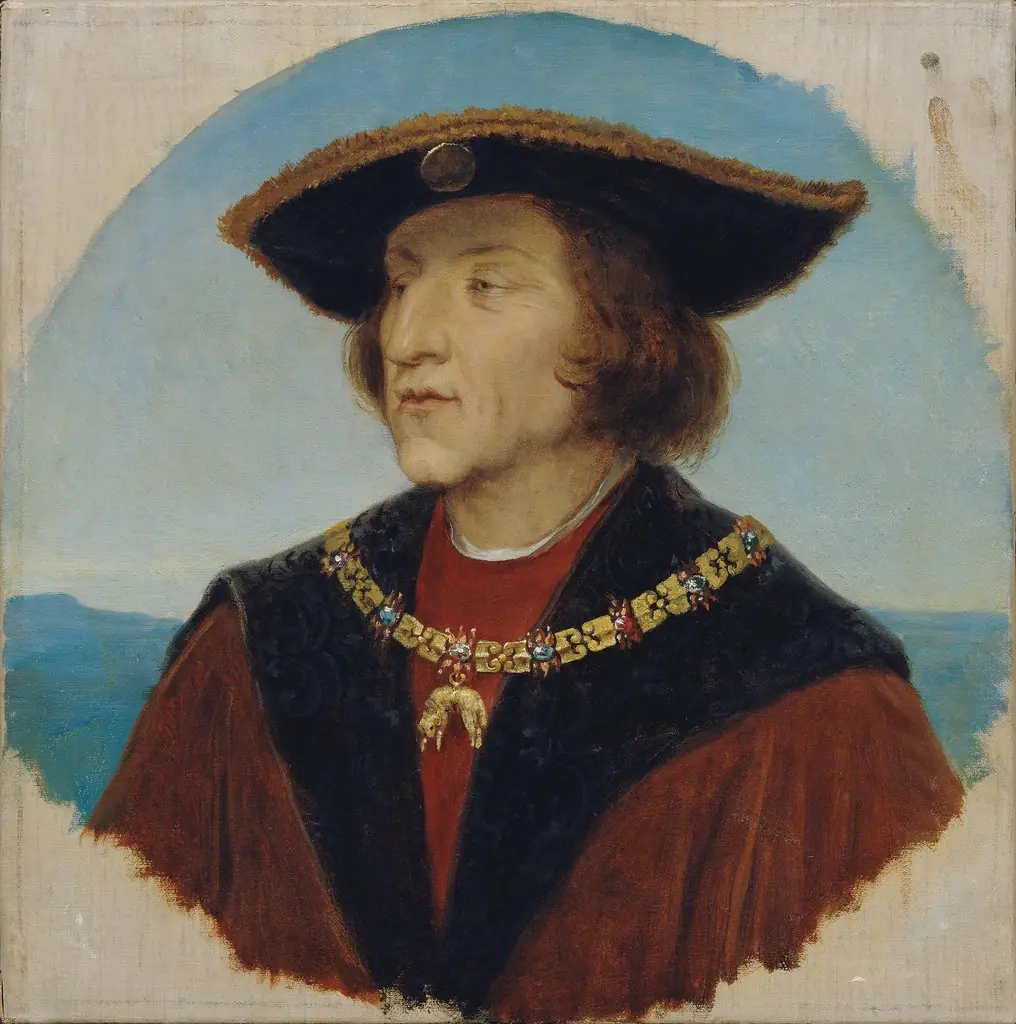
Emperor Maximilian I and Georg von Frundsberg
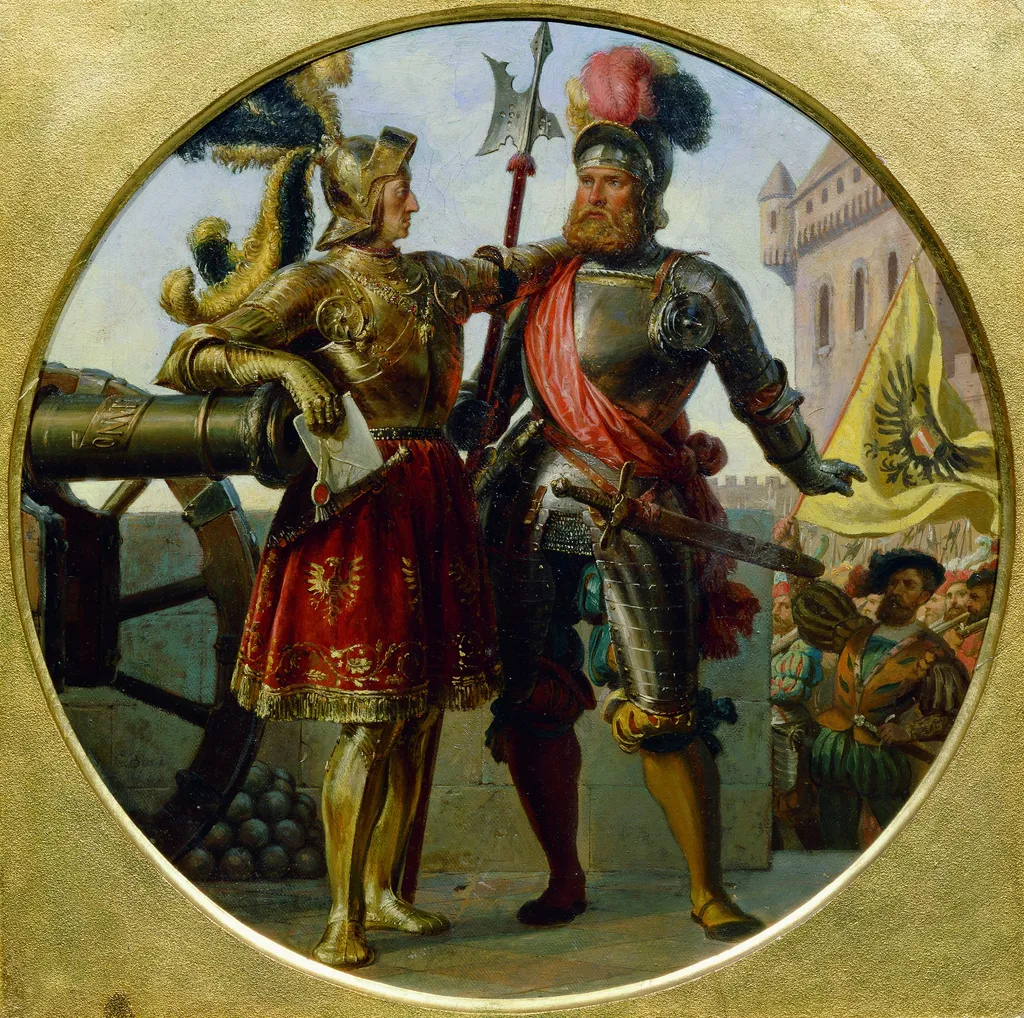
Emperor Maximilian I and Georg von Frundsberg is an oil painting by the Biedermeier artist Karl von Blaas. It dates from 1868 and is held in the collection of the Kunsthistorisches Museum.
About this work
Overview
It is currently housed in the Kunsthistorisches Museum in Vienna, where it serves as a historical portrait rather than a narrative scene.
Painted in 1868 by Austrian artist Karl von Blaas, this oil on canvas depicts two historical figures in ceremonial armor. The work belongs to the Biedermeier tradition, emphasizing precise detail and restrained emotion. It is currently housed in the Kunsthistorisches Museum in Vienna, where it serves as a historical portrait rather than a narrative scene. The composition centers on the figures’ attire and posture, with a background suggesting a military or civic setting.
Subject & Meaning
The painting portrays Emperor Maximilian I of the Holy Roman Empire and Georg von Frundsberg, a Swiss mercenary captain known for leading the Landsknechte. Their paired presence symbolizes the alliance between imperial authority and military leadership during the early 16th century. The letter in Maximilian’s hand may reference diplomatic or military orders, while Frundsberg’s axe suggests his role as a battlefield commander. The scene evokes a moment of formal recognition, not active combat.
Technique & Style
Von Blaas rendered the armor with meticulous attention to reflective surfaces and engraved decoration, using layered glazes to achieve metallic sheen. The figures are sharply defined against a softly rendered background of a walled city and distant crowd. Color contrasts—red and gold against silver and gray—enhance visual hierarchy. Lighting is even and diffused, avoiding dramatic chiaroscuro; instead, clarity and realism dominate, consistent with Biedermeier aesthetics.
History & Provenance
Commissioned in the mid-19th century, the painting reflects a period of renewed interest in Habsburg history during the Austrian Empire. Von Blaas, known for historical portraiture, likely drew from contemporary scholarship and surviving armor collections. The work entered the Kunsthistorisches Museum’s collection shortly after completion, where it remains part of the imperial art holdings, contextualized within 19th-century efforts to visually reinforce dynastic legacy.
Context
Created during a time of rising nationalism in Central Europe, the painting taps into 19th-century fascination with medieval and early modern rulers as symbols of order and strength. Maximilian I, though a 15th–16th century figure, was reimagined in the 1800s as a unifying imperial archetype. Frundsberg’s inclusion highlights the role of professional soldiers in maintaining Habsburg power, reflecting contemporary military ideals and the romanticization of past warrior elites.
Legacy
Though not widely exhibited outside Vienna, the painting remains a reference point for understanding 19th-century historical portraiture in Austria. It exemplifies how Biedermeier artists engaged with the past without overt romanticism, favoring accuracy and dignity. Its preservation in a major museum underscores its role as a document of cultural memory, illustrating how historical figures were visually reconstructed for modern audiences seeking continuity with imperial traditions.
Artist & collection
Artist
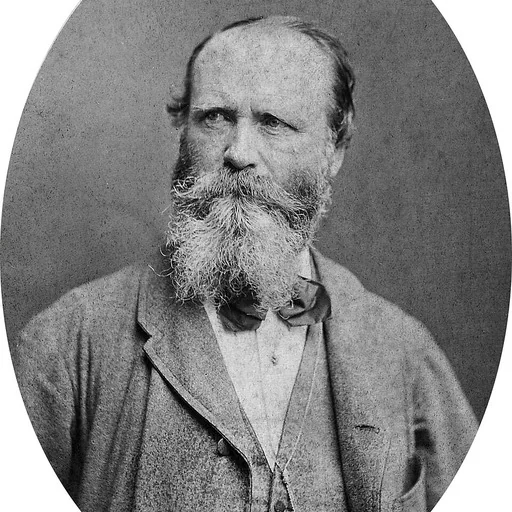
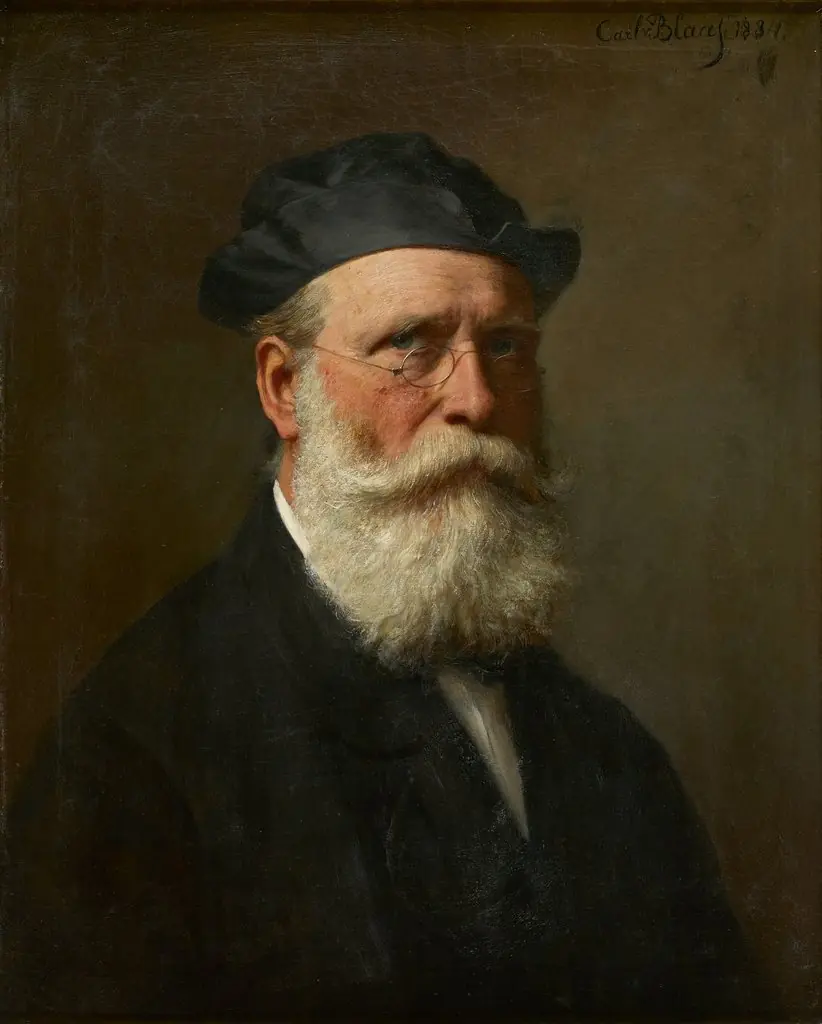
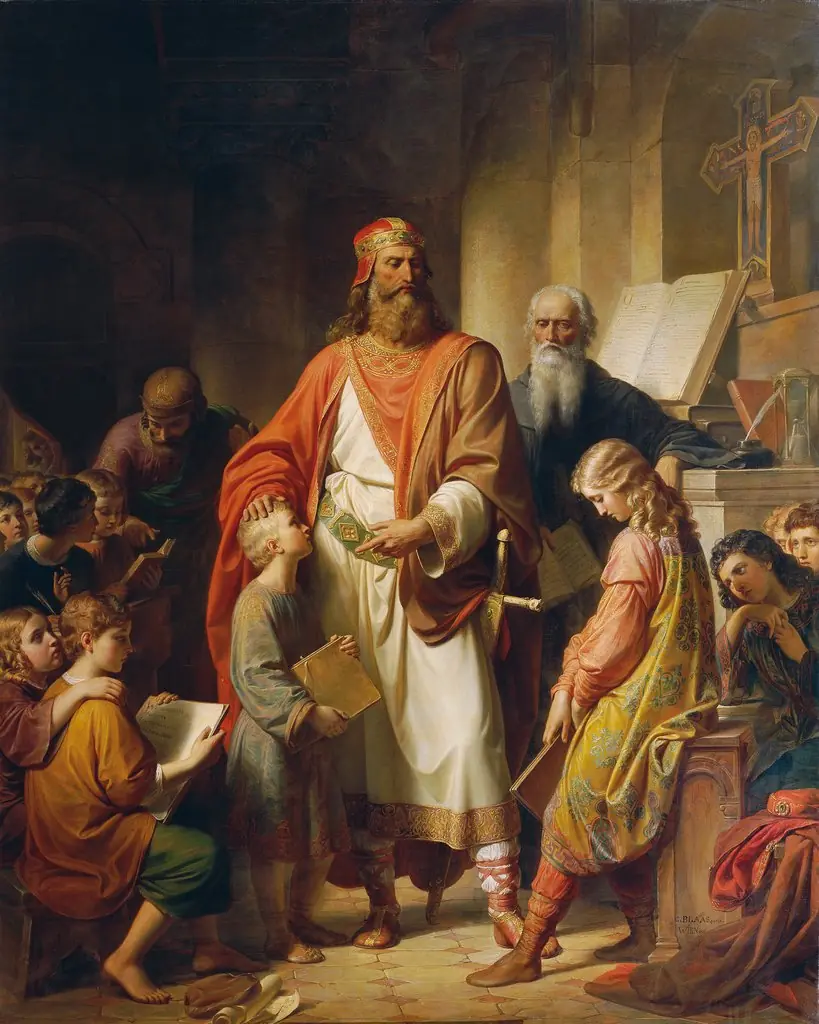
Karl von Blaas (28 April 1815 – 19 March 1894) was an Austrian painter known for his portraits and religious compositions executed on canvas as well as in the form of frescoes.

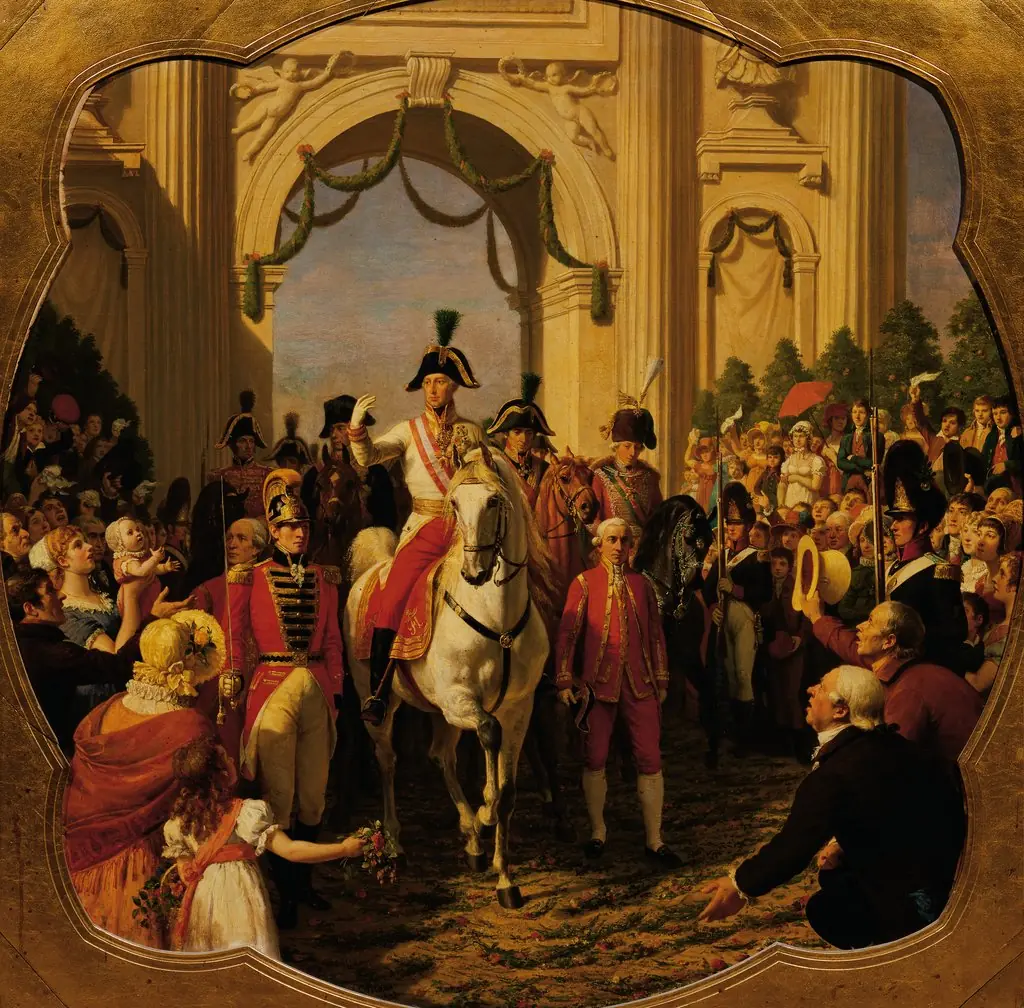
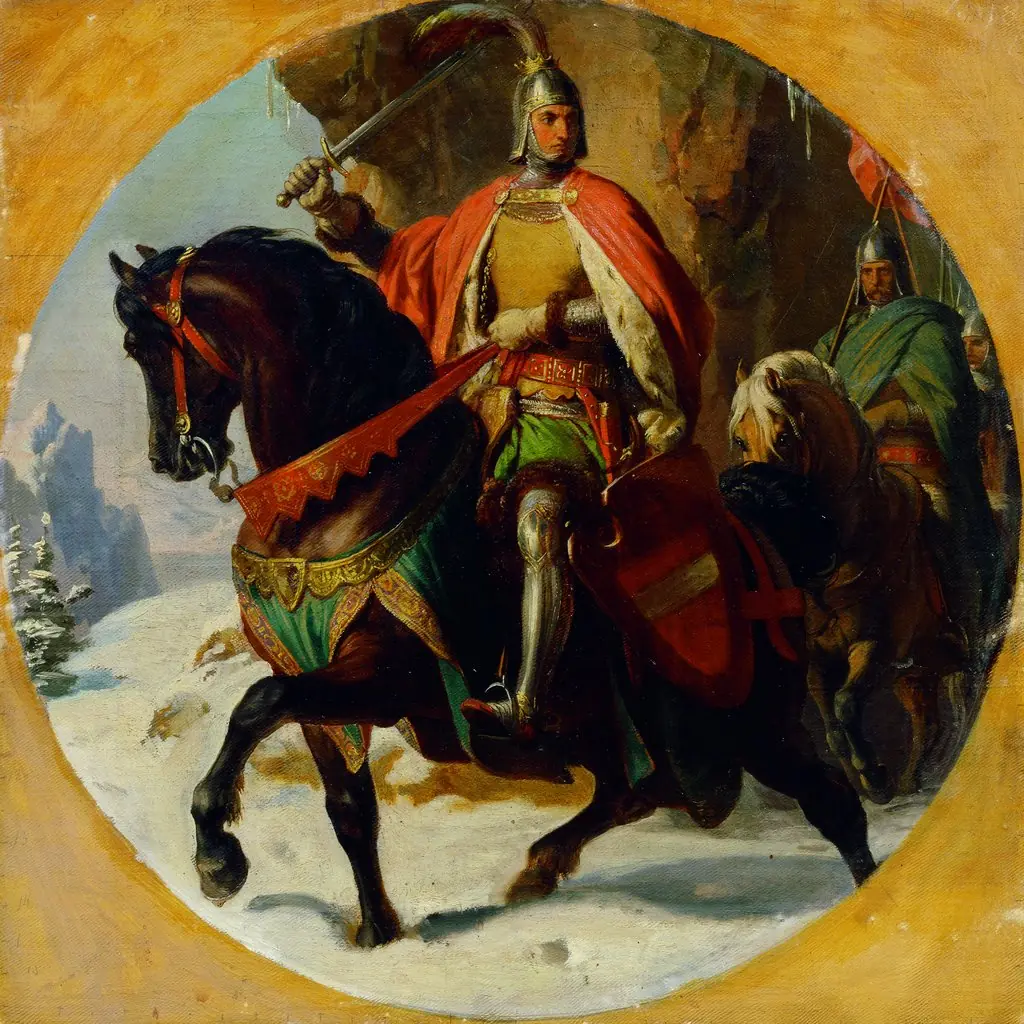 Battle of Albrecht I. over the Semming 1292
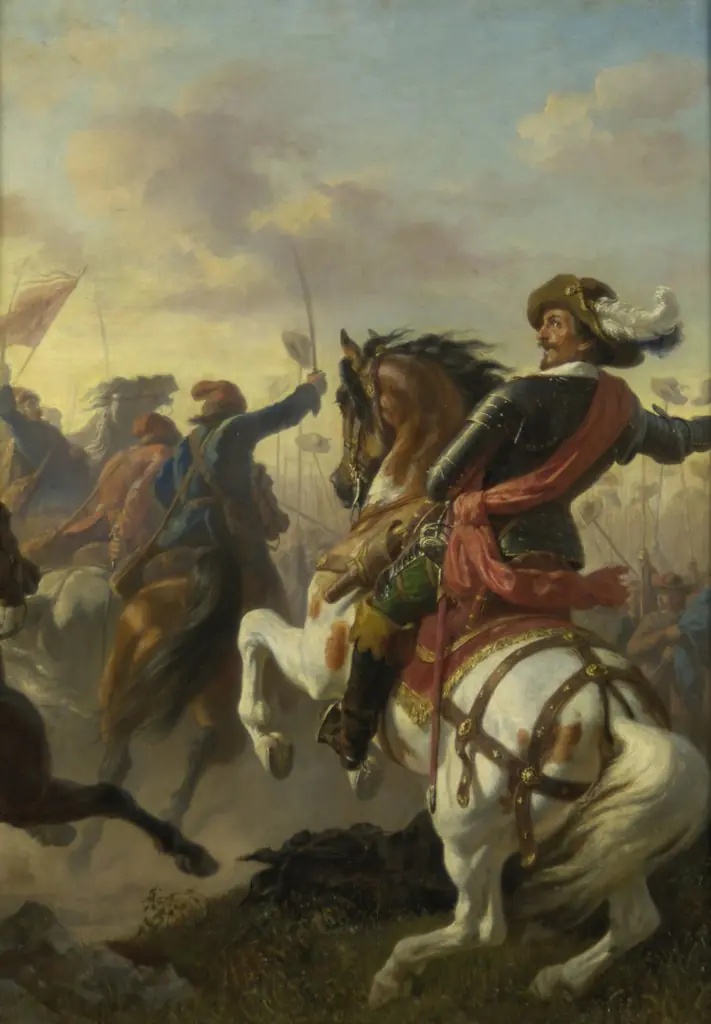 Boucquoi's victory at Zablat (Budweis) 1619
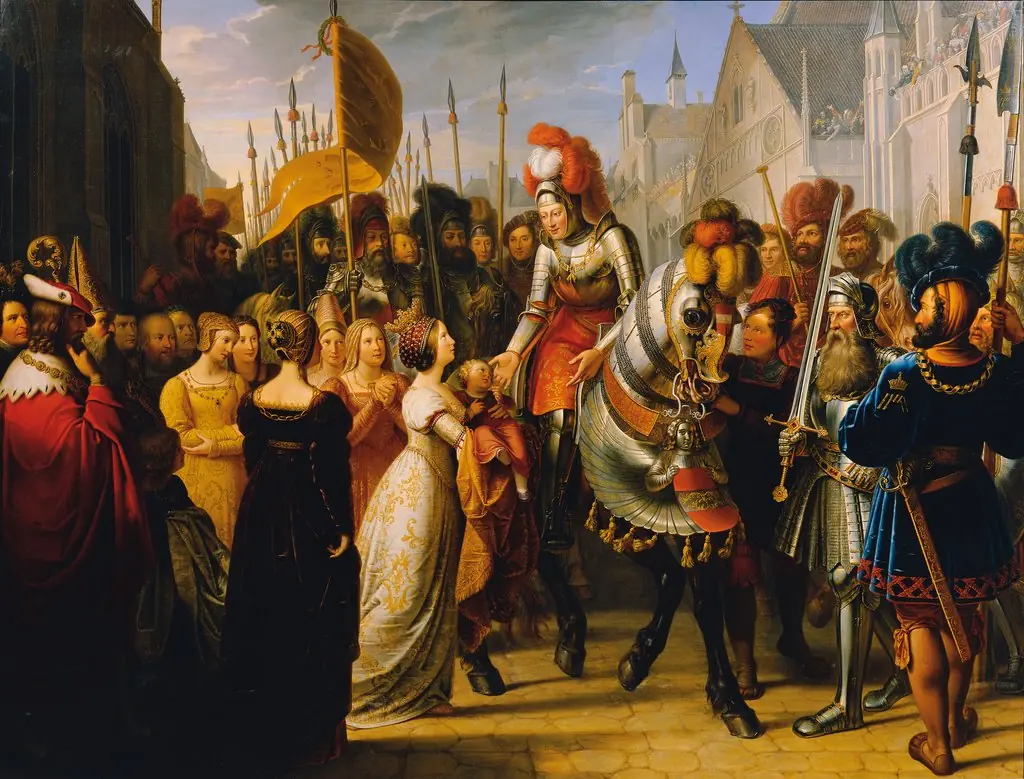 Der Einzug Kaiser Maximilians I. in Gent
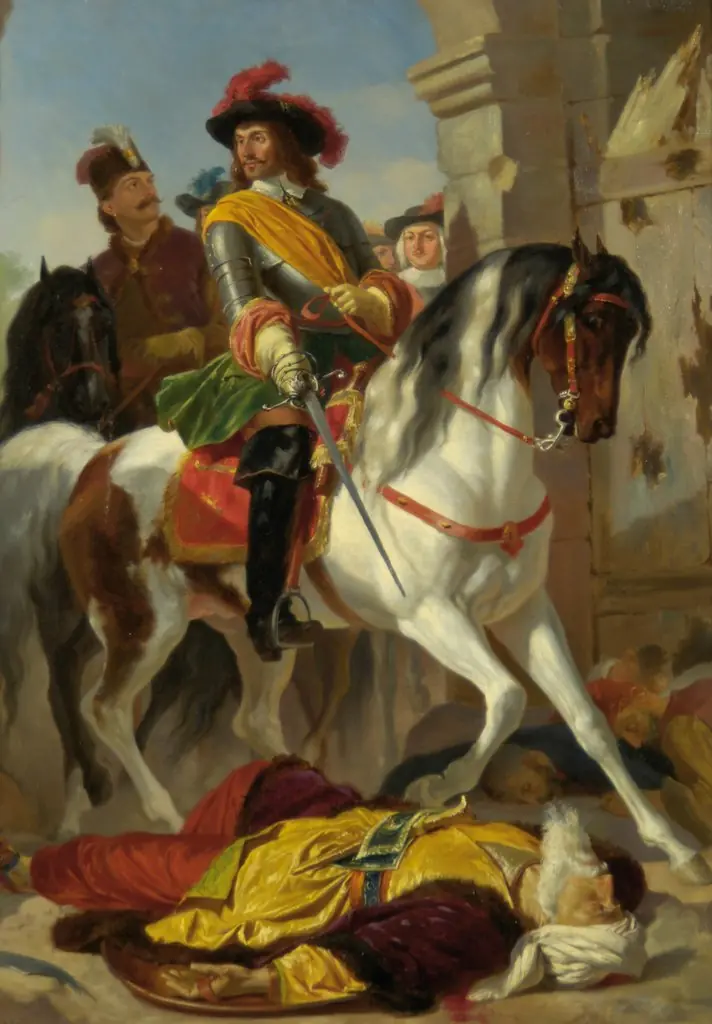 The Storming of Ofen 1686
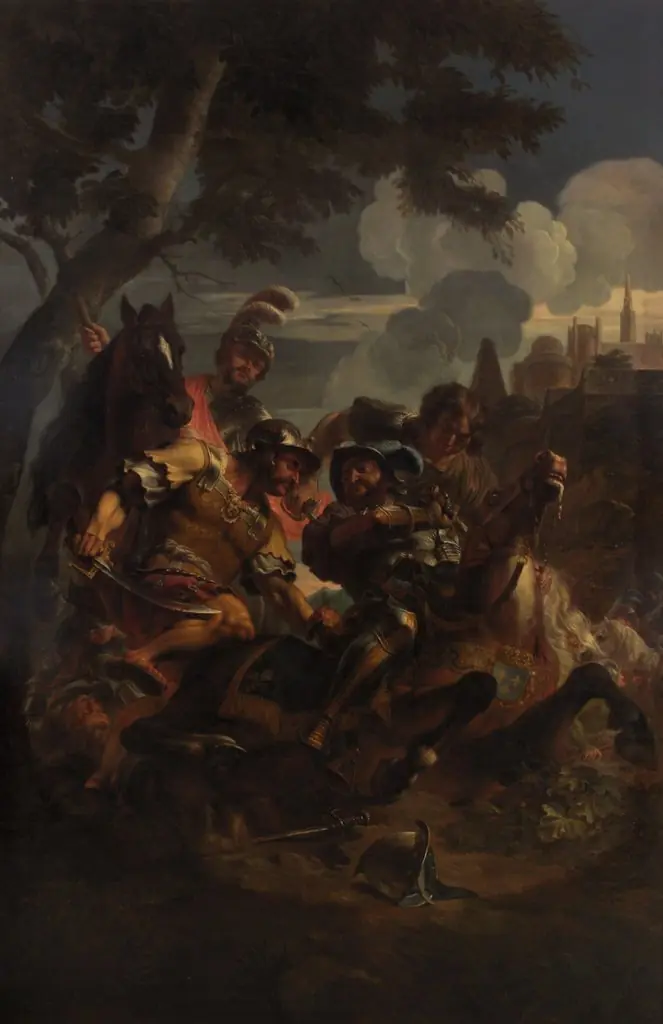 Capture of King Francis I at the Battle of Pavia
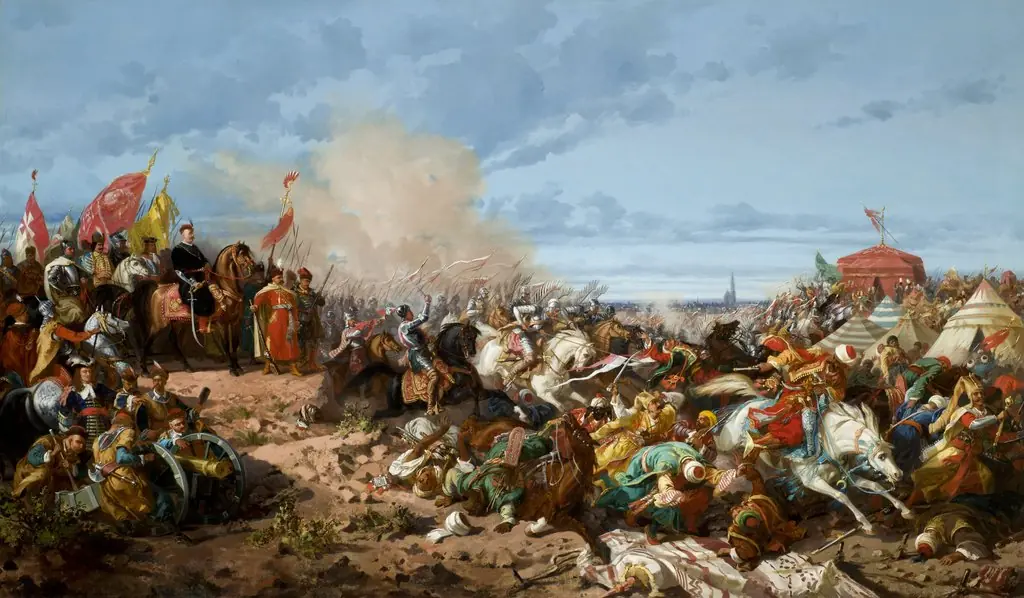 Sobieski at Vienna
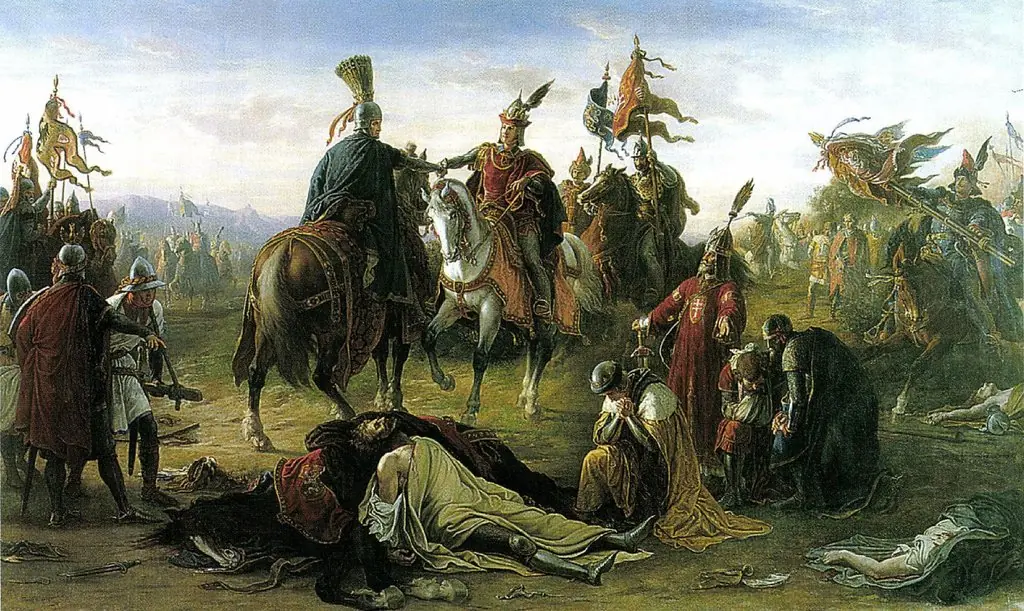 The Meeting of King Ladislas IV and Rudolph of Habsburg on the Battlefield of Marchfeld
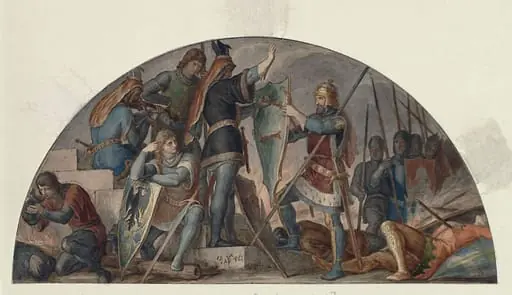 Rudiger gives his shield to Hagen
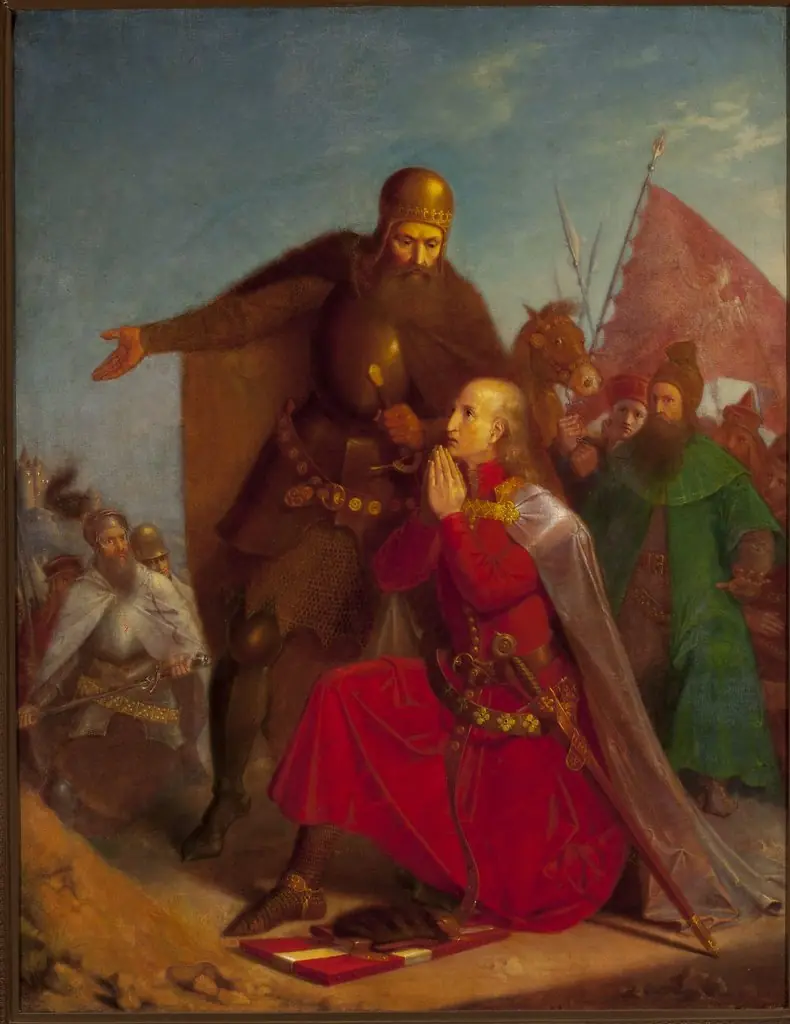 Władysław Jagiełło and Vytautas praying before the battle of Grunwald
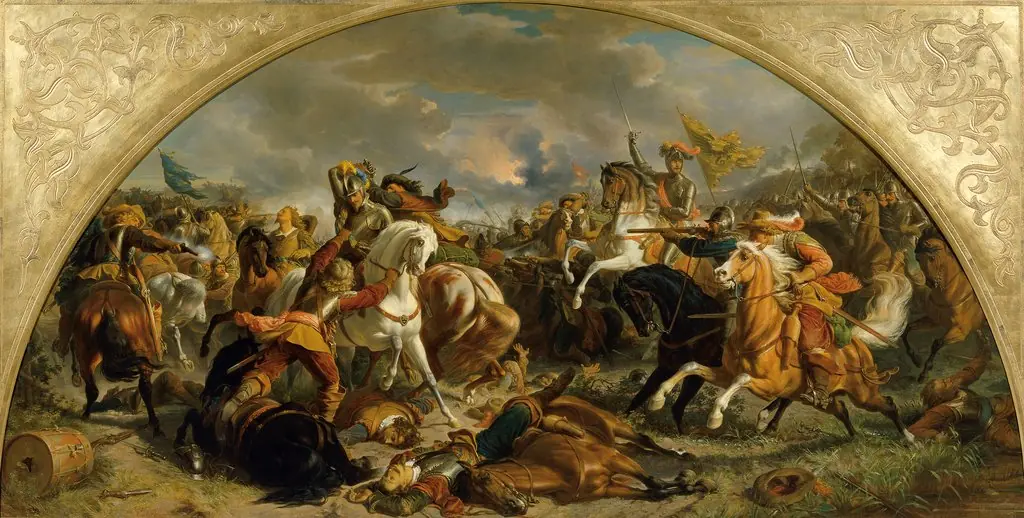 The storming of Schweidnitz in 1761
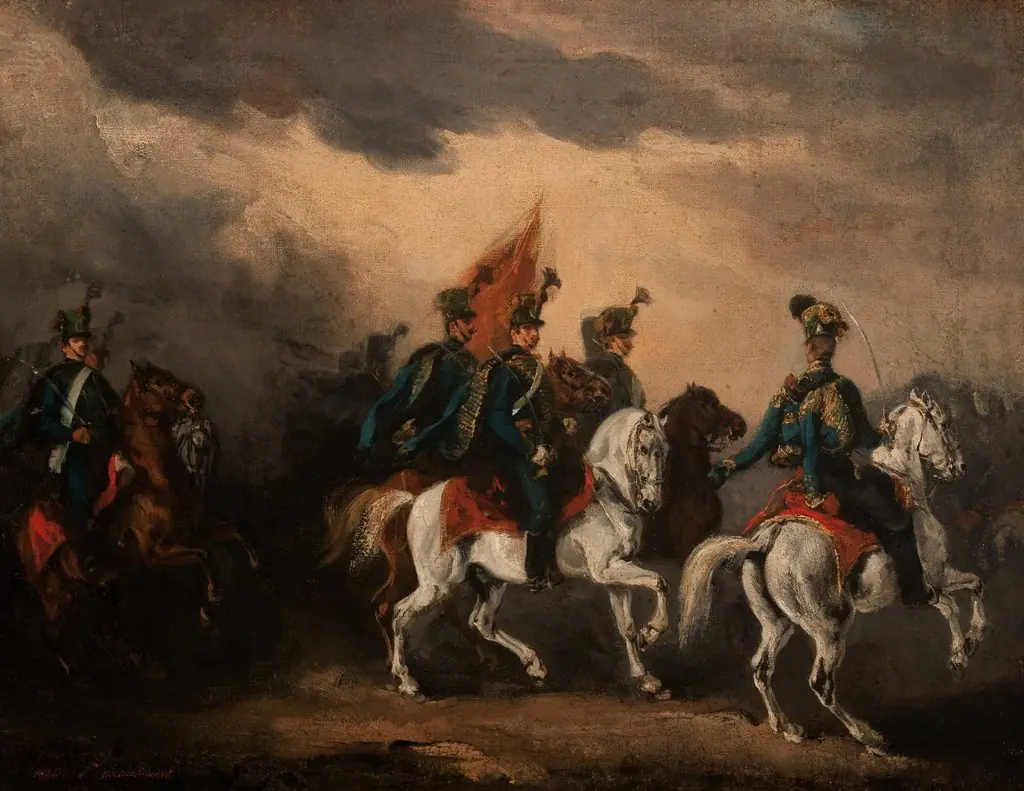 Blue Hussars
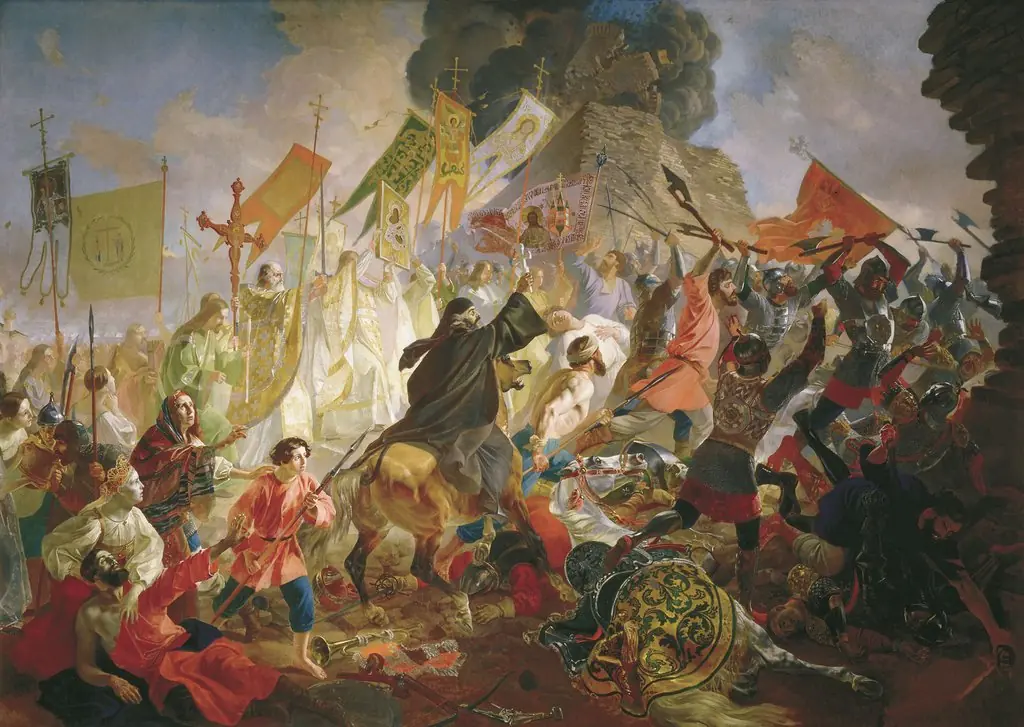 Осада Пскова польским королём Стефаном Баторием в 1581 году