Artwork
Untitled
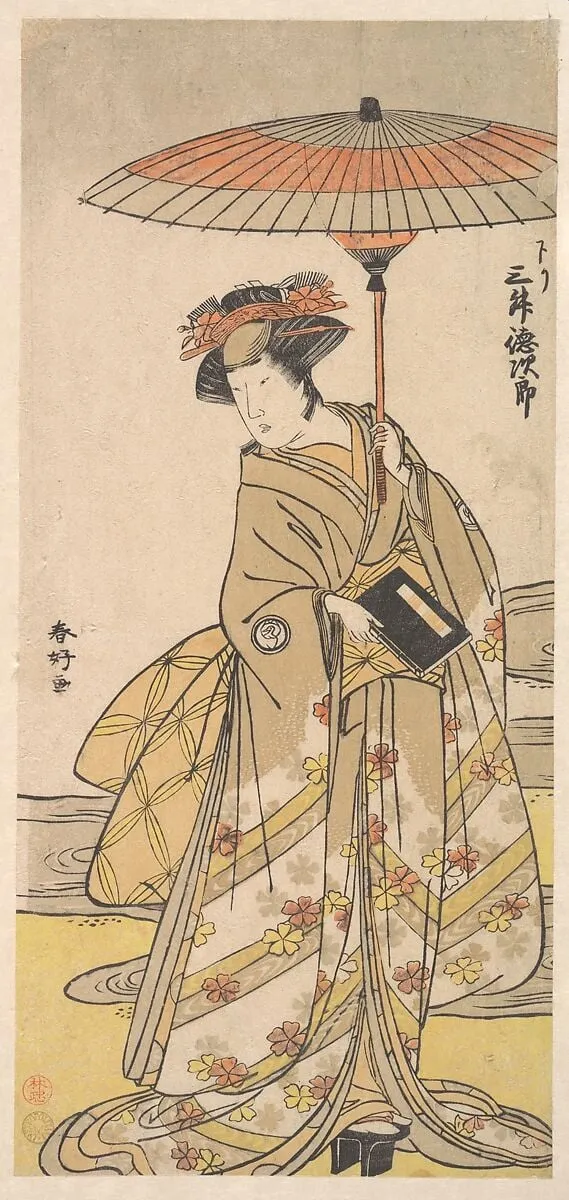
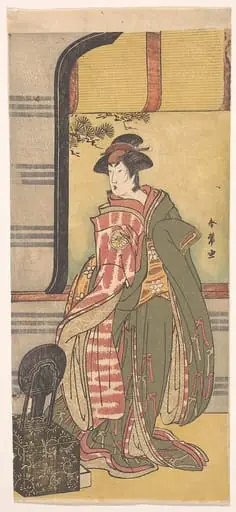
Untitled is an ink print by the Romanticist artist Katsukawa Shunkō. It dates from 1780 and is held in the collection of the Metropolitan Museum of Art.
About this work
Overview
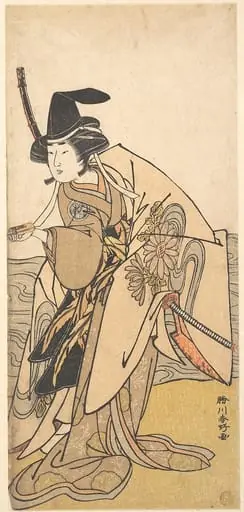
This woodblock print, dated around 1780, is attributed to Katsukawa Shunkō and resides in The Metropolitan Museum of Art’s collection. Executed in ink and color on paper, it exemplifies the ukiyo-e tradition of late 18th-century Japan. The composition centers on a solitary female figure, rendered with refined linework and muted tones, suggesting a quiet moment of transit or contemplation.
Subject & Meaning
The figure is a woman dressed in a beige kimono patterned with floral motifs and subtle stripes, accompanied by a matching headpiece. She holds a parasol and a small black box, objects that imply travel or a visit to a shrine or temple. The stillness of her posture and the delicate backdrop evoke a sense of private ritual, common in depictions of urban women during the Edo period.
Technique & Style
The use of restrained color—beige, black, and soft earth tones—emphasizes elegance over spectacle, aligning with Shunkō’s preference for understated realism.
The print employs traditional woodblock methods, with careful registration of multiple color blocks to achieve tonal gradations. The kimono’s patterns are rendered with fine, controlled lines, while the background’s faint water ripples suggest a shoreline or riverbank. The use of restrained color—beige, black, and soft earth tones—emphasizes elegance over spectacle, aligning with Shunkō’s preference for understated realism.
History & Provenance
The work entered The Metropolitan Museum of Art’s collection as part of its broader acquisition of Edo-period prints. While specific early ownership records are undocumented, its attribution to Shunkō is based on stylistic parallels with his known portraits of women and genre scenes. The print’s condition suggests it was preserved with care, likely within a collector’s album.
Context
Created during the height of ukiyo-e’s popularity, this print reflects the era’s fascination with the daily lives of urban women. Unlike dramatic actor prints or landscapes, Shunkō’s focus on quiet, individual moments reveals a shift toward intimate portraiture. The parasol and box may reference contemporary customs of pilgrimage or seasonal outings, common themes in prints of the time.
Legacy
Though less widely known than his contemporaries, Shunkō’s work contributed to the evolution of female portraiture in ukiyo-e. This print exemplifies a move away from theatricality toward psychological nuance, influencing later artists who sought to capture the subtleties of ordinary life. Its preservation in a major museum underscores its role in documenting Edo-period aesthetics beyond mainstream subjects.
Artist & collection

Artist
Katsukawa Shunkō spent his life in Edo, where crowded theaters and teahouses buzzed around him.

 Untitled
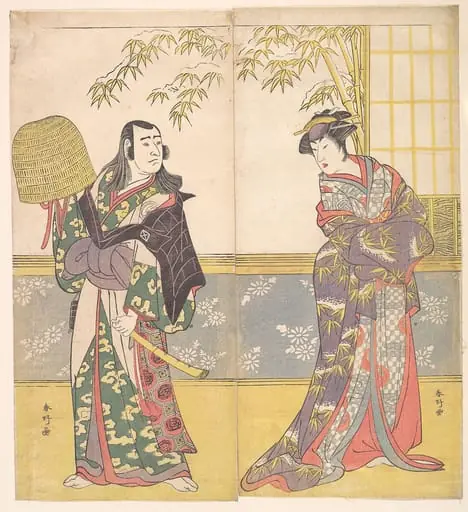 勝川春好画 三代目澤村宗十郎 三代目佐野川市松 |Kabuki Actors Sawamura Sōjūrō III and Sanogawa Ichimatsu III in "A Courtesan’s Mirror for the Eastern Provinces" (Keisei Azuma kagami)
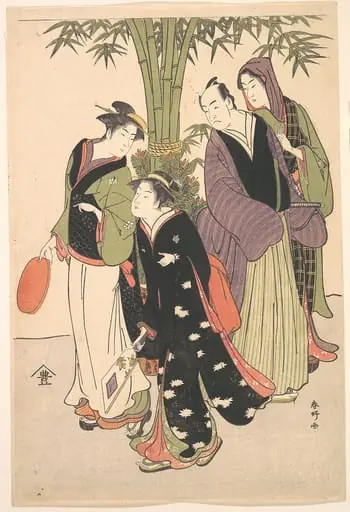 勝川春好画 三代目瀬川菊之丞・二代目市川門之助|Kabuki Actors Segawa Kikunojō III and Ichikawa Monnosuke II and Two Courtesans Celebrating the New Year
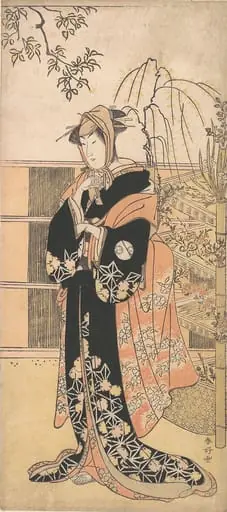 勝川春好画 三代目瀬川菊之丞|Kabuki Actor Segawa Kikunojō III in a Woman’s Role
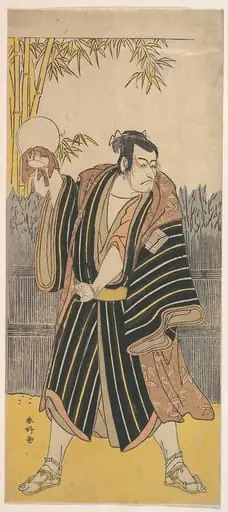 勝川春好画 七代目片岡仁左衛門 五代目市川團十郎|Kabuki Actor Ichikawa Danjūrō V
 Untitled
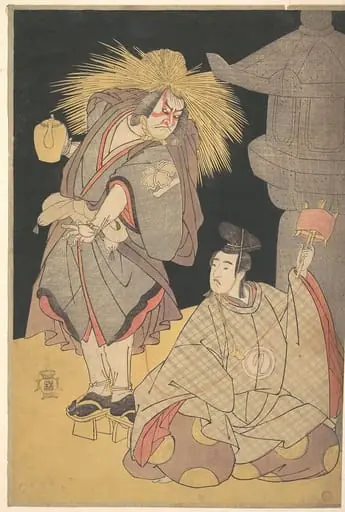 Untitled
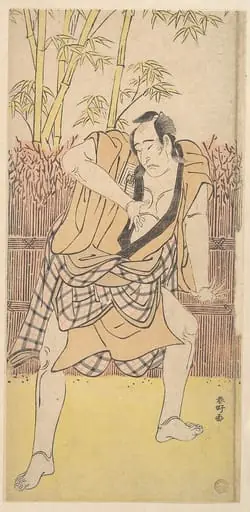 Untitled
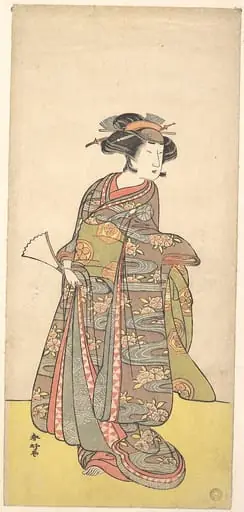 Untitled
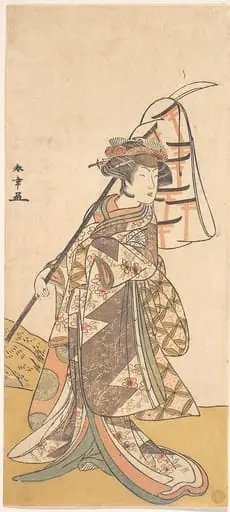 勝川春章画 三代目瀬川菊之丞|Kabuki Actor Segawa Kikunojō III
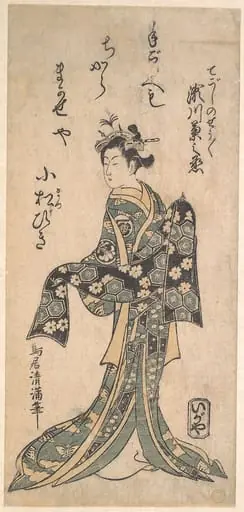 Untitled
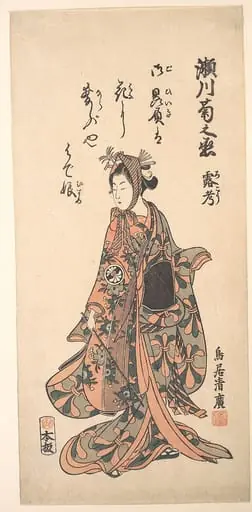 Untitled
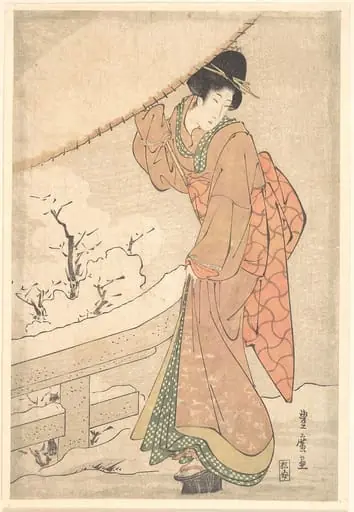 Untitled
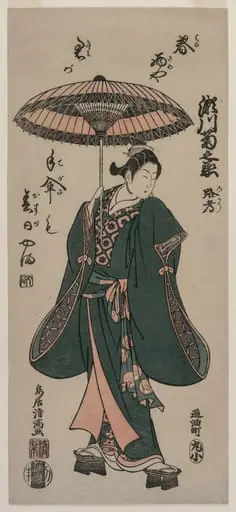 Segawa Kikunojo (Roko) Holding an Umbrella
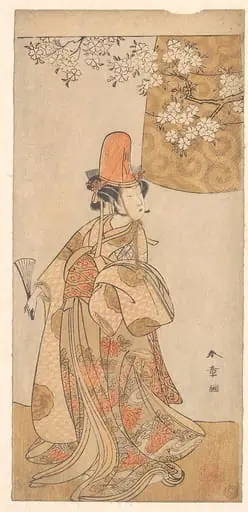 花形見風折烏帽子瀬川富三郎の娘道成寺|Segawa Tomisaburo in the Role of Musume Dojoji in "Hanagatami Kazaori Eboshi"
 Untitled
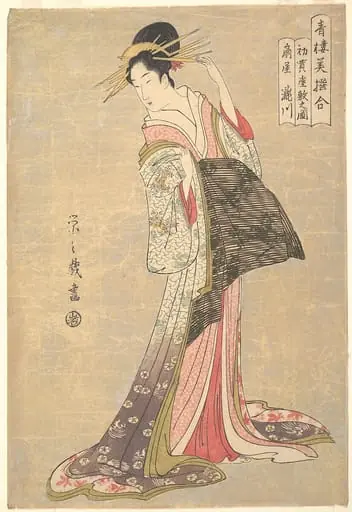 鳥文斎栄之画 「青楼美撰合 初売座敷之図 扇屋滝川」|Takigawa of the Ōgiya Brothel: The First Reception Room Appointment of the New Year (Hatsu-uri zashiki no zu: Ōgiya Takigawa), from the series A Comparison of Selected Beauties of the Pleasure Quarters (Seirō bisen awase)
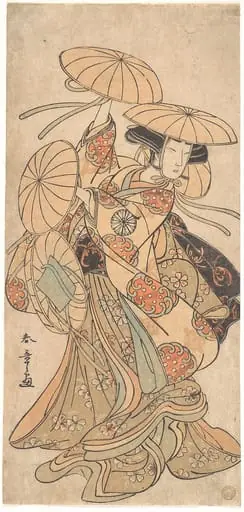 初代中村富十郎|Kabuki Actor Nakamura Tomijūrō I in a Female Dance Role
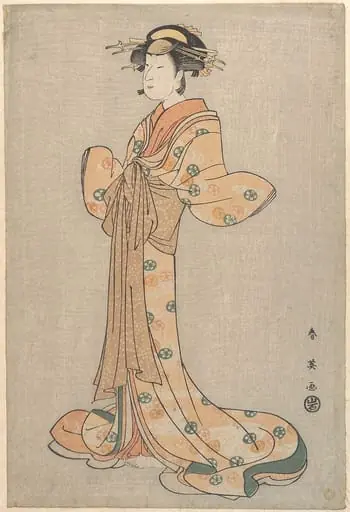 二代目中村二代目中村野塩のお軽|The Actor Nakamura Noshio II as the Courtesan Okaru