Artwork
The Monkey Bridge
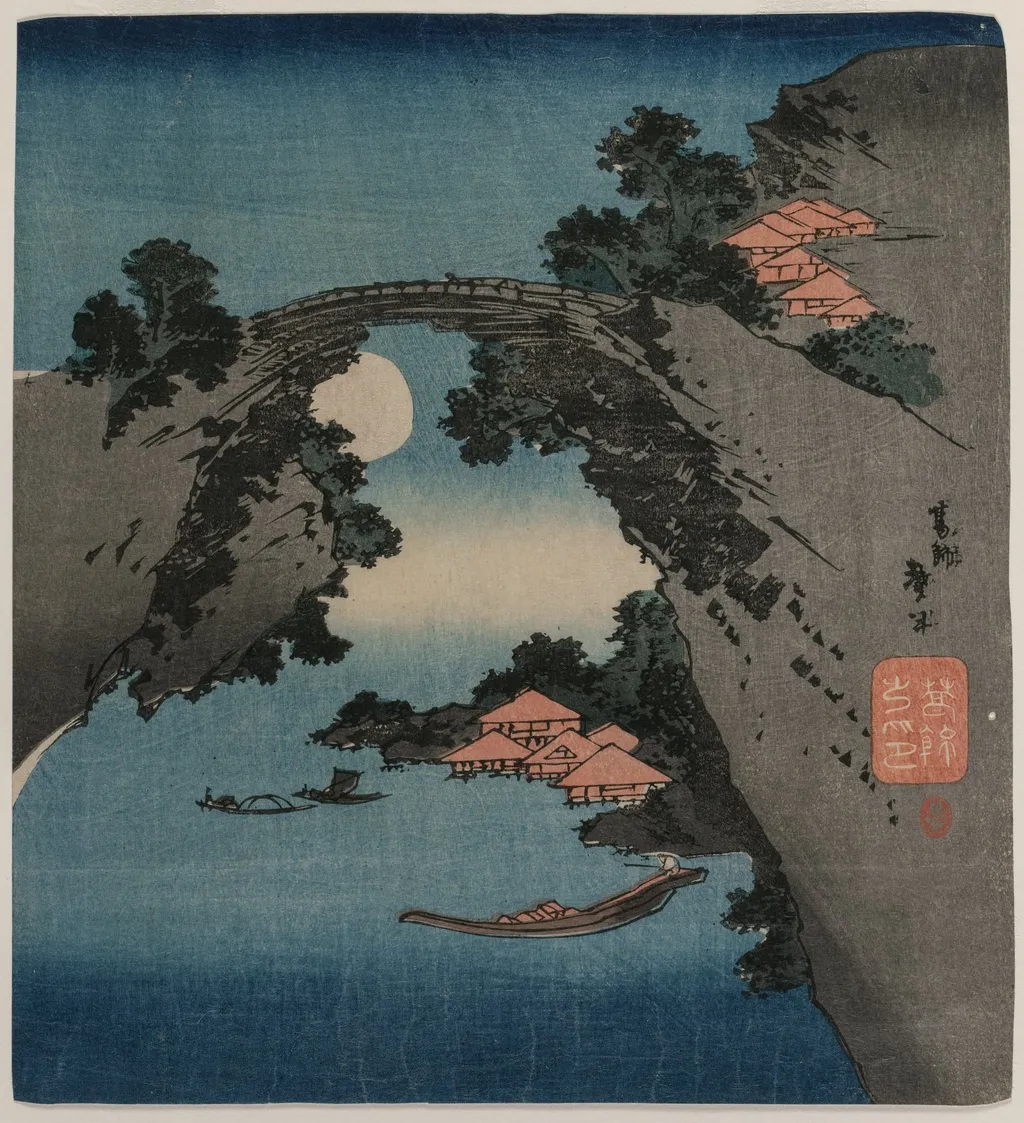
The Monkey Bridge is a print by the Romanticist artist Katsushika Taito II. It dates from 1834 and is held in the collection of the Cleveland Museum of Art.
About this work
Overview
The work is a woodblock print titled “The Monkey Bridge,” portraying a slender bridge spanning a deep gorge in Kai Province, an area west of present‑day Tokyo. A moon is shown directly beneath the bridge, heightening the sense of vertical space and drama in the composition.
Subject & Meaning
The bridge, known locally as the Monkey Bridge, is rendered in a way that stresses its precariousness over the chasm, with the moon’s placement underscoring the depth of the gorge. The scene evokes the traditional Japanese fascination with dramatic natural vistas and the interplay of light and shadow.
Technique & Style
Created by Taitō II, a pupil of Hokusai, the print employs typical ukiyo‑e woodblock methods, with variations in ink application that yield different tonal effects across impressions. Original uncut prints contain an additional strip featuring a poetic inscription designed to resemble a stone stele rubbing, a common decorative element at scenic sites.
History & Provenance
The print was once trimmed before entering the museum’s collection, having been donated by Jeptha H. Wade, one of the institution’s founders. Surviving uncut copies retain the extra inscription panel, offering insight into the work’s original format and presentation.
Context
Produced during the Edo period, the image reflects the era’s interest in travel literature and landscape prints that documented notable landmarks. Taitō II’s apprenticeship under Hokusai likely informed his compositional choices and emphasis on dramatic perspective.
Artist & collection

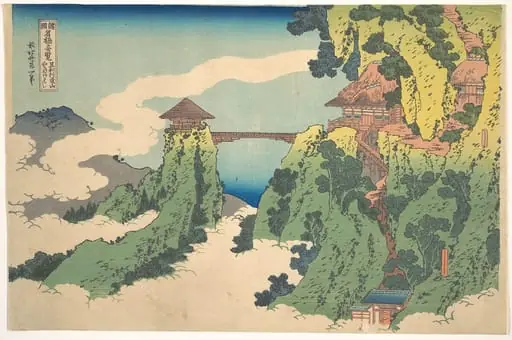 諸國名橋奇覧 足利行道山くものかけはし|The Hanging-cloud Bridge at Mount Gyōdō near Ashikaga (Ashikaga Gyōdōzan kumo no kakehashi), from the series Remarkable Views of Bridges in Various Provinces (Shokoku meikyō kiran)
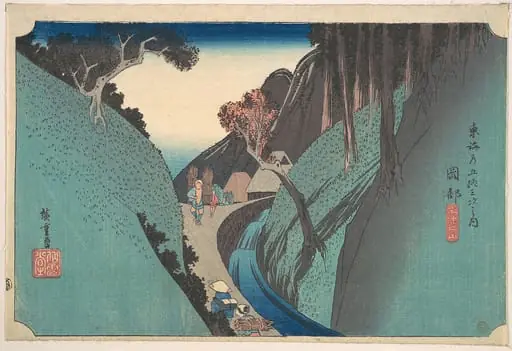 東海道五十三次之内 岡部 宇津の山|Okabe; Utsu no Yama
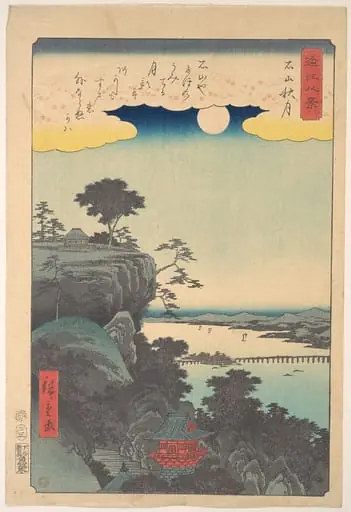 近江八景 石山秋月|The Autumn Moon on Ishiyama
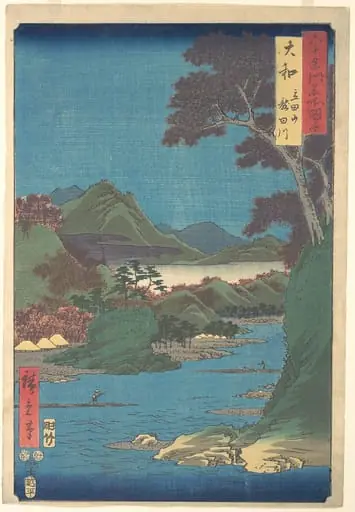 六十余州名所図会 大和 立田山 龍田川|Yamato, Tatsutayama, Tatsutagawa
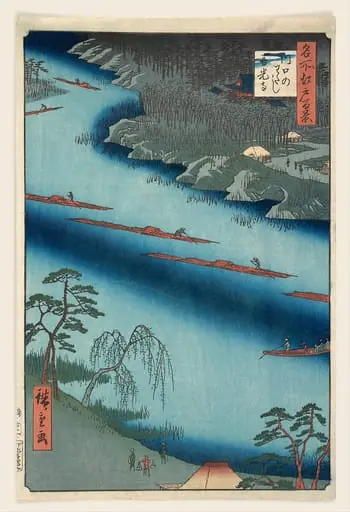 名所江戸百景 川口のわたし善光寺|Kawaguchi
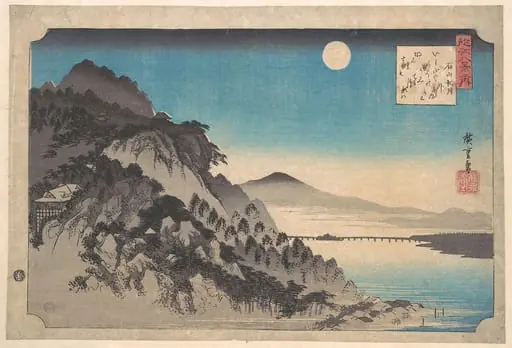 近江八景之内 石山秋月|The Autumn Moon at Ishiyama on Lake Biwa
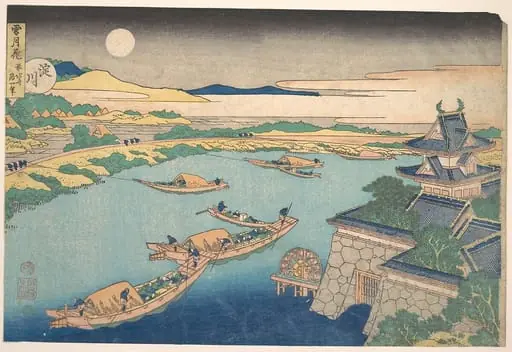 雪月花 淀川|Moonlight on the Yodo River (Yodogawa), from the series Snow, Moon, and Flowers (Setsugekka)
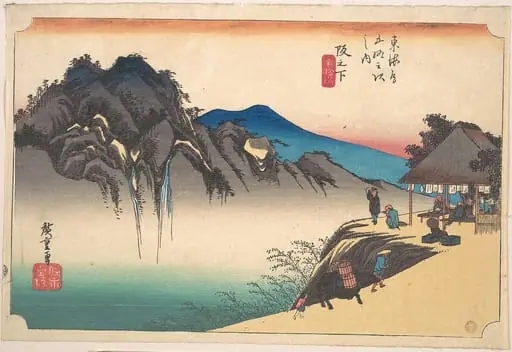 東海道五十三次之内 阪之下 筆捨嶺|Saka-no-shita, Fude-sute Mine
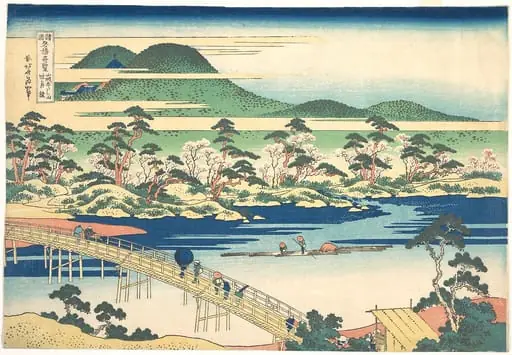 諸國名橋奇覧 山城あらし山吐月橋 |Togetsu Bridge at Arashiyama in Yamashiro, from the series Remarkable Views of Bridges in Various Provinces (Shokoku meikyō kiran)