Artwork
喜多川歌麿画 「婦女人相十品」 日傘を差す女|“Woman Holding Up a Parasol” from the series Ten Classes of Women’s Physiognomy (Fujo ninsō juppen: Higasa o sasu onna)
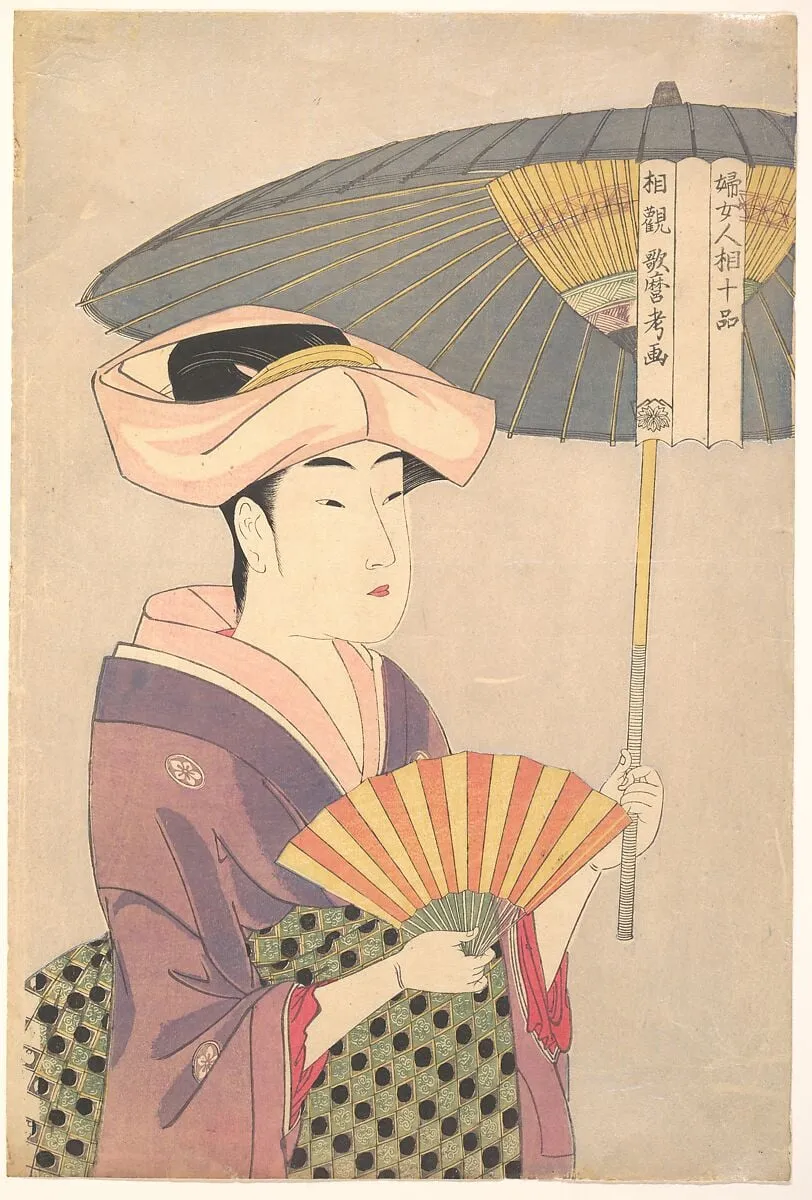
喜多川歌麿画 「婦女人相十品」 日傘を差す女|“Woman Holding Up a Parasol” from the series Ten Classes of Women’s Physiognomy (Fujo ninsō juppen: Higasa o sasu onna) is an ink print by the Romanticist artist Kitagawa Utamaro. It dates from 1792 and is held in the collection of the Metropolitan Museum of Art.
About this work
Overview
Created around 1792, this woodblock print by Kitagawa Utamara depicts a woman holding a parasol and is part of the series Ten Classes of Women’s Physiognomy. The work is part of the Metropolitan Museum of Art’s collection and exemplifies the artist’s interest in portraying individual female figures.
Subject & Meaning
The figure is shown standing, a folded fan in one hand and a tall, striped parasol in the other. She wears a pink hat, a purple kimono with black‑and‑white patterned sleeves, and a red undergarment, her hair tied back in a calm expression. The composition highlights everyday elegance and the nuanced gestures of a woman in Edo‑period society.
Technique & Style
Executed in ink and color on paper, the print demonstrates Utamara’s meticulous attention to detail, evident in the layered folds of the fan and the bold black‑and‑white stripes of the parasol, which are accented with gold lettering along the edge. The delicate line work and subtle coloration are characteristic of his portrait prints.
History & Provenance
The print belongs to the Ten Classes of Women’s Physiognomy series, a set that catalogued various female archetypes through portraiture. It entered the Metropolitan Museum of Art’s collection in the 20th century, where it remains on display as a representative example of Utamara’s work.
Context
During the late 18th century, ukiyo‑e artists like Utamara focused on bijin-ga, images of beautiful women, shifting from idealised forms to more individualized depictions. This print reflects that trend, offering a close observation of fashion, accessories, and posture that convey the subject’s social role.
Artist & collection


 Untitled
 Untitled
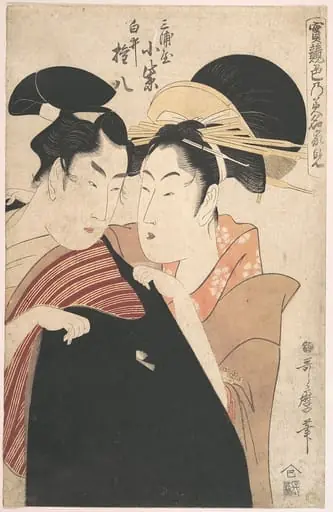 実競色乃美名家見 三浦屋小紫 白井権八|The Lovers Miura-ya Komurasaki and Shirai Gonpachi.
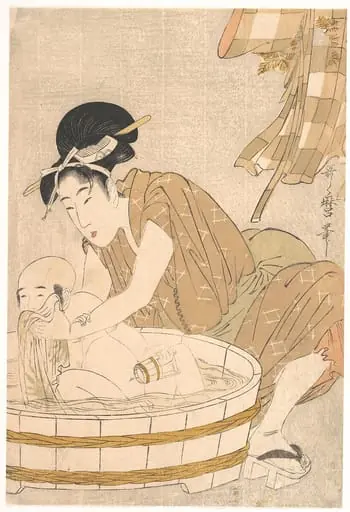 行水|Bathtime (Gyōzui)
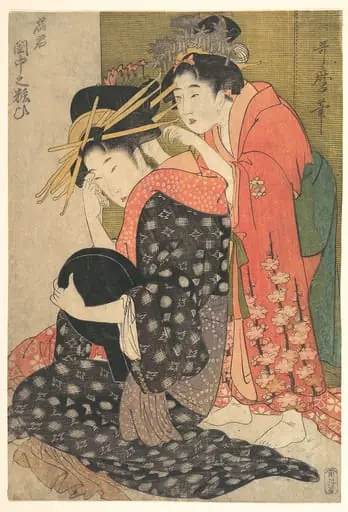 名君 閨中の粧ひ|The Oiran Yoso-oi Seated at Her Toilet
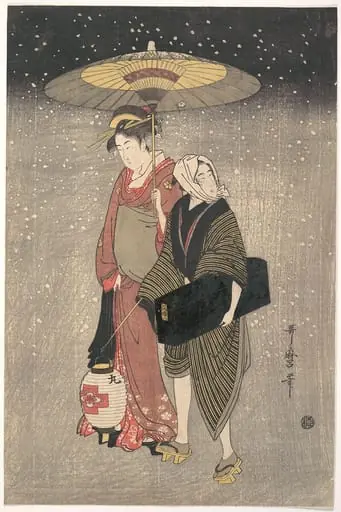 Untitled
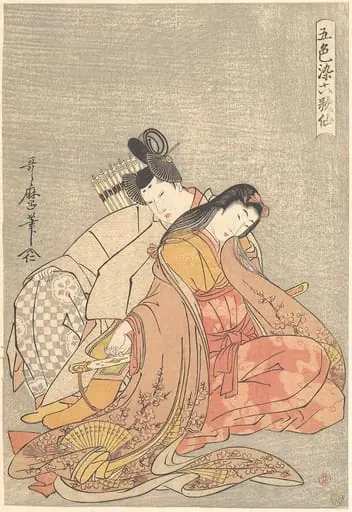 『五色染六歌仙』 在原業平と小野小町|“The Poet Ariwara no Narihira (825–880) and Ono no Komachi,” from the series Five Colors of Love for the Six Poetic Immortals (Goshiki-zome rokkasen)
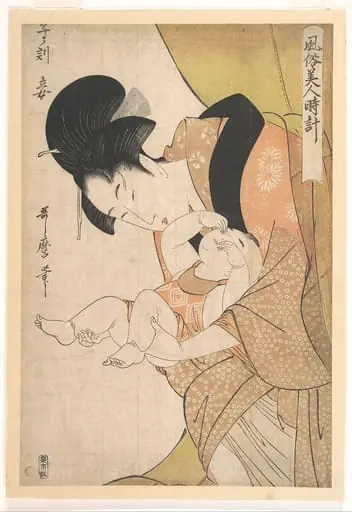 風俗美人時計 子ノ刻 妾|Midnight: Mother and Sleepy Child
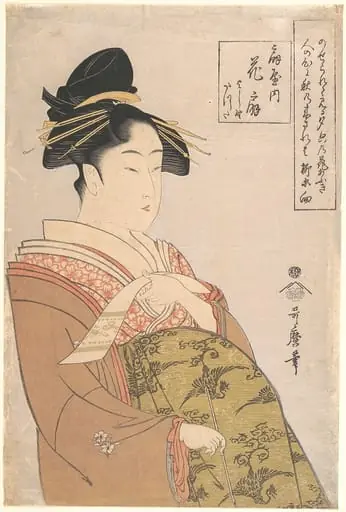 「扇屋内花扇図」|The Courtesan Hanaōgi of the Ōgiya Brothel in Yoshiwara (Ōgiya uchi Hanaōgi, Yoshino, Tatsuta)
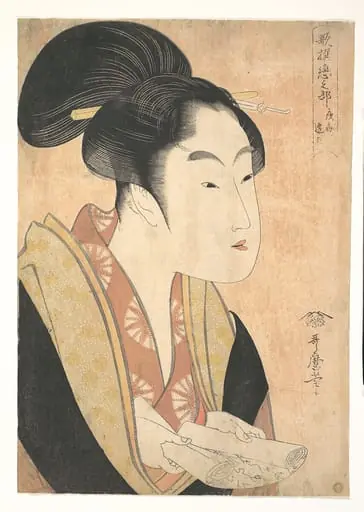 歌撰恋之部 夜毎に逢恋|A Young Woman Reading A Letter
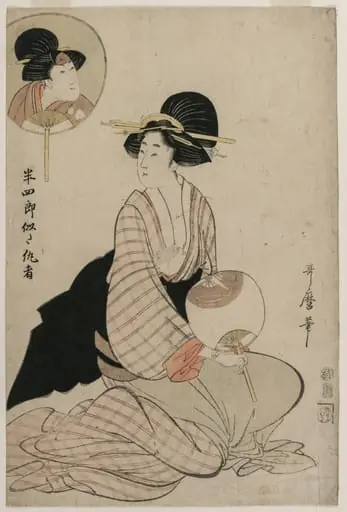 An Attractive Woman Who Looks Like the Actor Iwai Hanshiro V
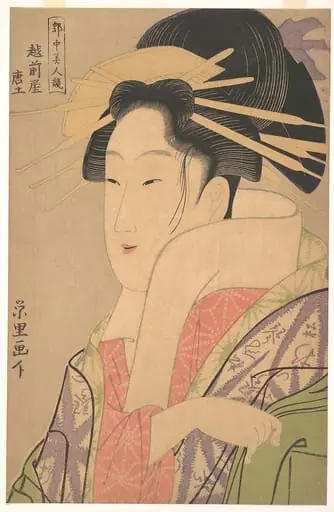 Untitled
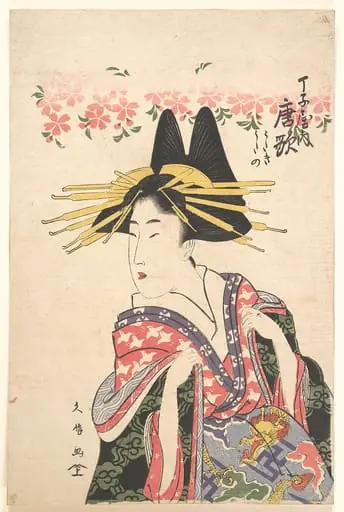 Untitled
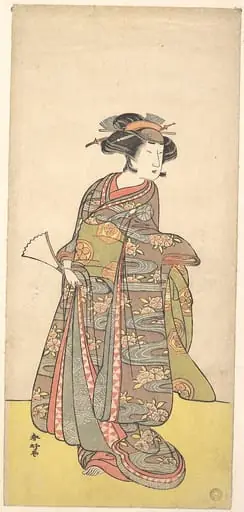 Untitled
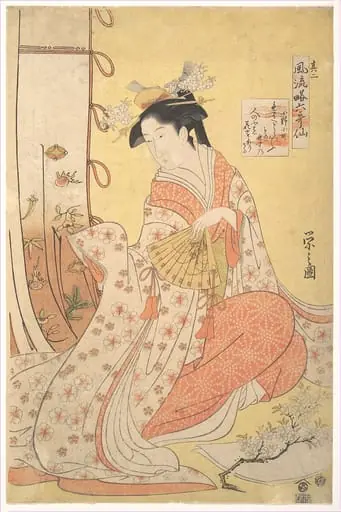 鳥文斎栄之画 「風流略六哥仙 其の二」小野小町|Ono no Komachi: Number Two (Sono ni), from the series Stylish Parodies of the Six Poetic Immortals (Fūryū yatsushi rokkasen)
 Untitled