Artwork
Untitled
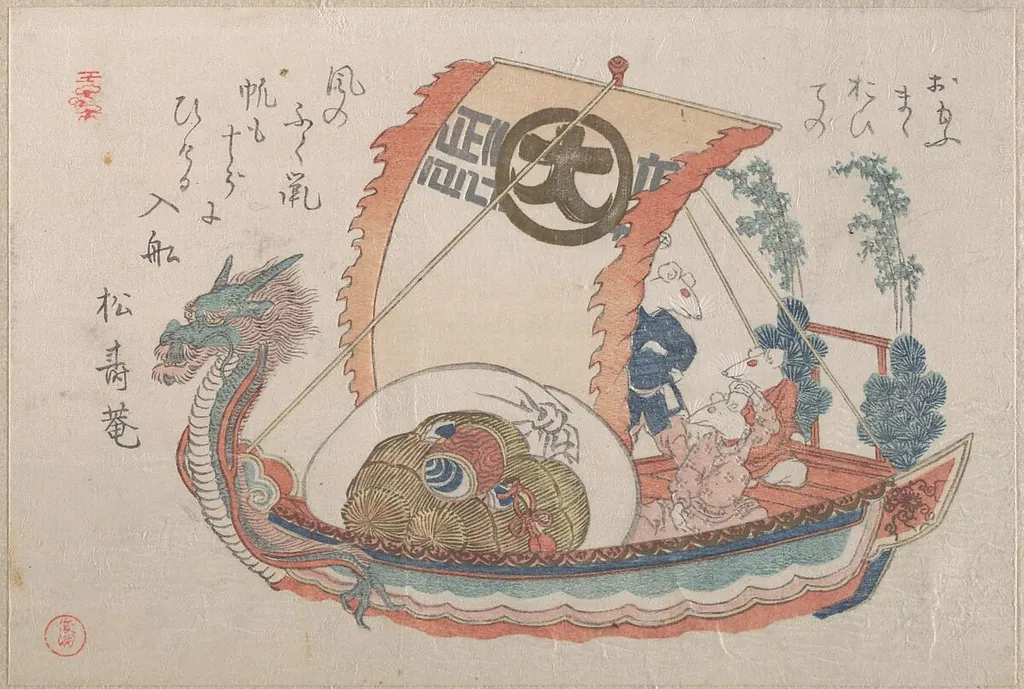
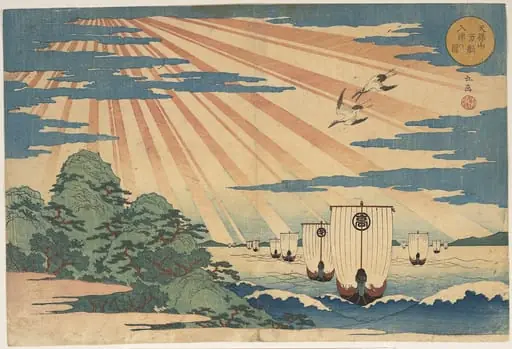
Untitled is an ink print by the Romanticist artist Kubo Shunman. It dates from 1816 and is held in the collection of the Metropolitan Museum of Art. This woodblock print, dated 1816, is one of several in a private commission album known as surimono.
About this work
Overview
This woodblock print, dated 1816, is one of several in a private commission album known as surimono. Created by Kubo Shunman, it combines ink and color on paper, featuring a narrative scene rendered with fine detail. The work belongs to The Metropolitan Museum of Art’s print collection, where it is preserved as an example of early 19th-century Japanese artisanal printing.
Subject & Meaning
A red vessel, guided by a fearsome dragon with bared teeth and sinuous scales, carries three figures near a chest and a lone man in blue at the stern.
A red vessel, guided by a fearsome dragon with bared teeth and sinuous scales, carries three figures near a chest and a lone man in blue at the stern. The calm water and distant trees suggest a tranquil journey, yet the dragon’s intensity introduces an otherworldly element. Japanese script along the borders likely contains poetic or ceremonial text, common in surimono, hinting at a ritual or literary theme tied to the occasion for which it was made.
Technique & Style
The print employs precise woodblock carving and hand-coloring to achieve subtle gradations. The dragon’s scales and water’s ripples are rendered with fine, controlled lines, while the sail’s gold emblem suggests metallic leaf application. Background elements are simplified, focusing attention on the central figures. Cross-hatching and layered ink washes create depth without perspective, typical of ukiyo-e-derived surimono aesthetics.
History & Provenance
Produced in 1816, the print was likely commissioned for a private literary or poetic gathering, as surimono were often distributed among elite circles. It was part of a small album, not intended for mass sale. The Metropolitan Museum of Art acquired it as part of a broader collection of Japanese prints, preserving its original context as a refined, intimate object rather than a commercial product.
Context
Surimono were luxury prints made for special occasions, often commissioned by poetry societies or wealthy patrons. Unlike mass-produced ukiyo-e, they emphasized artistic experimentation and literary allusion. This piece reflects the blending of myth and everyday elegance in Edo-period culture, where dragons symbolized protection or divine intervention, and boats evoked journeys—literal or spiritual.
Legacy
As a surviving example of surimono, this print illustrates the sophistication of private print culture in Edo Japan. It highlights how artists like Shunman elevated woodblock printing beyond popular imagery into realms of poetry, symbolism, and refined craftsmanship. Its preservation offers insight into the aesthetic values of a niche, literate audience during the early 1800s.
Artist & collection


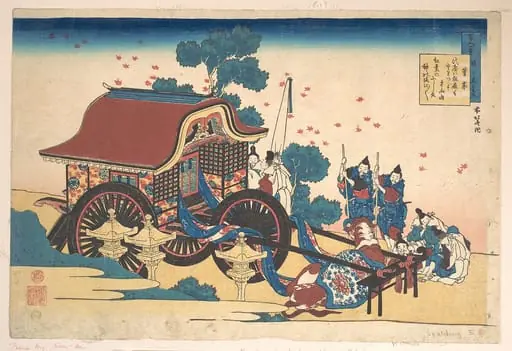 百人一首 うはかゑとき 菅家|Poem by Kanke (Sugawara Michizane), from the series One Hundred Poems Explained by the Nurse (Hyakunin isshu uba ga etoki)
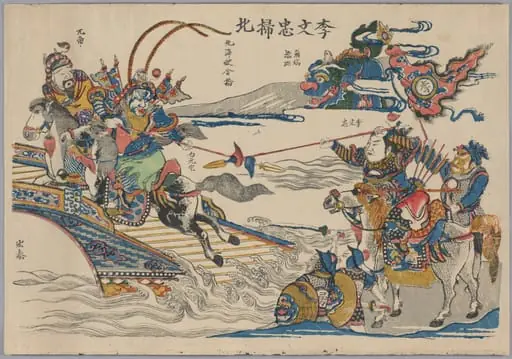 Li Wenzhong Clears the North
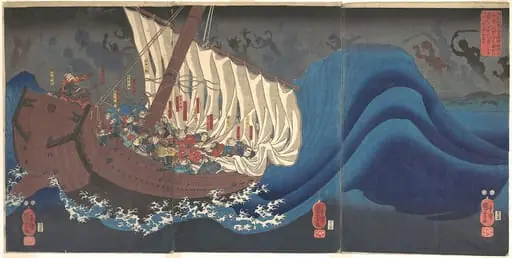 歌川国芳画 「大物の浦平家の亡霊」|Ghosts of the Taira at Daimotsu Bay
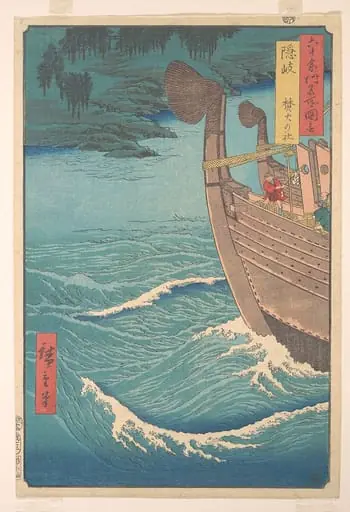 六十余州名所図会 隠岐 焚火の社|The Takihi Shrine, Oki Province, from the series Views of Famous Places in the Sixty-Odd Provinces
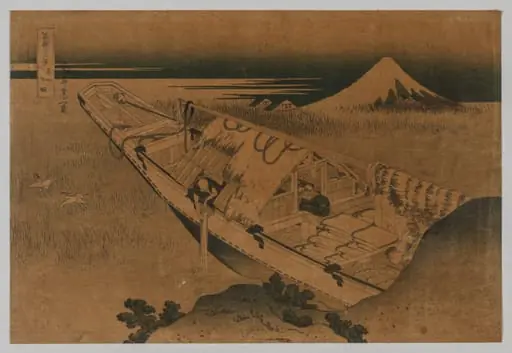 Fuji from Ushibori, Province of Hitachi
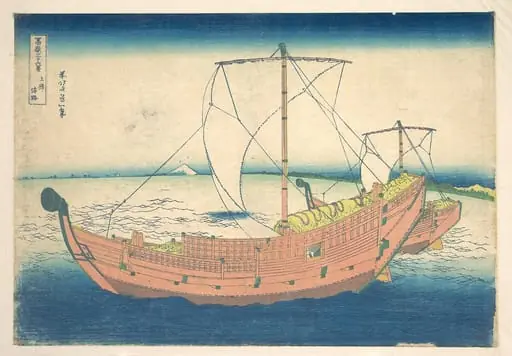 冨嶽三十六景 上総の海路|At Sea off Kazusa (Kazusa no kairo), from the series Thirty-six Views of Mount Fuji (Fugaku sanjūrokkei)
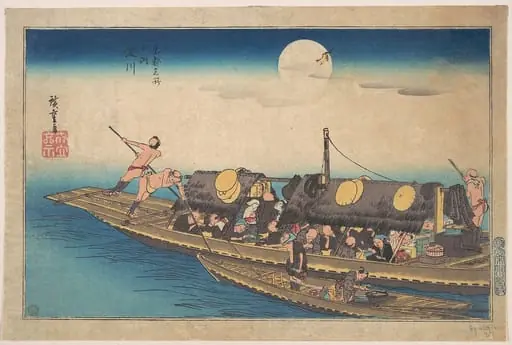 京都名所之内 淀川|Yodogawa
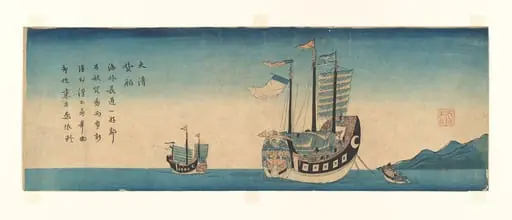 長崎港図|Chinese Ships at Nagasaki
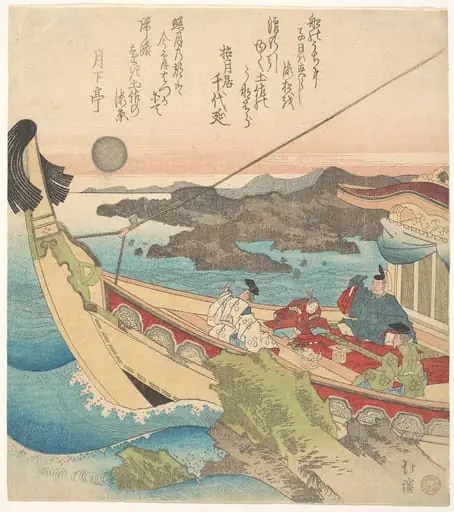 Tosa no umi|Inland Sea near Tosa
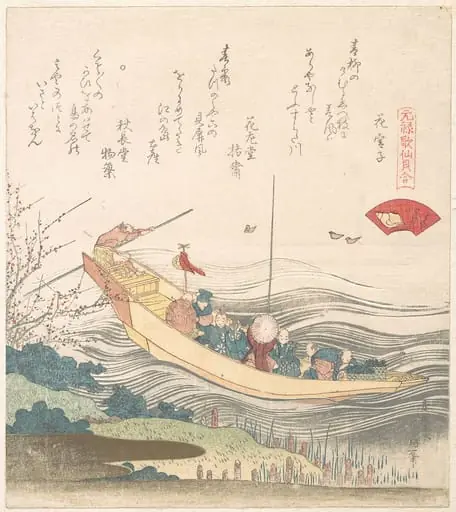 Miyako-gai|元禄歌仙貝合|Miyako Shell
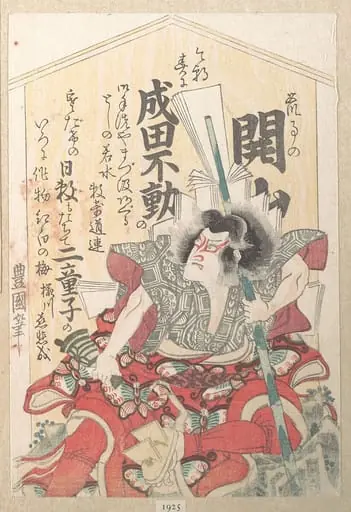 Untitled
 Untitled