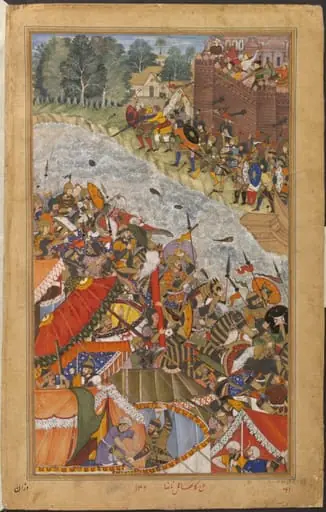
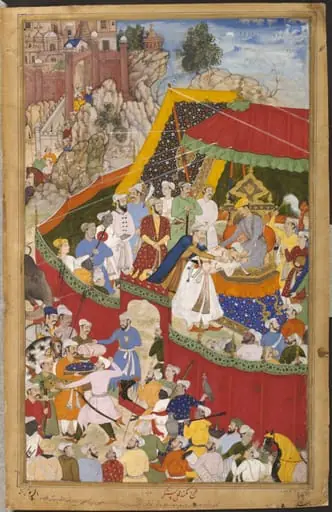
Artwork
Akbar
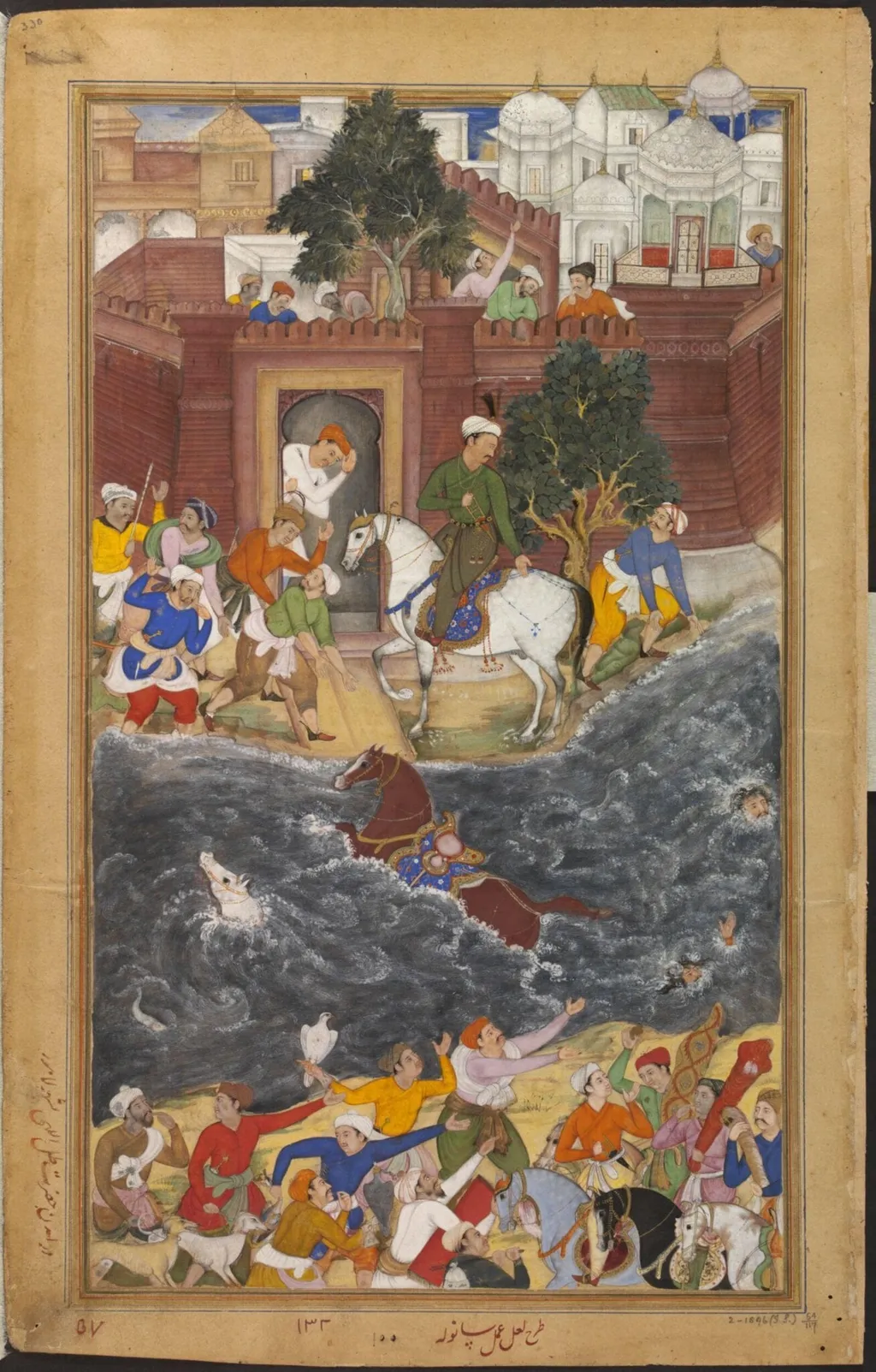
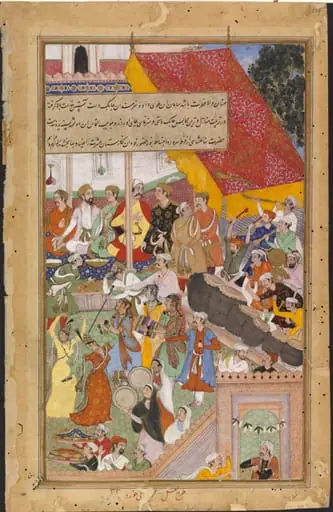
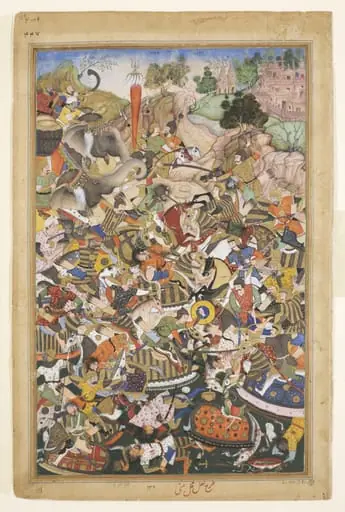
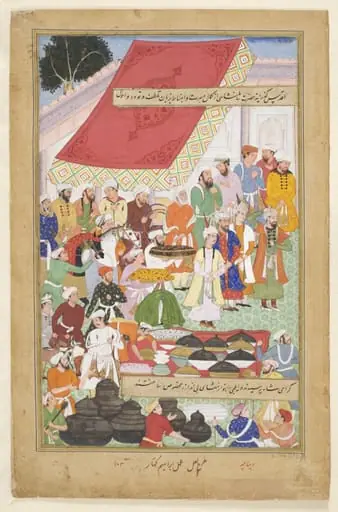
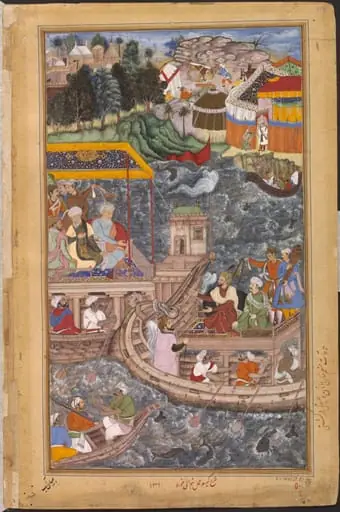
Akbar is a paint painting by the Mughal Painting artist La'l. It dates from 1592 and is held in the collection of the Victoria and Albert Museum.
About this work
Overview
The manuscript, now held by the V&A, is among the earliest surviving illustrated versions of the text and bears the signatures of its creators in red ink.
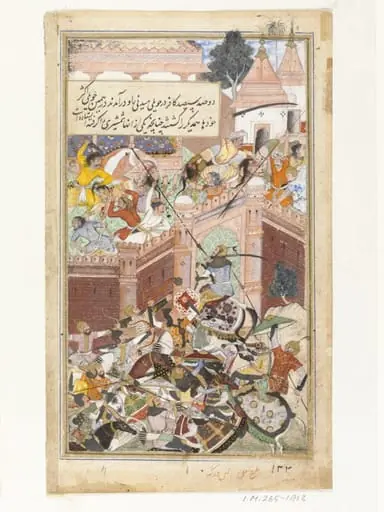
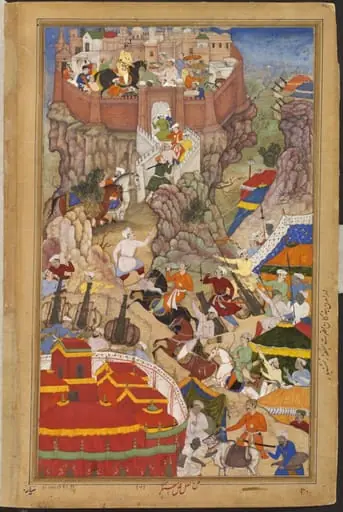
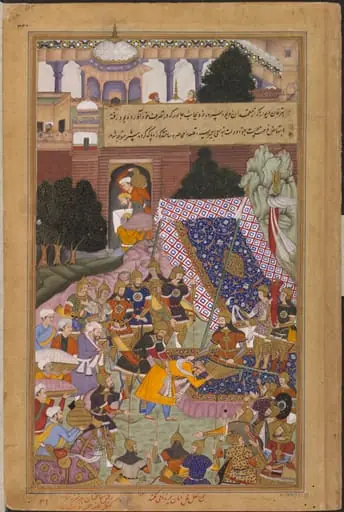
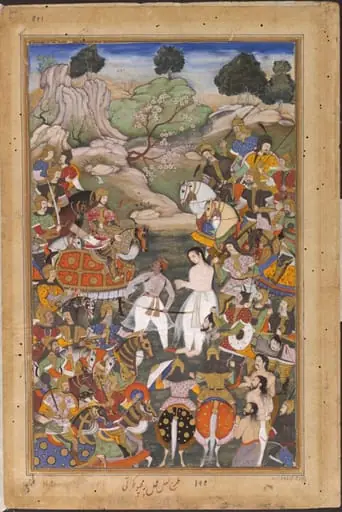
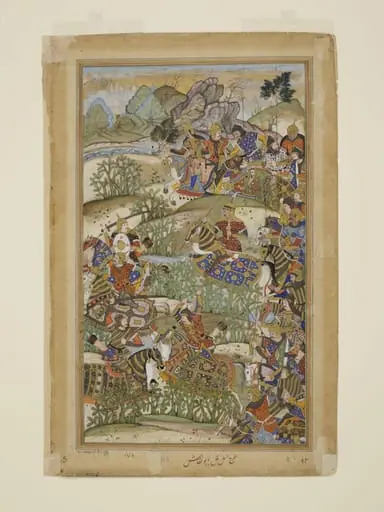
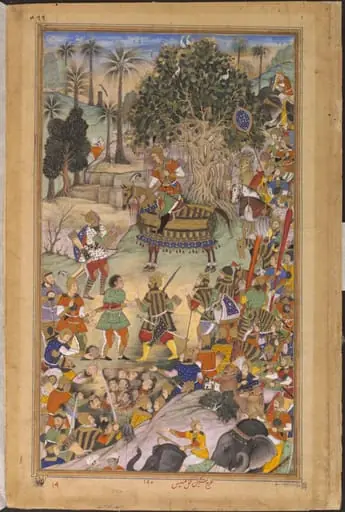
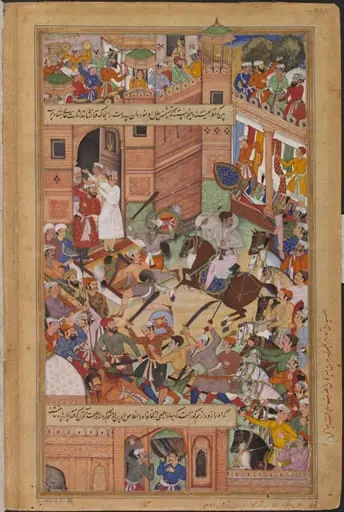
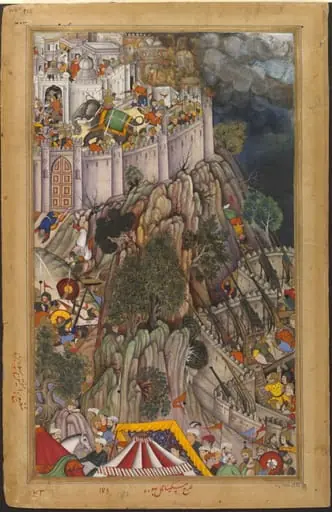
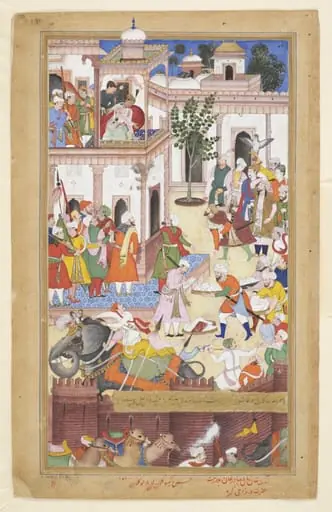
This painting is part of a lavishly illustrated manuscript commissioned by Emperor Akbar to document his reign. Created between 1592 and 1595, it illustrates a moment from the Akbarnama, a historical chronicle written in Persian by Abu’l Fazl. The scene captures Akbar observing a tragic incident on the Ravi River, rendered with precision by court artists La’l and Sanwala. The manuscript, now held by the V&A, is among the earliest surviving illustrated versions of the text and bears the signatures of its creators in red ink.
Subject & Meaning
The scene depicts two of Akbar’s soldiers struggling to cross the Ravi River with their horses, one gripping his mount’s mane, the other flailing in the current. Akbar, mounted and composed in gold and white, watches impassively from the riverbank. The contrast between his stillness and the men’s desperation underscores imperial detachment amid human vulnerability. The moment, recorded in the chronicle, reflects both the perils of military campaigns and the emperor’s role as distant observer of his empire’s trials.
Technique & Style
The composition was designed by La’l, who structured the narrative space with careful attention to spatial depth and figure placement. Sanwala executed the fine details, including the rippling water, the horses’ musculature, and the textures of clothing and armor. The palette is restrained yet rich, with gold leaf accents highlighting Akbar’s attire. The style blends Persian miniature traditions with emerging Mughal naturalism, particularly in the rendering of movement and individual expression.
History & Provenance
The manuscript was produced for Akbar’s personal library and remained in imperial hands through the reigns of Jahangir and Shah Jahan. After centuries in the Mughal collection, it entered private ownership in 19th-century India, acquired by Major General John Clarke during his service as Commissioner of Oudh. His widow, Frances Clarke, sold it to the V&A in 1896. The presence of artists’ names in red ink confirms its status as a royal commission, directly supervised by the emperor’s court.
Context
The Akbarnama was conceived as a legitimizing chronicle of Akbar’s rule, blending historical record with moral and political commentary. Its illustrations were not mere decorations but tools of imperial representation, reinforcing the emperor’s authority through controlled imagery. The involvement of named artists, documented in Abu’l Fazl’s A’in-i Akbari, reflects Akbar’s institutionalization of the arts, elevating painting to a state function within a centralized court culture.
Legacy
This painting exemplifies the height of Mughal manuscript illustration, influencing later court art through its synthesis of narrative clarity and technical refinement. Its survival as part of a complete, signed manuscript is rare, offering direct insight into the collaborative process of imperial art production. The work remains a key reference for understanding how visual culture served state ideology in early modern South Asia.
Artist & collection
Artist
Lal (La'l) sometimes called Lal wa Sarjangal is a town and the administrative center of Lal wa Sarjangal District, Ghor province in central Afghanistan.