Artwork
Baqi Muhammed Khan
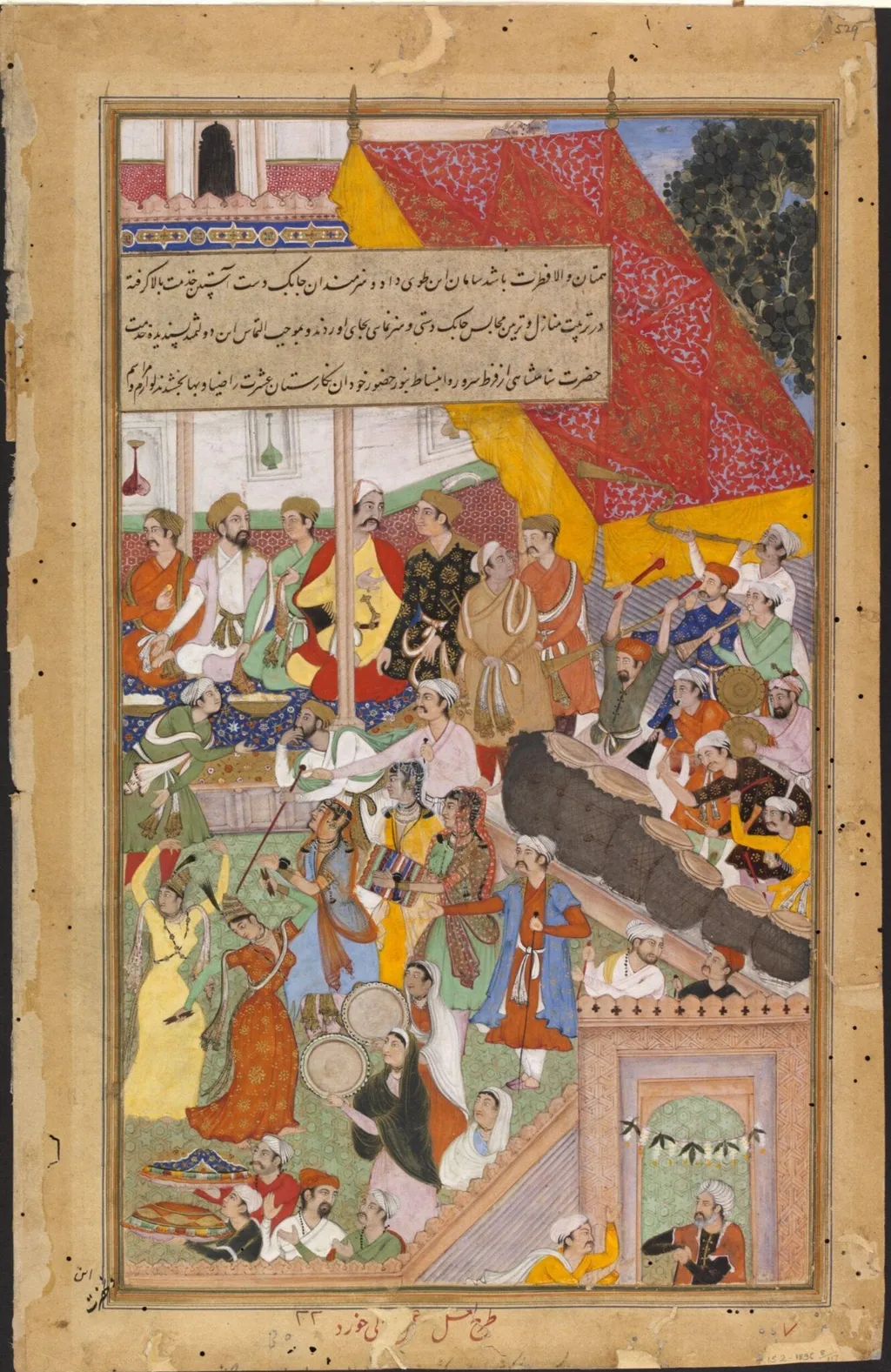
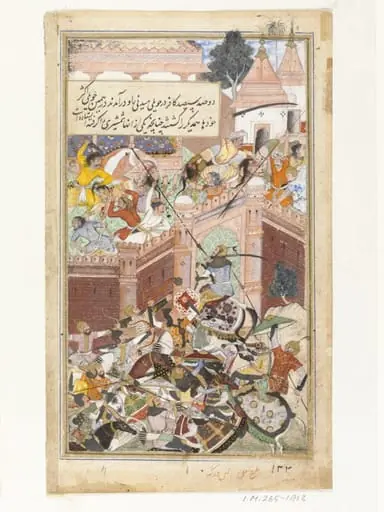
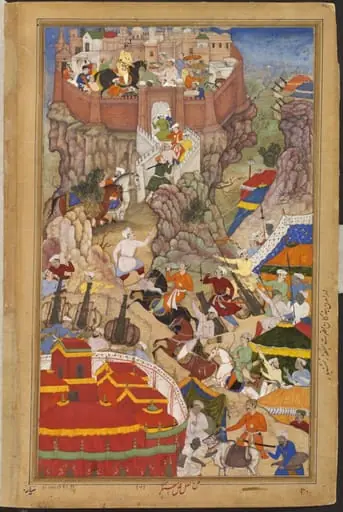
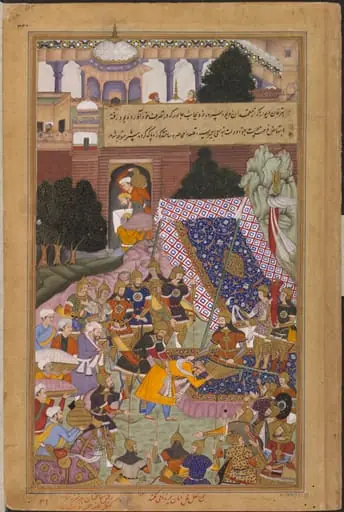
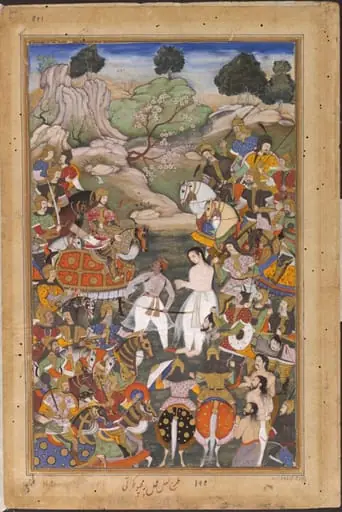
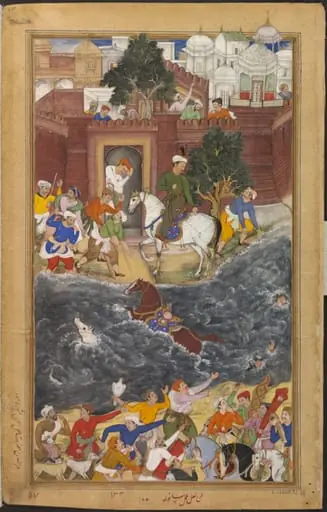
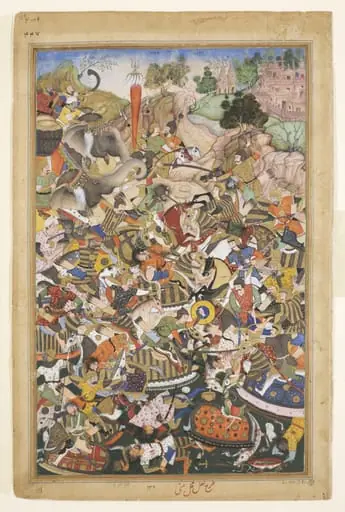
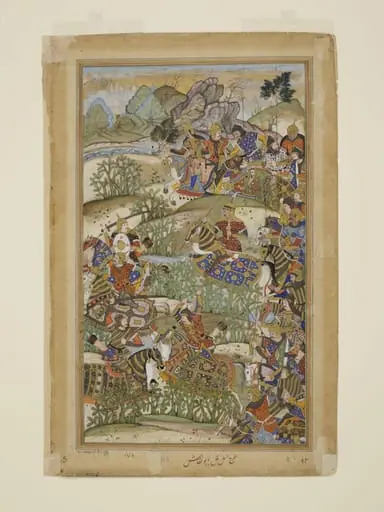
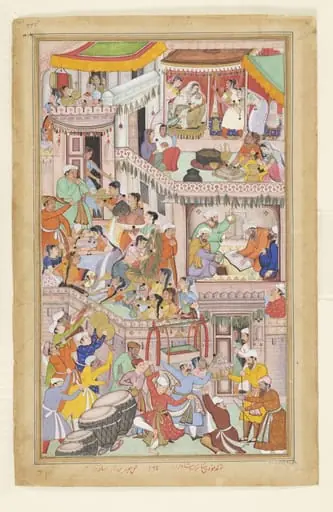
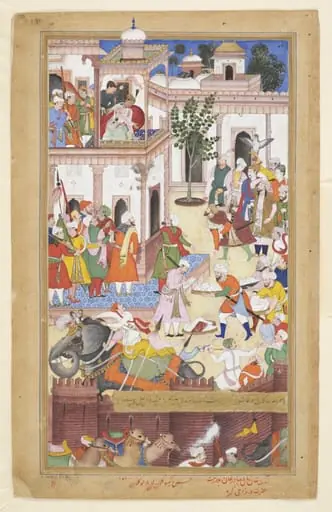
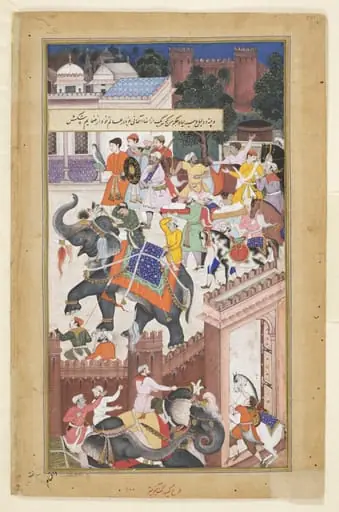
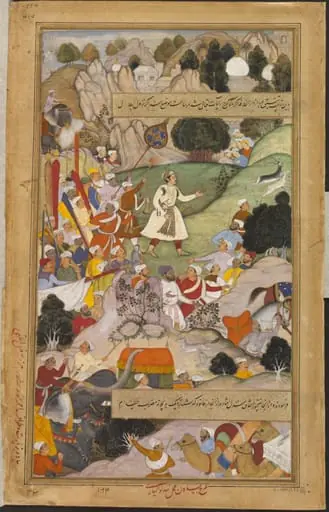
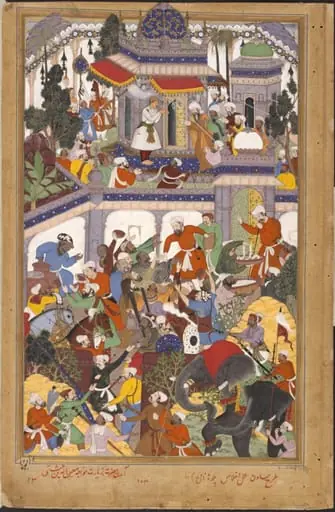
Baqi Muhammed Khan is a paint painting by the Mughal Painting artist La'l. It dates from 1592 and is held in the collection of the Victoria and Albert Museum. This painting is one half of a double-page illustration from the Akbarnama, a commissioned chronicle of Emperor Akbar’s reign.
About this work
The work is half of a double-page spread—the other side shows Akbar and his foster-mother, Maham Anaga, watching the celebration.
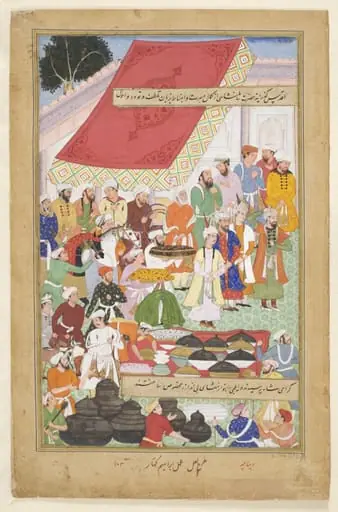
This painting shows a group of musicians and dancers performing in a courtyard. Bright colors fill the scene, with figures in detailed robes and jewelry. It’s part of a larger book called the Akbarnama, which tells the story of Emperor Akbar’s reign.
La'l painted this scene around 1590 for Akbar’s royal history. The work is half of a double-page spread—the other side shows Akbar and his foster-mother, Maham Anaga, watching the celebration.
This scene brings the emperor’s world to life. Check out more works by La'l.
Overview
This painting is one half of a double-page illustration from the Akbarnama, a commissioned chronicle of Emperor Akbar’s reign. Created around 1590–1595, it depicts a celebratory performance in a courtyard, featuring musicians and dancers. The work was produced by the artist La'l, one of at least forty-nine painters employed in Akbar’s imperial atelier. Its companion panel shows Akbar and Maham Anaga observing the festivities from a royal pavilion, together forming a unified narrative scene.
Subject & Meaning
The scene captures a private court celebration marking the marriage of Maham Anaga’s son, a moment of personal significance within the imperial household. Maham Anaga, as Akbar’s foster-mother, held considerable influence, and her presence in the adjacent panel underscores her elevated status. The performance reflects the cultural richness of the Mughal court, where music and dance were integral to ceremonial life, reinforcing the emperor’s patronage of the arts and the ceremonial fabric of courtly power.
Technique & Style
Rendered in opaque watercolor and gold on paper, the painting displays fine brushwork and vivid, saturated hues. Figures are rendered with meticulous detail in their textiles, jewelry, and gestures, characteristic of the Mughal style’s blend of Persian elegance and Indian naturalism. The composition balances rhythmic movement with architectural framing, guiding the viewer’s eye across the courtyard while maintaining a sense of orderly grandeur typical of imperial manuscript illustration.
History & Provenance
The Akbarnama manuscript was completed between 1590 and 1596 under Akbar’s direction, with illustrations produced concurrently. After his death, it passed through the libraries of his successors Jahangir and Shah Jahan. In the 19th century, the manuscript came into the possession of Major General Clarke, who served in Oudh. The Victoria and Albert Museum acquired the folios in 1896 from his widow, preserving them as part of a major collection of Mughal art.
Context
The Akbarnama was not merely a historical record but a tool of imperial ideology, visually affirming Akbar’s authority and cultural sophistication. Its illustrations, produced by a large team of artists, reflect a deliberate synthesis of diverse artistic traditions—Persian, Indian, and European influences—under royal supervision. This scene, embedded within a broader narrative, illustrates how courtly events were documented as both personal milestones and political spectacles.
Legacy
The Akbarnama remains one of the most significant illustrated manuscripts of the Mughal era, offering insight into courtly life, artistic collaboration, and the role of visual culture in legitimizing power. The survival of its folios, including this work by La'l, allows scholars to trace the evolution of Mughal painting and the collaborative nature of imperial manuscript production. Its presence in the V&A underscores its enduring value as a historical and aesthetic document.
Artist & collection
Artist
Lal (La'l) sometimes called Lal wa Sarjangal is a town and the administrative center of Lal wa Sarjangal District, Ghor province in central Afghanistan.