Artwork
Vaches sous Bois (Cattle in the Forest)
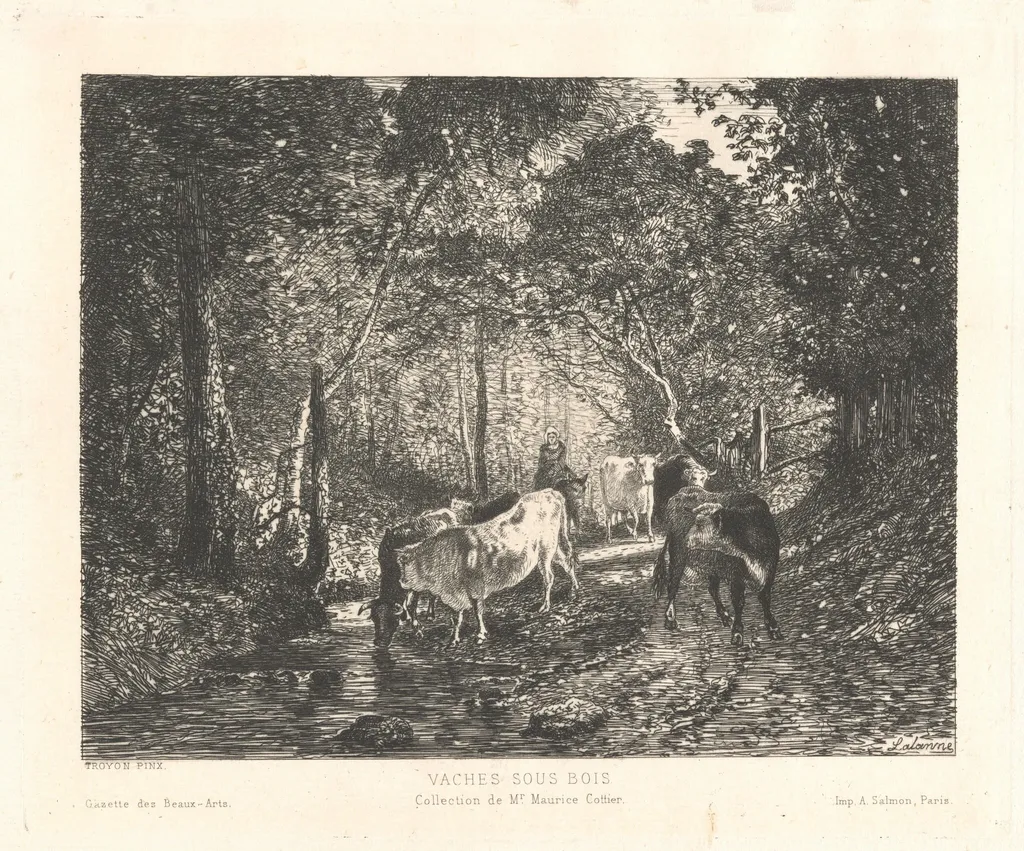
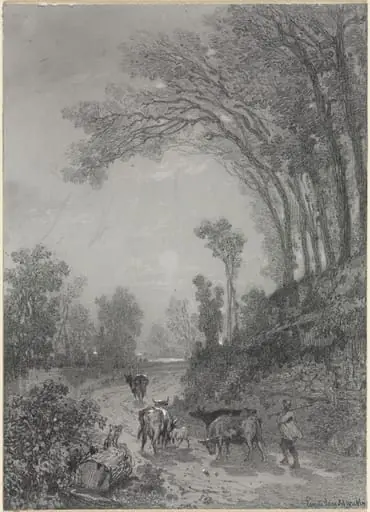
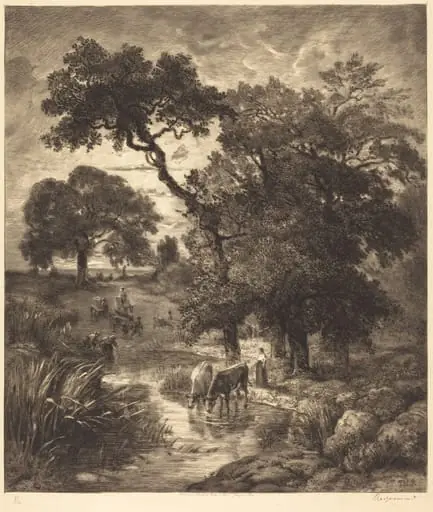
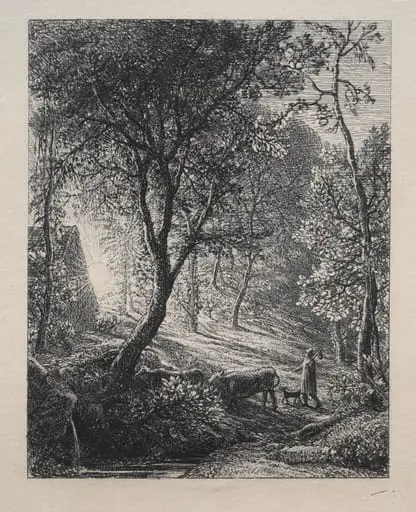
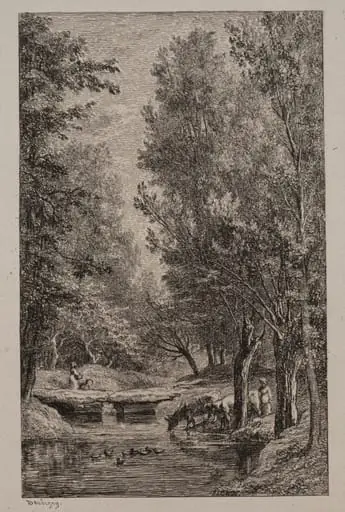
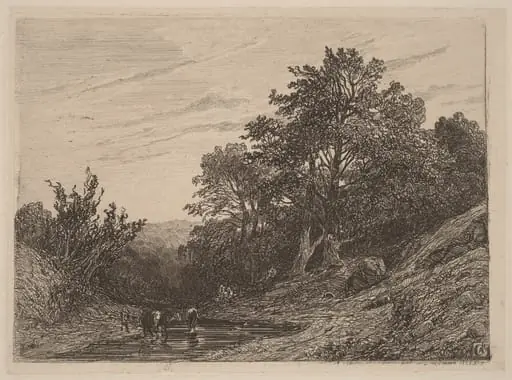
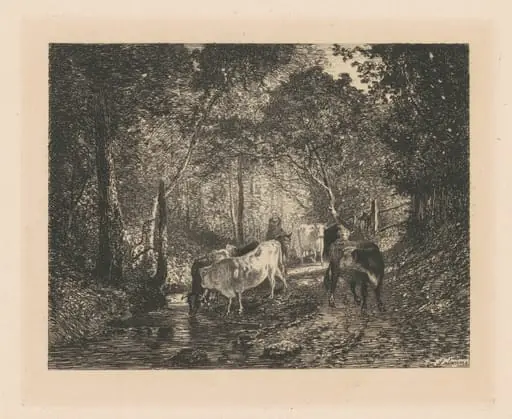
Vaches sous Bois (Cattle in the Forest) is an ink print by the Impressionist artist Maxime Lalanne. It dates from 1872 and is held in the collection of the National Gallery of Art.
About this work
Overview
Held in the National Gallery of Art in Washington, the piece exemplifies his mastery of the etching technique and his sensitivity to natural environments.
Created in 1872, *Vaches sous Bois* is an etching on laid paper by French artist François Antoine Maxime Lalanne. The work belongs to a body of prints in which Lalanne focused on rural life, capturing quiet, unidealized moments in the countryside. Held in the National Gallery of Art in Washington, the piece exemplifies his mastery of the etching technique and his sensitivity to natural environments.
Subject & Meaning
The scene depicts three cattle standing beneath dense trees, accompanied by a figure in modest attire holding a staff. The presence of the human form suggests a herder or local observer, grounding the image in everyday rural existence. Wet ground and tangled branches reinforce a sense of stillness and damp solitude, evoking the quiet rhythm of forest life without narrative drama or sentimentality.
Technique & Style
Lalanne employed etching to render fine, irregular lines that mimic the texture of bark, wet earth, and foliage. The inked lines vary in density, creating depth through subtle contrasts rather than heavy shading. The use of laid paper, with its visible chain lines, adds a tactile quality that complements the rough, organic character of the scene, typical of 19th-century printmakers seeking authenticity over polish.
History & Provenance
The print was produced during a period when Lalanne was actively engaged in documenting French rural landscapes. It entered the collection of the National Gallery of Art in Washington, D.C., where it remains part of a broader archive of 19th-century European prints. Its preservation reflects its significance as a representative example of Lalanne’s contribution to the revival of etching as a medium for observational art.
Context
In the decades following the 1848 revolutions, French artists increasingly turned to scenes of peasant life and nature as alternatives to academic grandeur. Lalanne’s work aligns with this shift, sharing affinities with the Barbizon School’s emphasis on direct observation. Etching, once reserved for reproductive purposes, was being reclaimed by artists as a vehicle for personal expression and atmospheric realism.
Legacy
Lalanne’s prints, including *Vaches sous Bois*, influenced later generations of printmakers who valued the medium’s capacity for intimate, unembellished observation. His technical precision and restraint helped elevate etching beyond illustration, contributing to its recognition as a legitimate fine art form in the late 19th century. The work endures as a quiet testament to the dignity of rural labor and landscape.
Own this work as a print
Artist & collection
Artist
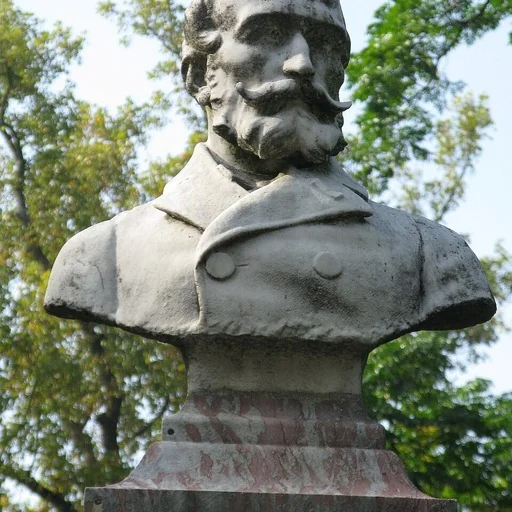
François Antoine Maxime Lalanne (November 27, 1827 – July 29, 1886) was a French artist known for his etchings and charcoal drawings (fusain).