Artwork
La vieillesse
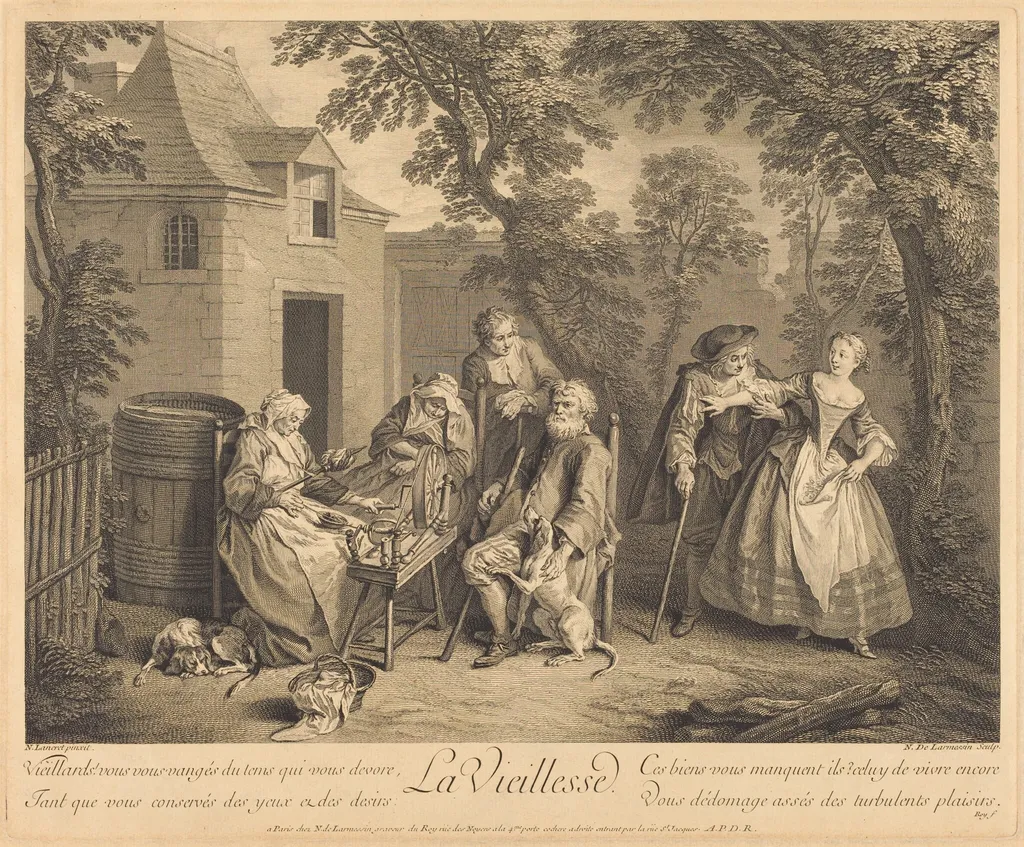
La vieillesse is an ink print by the Baroque artist Nicolas de Larmessin IV. It dates from 1735 and is held in the collection of the National Gallery of Art.
About this work
Overview
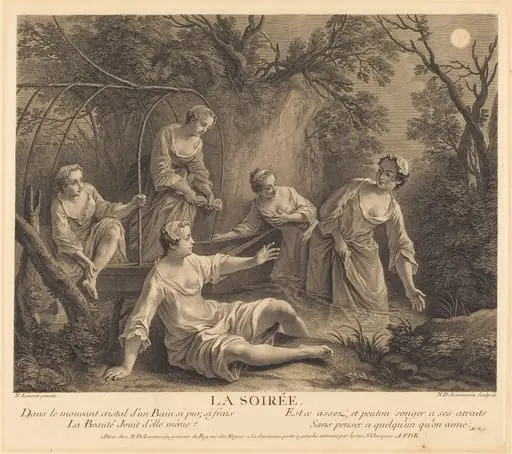
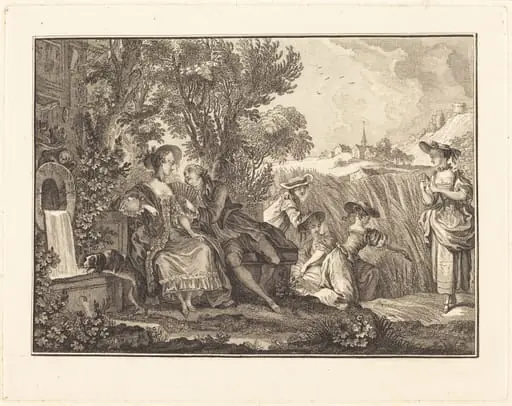
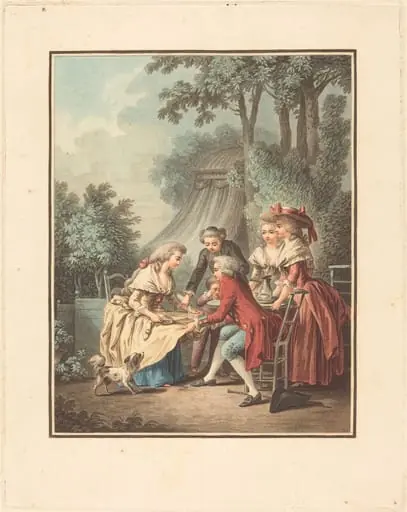
La vieillesse, executed in 1735 by Nicolas de Larmessin IV, is a print that combines engraving and etching techniques. The work portrays a tranquil courtyard scene populated by several figures, a dog, and domestic objects, all arranged within a modest architectural setting surrounded by trees.
Subject & Meaning
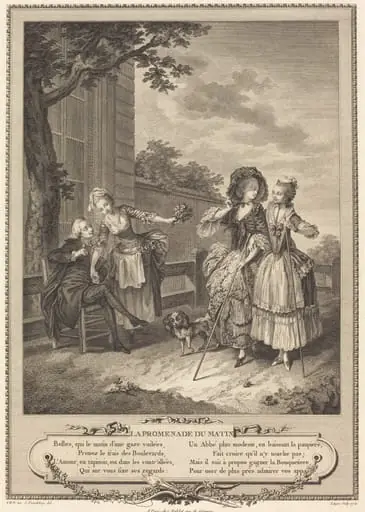
The composition gathers a small community engaged in everyday activities: a seated woman at a table, a man supporting himself with a cane, and another woman gesturing toward him. The inclusion of a lying dog and a barrel suggests a domestic, rural atmosphere, emphasizing simple social interaction and the calm of rural life.
Technique & Style
Larmessin employs fine, intersecting lines to render textures of foliage, stone, and fabric, creating a convincing sense of depth. The blend of engraving’s precise incisions with the softer tones of etching allows subtle shading, lending the scene a realistic yet delicate quality.
History & Provenance
Created in the early eighteenth century, the print reflects the period’s interest in genre scenes that depict ordinary life. While specific ownership records are scarce, the work is catalogued among Larmessin’s known prints and has been referenced in collections of French printmaking from the 1700s.
Context
During the 1730s, French artists often turned to rural genre subjects to contrast the grandeur of courtly art. Larmessin’s depiction aligns with this trend, offering a glimpse into everyday communal life outside the aristocratic sphere, a theme popular among contemporary engravers.
Artist & collection