Artwork
Nuttall's Starling, Yellow-headed Troopial and Bullock's Oriole
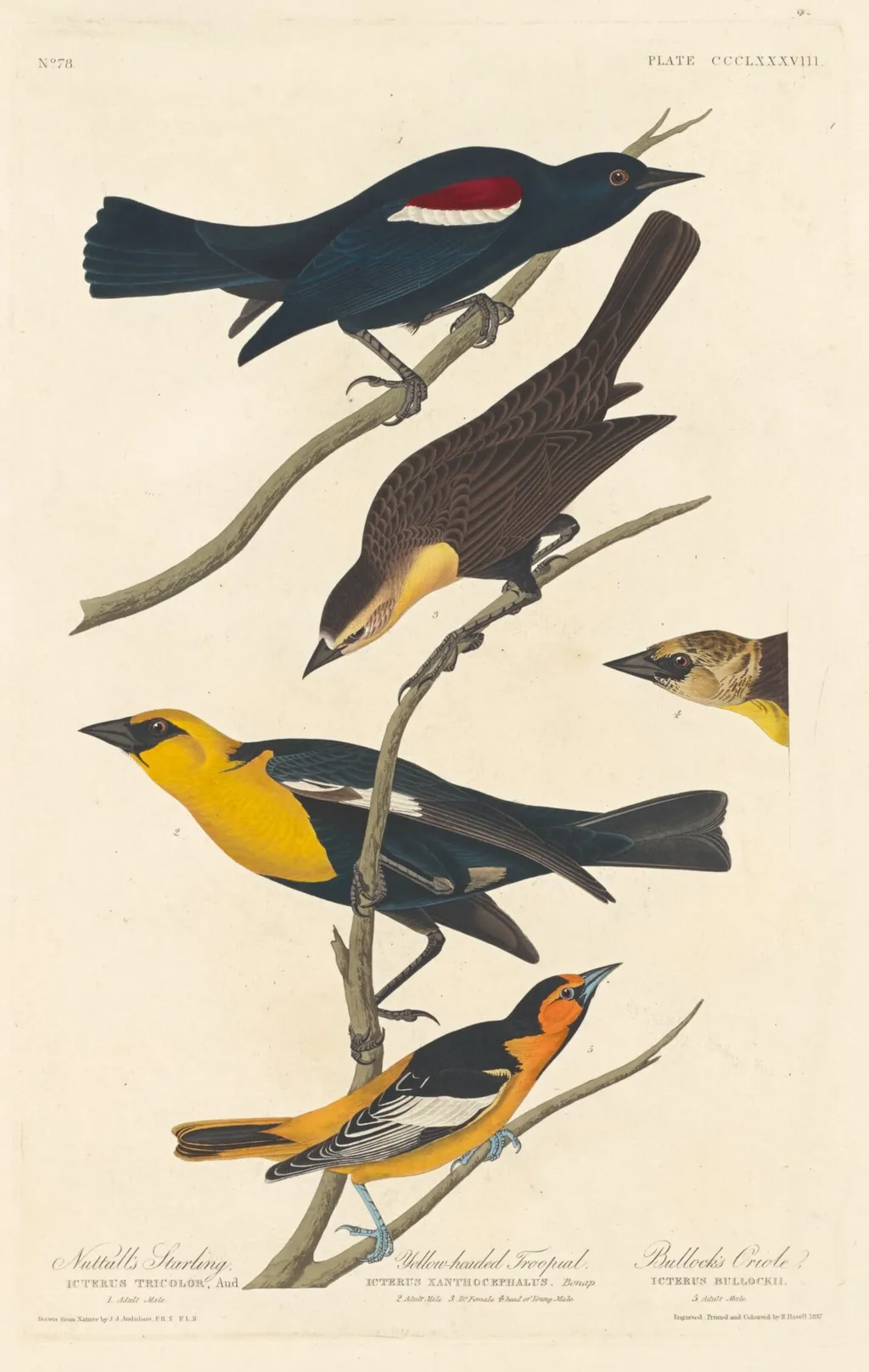
Nuttall's Starling, Yellow-headed Troopial and Bullock's Oriole is an ink print by the Romanticist artist Robert Havell Jr.. It dates from 1837 and is held in the collection of the National Gallery of Art.
About this work
Overview
, this print combines hand-colored engraving and aquatint on Whatman wove paper.
Created in 1837 by Robert Havell Jr., this print combines hand-colored engraving and aquatint on Whatman wove paper. It presents three North American bird species—Nuttall’s Starling, Yellow-headed Troopial, and Bullock’s Oriole—rendered with precision typical of early 19th-century natural history illustration. The Havell family, based in Reading, Berkshire, were known for their technical skill in printmaking, particularly aquatint, which allowed for subtle tonal gradations and fine detail.
Subject & Meaning
The print documents three bird species native to the Americas, each depicted in distinct postures: perched, mid-flight, and alert. The inclusion of multiple species reflects a scientific impulse to classify and observe avian life, aligning with the broader naturalist projects of the era. No symbolic or allegorical meaning is evident; the focus remains on accurate representation rather than narrative or emotional expression.
Technique & Style
Havell employed aquatint to achieve soft tonal transitions in the birds’ plumage, complemented by fine engraved lines for feather detail. Cross-hatching and delicate stippling model volume and texture, enhancing realism. Hand-coloring, applied with care, uses muted earth tones—browns, grays, and pale yellows—to reflect natural hues without embellishment. The composition arranges the birds against a neutral background, emphasizing form over environment.
History & Provenance
Robert Havell Jr. was part of a multi-generational family of English printmakers active in the early 1800s. His father, Robert Havell the Elder, and uncle Luke Havell were also engravers, contributing to a legacy of technical refinement. This print likely originated as part of a larger ornithological publication, though its specific provenance prior to modern collections remains undocumented. It reflects the British print trade’s role in disseminating American natural history imagery.
Context
Produced during a period of expanding natural science and colonial exploration, the print aligns with European efforts to catalog New World fauna. While the birds are American, the technique and presentation are rooted in British print traditions. The absence of landscape or habitat details reflects a convention of the time: prioritizing specimen clarity over ecological context, a practice common in scientific illustration before the rise of field-based naturalism.
Legacy
Havell’s work contributed to the standardization of ornithological imagery in print, influencing later natural history publications. His technical approach—combining engraving with aquatint and hand-coloring—became a model for precision in biological illustration. Though not widely known outside specialist circles, his prints remain valued for their fidelity and craftsmanship within the history of scientific printmaking.
Artist & collection

Artist
The Havell family of Reading, Berkshire, England, included a number of notable engravers, etchers and painters, as well as writers, publishers, educators, and musicians.

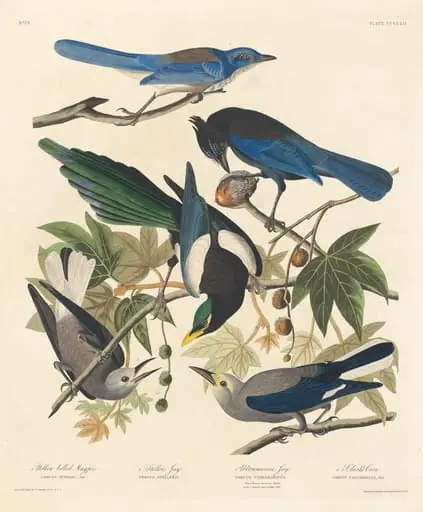 Yellow-billed Magpie, Stellers Jay, Ultramarine Jay and Clark's Crow
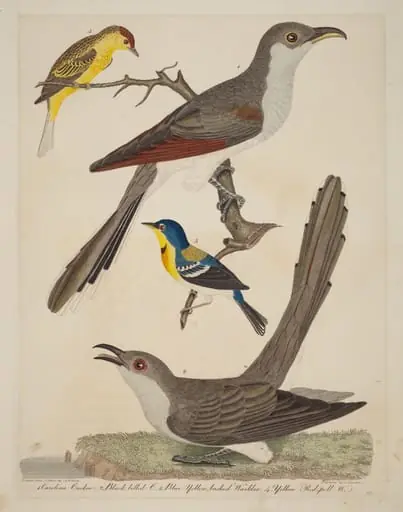 Carolina Cuckoo, Black-billed Cuckoo, Blue Yellow-backed Warbler, and Yellow Red-poll Warbler
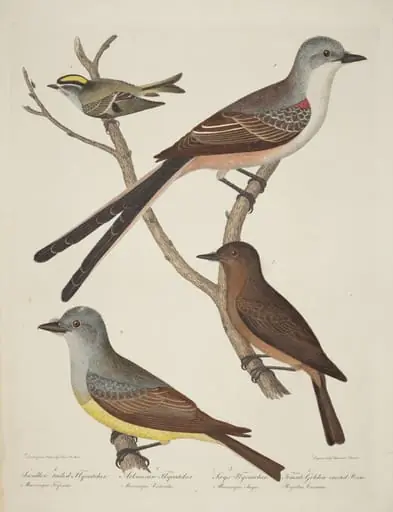 Swallow-tailed Flycatcher, Arkansas Flycatcher, Say's Flycatcher, and Female Golden-crested Wren
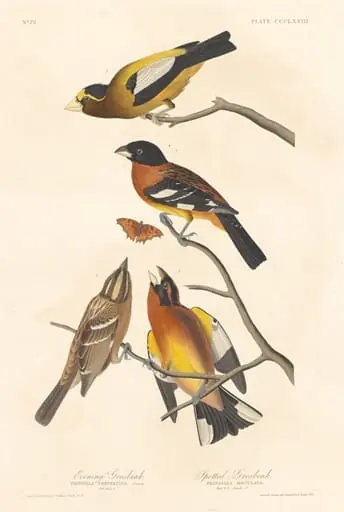 Evening Grosbeak and Spotted Grosbeak
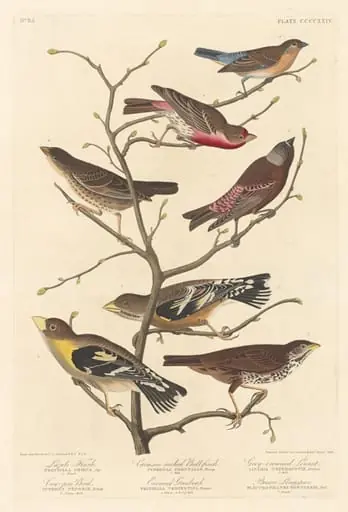 Lazuli Finch
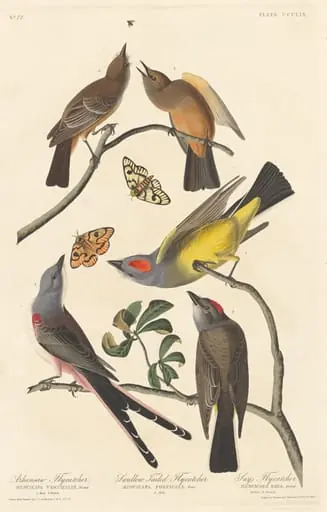 Arkansaw Flycatcher, Swallow-tailed Flycatcher and Says Flycatcher
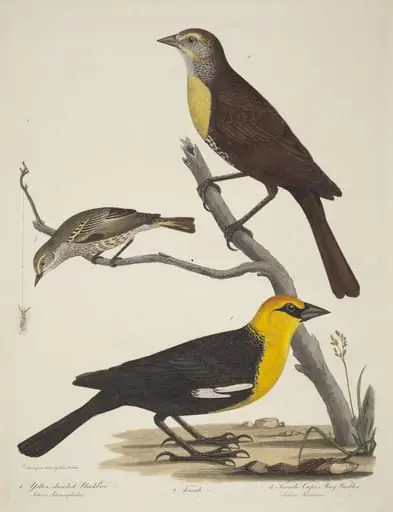 Yellow-headed Blackbird, Female Blackbird, and Female Cape May Warbler
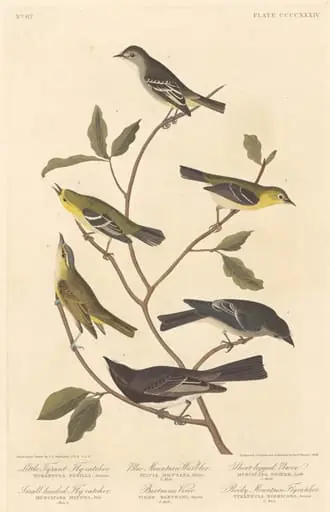 Little Tyrant Flycatcher, Small-Headed Flycatcher, Blue Mountain Warbler, Bartram's Vireo, Short-Legged Pewee, and Rocky Mountain Flycatcher