Artwork
The Seconda Macchina for the Chinea of 1746: The Territories of the Kingdom of Naples
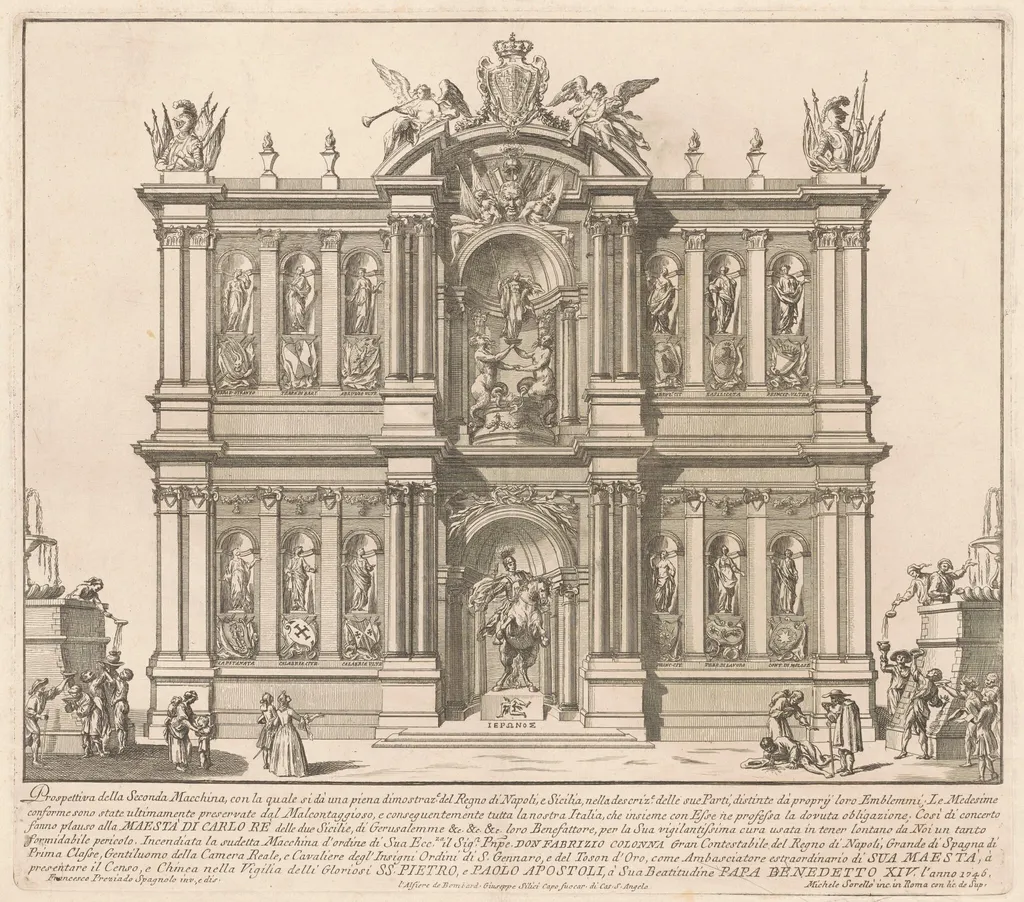
The Seconda Macchina for the Chinea of 1746: The Territories of the Kingdom of Naples is an ink print by the Baroque artist Miguel de Sorellò. It dates from 1746 and is held in the collection of the National Gallery of Art.
About this work
The tiny text at the bottom explains this was built for a royal event in 1746, celebrating the territories of Naples.
This print shows a grand, ornate stage set designed to look like a building. Statues of people stand in niches, and a central arch frames a figure on horseback. Smaller figures—some kneeling, some holding props—fill the lower edges, as if preparing for a performance. The whole scene is packed with symbols, like shields and crowns, and looks like a mix of a palace and a theater.
The tiny text at the bottom explains this was built for a royal event in 1746, celebrating the territories of Naples. The artist used shading and lines to make the 3D effect pop, almost like a shadow play.
Try looking up etching to see how artists like this one carved fine lines into metal to print images.
Overview
Created in 1746 by Miguel de Sorellò, this etching depicts a temporary architectural spectacle commissioned for the Chinea ceremony in Naples. Designed as a theatrical backdrop, it presents a monumental facade adorned with statues, heraldic emblems, and a central equestrian figure. The composition mimics a stage set, blending architectural grandeur with performative elements to honor the Kingdom’s territorial domains during a ceremonial procession.
Subject & Meaning
The image symbolizes the territorial authority of the Kingdom of Naples through allegorical figures, crowns, and shields arranged along a ceremonial facade. A mounted figure, likely representing the monarch, dominates the central arch, while smaller attendants and offerings at the base suggest ritual submission and tribute. The scene functions as a visual manifesto of royal power, rendered for a public event that reinforced political legitimacy through spectacle.
Technique & Style
Sorellò employed fine, controlled etching lines to model depth and texture, creating a convincing illusion of three-dimensional architecture. Shading and cross-hatching define niches, drapery, and sculptural details, while the dense composition avoids visual emptiness. The precision of the lines reflects the printmaker’s skill in translating elaborate stage designs into a reproducible medium, balancing ornamental richness with structural clarity.
History & Provenance
The print was produced as a record of the 1746 Chinea, an annual tribute ceremony in which Naples reaffirmed its feudal obligations to the Papacy. Such ephemeral constructions were rarely preserved, making this etching a rare document of Bourbon-era ceremonial culture. It likely circulated among courtiers and artists as both commemoration and design reference, though its original context remains tied to the Neapolitan royal court.
Context
The Chinea ceremony was a longstanding ritual linking Naples to papal authority, marked by elaborate processions and temporary architecture. Sorellò’s etching reflects the Baroque tradition of using spectacle to convey political order, where architecture, sculpture, and performance merged. Similar designs appeared in other European courts, but this work is specific to Naples’ unique position within the Spanish and later Bourbon dynastic framework.
Legacy
As a surviving record of a transient event, the etching offers insight into how power was visually constructed in 18th-century Naples. It stands as an example of how print culture preserved ephemeral court spectacles, influencing later documentation of public ceremonies. Though not widely known outside specialized circles, it remains a key artifact for understanding the intersection of art, politics, and ritual in early modern Southern Italy.
Artist & collection


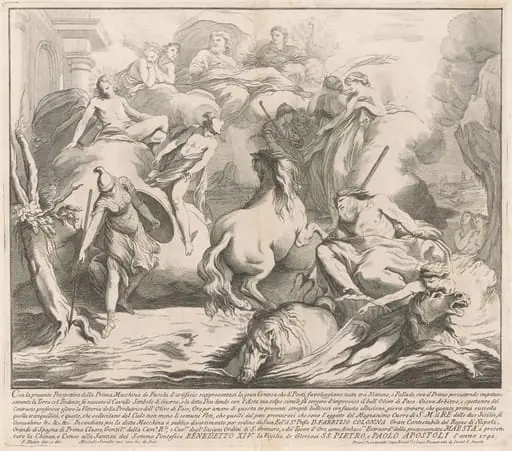 The Prima Macchina for the Chinea of 1742: The Contest of Neptune and Minerva
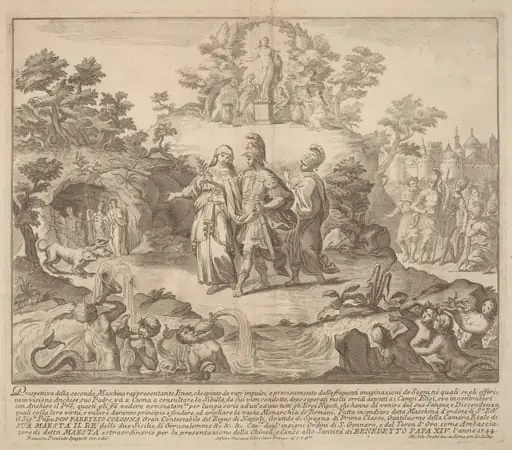 The Seconda Macchina for the Chinea of 1744: Aeneas and Cumaean Sibyl
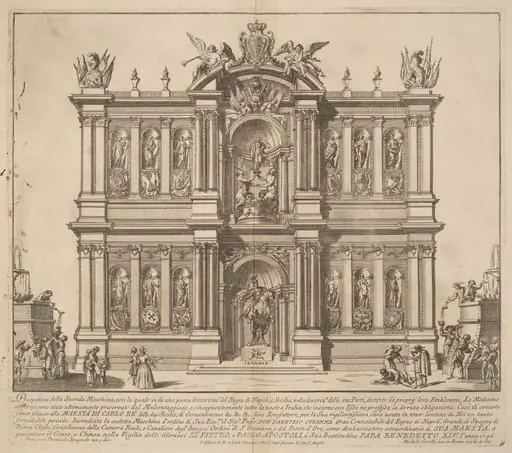 The Seconda Macchina for the Chinea of 1746: The Territories of the Kingdom of Naples
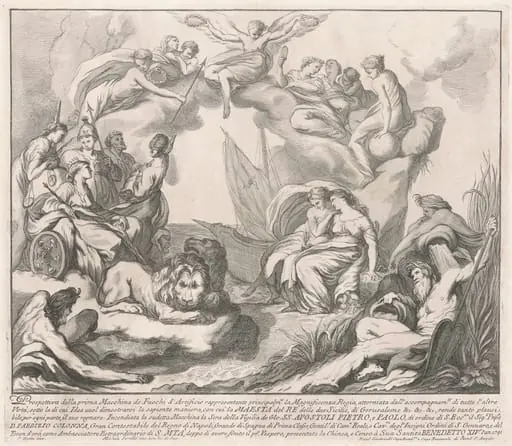 The Prima Macchina for the Chinea of 1741: Allegory of Regal Magnificence
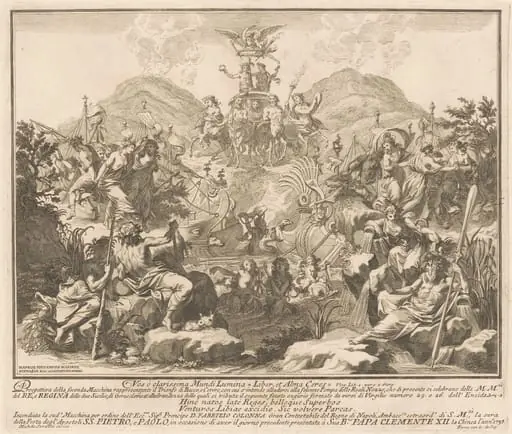 The Seconda Macchina for the Chinea of 1738: The Triumph of Bacchus and Ceres
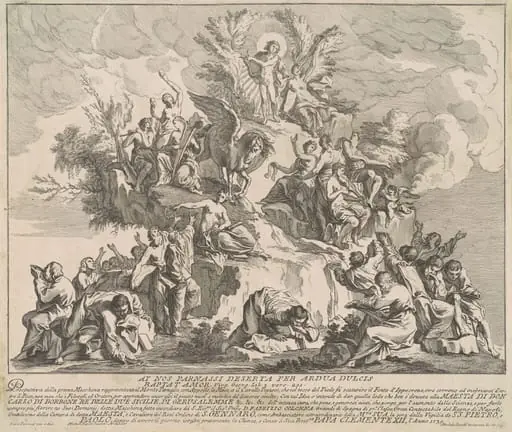 The Prima Macchina for the Chinea of 1739: Mount Parnassus with Apollo, the Muses, and Pegasus
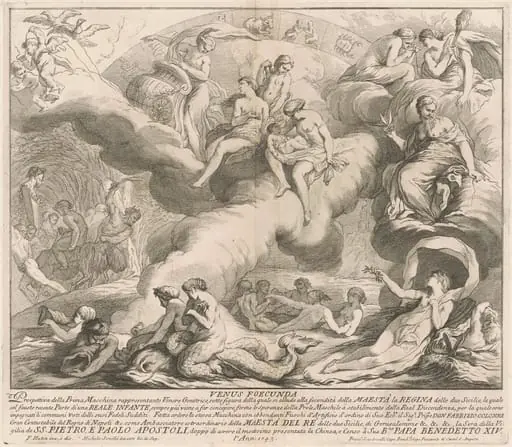 The Prima Macchina for the Chinea of 1743: Venus Genetrix
 Tapestries in the Vatican, after designs by Raphael
 The Seconda Macchina for the Chinea of 1745: Triumphal Arch for the Return of King Charles of Bourbon to Naples
 The Seconda Macchina for the Chinea of 1773: The Preparation of Theriac in Venice
 The Seconda Macchina for the Chinea of 1765: A Decorated Building with Cockaigne Poles
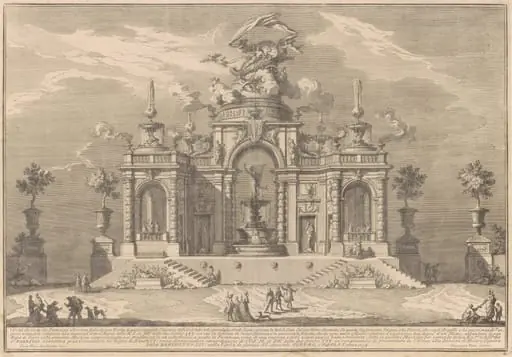 The Prima Macchina for the Chinea of 1754: The Palace of Venus in Cyprus
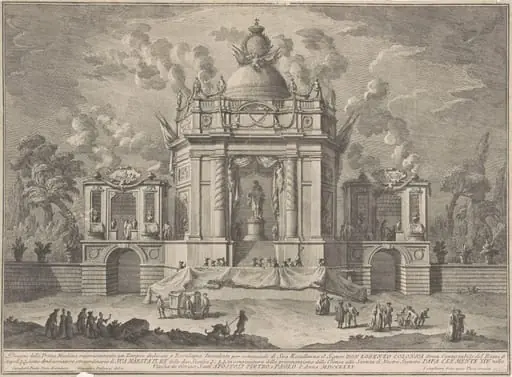 The Prima Macchina for the Chinea of 1771: The Temple of Asclepius
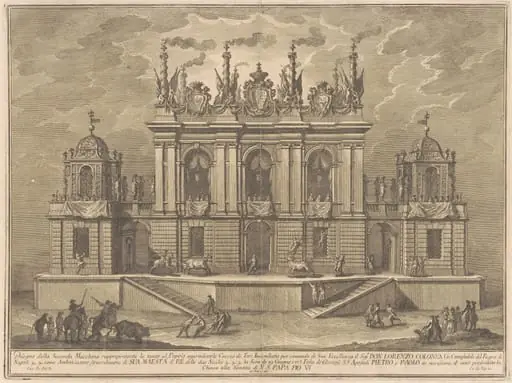 The Seconda Macchina for the Chinea of 1775: A Bull-fight
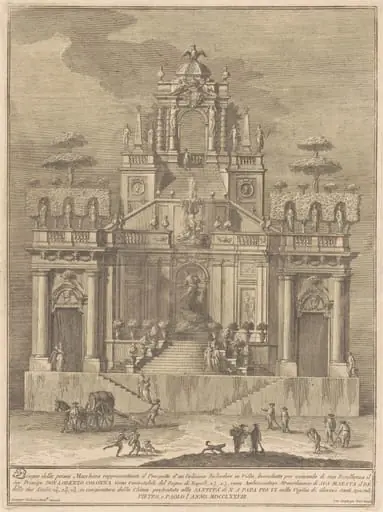 The Prima Macchina for the Chinea of 1778: A Countryside Belevedere with Hercules and Antaeus
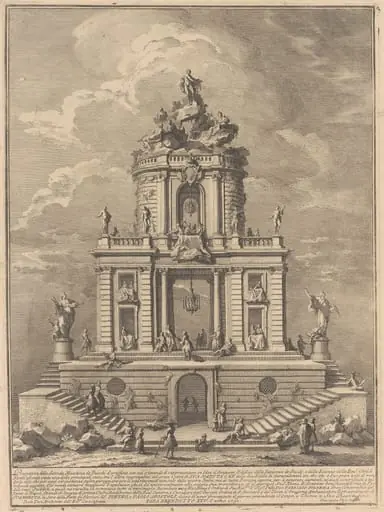 The Seconda Macchina for the Chinea of 1751: The Palace of Wisdom, Studies, and the Sciences
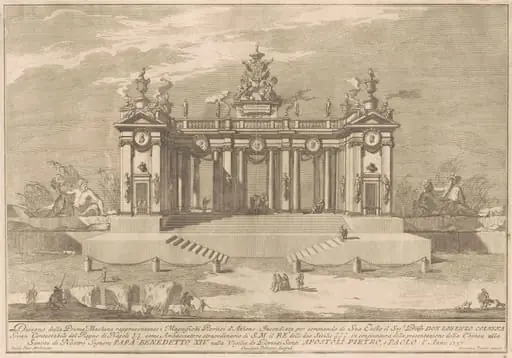 The Prima Macchina for the Chinea of 1757: The Colonnade of the Athenian Lyceum
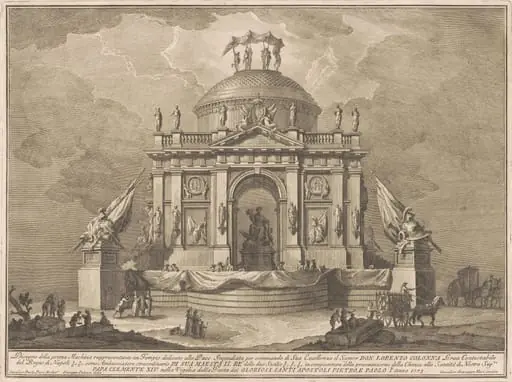 The Prima Macchina for the Chinea of 1773: The Temple of Peace