Artwork
The Seconda Macchina for the Chinea of 1765: A Decorated Building with Cockaigne Poles
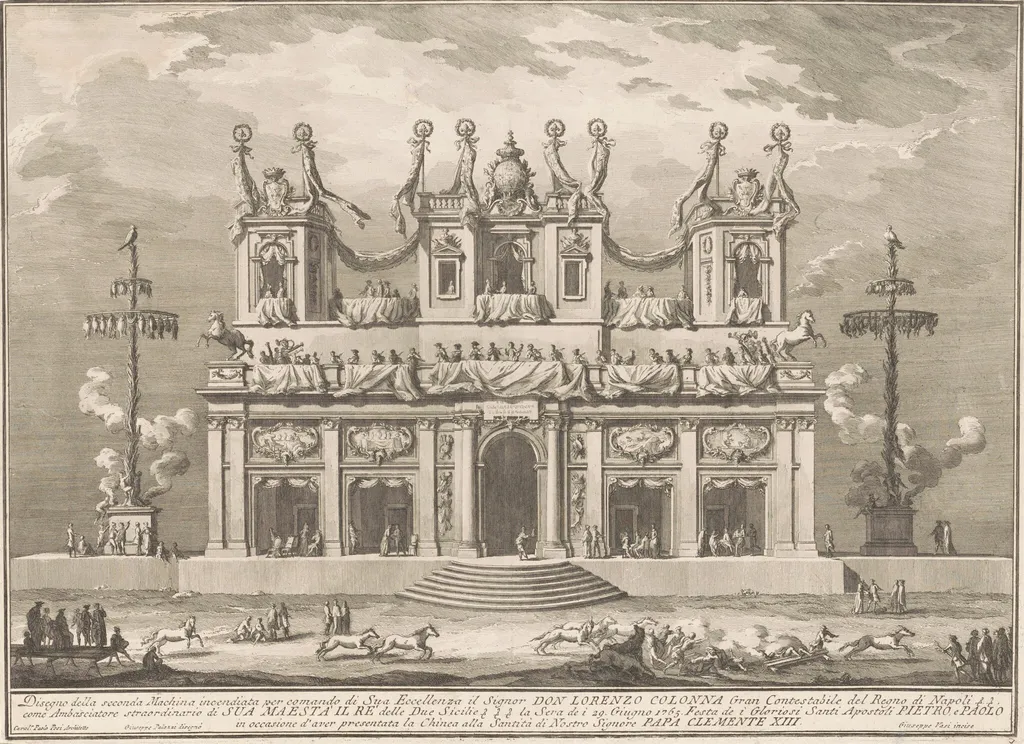
The Seconda Macchina for the Chinea of 1765: A Decorated Building with Cockaigne Poles is an ink print by the Romanticist artist Giuseppe Vasi. It dates from 1765 and is held in the collection of the National Gallery of Art.
About this work
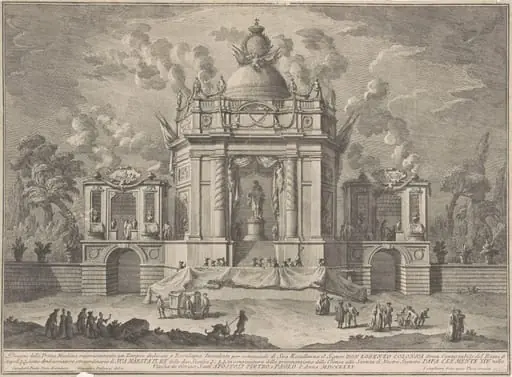
It has three tall doors with fancy carvings above them, and two giant poles wrapped in ribbons on either side.
This drawing shows a grand, fake building decorated like a palace. It has three tall doors with fancy carvings above them, and two giant poles wrapped in ribbons on either side. People in old-fashioned clothes stand on a balcony, watching a parade below with horses and riders. The ground floor has more people, some riding, some walking, while the sky above is dotted with fluffy clouds.
The text at the bottom says this was made for a special event in 1765. The building looks temporary, like a stage set for a celebration.
Look up etching to see how artists like this made detailed prints.
Overview
Giuseppe Vasi’s 1765 etching, titled *The Seconda Macchina for the Chinea of 1765: A Decorated Building with Cockaigne Poles*, records a temporary architectural spectacle erected for the annual Chinea ceremony. The print captures a lavish, stage‑like façade that functioned as a backdrop for the procession, illustrating the festive atmosphere of mid‑eighteenth‑century Rome.
Subject & Meaning
The composition centers on an elaborate, make‑shift building reminiscent of a palace, its façade punctuated by three towering doors crowned with ornamental pediments. Flanking the structure are two massive poles festooned with ribbons, a visual reference to the mythic land of Cockaigne, symbolising abundance and celebration. Figures in contemporary dress populate the balcony and ground level, observing the horse‑drawn parade below, thereby emphasizing the communal spectacle of the Chinea tribute.
Technique & Style
Executed as an etching, Vasi employed fine line work to render architectural detail and the texture of clouds in the sky. The medium allowed for precise delineation of the decorative carvings above the doors and the intricate ribbon‑wrapping of the poles, while the contrast of dark ink against the paper conveys depth and the bustling crowd’s movement.
History & Provenance
Created specifically for the 1765 Chinea festivities, the print served both as a record of the event and as a promotional image for the celebration. The Chinea, a yearly tribute from the Kingdom of Naples to the Pope, was marked by elaborate pageantry in Rome; Vasi’s work documents one of its most ornate visual interventions. The etching remains in collections of institutions focusing on Roman urban history and 18th‑century printmaking.
Artist & collection

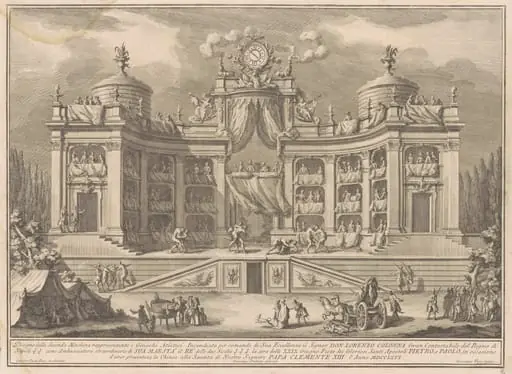 The Seconda Macchina for the Chinea of 1766: A Theater for Athletic Games
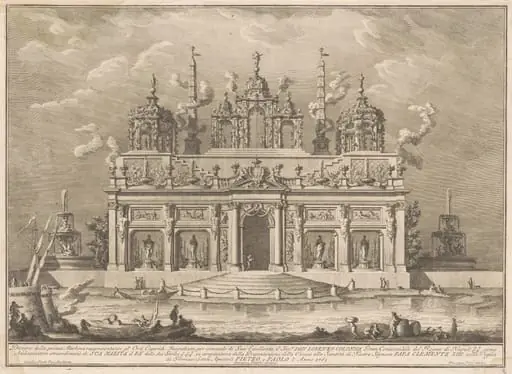 The Prima Macchina for the Chinea of 1765: The Garden of the Hesperides
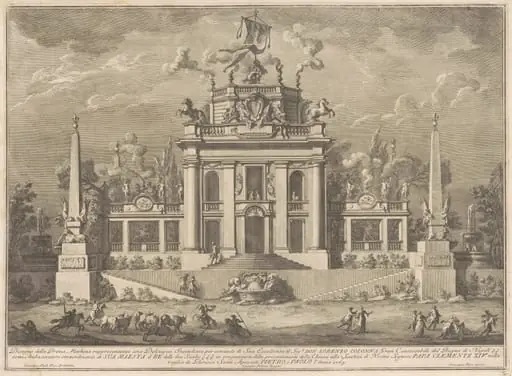 The Prima Macchina for the Chinea of 1769: A "Deliziosa"
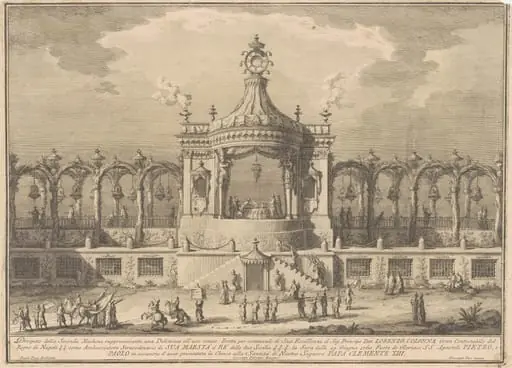 The Seconda Macchina for the Chinea of 1760: A Chinoiserie Pavilion
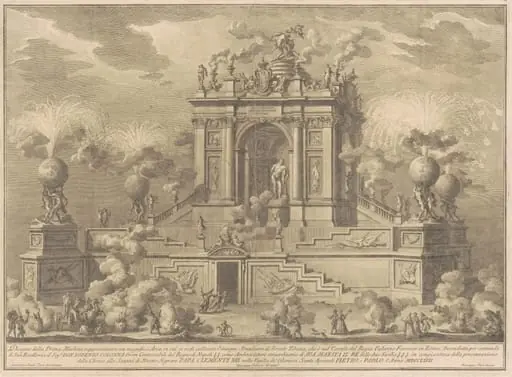 The Prima Macchina for the Chinea of 1767: A Triumphal Arch with the Farnese Hercules
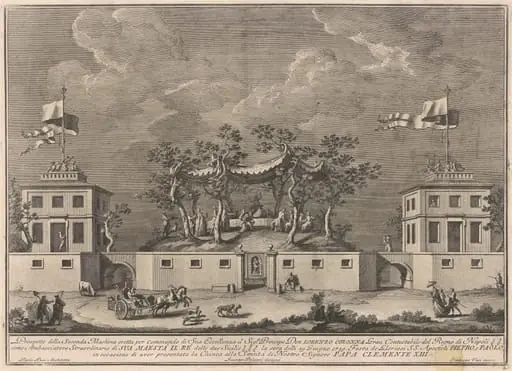 The Seconda Macchina for the Chinea of 1759: A "Deliziosa" with a Bacchanal
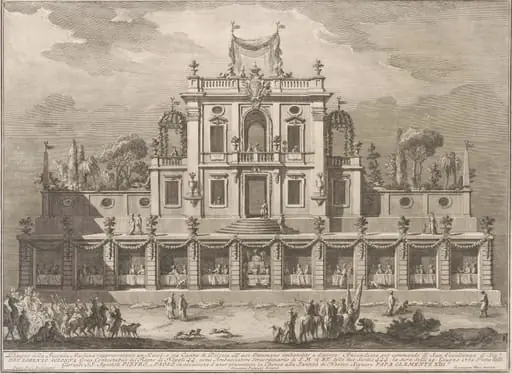 The Seconda Macchina for the Chinea of 1762: A Kiosk, or Pleasure-House in Ottoman Style
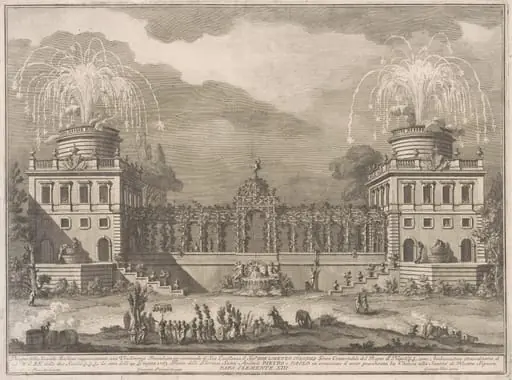 The Seconda Macchina for the Chinea of 1763: The Grape Harvest
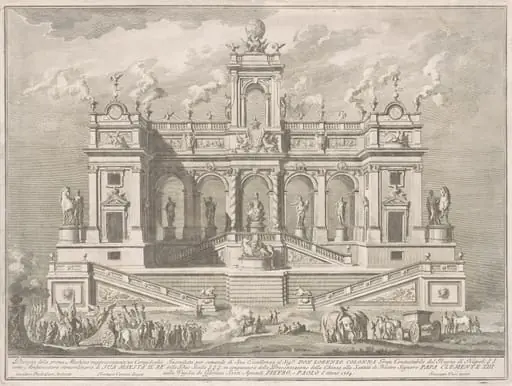 The Prima Macchina for the Chinea of 1764: A Capitol Building
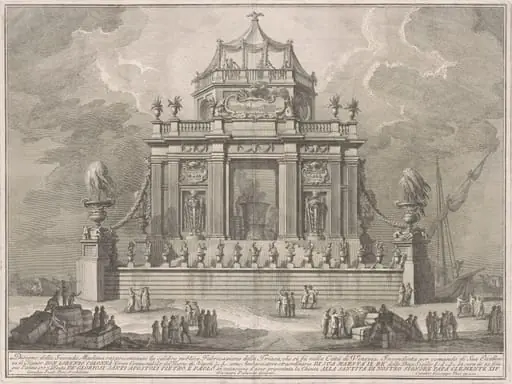 The Seconda Macchina for the Chinea of 1773: The Preparation of Theriac in Venice
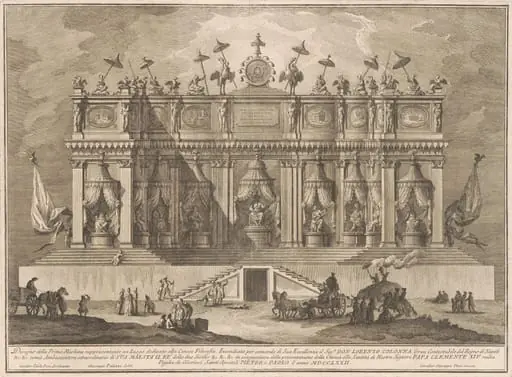 The Prima Macchina for the Chinea of 1772: A Building Dedicated to Chinese Philosophy
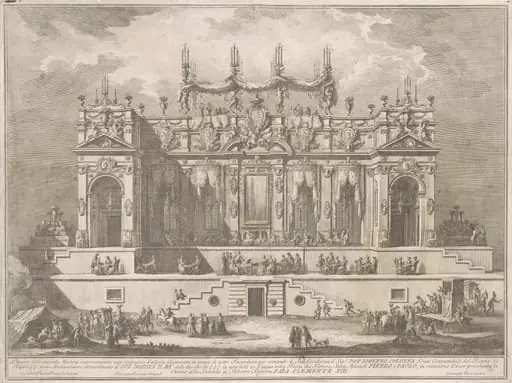 The Seconda Macchina for the Chinea of 1764: A Magnificent Gallery Illuminated at Night
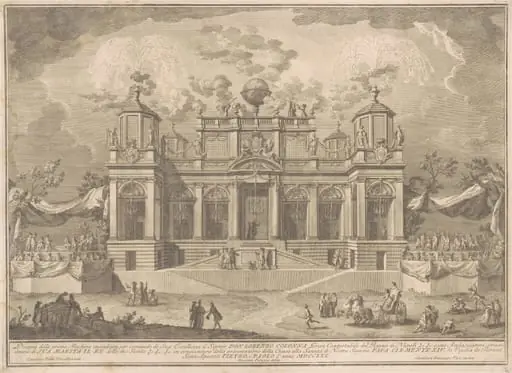 The Prima Macchina for the Chinea of 1770: An Roman Building for Commerce
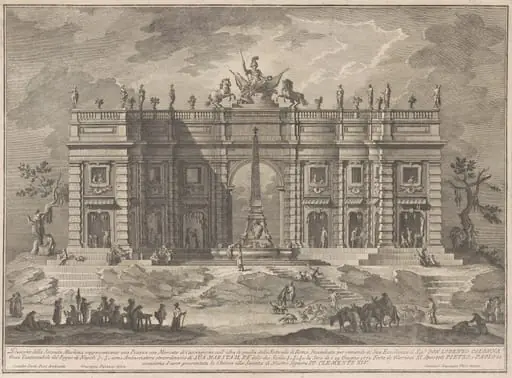 The Seconda Macchina for the Chinea of 1772: A Square with a Game Market and the Pantheon Fountain
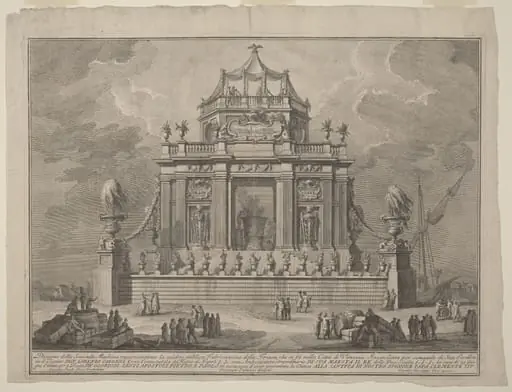 The Seconda Macchina for the Chinea of 1773: The Preparation of Theriac in Venice
 The Prima Macchina for the Chinea of 1771: The Temple of Asclepius
 The Seconda Macchina for the Chinea of 1775: A Bull-fight