Artwork
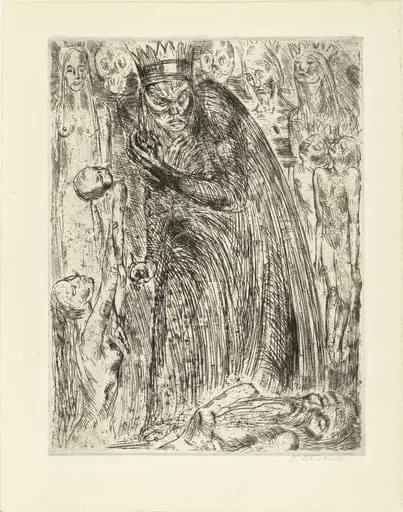
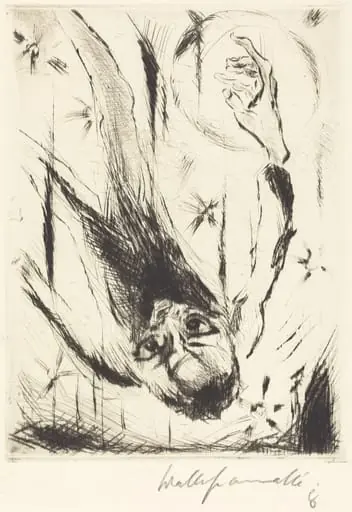
Macbeth V (The Vision of Lady Macbeth)
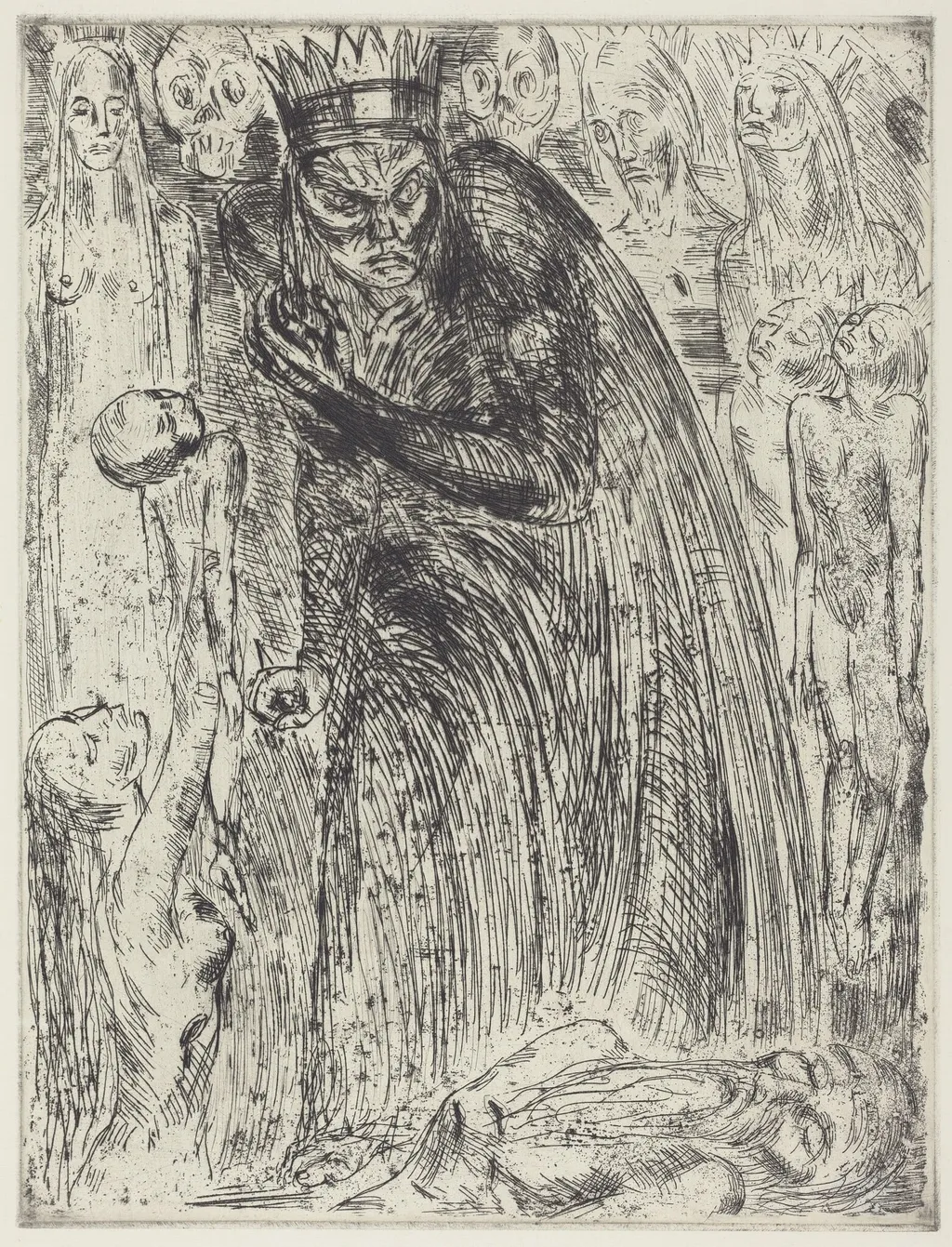
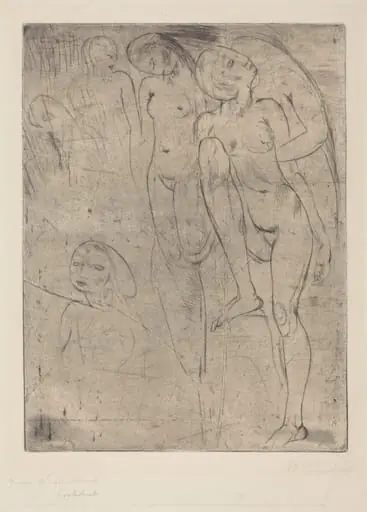
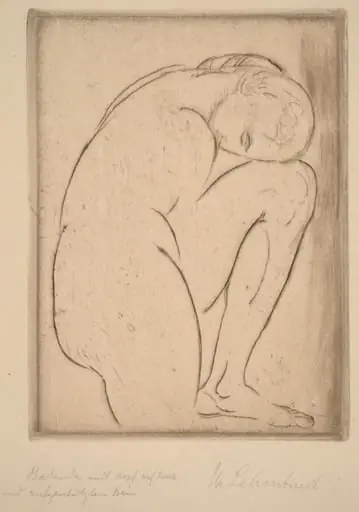
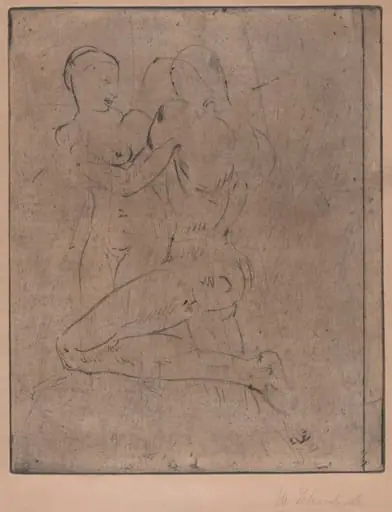
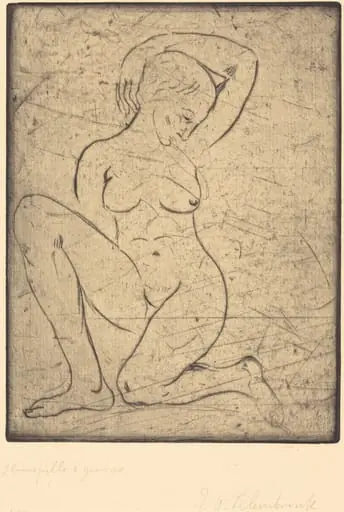
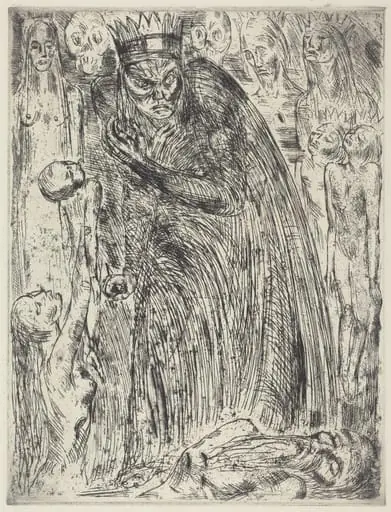
Macbeth V (The Vision of Lady Macbeth) is an ink print by Wilhelm Lehmbruck. It dates from 1918 and is held in the collection of the National Gallery of Art.
About this work
Overview
The work belongs to a series inspired by Shakespeare’s tragedy, distilling its emotional weight into a single, haunting image.
Created in 1918 by German artist Wilhelm Lehmbruck, *Macbeth V (The Vision of Lady Macbeth)* is an etching and drypoint print that explores psychological turmoil through graphic means. Though primarily known as a sculptor, Lehmbruck turned to printmaking to convey inner states with raw immediacy. The work belongs to a series inspired by Shakespeare’s tragedy, distilling its emotional weight into a single, haunting image.
Subject & Meaning
The print portrays a crowned figure, isolated and burdened, clutching a spherical object that evokes both power and guilt. Surrounding them are indistinct, floating faces—some descending, others fading—suggesting the intrusion of memory or spectral judgment. These apparitions imply a mind haunted by past actions, aligning with Lady Macbeth’s descent into psychological fragmentation as depicted in Shakespeare’s play.
Technique & Style
Lehmbruck employed drypoint to scratch directly into the metal plate, producing dense, velvety lines that trap ink and create deep shadows. Combined with etching, the result is a texture of tangled, urgent strokes that obscure form while amplifying emotional tension. The lack of clean contours and the heavy cross-hatching generate a sense of claustrophobia, reinforcing the psychological weight of the scene.
History & Provenance
Made during the final year of World War I, the print emerged from a period of personal and societal upheaval in Germany. Lehmbruck, deeply affected by the war’s devastation, turned to literary themes to express collective grief and moral decay. The work was likely produced in his studio in Berlin and circulated among avant-garde circles, though its early ownership remains undocumented.
Context
This print reflects the broader German Expressionist interest in inner experience over external realism. Artists of the time used distorted forms and aggressive mark-making to convey anxiety, alienation, and existential dread. Lehmbruck’s engagement with Shakespeare’s tragedy resonated with contemporaries grappling with the collapse of old social orders and the fragility of human conscience.
Legacy
Though less known than his sculptures, *Macbeth V* stands as a significant example of Lehmbruck’s graphic work and his ability to translate emotional intensity into print. It influenced later artists exploring psychological depth through monochromatic, linear techniques. The print remains a quiet but potent testament to how literature and visual art converged in early 20th-century Germany to articulate inner crisis.
Own this work as a print
Artist & collection
Artist
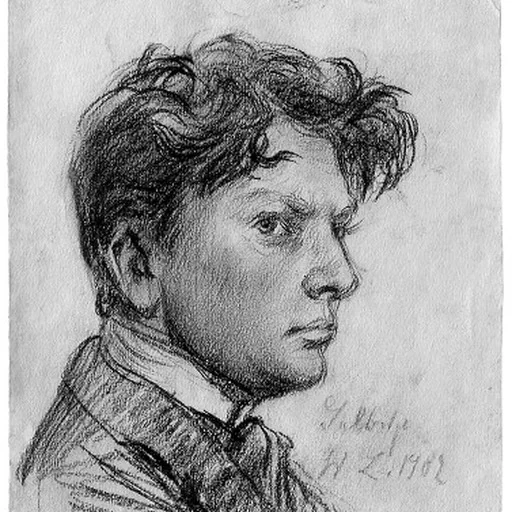
Wilhelm Lehmbruck (4 January 1881 – 25 March 1919) was a German sculptor. One of the most important of his generation, he was influenced by realism and expressionism.