Artwork
A Bishop
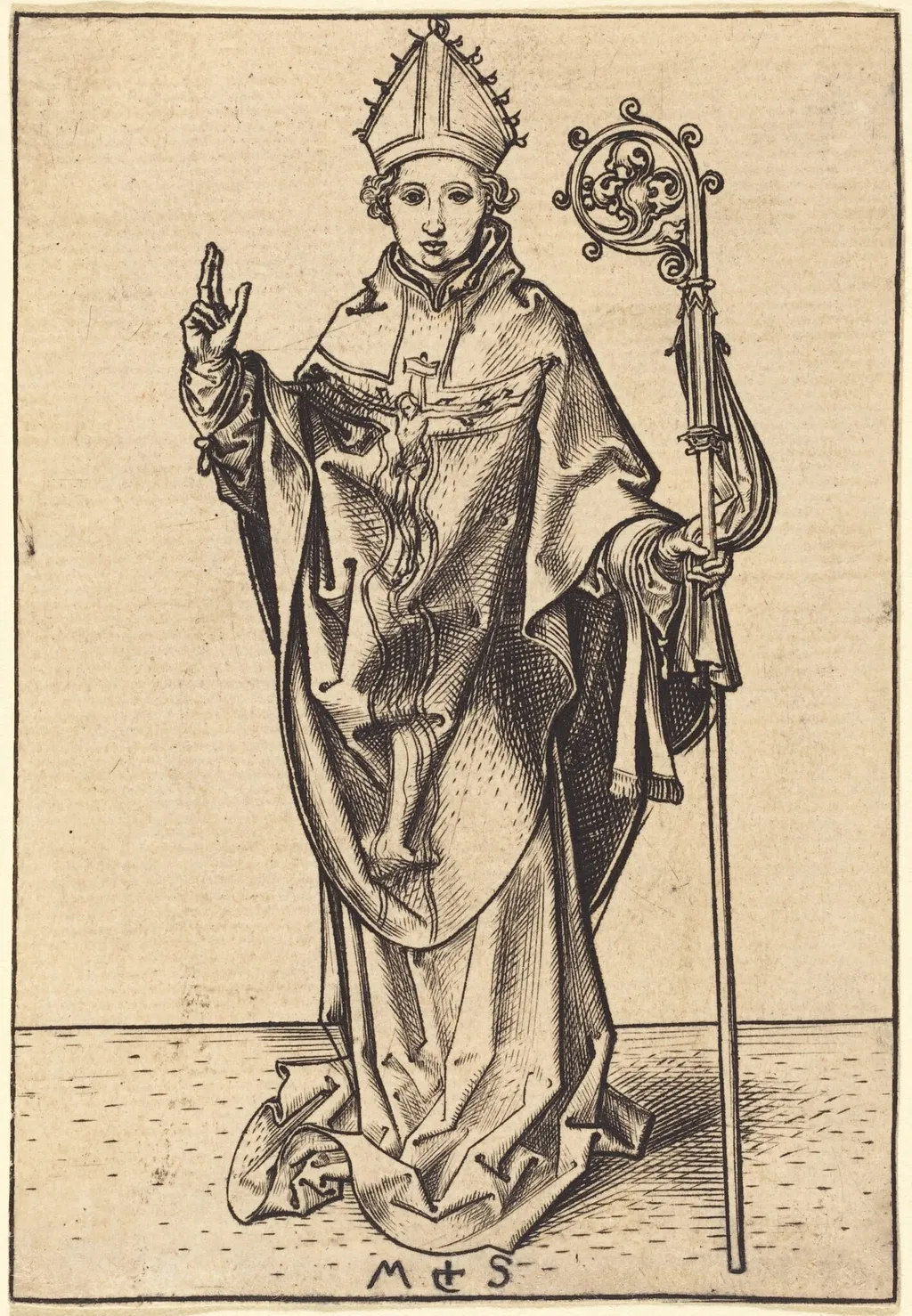
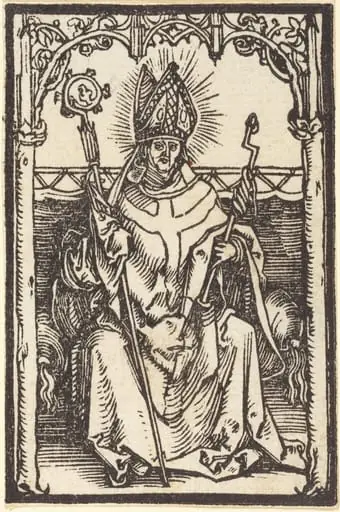
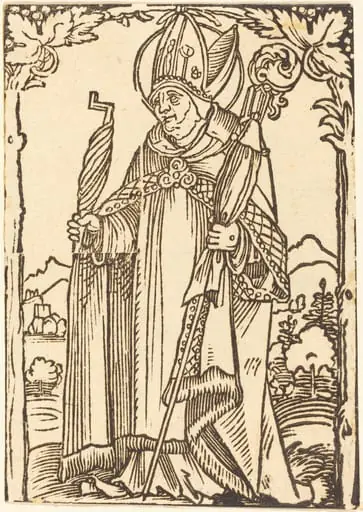
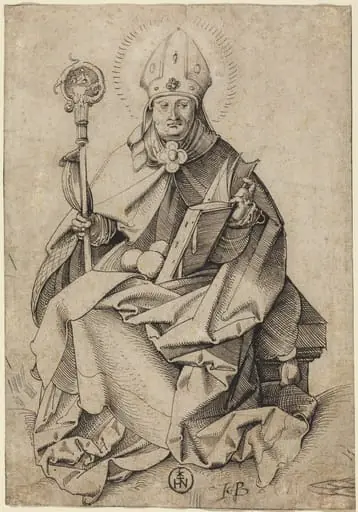
A Bishop is an ink print by the Renaissance artist Martin Schongauer. It dates from 1485 and is held in the collection of the National Gallery of Art.
About this work
Overview
His monogram appears on all his engravings, marking them as distinct authorial outputs in an era before widespread artist attribution.
Created around 1485, this engraving on laid paper is one of 116 known works by Martin Schongauer, an Alsatian artist whose technical precision elevated printmaking in late 15th-century Europe. Trained as a goldsmith, Schongauer brought fine metalwork discipline to the medium, using fine lines to render texture and form. His monogram appears on all his engravings, marking them as distinct authorial outputs in an era before widespread artist attribution.
Subject & Meaning
The figure is a bishop, depicted in full liturgical vestments including a mitre and ornate chasuble. His right hand holds a pastoral staff, while his left is raised with two fingers extended—a gesture associated with blessing or teaching. The solemn, frontal pose and minimal background direct attention to the ecclesiastical authority of the subject, reflecting the visual language of religious leadership in the late Middle Ages.
Technique & Style
Schongauer employed fine, controlled lines to model fabric folds, the sheen of silk, and the texture of the bishop’s beard with remarkable subtlety. The engraved lines vary in density and direction to suggest light and volume, while the floor’s faint geometric pattern adds spatial depth without distraction. The solid background isolates the figure, emphasizing the precision of his rendering and the quiet dignity of the subject.
History & Provenance
Schongauer’s engravings circulated widely across Europe before the rise of Dürer, who admired and collected his work. This print, like others in his oeuvre, was likely produced in small editions for sale to clergy, scholars, and collectors. Though the specific provenance of this impression is unrecorded, its survival reflects the demand for high-quality religious imagery in pre-Reformation Europe.
Context
In the decades before the Reformation, printed images of clergy served both devotional and didactic purposes. Schongauer’s engravings, made in Colmar—a center of artistic and commercial exchange—bridged regional styles and technical innovation. His work helped establish engraving as a respected medium, distinct from painting, capable of conveying spiritual gravity through line alone.
Legacy
Schongauer’s technical innovations influenced generations of Northern European printmakers, most notably Albrecht Dürer, who studied his engravings closely. The clarity of form, attention to detail, and expressive restraint in this bishop portrait became benchmarks for later artists. His prints preserved the visual culture of late medieval ecclesiastical authority long after the original contexts had faded.
Artist & collection

Artist
Martin Schongauer, also known as Martin Schön or Hübsch Martin by his contemporaries, was an Alsatian engraver and painter.