Artwork
Jeannes de Cocesme, First Wife of Francois, Prince of Conti
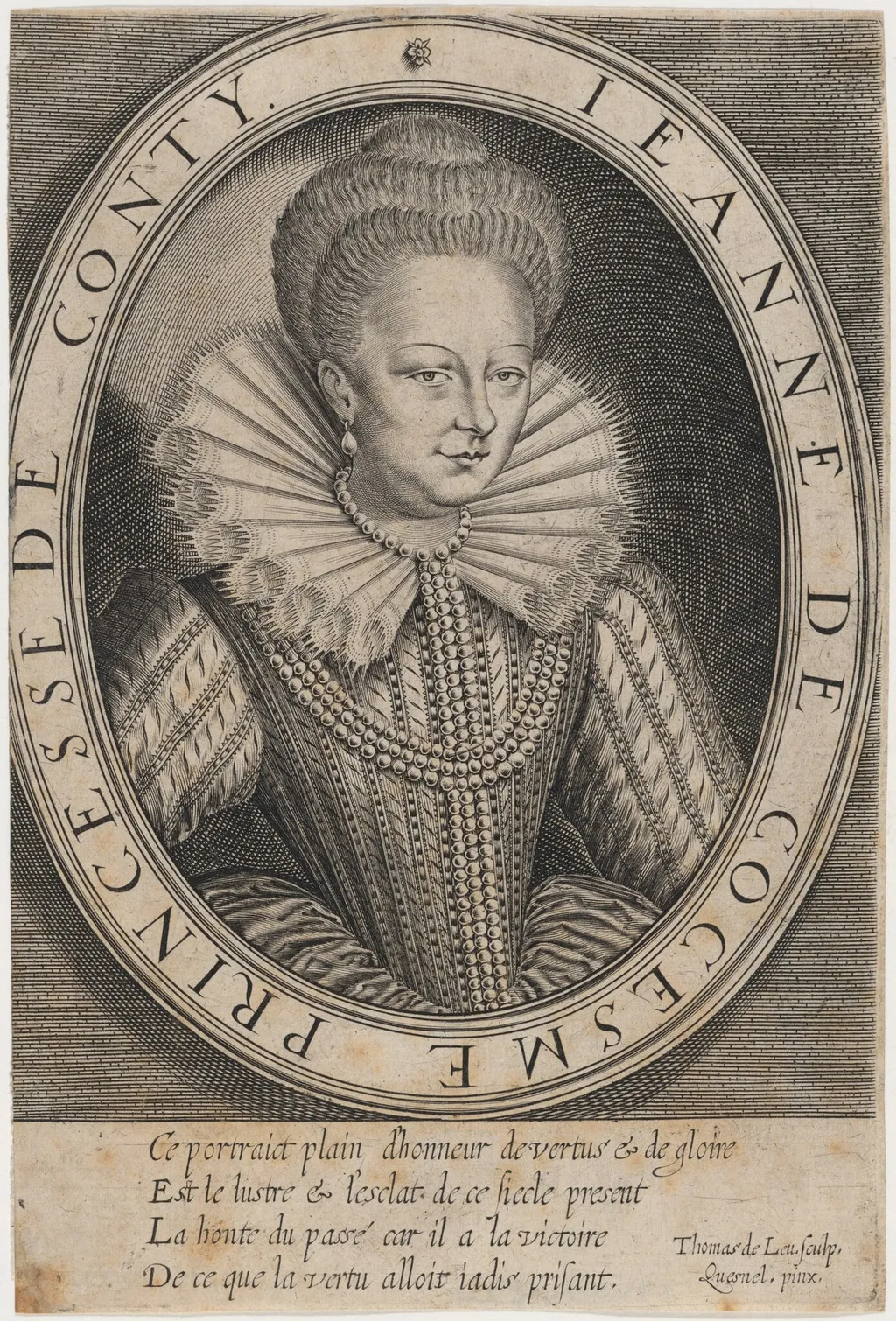
Jeannes de Cocesme, First Wife of Francois, Prince of Conti is an ink print by the Renaissance artist Thomas de Leu. It dates from 1590 and is held in the collection of the National Gallery of Art.
About this work
Overview
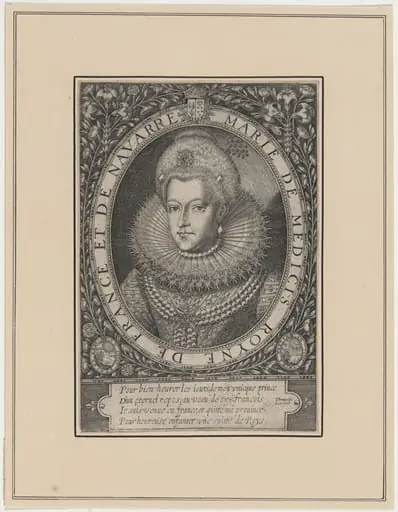
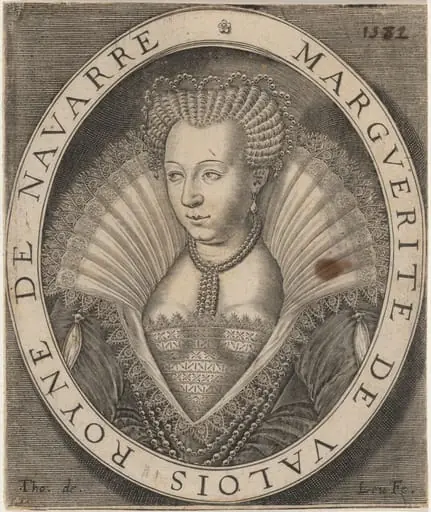
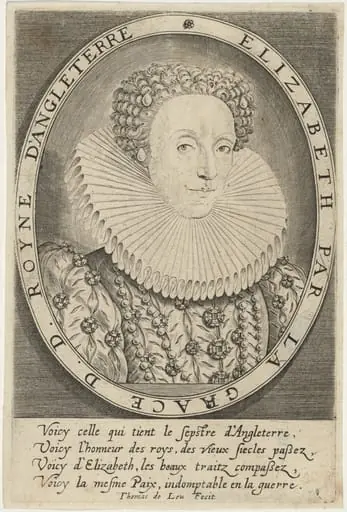
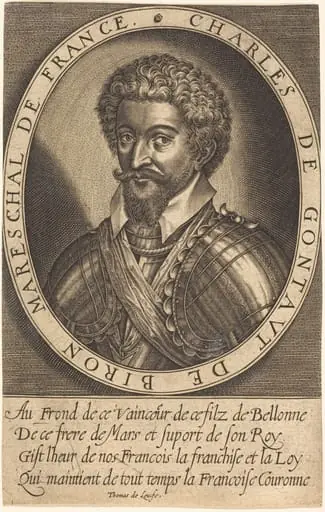
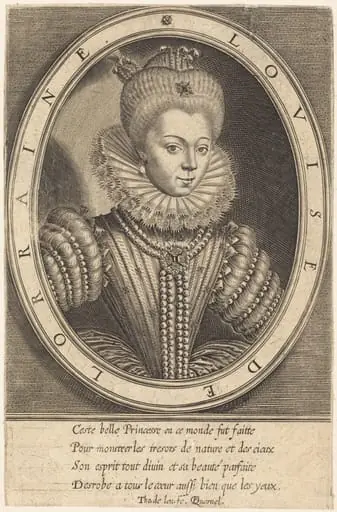
Created in 1590 by Thomas de Leu, this engraving portrays Jeannes de Cocesme, the first wife of François, Prince of Conti.
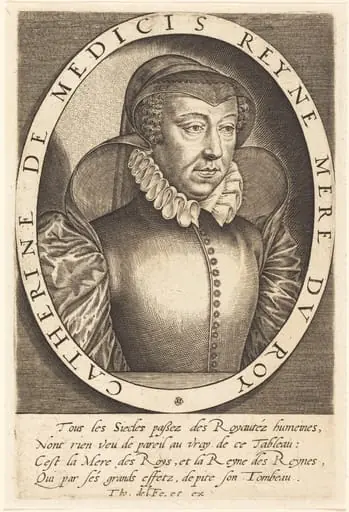
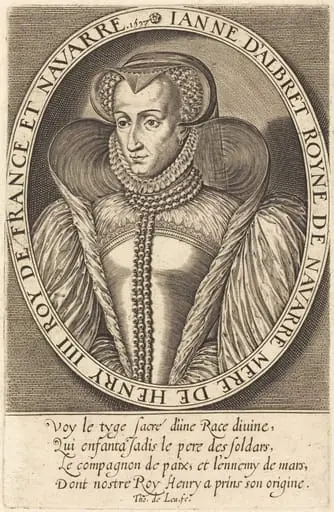
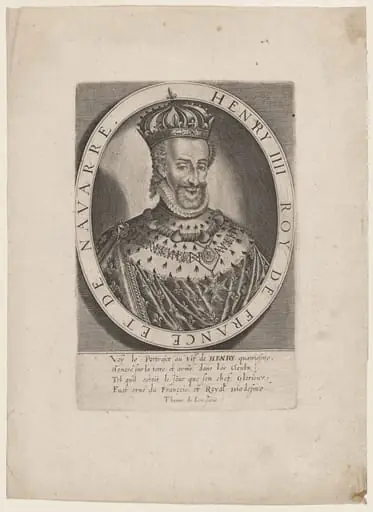
Created in 1590 by Thomas de Leu, this engraving portrays Jeannes de Cocesme, the first wife of François, Prince of Conti. De Leu, a Flemish artist active in France, specialized in reproductive prints that circulated portraits of nobility. The work is a black-and-white impression, typical of the period’s print culture, designed for dissemination among educated elites rather than as a unique object.
Subject & Meaning
Jeannes de Cocesme is depicted with formal dignity, reflecting her status as a noblewoman. Her attire—high ruffled collar and beaded necklace—signals wealth and adherence to courtly fashion. The circular frame and ornate French inscription around her face reinforce her identity and lineage, serving both as identification and as a marker of social prestige within the Conti family’s network.
Technique & Style
The image was produced through engraving, a method involving incised lines on a metal plate inked and pressed onto paper. De Leu employed fine, controlled lines to render texture in fabric and the soft contours of the face. The plain background and circular border follow Renaissance conventions, emphasizing the subject’s presence while drawing attention to the elegant typography encircling her likeness.
History & Provenance
Thomas de Leu, based in Paris, operated as both artist and publisher, distributing prints across France and beyond. This engraving likely served as a portrait commission or commercial product for aristocratic circles. Its survival suggests it was preserved in private collections or institutional archives, though its early ownership records remain undocumented beyond its production date and maker’s signature.
Context
In late 16th-century France, engraved portraits of nobility were common tools for reinforcing social hierarchy and familial prestige. De Leu’s work aligns with a broader trend of printmakers translating painted likenesses into reproducible formats. The use of French text and courtly dress reflects the cultural priorities of the Valois court, where visual identity was carefully curated through imagery.
Legacy
Though not widely known today, de Leu’s prints contributed to the standardization of noble portraiture in print form. This engraving exemplifies how reproductive techniques democratized access to elite imagery, allowing non-patrons to engage with aristocratic identity. Its preservation offers insight into the visual culture of French nobility during a period of political and religious upheaval.
Artist & collection
Artist
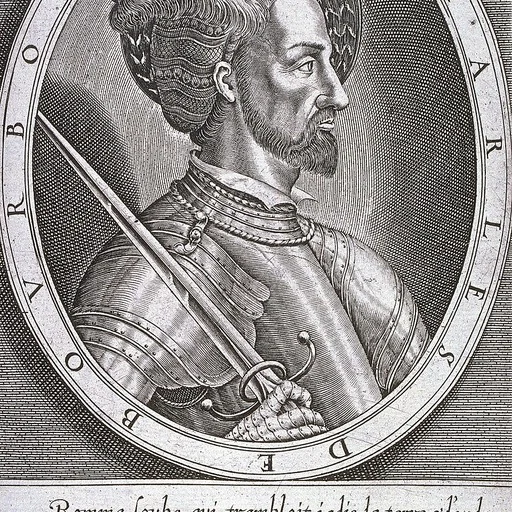
Thomas de Leu or Leeuw or Le Leup or Deleu (1560–1612) was a French engraver, publisher, and print dealer of Flemish origin.