Artwork
Eighteen Views of Rome: The Church of Sant'Ignazio
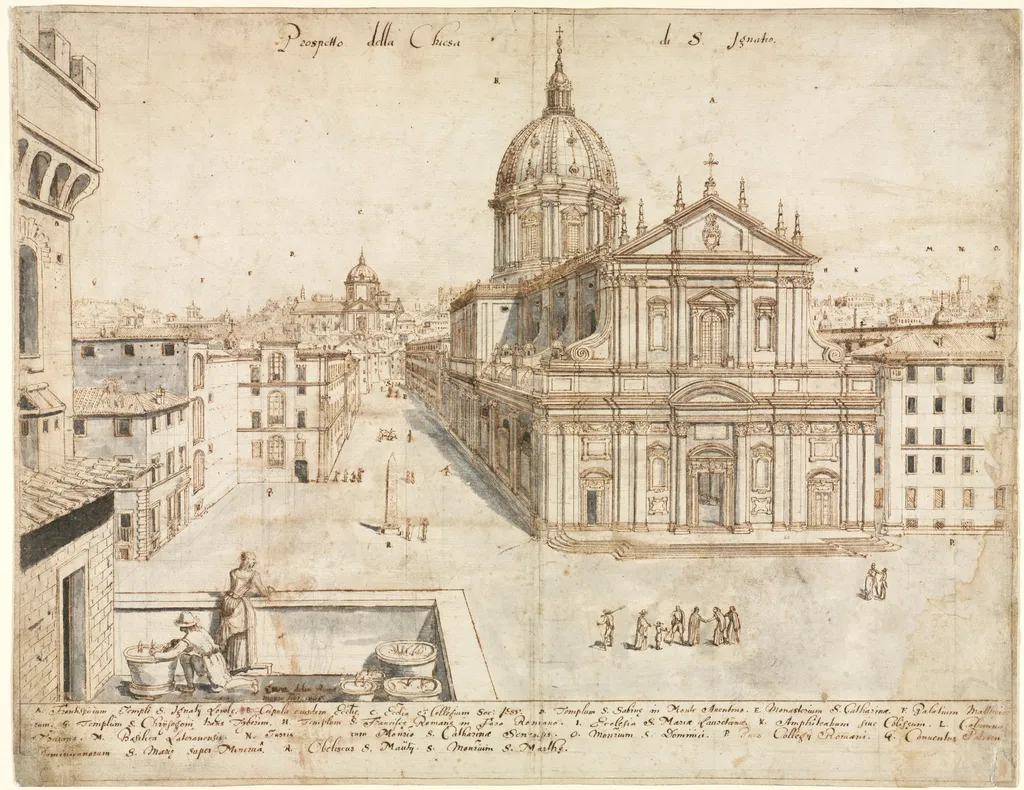
Eighteen Views of Rome: The Church of Sant'Ignazio is a drawing by the Baroque artist Lievin Cruyl. It dates from 1665 and is held in the collection of the Cleveland Museum of Art.
About this work
Overview
Executed with precise linework and subtle tonal gradations, the work belongs to a collection of urban views intended to record Rome’s monumental structures.
Created in 1665 by Lievin Cruyl, this pencil drawing captures the Church of Sant'Ignazio in Rome as part of a series documenting the city’s architecture. Executed with precise linework and subtle tonal gradations, the work belongs to a collection of urban views intended to record Rome’s monumental structures. It is now held in the collection of The Cleveland Museum of Art, where it serves as a record of 17th-century architectural observation.
Subject & Meaning
The drawing centers on Sant'Ignazio, a Jesuit church notable for its imposing dome and ornate facade. Surrounding buildings frame the structure, grounding it in the lived texture of the city. A small, quiet scene in the lower left—two figures observing a table with dishes—adds a human scale to the grandeur, suggesting contemplation of both sacred and domestic life within the urban fabric.
Technique & Style
Cruyl employed fine pencil strokes to define architectural details, using light and shadow to emphasize the church’s volumetric form. The play of daylight across the dome and columns reveals an acute sensitivity to Baroque principles of dramatic contrast and spatial depth. The rendering is meticulous yet restrained, prioritizing clarity and structural accuracy over decorative flourish.
History & Provenance
The drawing is one of eighteen views Cruyl made during his time in Rome, likely commissioned or produced for scholarly or aristocratic audiences interested in Italian architecture. It entered the Cleveland Museum of Art’s collection in the 20th century, where it remains among the few surviving works from this early series of topographical studies by a Flemish artist in Italy.
Context
In mid-17th-century Rome, Jesuit churches like Sant'Ignazio symbolized the Counter-Reformation’s architectural ambition. Artists from northern Europe, including Cruyl, traveled to Italy to document these new forms, contributing to a growing interest in urban topography. This drawing reflects a trend toward empirical observation, blending artistic skill with documentary intent.
Legacy
Cruyl’s series helped establish the architectural drawing as a distinct genre in Northern European art. His precise, atmospheric renderings influenced later topographers and architects, offering models for recording monumental structures with both technical rigor and visual sensitivity. The work endures as a quiet testament to the intersection of art, travel, and architectural study in the early modern period.
Artist & collection

Artist
Lievin Cruyl or Lieven Cruyl was a Flemish priest and a draughtsman and etcher of landscapes, seascapes, and architectural views.

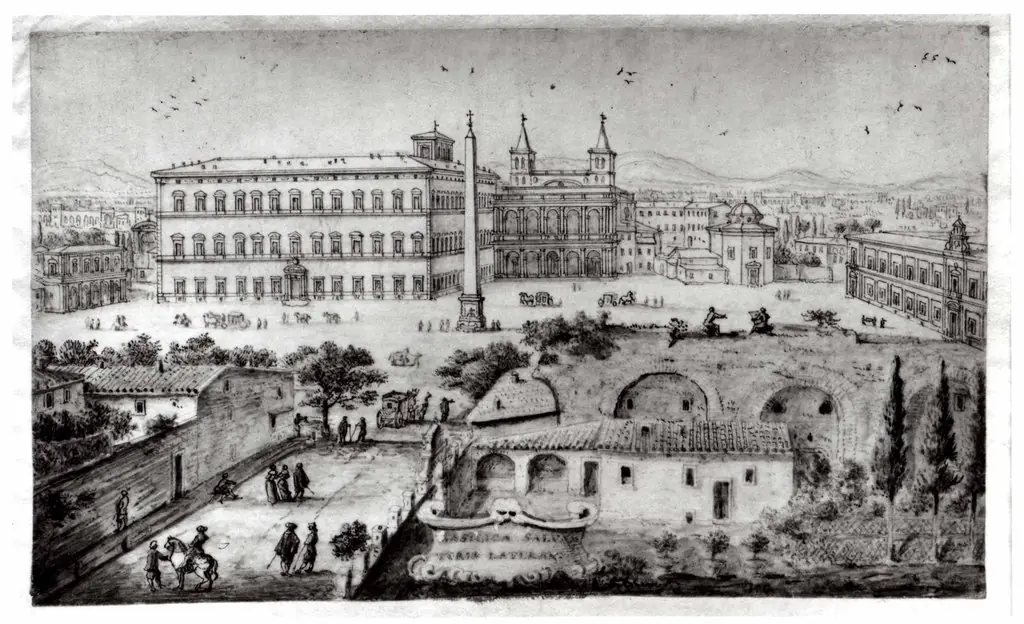 View of Lateran, Rome
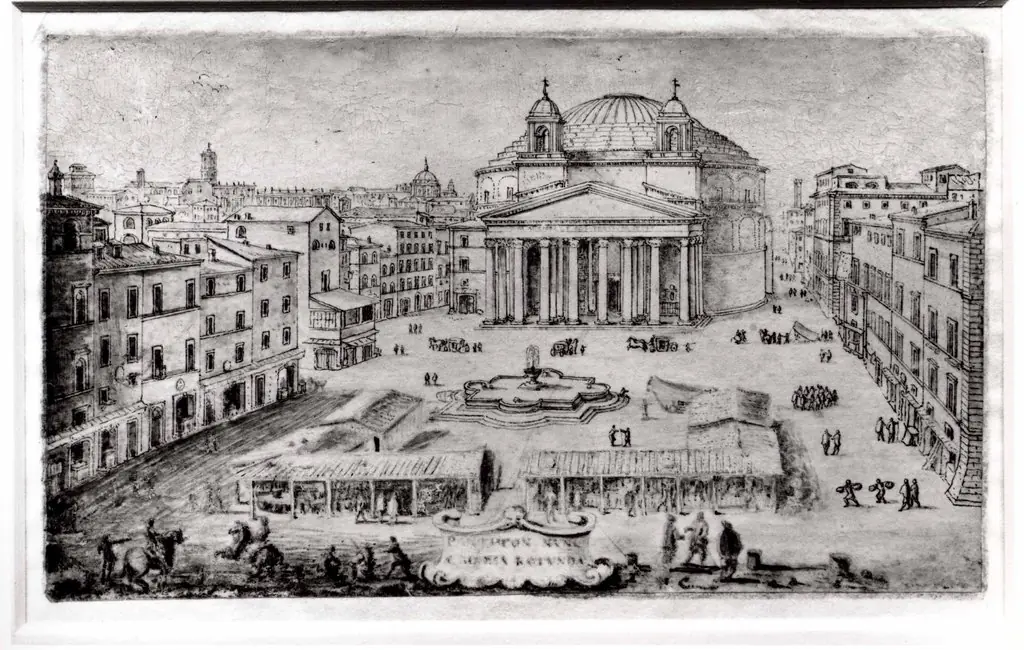 View of the Pantheon, Rome
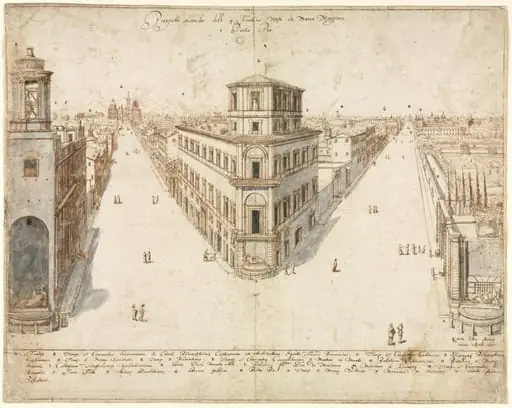 Eighteen Views of Rome: The Quattro Fontane Looking Toward Santa Maria Maggiore
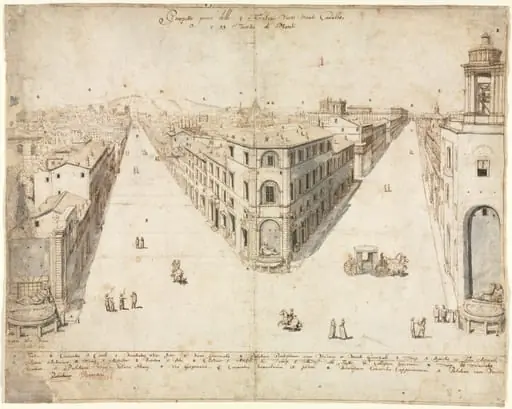 Eighteen Views of Rome: The Quattro Fontane Looking Toward Monte Cavallo
 Sketch for San Giovanni in Laterano (verso)
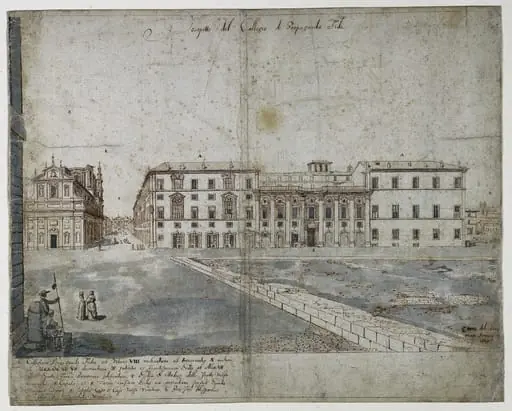 Eighteen Views of Rome: The Collegio di Propaganda Fide (recto)
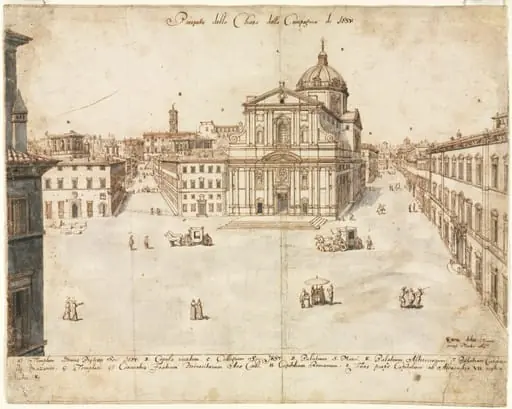 Eighteen Views of Rome: The Church of the Gesù
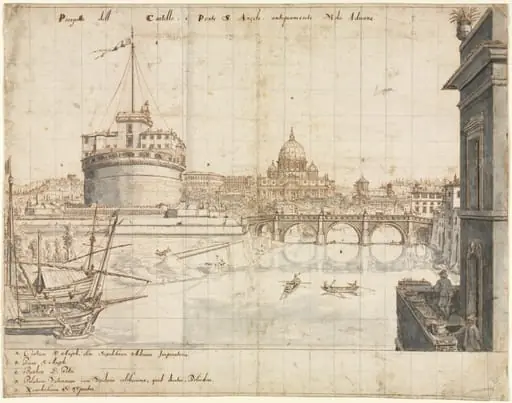 Eighteen Views of Rome: The Castel Sant'Angelo
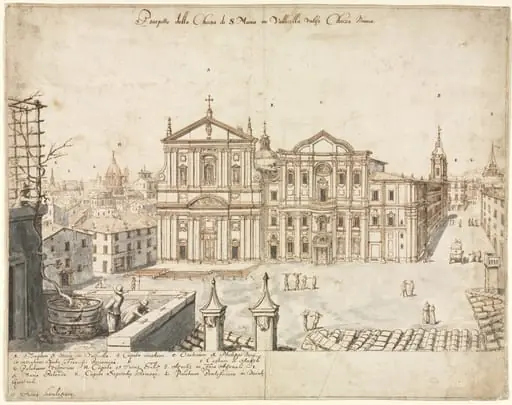 Eighteen Views of Rome: The Church of Santa Maria in Vallicella
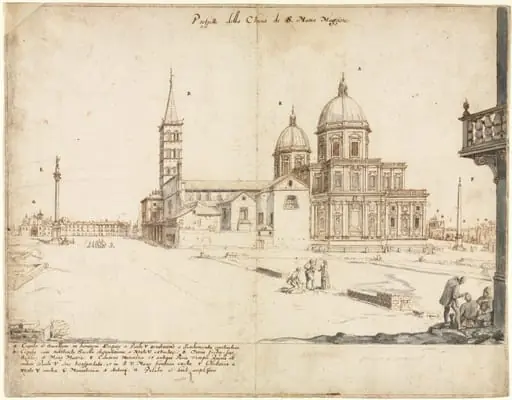 Eighteen Views of Rome: The Basilica of Santa Maria Maggiore
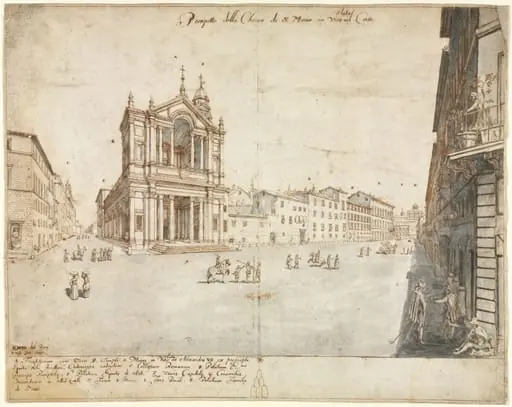 Eighteen Views of Rome: Santa Maria in Via Lata
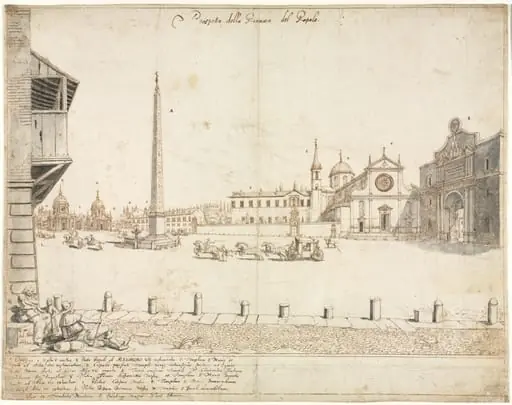 Eighteen Views of Rome: The Piazza del Popolo (recto)
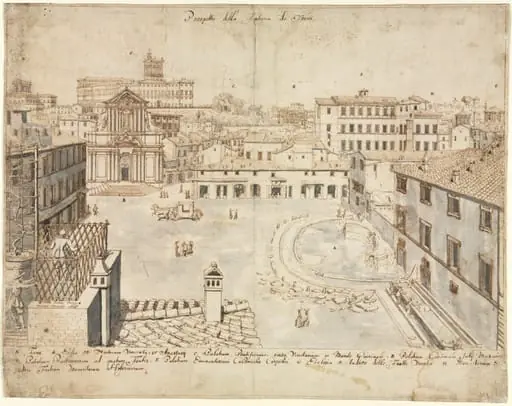 Eighteen Views of Rome: The Trevi Fountain
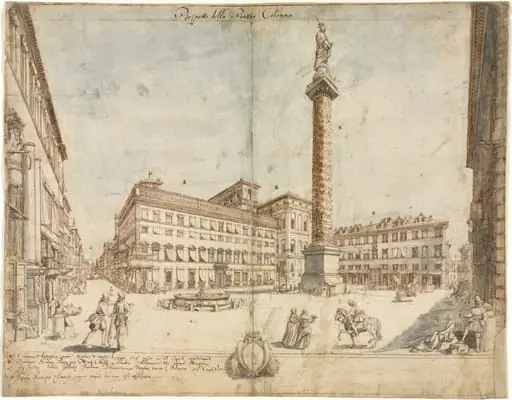 Eighteen Views of Rome: The Piazza Colonna
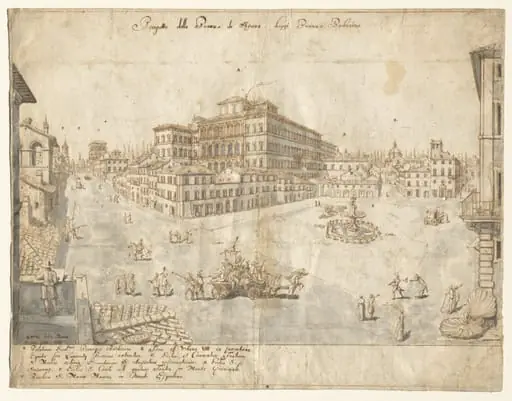 Eighteen Views of Rome: The Piazza Barberini (recto)