Artwork
Loading cotton onto boats
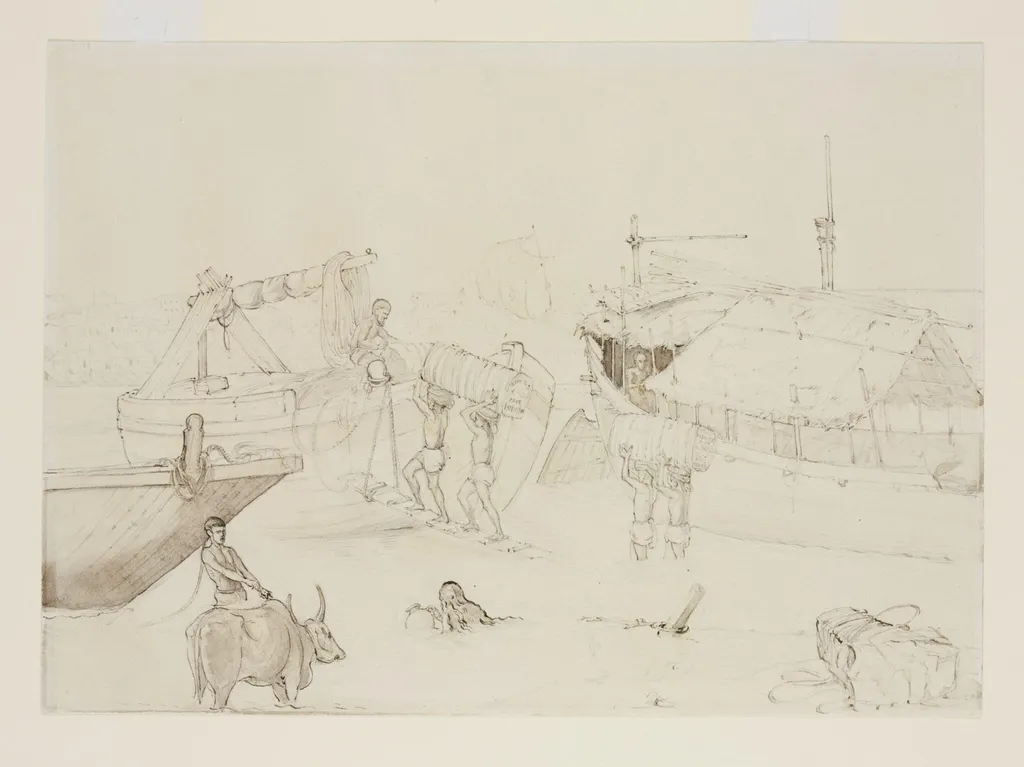
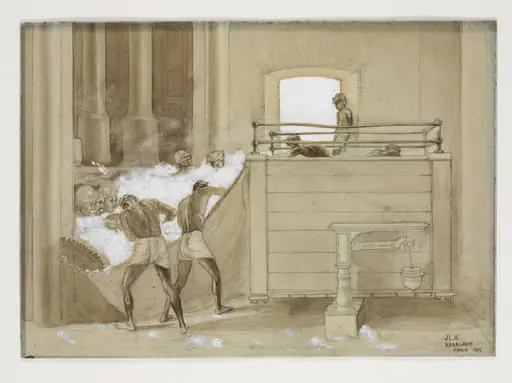
Loading cotton onto boats is a drawing by the Impressionist artist John Lockwood Kipling. It dates from 1874 and is held in the collection of the Victoria and Albert Museum.
About this work
Overview
The scene captures everyday industrial activity with observational precision, reflecting his broader interest in documenting local labor and material culture.
This drawing, created in the 1870s by John Lockwood Kipling, depicts laborers loading cotton bales onto riverboats near Salkhia in Bengal. Kipling, an English artist and educator based in India, produced this work during a government-commissioned survey of Indian craftsmanship. The scene captures everyday industrial activity with observational precision, reflecting his broader interest in documenting local labor and material culture.
Subject & Meaning
The drawing portrays the physical labor involved in India’s cotton trade, a key economic activity under British colonial rule. A bale marked 'KIPLING' subtly inserts the artist’s presence into the scene, possibly as a personal signature or ironic commentary on colonial appropriation. Rather than idealizing the scene, Kipling records the workers’ routines with quiet attention, aligning the image with realist traditions that valued unembellished observation.
Technique & Style
Executed in pencil or ink on paper, the drawing employs clear, controlled lines to define figures and forms without overt shading or dramatic contrast. The composition is structured to guide the eye along the sequence of loading, emphasizing movement and coordination among workers. Kipling’s draftsmanship reflects his training in design and his commitment to accurate representation, avoiding romanticization in favor of documentary clarity.
History & Provenance
Kipling created this work during a government-sponsored tour of the North-West Provinces in 1870, commissioned to record Indian artisans and industries. Though undated, the drawing likely stems from his time in Bengal between 1870 and 1875. It was produced as part of a larger visual archive intended for educational and administrative use, later preserved in institutional collections linked to his work in Indian art schools.
Context
In the 1870s, British administrators sought to document India’s economic infrastructure to better manage trade and resource extraction. Kipling’s drawings served both ethnographic and utilitarian purposes, capturing scenes like cotton loading to inform colonial policy. His role as an educator also shaped his focus on labor and craft, positioning him as a bridge between colonial interests and the preservation of indigenous practices.
Legacy
Kipling’s drawings contributed to the institutional recognition of Indian craft traditions within colonial education systems. His work at art schools in Bombay and Lahore helped revive interest in local techniques, countering the decline caused by imported goods. Though less known than his son Rudyard, his visual records remain valuable resources for understanding 19th-century Indian industry and the role of art in colonial administration.
Artist & collection
Artist
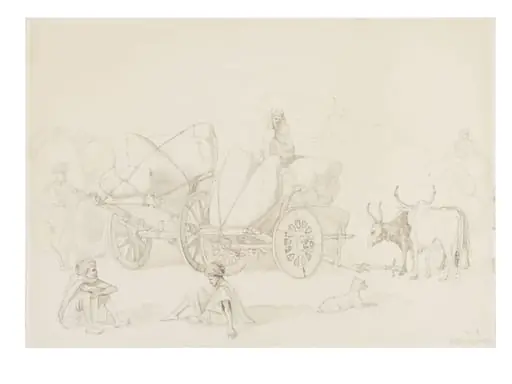
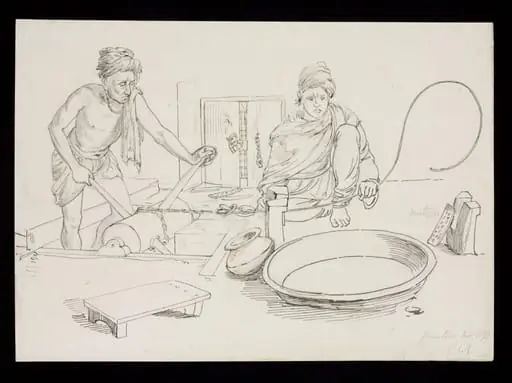
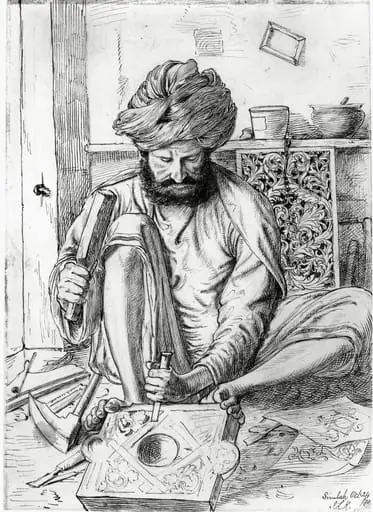
John Lockwood Kipling filled sketchbooks with the daily life he saw around him in British India, drawing craftsmen at work, farmers at market, and seed planters in fields.


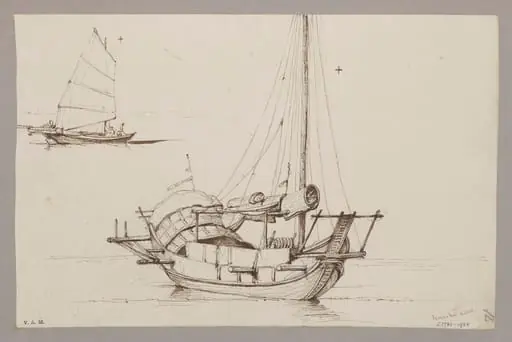 Two drawings of Chinese boats
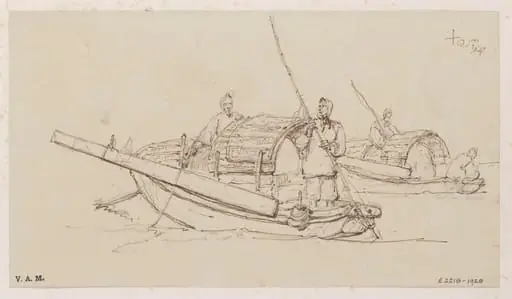 Two Tanka boats
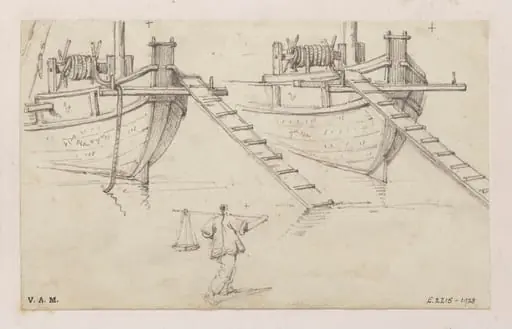 Two drawings of the prow of a Chinese boat
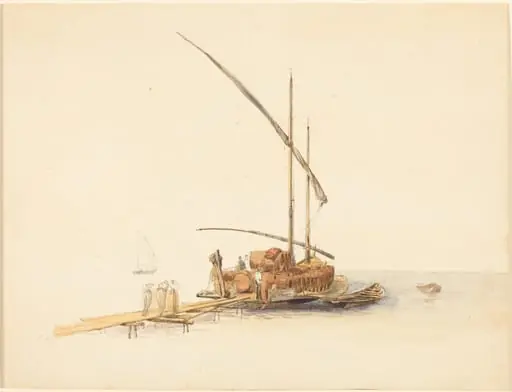 Wine Barrels Loaded onto a Sailing Barge at Vevey
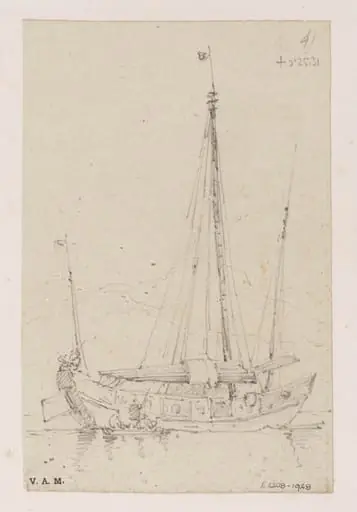 A three-masted junk with a smaller boat alongside
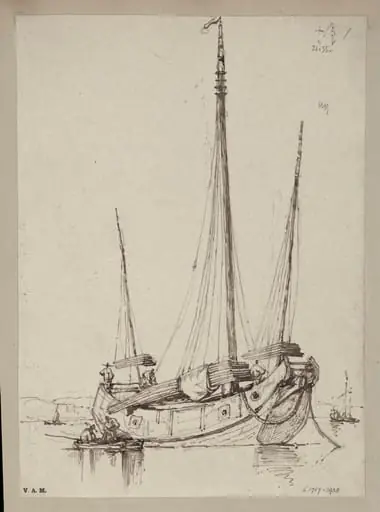 A junk hauling planks aboard
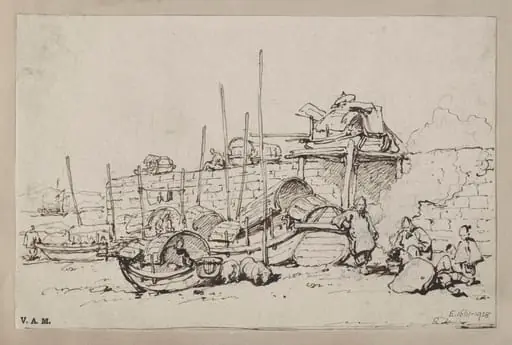 Tanka boats and boatpeople on the beach by the sea wall, Macau
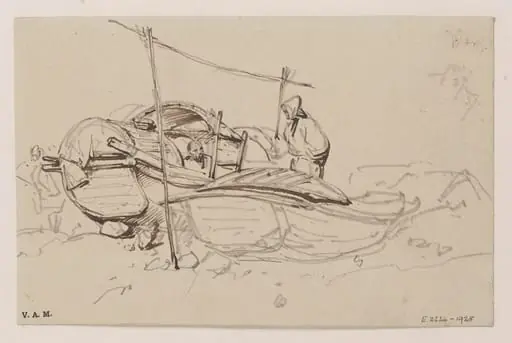 Untitled
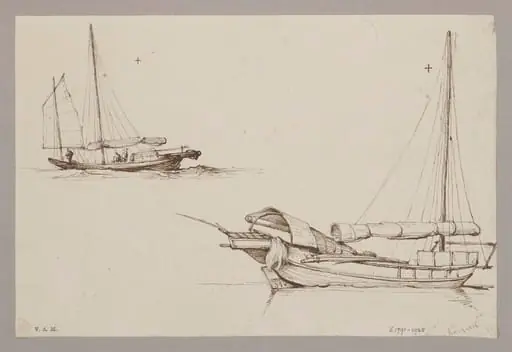 Small Chinese junks
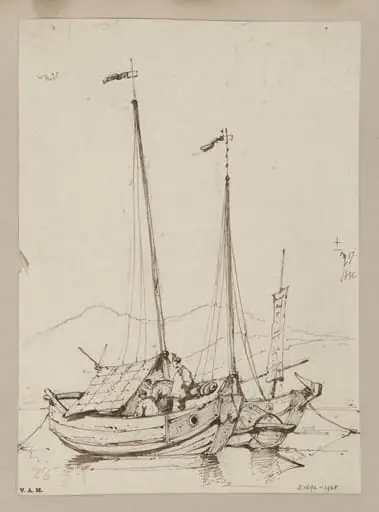 Two small junks at anchor, Macau