Artwork
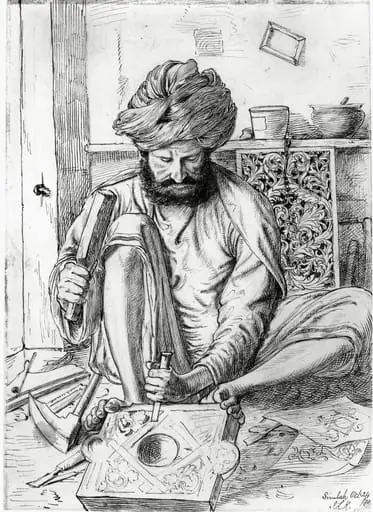
Two men working at an embroidery frame
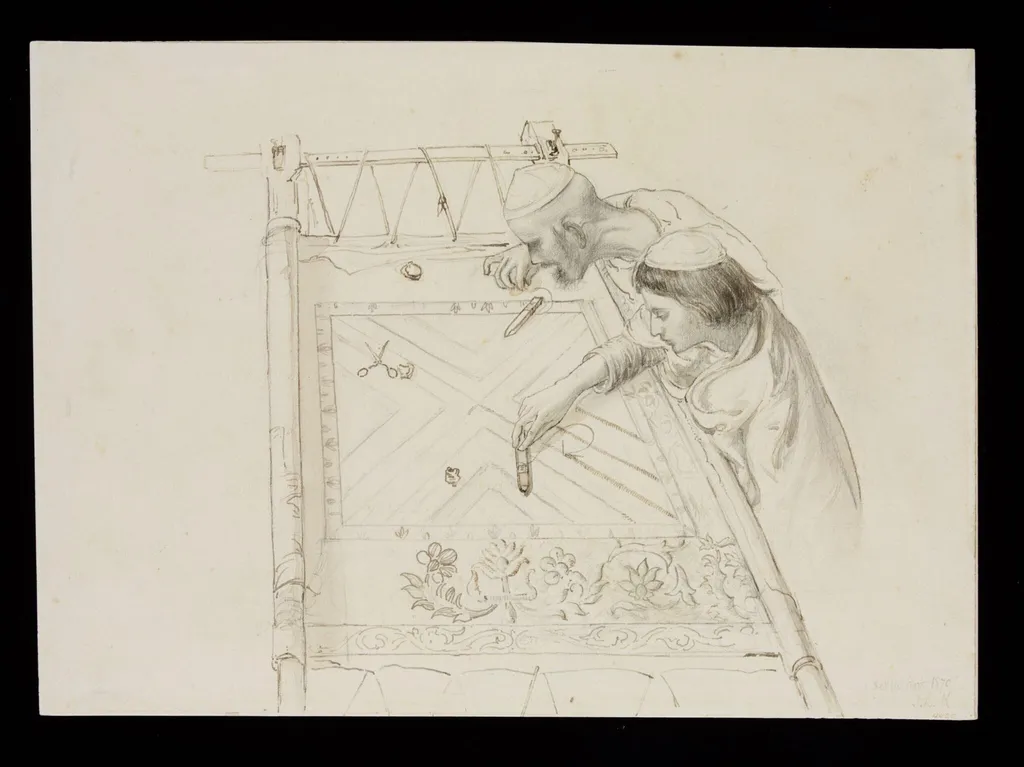
Two men working at an embroidery frame is a drawing by the Impressionist artist John Lockwood Kipling. It dates from 1870 and is held in the collection of the Victoria and Albert Museum.
About this work
Lockwood Kipling drew two men bent over embroidery frames in 1870. It’s a simple scene—just craftsmen at work. The drawing fits between Impressionism and Realism, two styles that focused on everyday life.
Kipling knew India well. He moved there in 1865 to teach art and later helped shape the Victoria and Albert Museum’s design.
Look up the Victoria and Albert Museum.
Overview
Executed in pencil or ink, it belongs to a series commissioned by the British Indian government to document traditional craft practices.
This drawing by John Lockwood Kipling, created in Delhi in November 1870, captures two Indian artisans engaged in embroidery work. Executed in pencil or ink, it belongs to a series commissioned by the British Indian government to document traditional craft practices. Kipling, then serving as an art educator in Bombay, produced these sketches as part of an effort to record and preserve indigenous techniques threatened by industrial imports.
Subject & Meaning
The scene depicts two men focused on their embroidery frames, their postures suggesting quiet concentration. No grand narrative or symbolism is present—only the quiet dignity of labor. Kipling’s choice to portray ordinary craftsmen reflects his broader interest in sustaining India’s artisanal traditions. The drawing serves as both a record of technique and a quiet affirmation of the value of handwork in a rapidly changing economy.
Technique & Style
The drawing employs loose, observational lines typical of on-site sketching, with minimal shading and no embellishment. Its composition is unadorned, emphasizing the figures’ gestures and the structure of the embroidery frame. While not formally aligned with either Impressionism or Realism, its directness and attention to everyday detail align it with the observational ethos of both movements, prioritizing authenticity over idealization.
History & Provenance
Kipling created this work during a government-sponsored tour of the North-West Provinces in 1870, tasked with documenting Indian crafts. The drawing was likely part of an archival collection assembled for educational and preservation purposes. After his appointment to Mayo College in Lahore in 1875, Kipling continued to promote such documentation, ensuring these sketches informed curriculum and policy in Indian art education.
Context
In the late 19th century, British colonial authorities increasingly viewed Indian crafts as culturally significant yet economically vulnerable. Kipling’s sketches emerged amid efforts to revive traditional industries against the tide of mass-produced European goods. His role as an educator and administrator placed him at the intersection of colonial policy and indigenous practice, making his work both observational and interventionist.
Legacy
Kipling’s drawings contributed to the institutional recognition of Indian craftsmanship within colonial educational frameworks. They informed the curriculum at schools he led and influenced later efforts to preserve regional techniques. Though largely overlooked in Western art histories, these works remain valuable as ethnographic records and as evidence of a rare colonial figure who sought to elevate, rather than replace, local artistic traditions.
Artist & collection
Artist
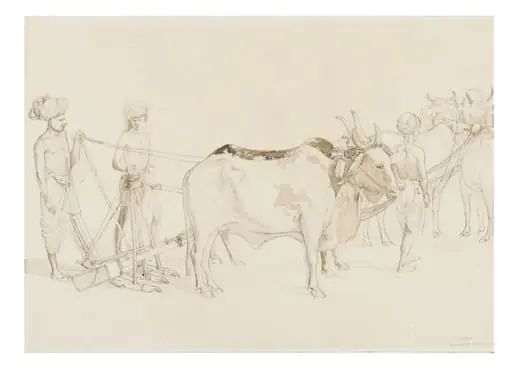
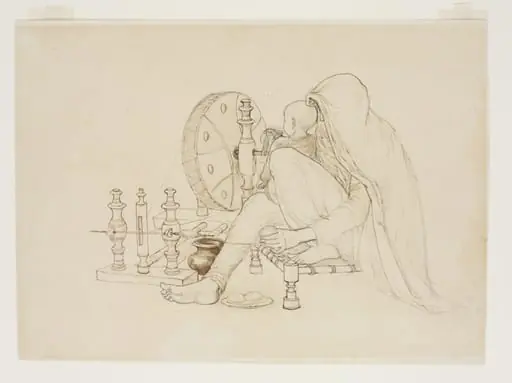
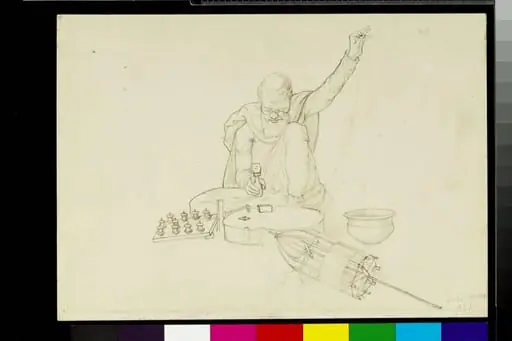
John Lockwood Kipling filled sketchbooks with the daily life he saw around him in British India, drawing craftsmen at work, farmers at market, and seed planters in fields.

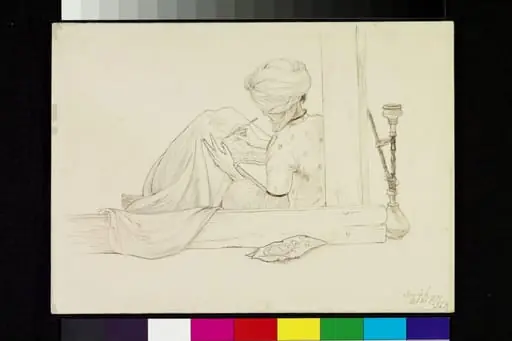
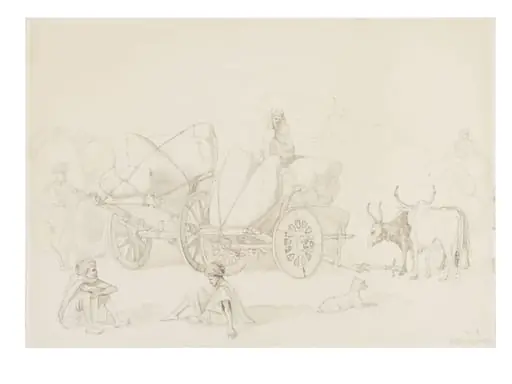
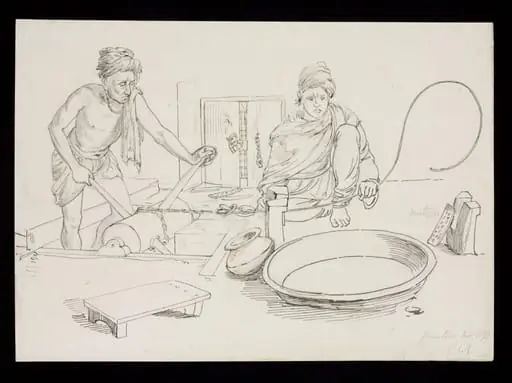
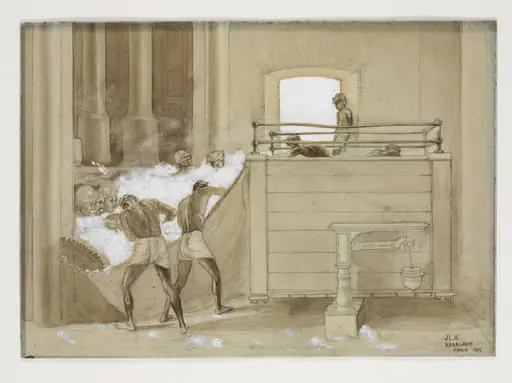
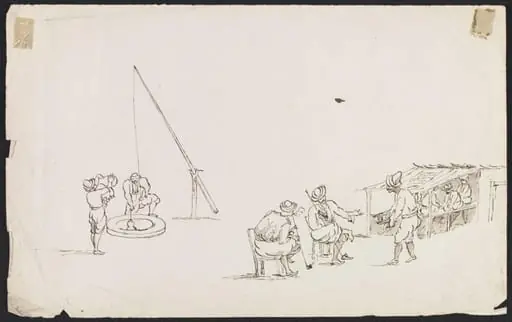 Wayside café, with men drawing water from a well, and others seated, smoking, being served with coffee
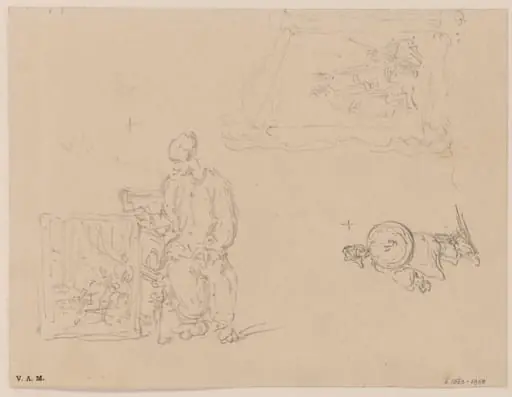 A figure seated beside a portrait, and other sketches
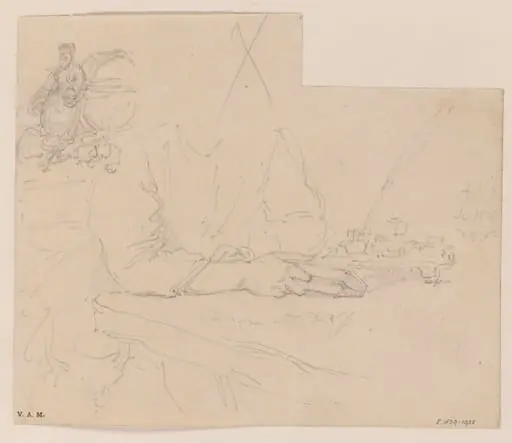 A Western woman seated at a table
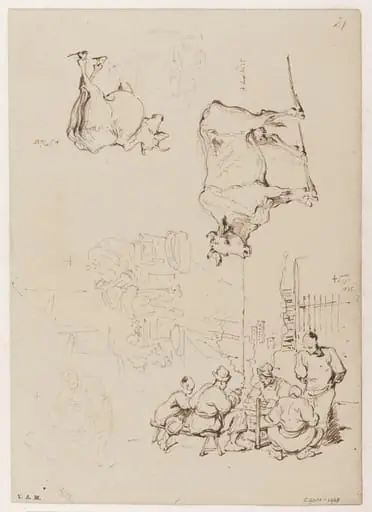 Figures eating at a food stall
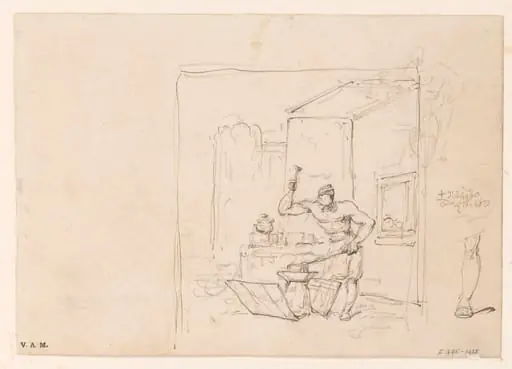 A Chinese blacksmith hammering at his anvil
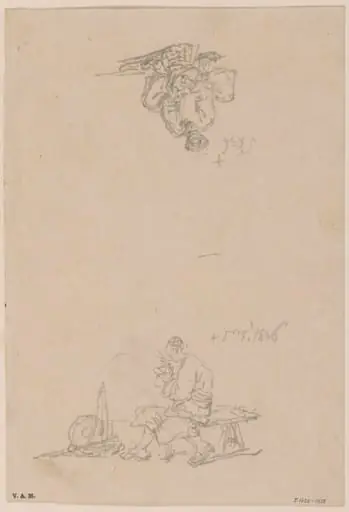 Two drawings of Chinese figures
![Father of the Artist [verso], by Paul Cezanne](https://artifactworldgallery.com/img/paul-cezanne--father-of-the-artist-verso--74e24a3aa4f42c1a-w320.webp) Father of the Artist [verso]
Father of the Artist [verso]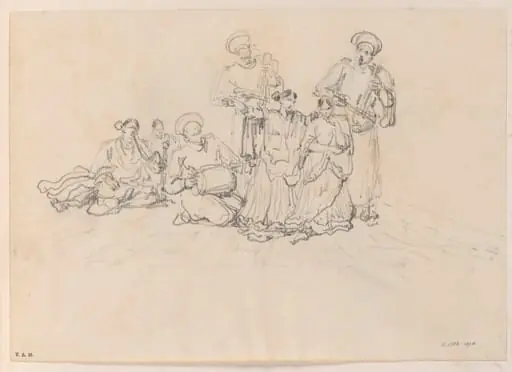 A group of Indian musicians and dancers