Artwork
The Nativity
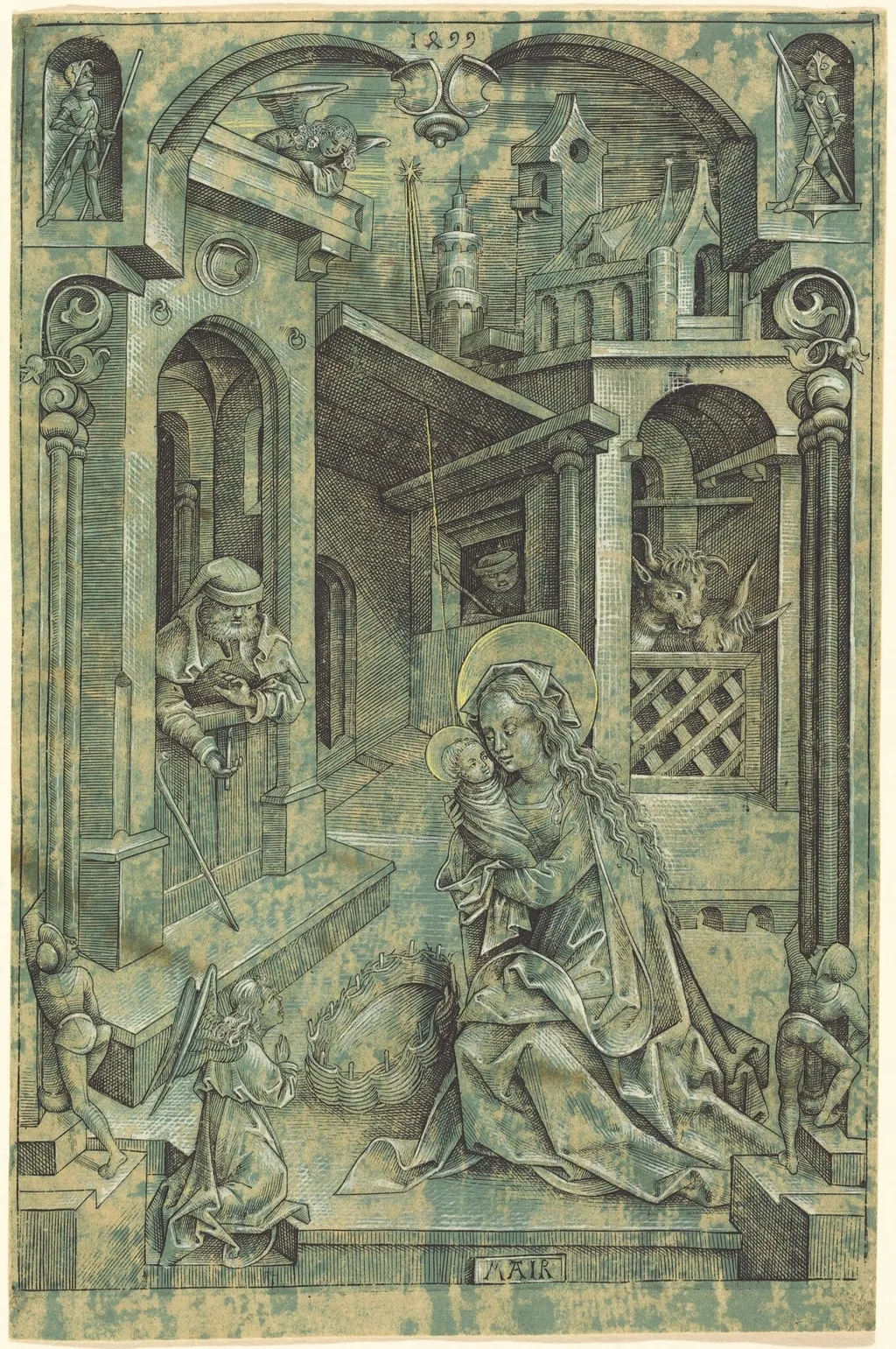
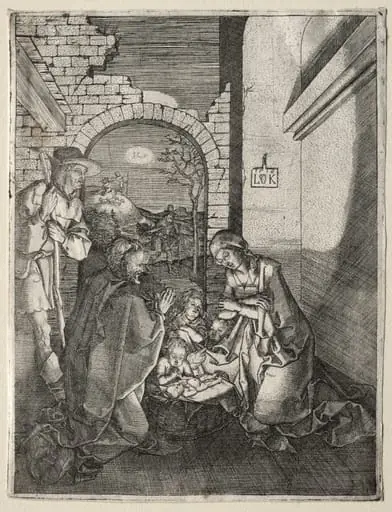
The Nativity is an ink print by the Renaissance artist Mair von Landshut. It dates from 1499 and is held in the collection of the National Gallery of Art.
About this work
Overview
One of ten dated works from that year, it reflects Mair’s distinctive approach within a flourishing tradition of northern European printmaking.
Created in 1499 by the Bavarian engraver Mair von Landshut, this print depicts the Nativity using engraved lines enhanced with white and yellow pigment on a green-toned paper ground. One of ten dated works from that year, it reflects Mair’s distinctive approach within a flourishing tradition of northern European printmaking. His output, though limited to about two dozen known engravings, demonstrates careful craftsmanship and a sensitivity to atmospheric detail.
Subject & Meaning
The scene portrays the birth of Christ in a modest stable, with Mary cradling the infant, Joseph observing nearby, and animals present as traditional symbols. Above, celestial figures sing in praise, while a sleeping soldier at the bottom suggests the world’s unawareness of the divine event. The composition blends sacred narrative with quiet human observation, emphasizing humility and wonder rather than grandeur.
Technique & Style
Mair employed fine, precise engraving lines to model form and texture, using cross-hatching to build shadow and depth. White and yellow highlights were added by hand to suggest divine light and luminous surfaces against the green paper, which served as a midtone base. The result is a delicate interplay of tone and line, where the paper’s color subtly unifies the composition and enhances the nocturnal mood.
History & Provenance
Mair von Landshut was active in Bavaria between 1485 and 1504, signing his works with the monogram 'MAIR.' His prints circulated among collectors and religious institutions in southern Germany. While few of his works survive in large numbers, this engraving remains among the best-preserved examples of his mature style, offering insight into regional print production during the late 15th century.
Context
Mair worked alongside contemporaries like Martin Schongauer and Israhel van Meckenem, who also refined engraving as a medium for devotional imagery. Unlike the more monumental styles of Italian printmakers, northern artists favored intimate, detailed scenes. The use of colored paper and hand-coloring was a regional practice, reflecting both technical experimentation and the demand for visually rich religious objects in private devotion.
Legacy
Though Mair’s reputation faded after his death, his engravings are now recognized for their lyrical quality and technical ingenuity. This Nativity exemplifies how northern artists adapted printmaking to convey spiritual emotion through subtle tonal effects and domestic realism. His work influenced later generations of printmakers who valued nuance over spectacle in sacred imagery.
Artist & collection

Artist
Mair von Landshut (active c. 1485–1504 or later) was a German engraver, painter, and designer of woodcuts, who worked in Bavaria. He probably came from Freising near Munich, and worked in both towns, as well as…

 The Nativity
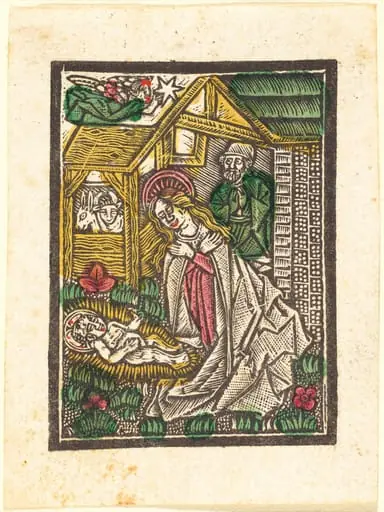 The Nativity
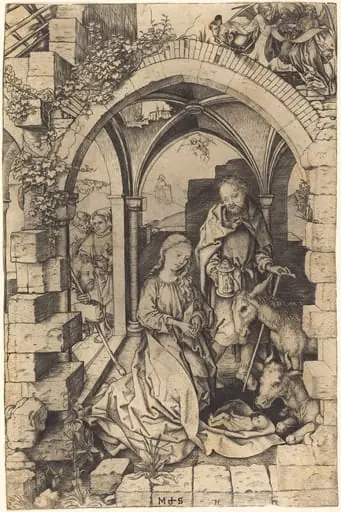 The Nativity
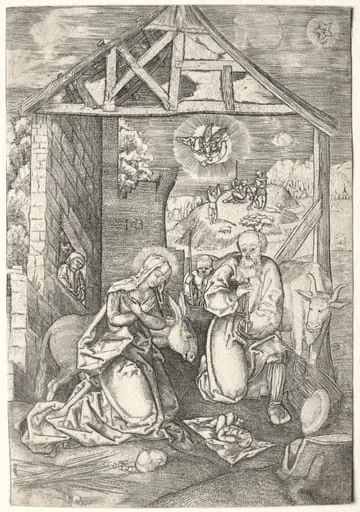 The nativity
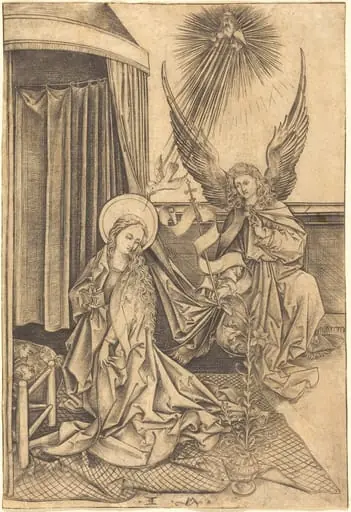 The Annunciation
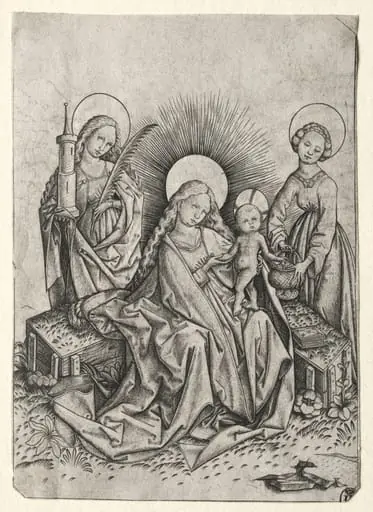 Madonna and Child in a Garden between St. Barbara and st. Dorothy
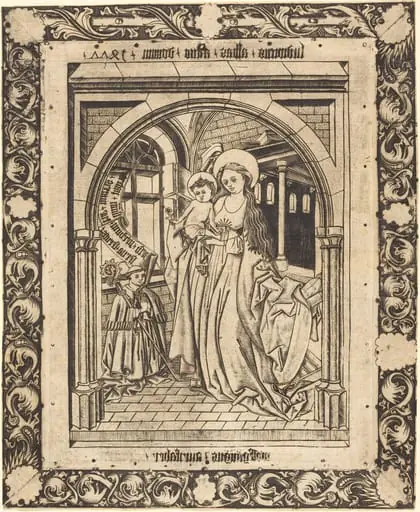 The Madonna and Child with the Abbot Ludwig von Churchwalden
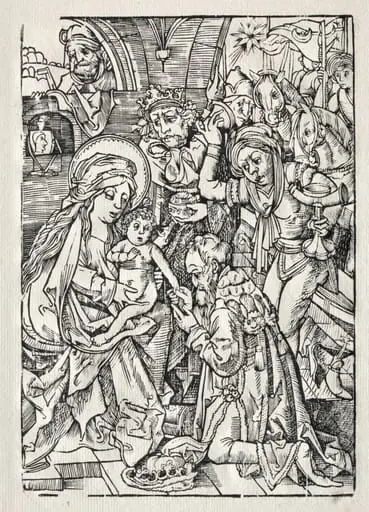 Adoration of the Kings
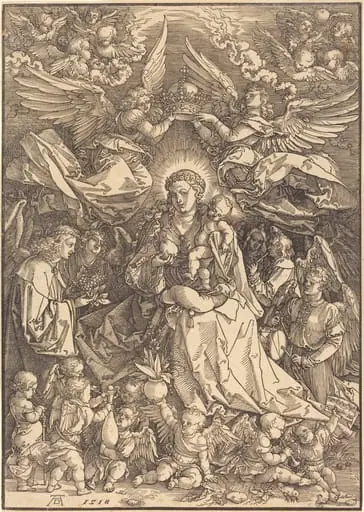 The Virgin Surrounded by Many Angels
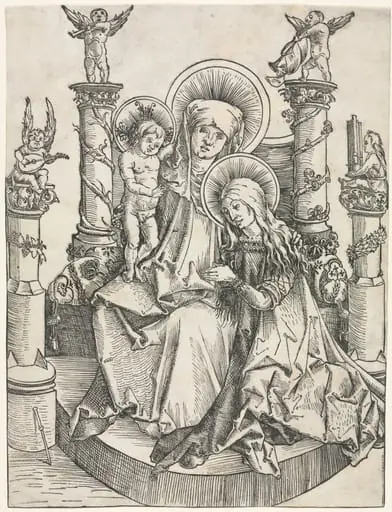 St. Anne, the Virgin and Christ Child
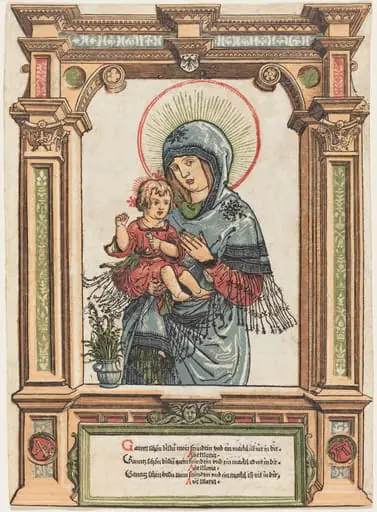 The Beautiful Virgin of Regensburg
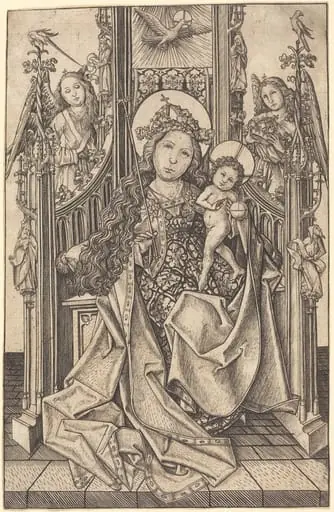 Madonna and Child Enthroned