Artwork
Untitled
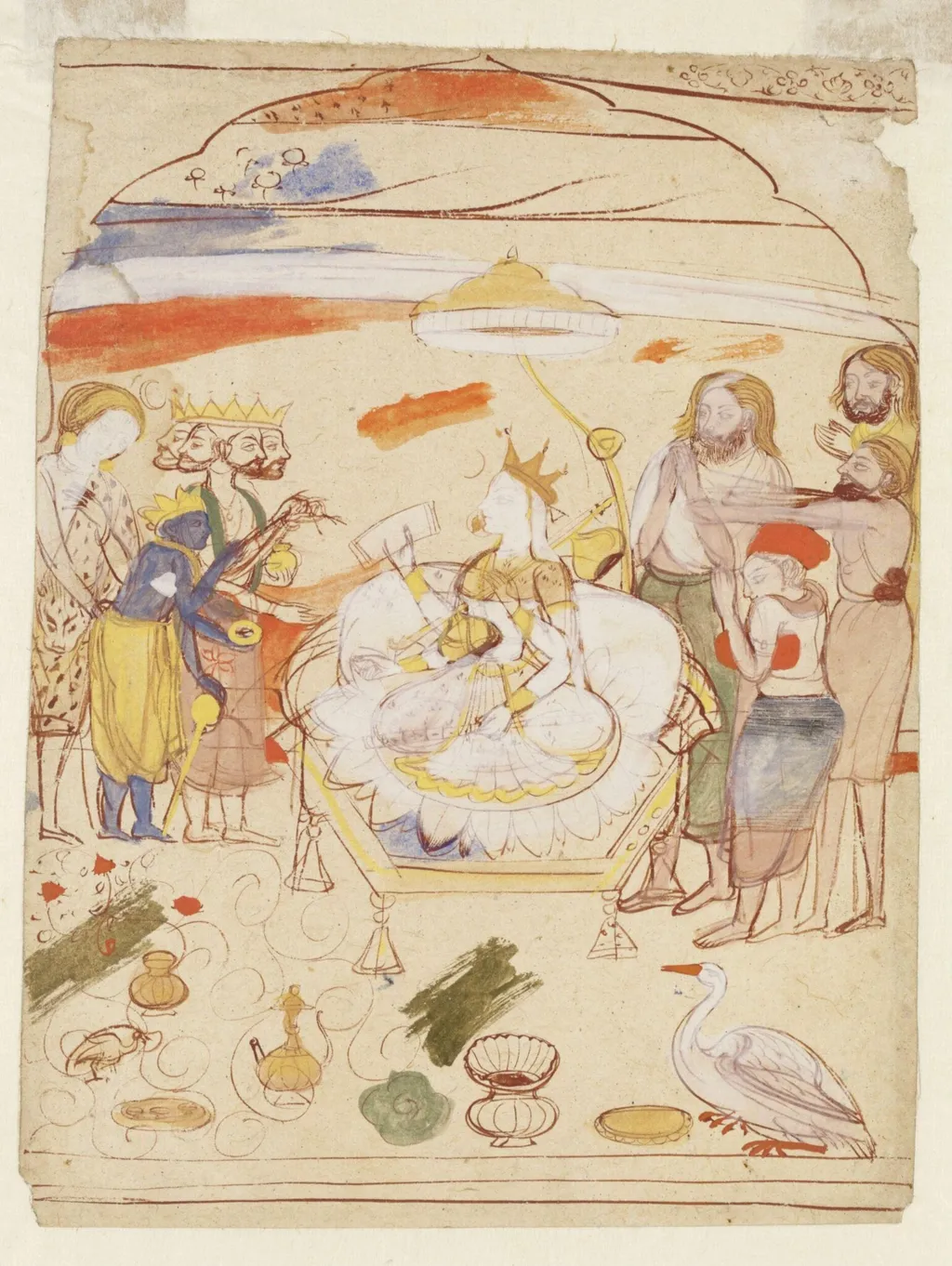
Untitled is a paint painting by the Impressionist artist Mangnu. It dates from 1870 and is held in the collection of the Victoria and Albert Museum.
About this work
Overview
This watercolor on paper, created in 1870 by the artist Mangnu, belongs to a series of miniature paintings produced in the Pahari tradition.
This watercolor on paper, created in 1870 by the artist Mangnu, belongs to a series of miniature paintings produced in the Pahari tradition. Originating in the hill courts of northern India, these works were often made for devotional or courtly use. The piece is notable for its unembellished composition and lack of atmospheric depth, reflecting a regional aesthetic that prioritized symbolic clarity over naturalism.
Subject & Meaning
The scene centers on a female figure seated in a gilded palanquin, likely representing a goddess, surrounded by attendants and worshippers. Figures to the left and right, including a crowned man and a bearded figure holding a child, suggest a procession or ritual gathering. Objects at the base—such as a swan, bowls, and a chess piece—may symbolize divine attributes or earthly offerings, reinforcing the sacred nature of the moment without literal narrative detail.
Technique & Style
The painting employs flat, unmodulated colors and simplified forms, typical of Pahari miniatures. Lines are crisp but economical, with minimal shading or perspective to suggest space. Figures and objects are rendered as stylized silhouettes, evoking a sense of immediacy rather than polished finish. This approach aligns with a local practice where artistic clarity and symbolic resonance outweighed illusionistic realism.
History & Provenance
The work was part of a larger collection assembled from the family archives of Hira Lal of Chamba, a region in present-day Himachal Pradesh. Mangnu, a known artist within this lineage, produced the piece as one of several related compositions. The set was acquired by the Victoria and Albert Museum in 1954, preserving its connection to its original cultural context and patronage network.
Context
Pahari painting flourished in the 17th to 19th centuries under Rajput rulers who supported devotional art. These works often illustrated Hindu epics or courtly rituals, blending spiritual themes with local customs. Unlike Mughal miniatures, Pahari styles favored bold color and rhythmic composition, reflecting regional tastes and the intimate scale of devotional objects used in private worship or temple settings.
Legacy
Mangnu’s painting contributes to a broader understanding of how regional artists adapted religious iconography within localized visual languages. Its preservation in a major museum collection ensures continued study of Pahari aesthetics beyond elite courtly traditions. The work exemplifies how everyday artistic practices in small hill states sustained cultural continuity through generations of artisan families.
Artist & collection
Artist
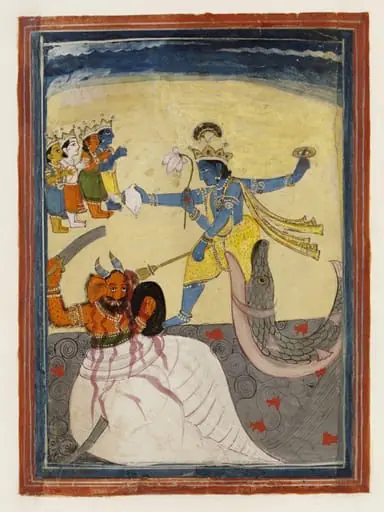
Mangnu’s paintings bring India’s sacred stories to life in vivid detail. Around 1760 they rendered scenes from Hindu myths, like Vishnu as Matsya—where the god takes the form of a fish to save the world—while later…

 Untitled
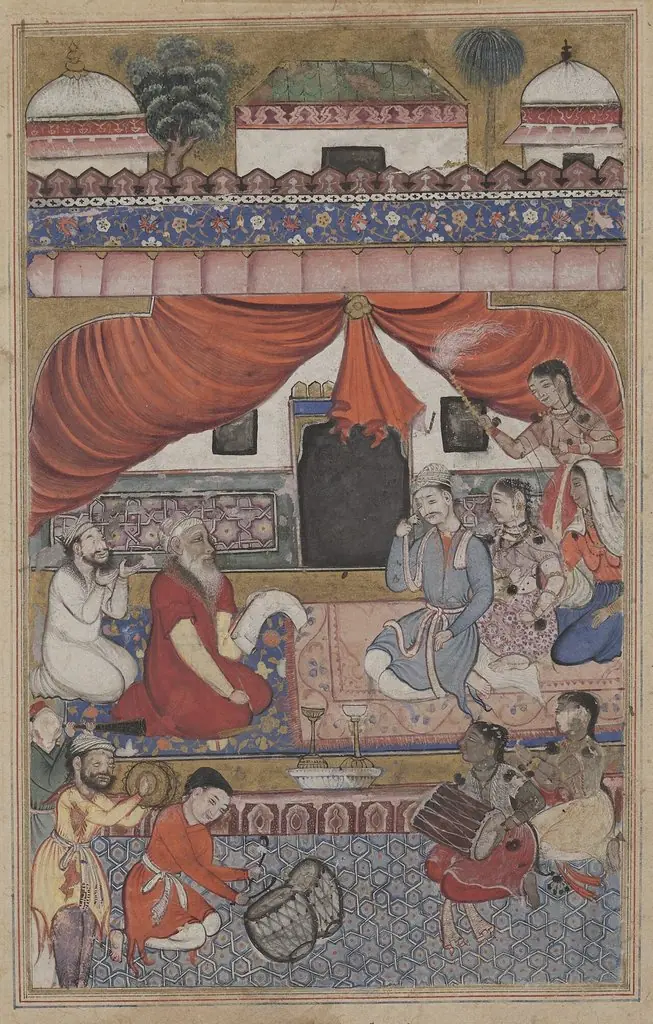 Preparation for the marriage of Mahmuda to the Young Vizier, from a Tuti-nama (Tales of a Parrot): Thirty-third Night
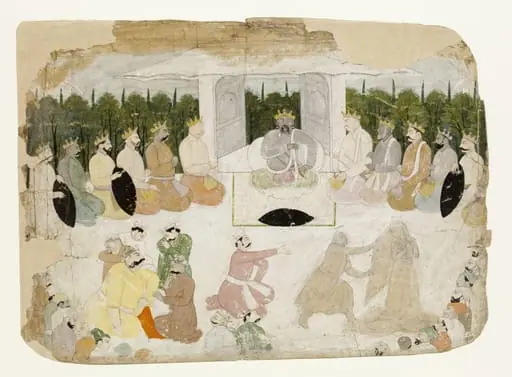 Draupadi
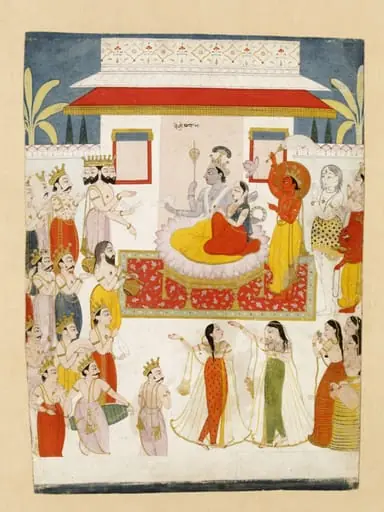 Vishnu
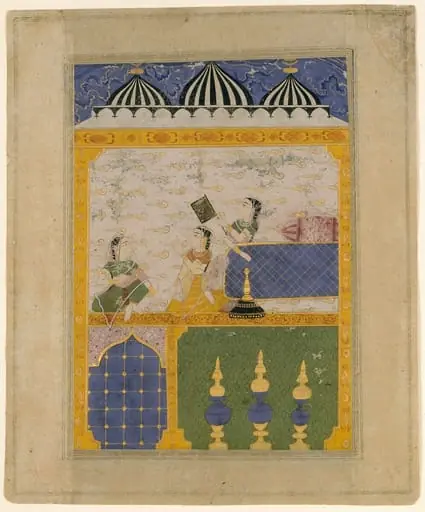 Untitled
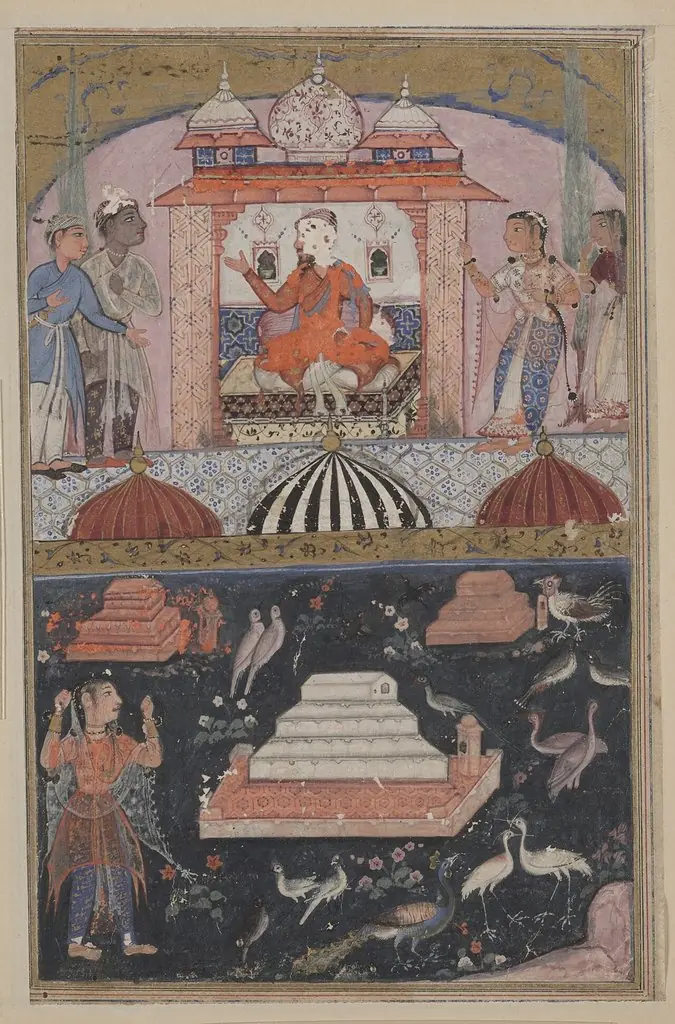 The merchant hears of his wife’s unfaithfulness (above); the unfaithful wife performs penance by plucking her hair (below), from a Tuti-nama (Tales of a Parrot): First Night
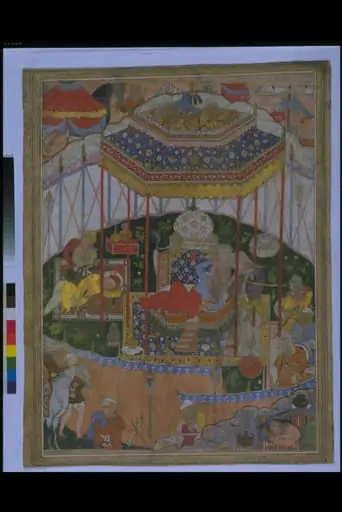 An Ayyar murders Qubad in his sleep
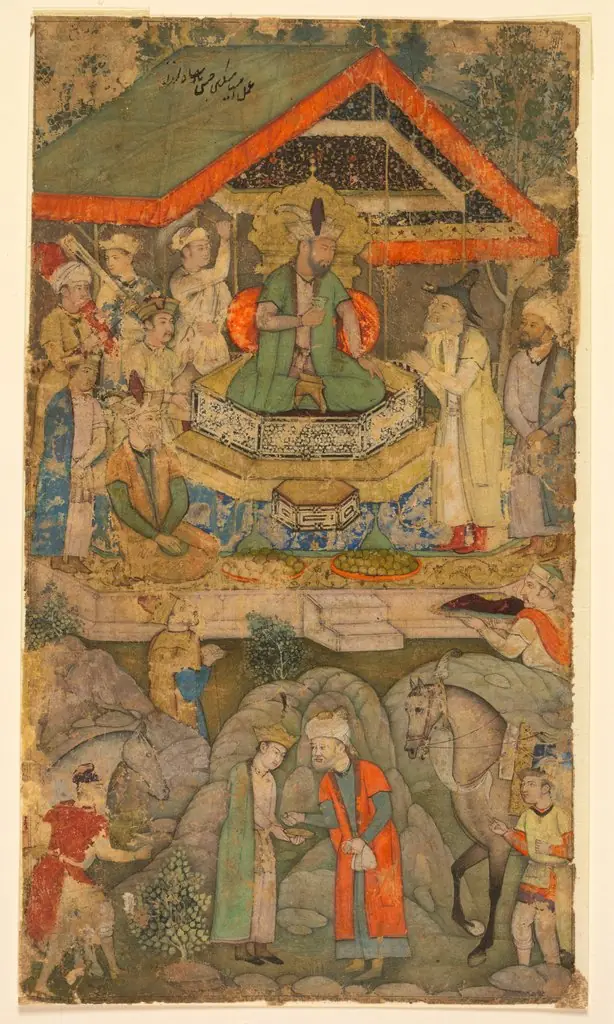 An Ambassador before Humayun
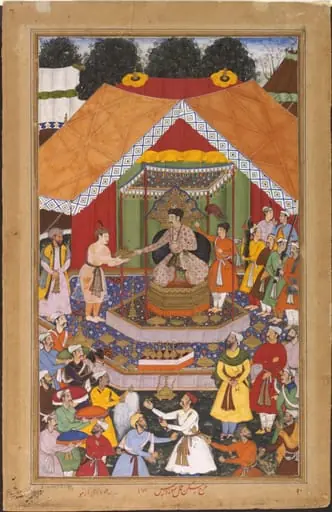 Akbar and Azim Khan at Dipalpur
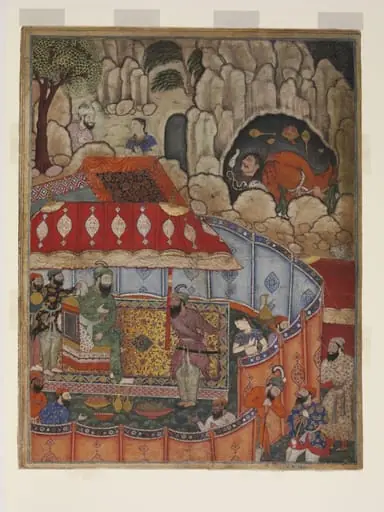 Hamzanama
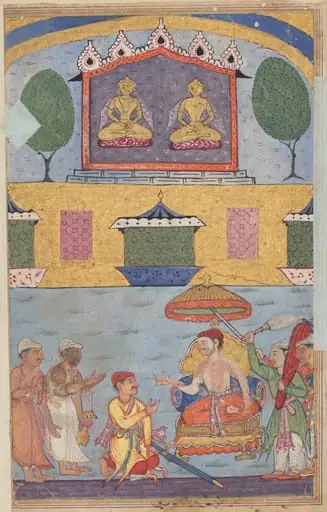 The goldsmith and the carpenter inform the king of a dream in which the golden images plan to desert the city for lack of worshippers, from a Tuti-nama (Tales of a Parrot): Third Night
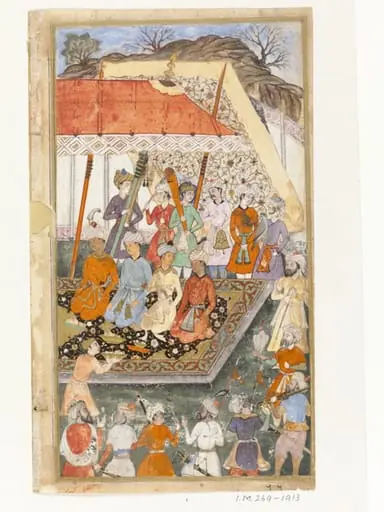 Untitled