Artwork
Landscape with Ruin
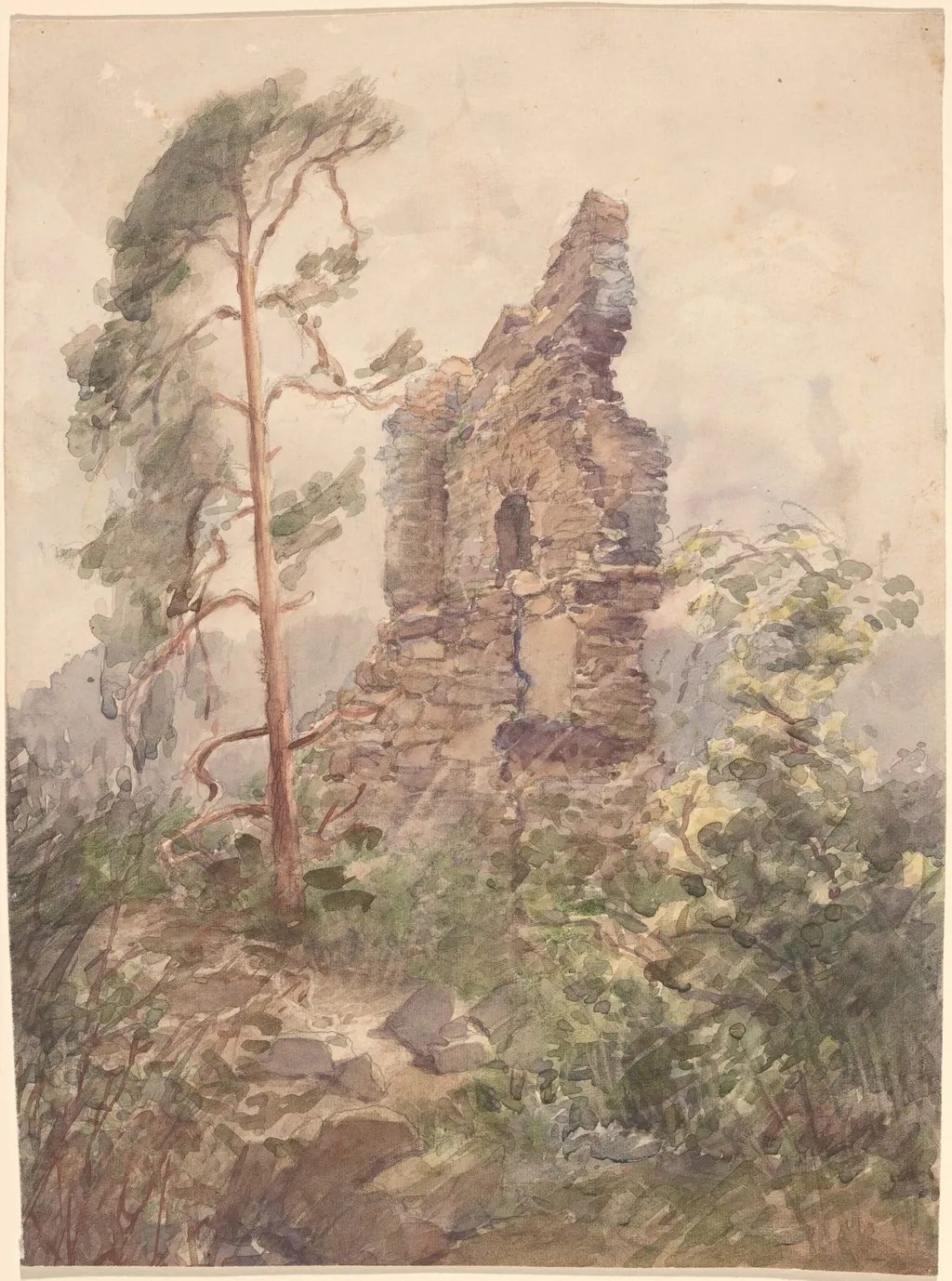
Landscape with Ruin is a watercolor drawing by Karel Vitezslav Masek. It dates from 1901 and is held in the collection of the National Gallery of Art.
About this work
Overview
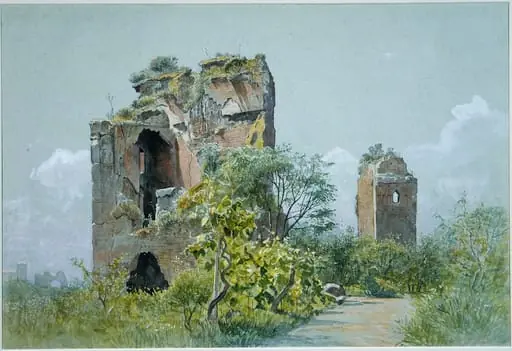
Landscape with Ruin is a 1901 watercolor by Czech artist Karel Vítězslav Mašek, depicting the quiet decay of stone architecture overtaken by nature. Executed in delicate washes, the work captures a moment of stillness where crumbling walls and arches emerge from tall, uneven grass. The composition avoids dramatic detail, favoring subtle tonal shifts that evoke a sense of time passed and solitude.
Subject & Meaning
Rather than emphasizing architectural grandeur, the artist focuses on the gentle encroachment of vegetation—grass, moss, and earth reclaiming human-made forms.
The scene portrays abandoned masonry structures in a rural Bohemian setting, likely inspired by ruins Mašek encountered during travels. Rather than emphasizing architectural grandeur, the artist focuses on the gentle encroachment of vegetation—grass, moss, and earth reclaiming human-made forms. The mood is contemplative, suggesting neither destruction nor renewal, but an enduring equilibrium between nature and decay.
Technique & Style
Mašek employed watercolor glazing to build soft, translucent layers of pale green, ochre, and blue, allowing underlying washes to subtly show through. The brushwork is restrained, with minimal detail and no hard outlines, creating a hazy, atmospheric effect. The technique mimics the way light filters through foliage and settles on weathered stone, reinforcing the quiet, meditative tone of the scene.
History & Provenance
Painted in 1901, the work stems from Mašek’s personal observations of Bohemian ruins, rendered from memory rather than on-site sketching. It reflects his broader interest in the passage of time and the erosion of human presence. While its early ownership is undocumented, the piece remains within the corpus of his lyrical landscape studies, valued for its emotional restraint and technical sensitivity.
Context
Created during a period when Czech artists were redefining national identity through landscape, Mašek’s work diverged from heroic or romanticized depictions. Instead, he turned to quiet, overlooked sites—ruins where nature’s reclamation offered a more intimate, introspective vision of the land. His approach aligned with broader European trends favoring mood over narrative in late 19th- and early 20th-century watercolor.
Legacy
Landscape with Ruin exemplifies Mašek’s contribution to Czech watercolor traditions, emphasizing subtlety and emotional nuance over spectacle. Though not widely exhibited in his lifetime, the work has come to represent a quiet strand of modernist landscape painting that values stillness and impermanence. It continues to inform contemporary readings of nature’s relationship to human history in Central European art.
Own this work as a print
Artist & collection




 Baths of Trajan (Sette Sale, Villa Brancaccio, Rome)
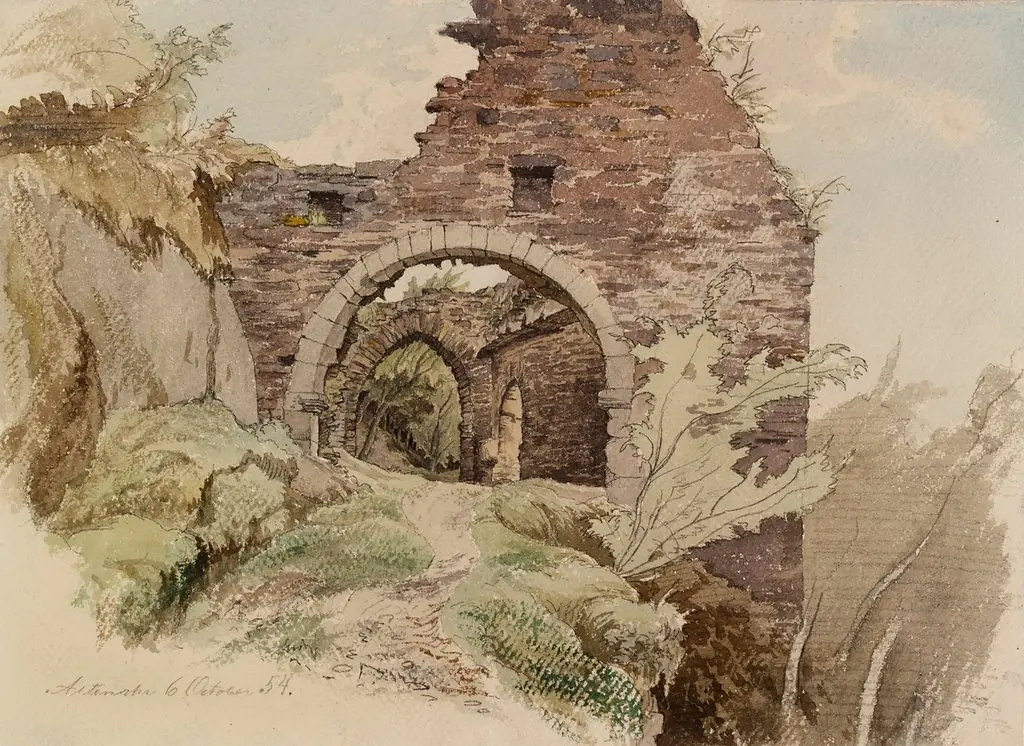 Linnanrauniot, portaaliholvi
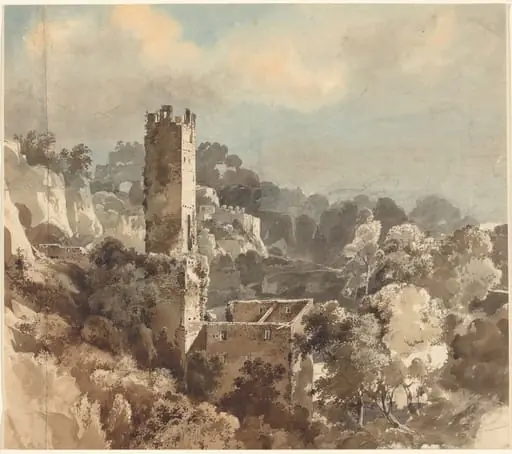 Ruins of a Fortified Tower among Wooded Hills
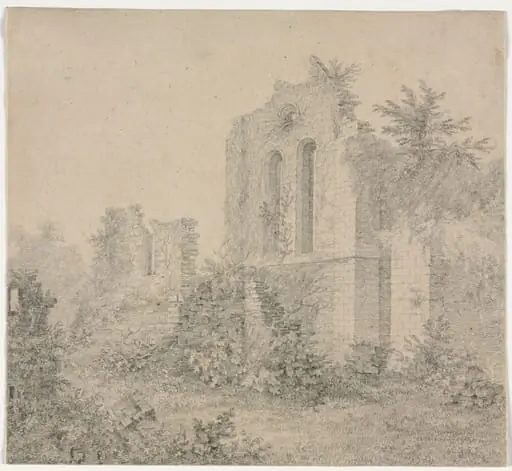 Ruins of an Abbey
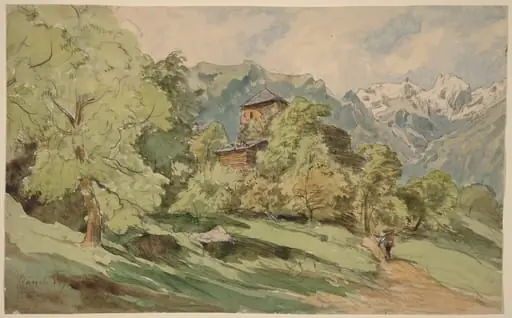 The Castle of Bürglen with the Alps Beyond
 Ruins by a Woodland Stream
 Six Views of Heidelberg Castle: Tower
 A Woody Bit, North Wales
 Conisborough Castle, Yorkshire
 Rays of Sunlight Striking a Woodland Path
 Torre dei Schiavi, Roman Campagna
 Landscape with Castle Ruin