Artwork
Saint Stephen
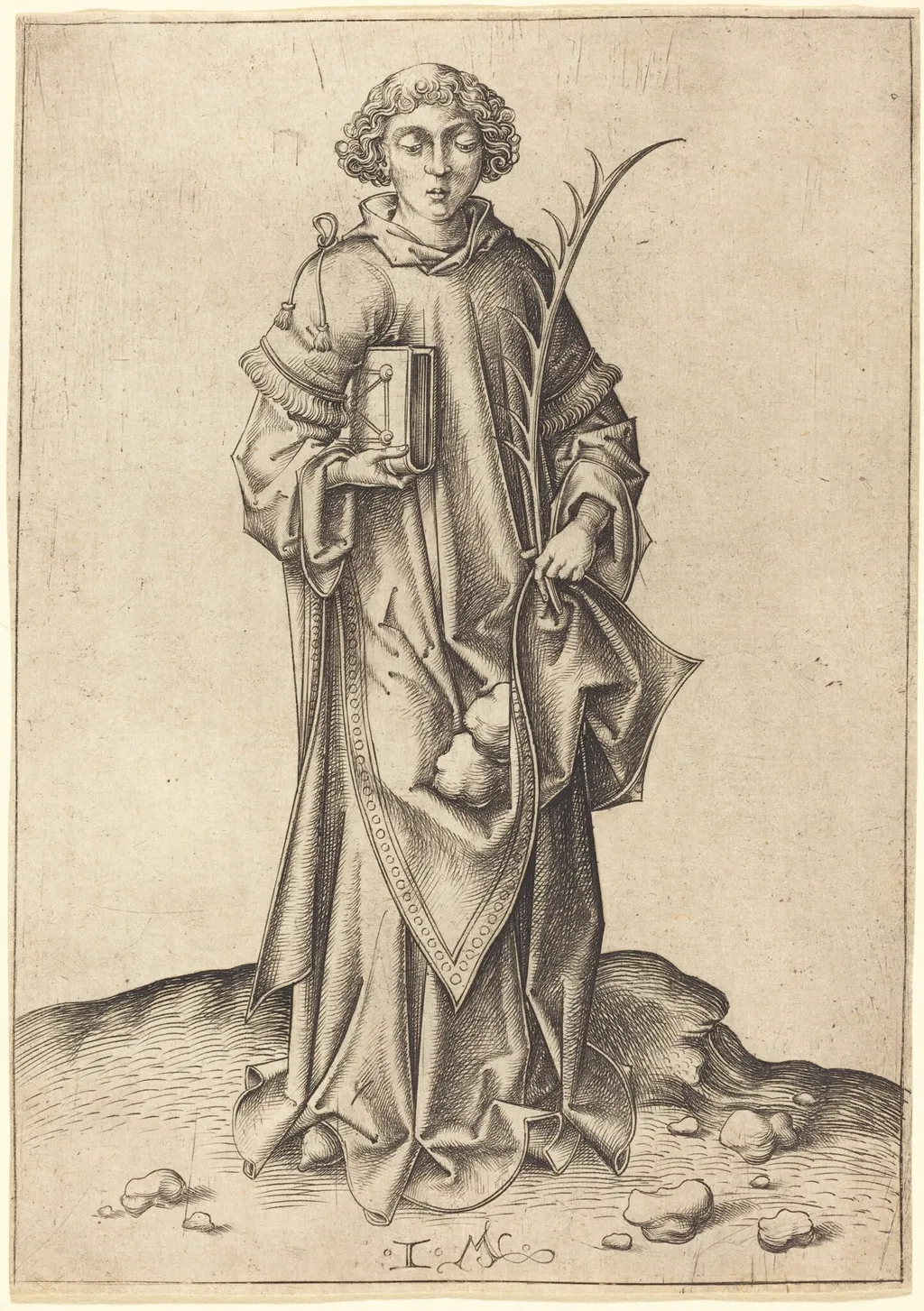
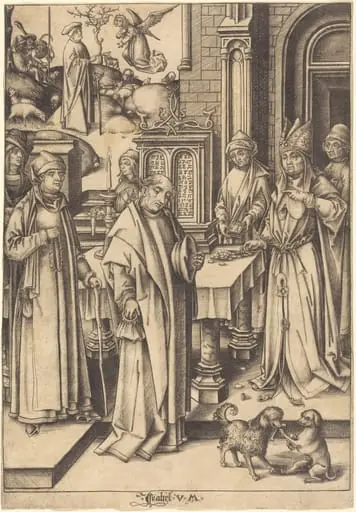
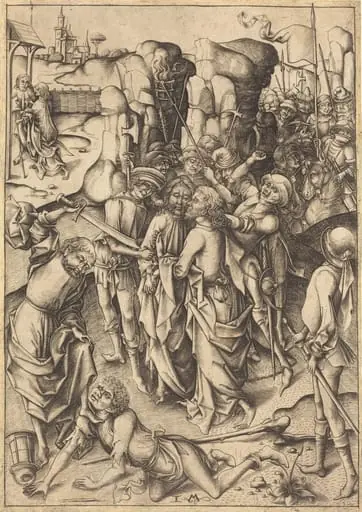
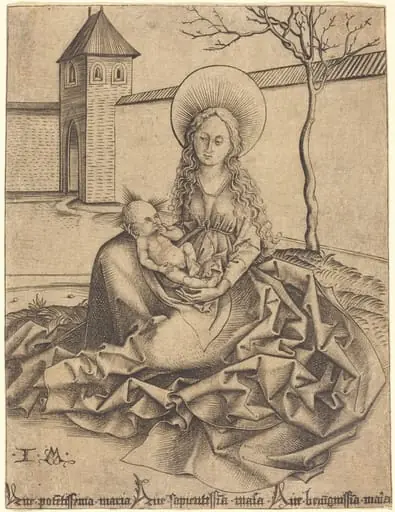
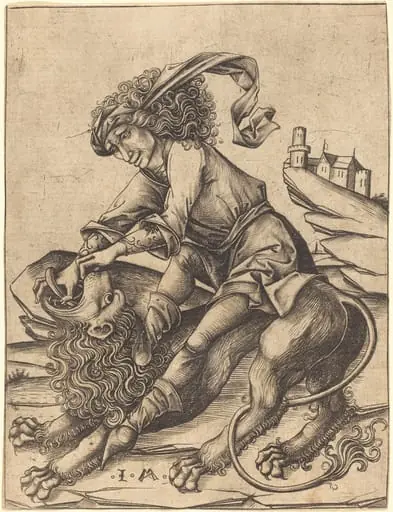
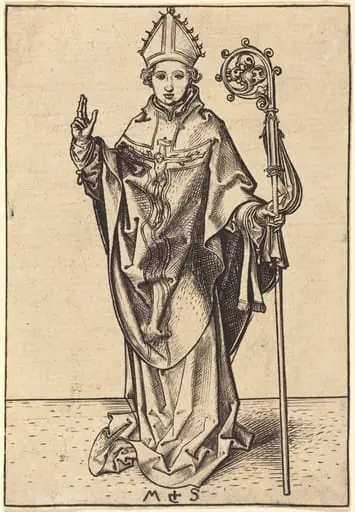
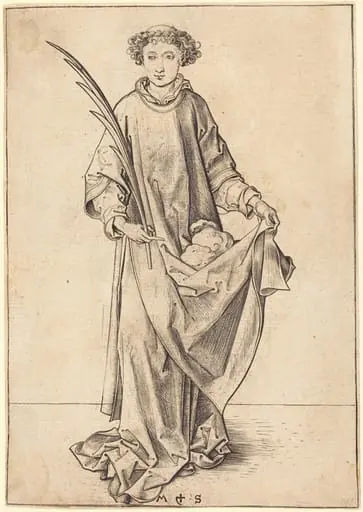
Saint Stephen is an ink print by the Renaissance artist Israhel van Meckenem. It dates from 1474 and is held in the collection of the National Gallery of Art.
About this work
Overview
Created in 1474, this engraving presents a standing figure in a long, belted robe, holding a book in the left hand and a slender‑leafed plant in the right. The subject stands upon a rocky base against a light‑toned background, his curly hair visible beneath the head covering. The work reflects the devotional focus typical of late‑medieval printmaking.
Subject & Meaning
The figure is identified as Saint Stephen, the first Christian martyr, traditionally shown with a book symbolising his role as a deacon and a plant that may allude to his martyrdom or a specific attribute from contemporary iconography. The composition emphasizes his learned and pious character, aligning with the religious themes prevalent in the artist’s oeuvre.
Technique & Style
Engraved on a copper plate, the image displays fine line work and cross‑hatching that model the folds of the robe and the texture of the rocky surface. Van Meckenem’s hand is evident in the precise, somewhat repetitive rendering of details, a hallmark of his prolific workshop practice, which often reproduced established motifs with consistent technical quality.
History & Provenance
Israël van Meckenel, a German goldsmith and printmaker active between 1465 and 1503, produced more than six hundred prints, many of which were copies of earlier designs. This particular engraving, part of his extensive religious series, illustrates his role in disseminating devotional imagery across the Holy Roman Empire during the late fifteenth century.
Artist & collection
Artist
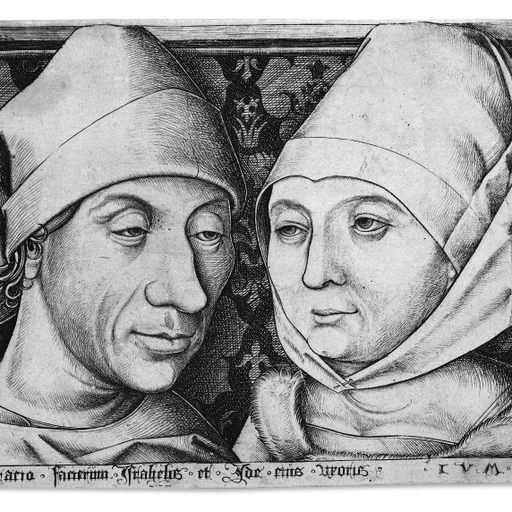
Israhel van Meckenem (c. 1445 – 10 November 1503), also known as Israhel van Meckenem the Younger, was a German printmaker and goldsmith, perhaps of a Dutch family origin. He was the most prolific engraver of the…