Artwork
Spes (Hope)
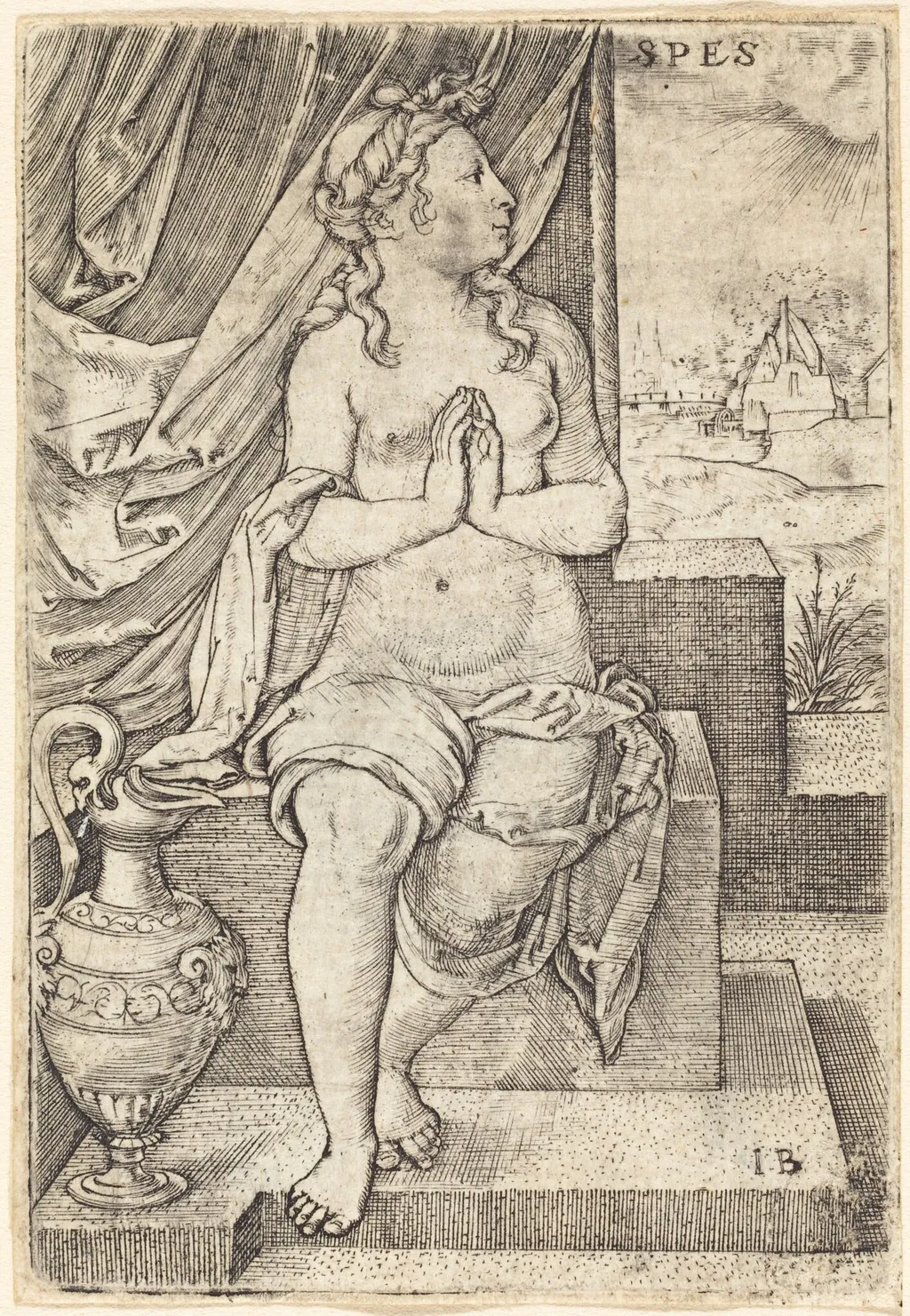
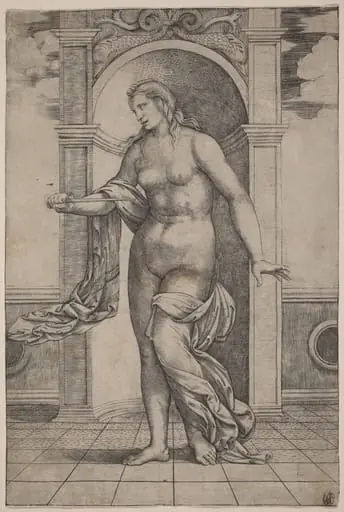
Spes (Hope) is an ink print by the Renaissance artist Master IB. It dates from 1516 and is held in the collection of the National Gallery of Art.
About this work
Overview
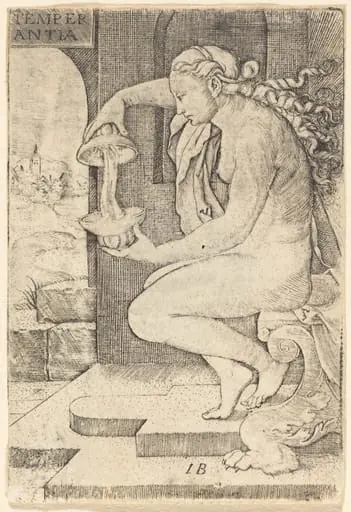
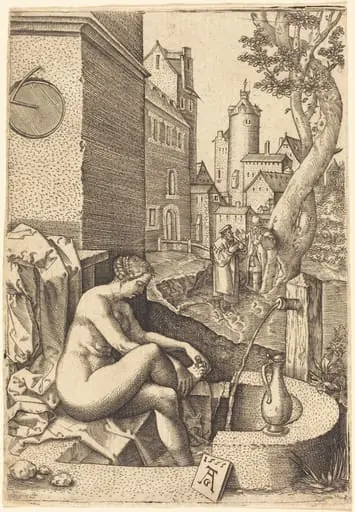
The composition centers on her contemplative posture, framed by a modest background of a distant settlement and a tall vase.
Created in 1516, Spes (Hope) is an engraving by the artist known as Master IB. The work depicts a solitary female figure seated on a stone ledge, rendered with delicate linear precision. The composition centers on her contemplative posture, framed by a modest background of a distant settlement and a tall vase. The Latin word SPES appears above, anchoring the image’s thematic intent. As a print, it reflects the technical sophistication of early 16th-century Northern European engraving traditions.
Subject & Meaning
The figure represents Spes, the Roman personification of hope, depicted not with grandeur but quiet introspection. Barefoot and draped in loose fabric, she sits with legs crossed and hands clasped, suggesting vulnerability and patience. The barren landscape and distant town imply isolation, while the vase may symbolize containment or fragility. The absence of overt symbols like anchors or torches shifts focus to inner resilience, aligning with humanist interpretations of hope as a quiet, enduring state.
Technique & Style
Master IB employed fine, controlled lines to model form and texture, particularly in the folds of the dress and the soft rendering of hair. Shading is achieved through hatching and cross-hatching, creating subtle tonal gradations without heavy ink. The background town is rendered with minimal detail, receding into a hazy, atmospheric distance. This contrast between the detailed figure and the ethereal landscape enhances the sense of psychological depth and spatial ambiguity.
History & Provenance
The engraving is attributed to Master IB, a shadowy figure active in the early 1500s, likely in the Netherlands or Germany. No definitive records of its early ownership exist, but its technical quality suggests it was produced for a learned or devotional audience. Surviving impressions are rare, and the work is known primarily through museum collections and scholarly catalogs from the 19th century onward.
Context
Created during the Northern Renaissance, Spes reflects a broader cultural interest in classical allegory filtered through Christian humanism. While religious imagery dominated print culture, secular personifications like Hope gained traction among educated patrons. The quiet, introspective tone of this work diverges from more dramatic allegories, aligning with emerging humanist values that emphasized inner life over external spectacle.
Legacy
Though not widely reproduced or celebrated in its time, Spes remains a quiet example of early 16th-century engraving’s capacity for emotional nuance. It influenced later artists exploring allegory through restraint rather than spectacle. Its survival in institutional collections attests to its enduring value as a study in minimalism, psychological depth, and the expressive potential of line alone.
Artist & collection