Artwork
Temperantia (Temperance)
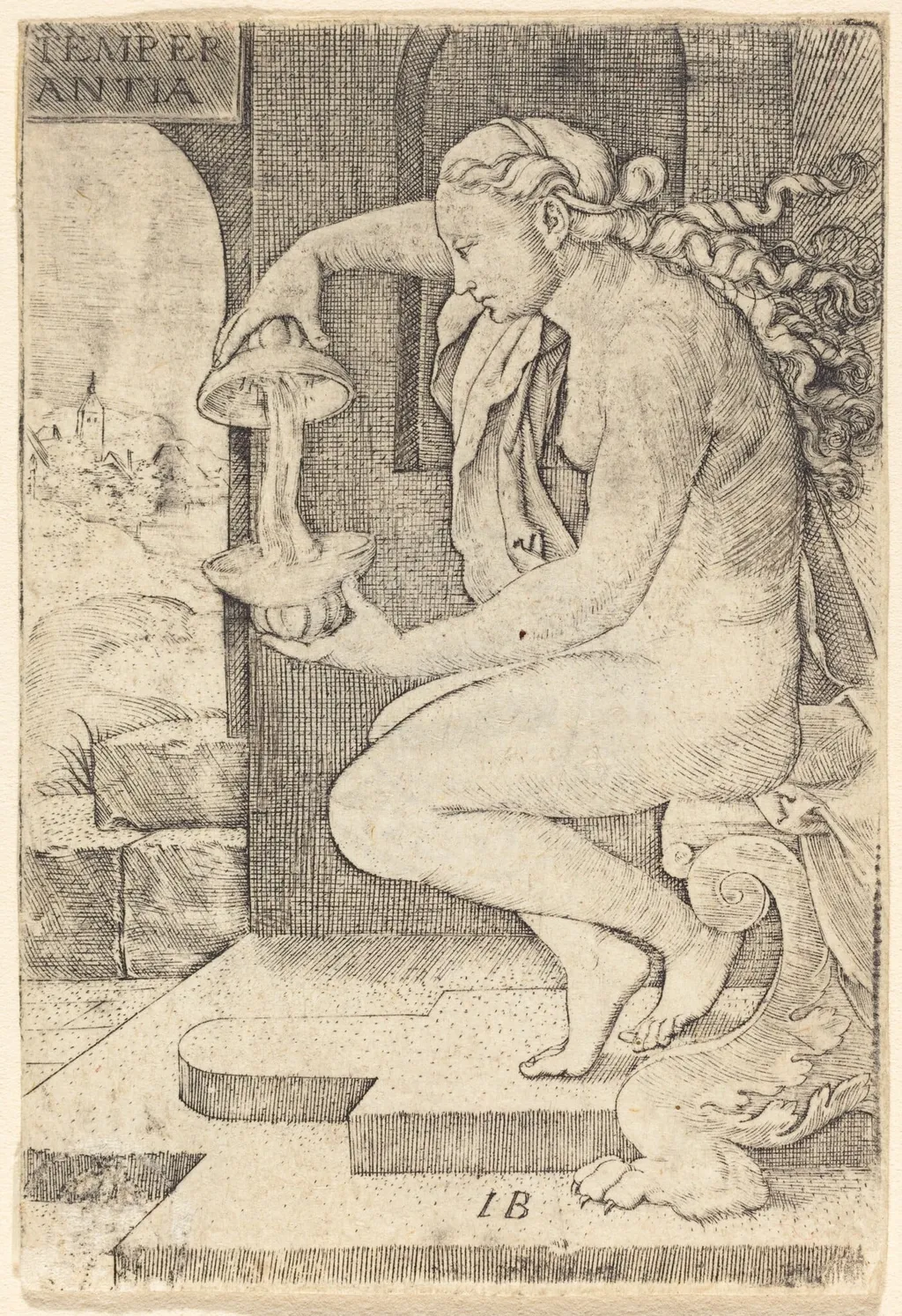
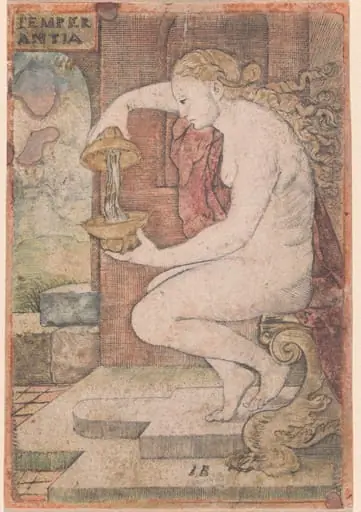
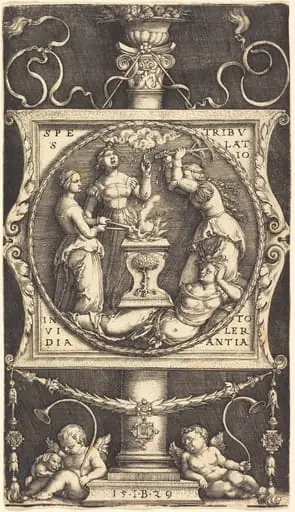
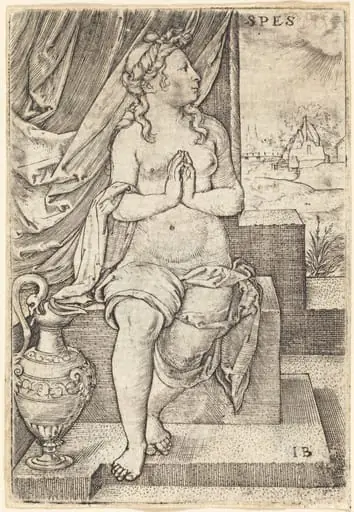
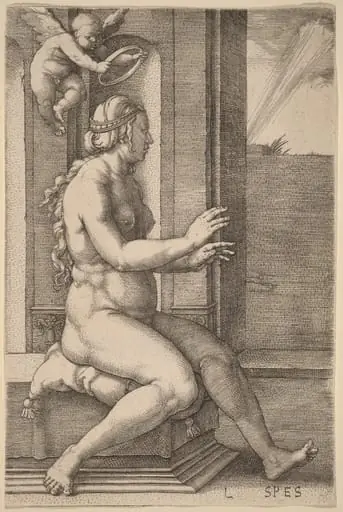
Temperantia (Temperance) is an ink print by the Renaissance artist Master IB. It dates from 1525 and is held in the collection of the National Gallery of Art.
About this work
Overview
The work belongs to a series of moral virtues and exemplifies the Northern Renaissance interest in symbolic imagery executed with technical precision.
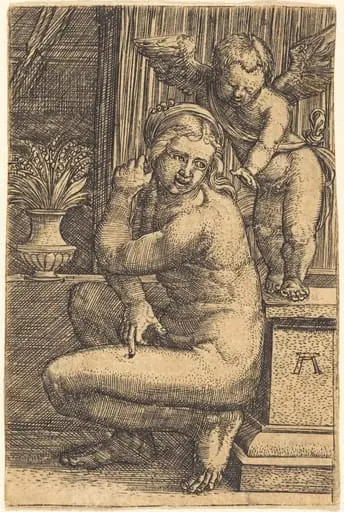
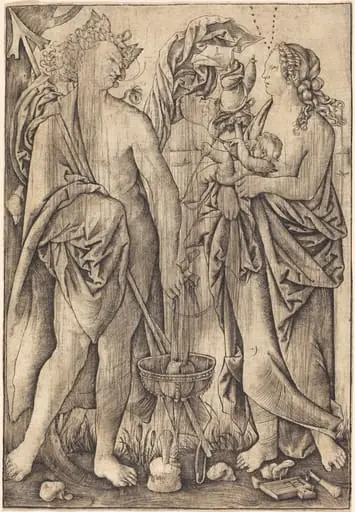
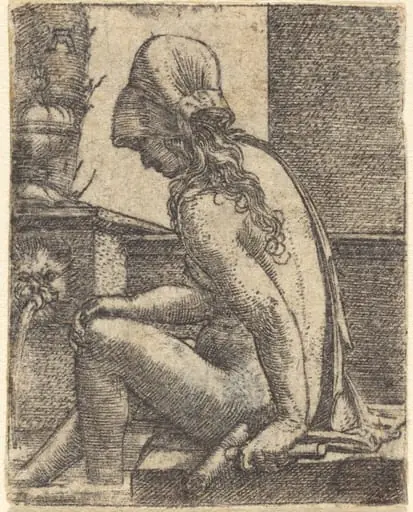
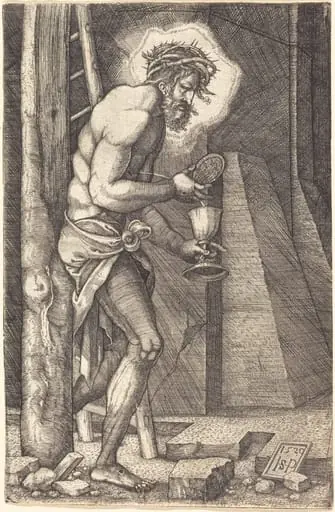
Created around 1525, this engraving by Master IB portrays the allegorical figure of Temperance. Rendered in fine linear detail, the image captures a woman in quiet motion, pouring water from a bowl into a vessel. The composition is restrained yet deliberate, with a distant landscape framing the figure. The work belongs to a series of moral virtues and exemplifies the Northern Renaissance interest in symbolic imagery executed with technical precision.
Subject & Meaning
The figure represents Temperance, one of the cardinal virtues, traditionally associated with moderation and self-control. The act of pouring water—neither overflowing nor insufficient—symbolizes balance. Her kneeling posture suggests humility, while the absence of excess in the scene reinforces the virtue’s core principle. The architectural element in the distance may allude to order or divine structure, reinforcing the moral framework of the image.
Technique & Style
Master IB employs fine, controlled lines and layered cross-hatching to model form and suggest texture. The flowing fabric of the robe is rendered with rhythmic contours, while the stone platform and distant hills gain depth through gradations of tone. The engraving avoids dramatic contrasts, favoring a calm, even light that enhances the meditative quality of the scene. The precision of the toolwork reflects a mastery of the medium typical of early 16th-century Northern printmakers.
History & Provenance
The engraving is attributed to Master IB, an anonymous artist active in the early 1500s, likely in the Rhineland or southern Netherlands. It entered the collection of the National Gallery of Art in Washington, D.C., where it remains part of the Prints and Drawings department. Its survival in good condition suggests it was carefully preserved, possibly by a collector interested in moral allegories or Renaissance graphic arts.
Context
This work emerged during a period when printed images of virtues and vices circulated widely in Northern Europe, often used for religious instruction or personal reflection. Engravings like this one were affordable and portable, making them accessible beyond elite circles. The emphasis on quiet virtue, rather than overt piety, reflects a humanist shift in moral representation during the early Reformation era.
Legacy
Though Master IB’s identity remains obscure, this engraving stands as a refined example of how allegory was visualized in print form during the Renaissance. Its influence lies in its quiet clarity—avoiding spectacle in favor of contemplative symbolism. It continues to be studied for its technical discipline and its role in the broader tradition of moral imagery in early modern European art.
Artist & collection