Artwork
Marcus Curtius
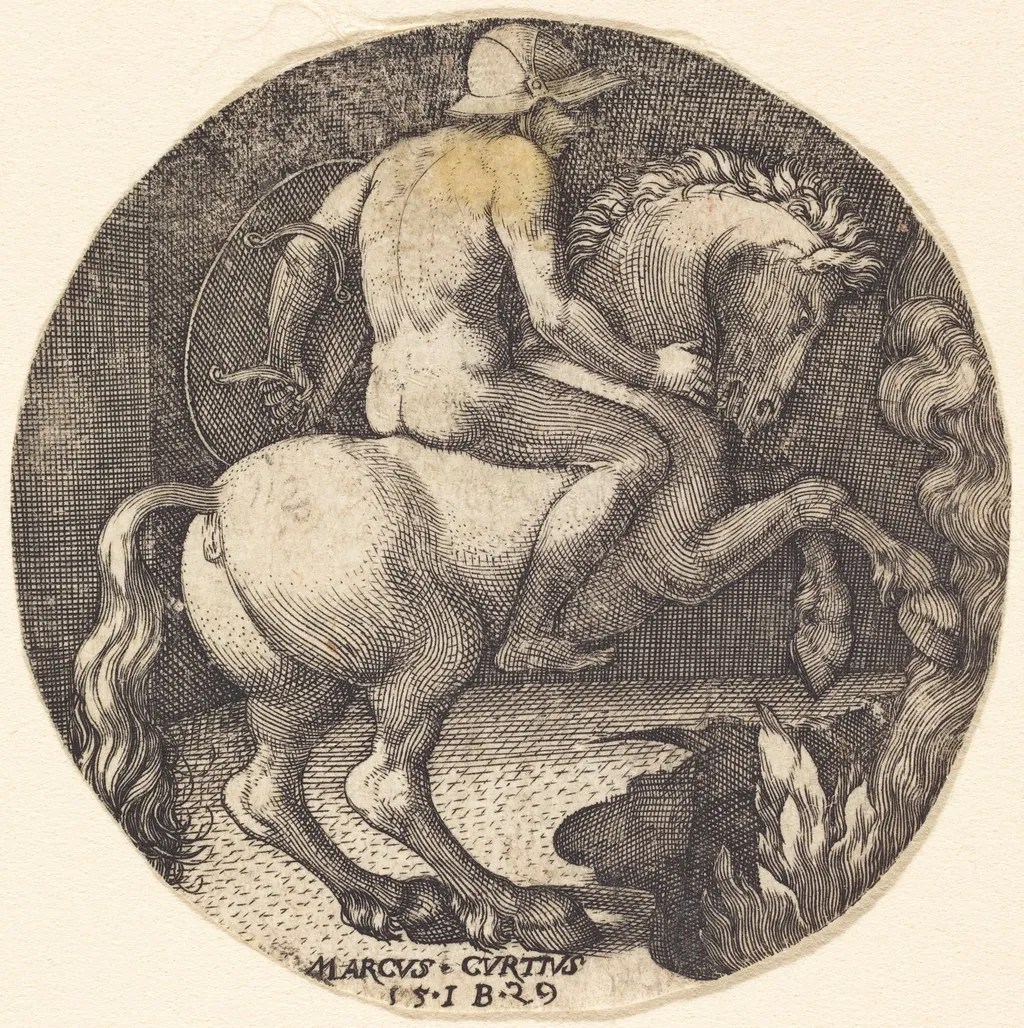
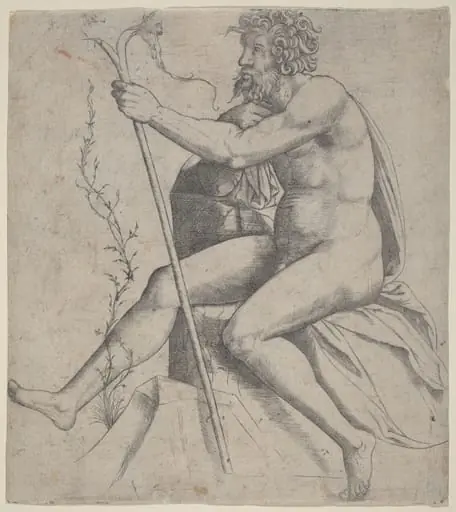
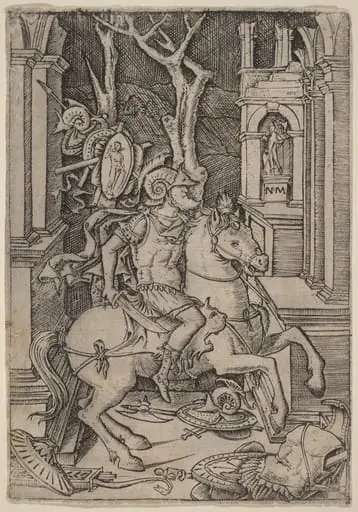
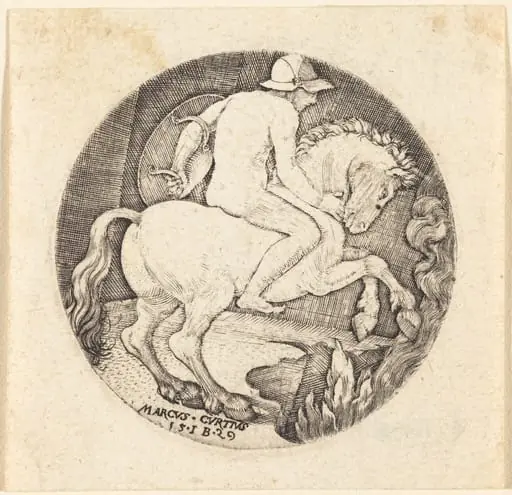
Marcus Curtius is an ink print by the Renaissance artist Master IB. It dates from 1529 and is held in the collection of the National Gallery of Art.
About this work
Overview
The work is a circular copper engraving dated 1529, attributed to the anonymous printmaker known as Master IB. Executed in the early Renaissance period, the image presents a solitary figure in a composed stance, rendered with fine linear detail characteristic of the era’s print culture.
Subject & Meaning
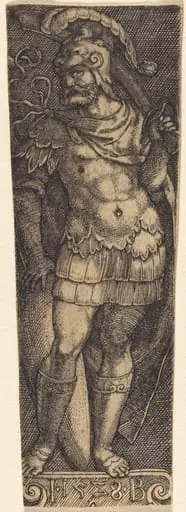
The central figure is identified as Marcus Curatius, a legendary Roman youth who, according to myth, sacrificed himself by leaping from the Capitoline Hill into a chasm to save the city. The engraving captures the decisive moment of his self‑offering, emphasizing his resolve through a solemn expression and the presence of a horse’s head emerging from the ground, a symbolic reference to the equine element of the tale.
Technique & Style
The image is constructed through meticulous cross‑hatching, a method where intersecting lines are layered to create tonal variation and depth. Tight, parallel strokes define the folds of the figure’s loose hat and the texture of the horse’s mane, while denser hatching produces the shadows that model the body, sword, and surrounding space.
History & Provenance
Created in 1529, the engraving reflects the spread of classical subjects in Northern European printmaking. Though the artist’s true identity remains unknown, the moniker Master IB groups him with other anonymous engravers of the period whose works circulated among collectors and scholars of antiquity.
Context
The early sixteenth century saw a resurgence of interest in Roman legends, spurred by humanist scholarship. Marcus Curatius, as a model of civic virtue, was a popular motif for artists seeking to convey moral exempla. This print would have functioned as both a decorative object and an educational illustration of the ancient story.
Legacy
Prints such as this contributed to the visual vocabulary of Renaissance antiquarianism, influencing later depictions of heroic sacrifice in both painting and engraving. The work remains a reference point for the study of anonymous Northern European printmakers and the transmission of classical narratives through graphic media.
Artist & collection