Artwork
Visitation

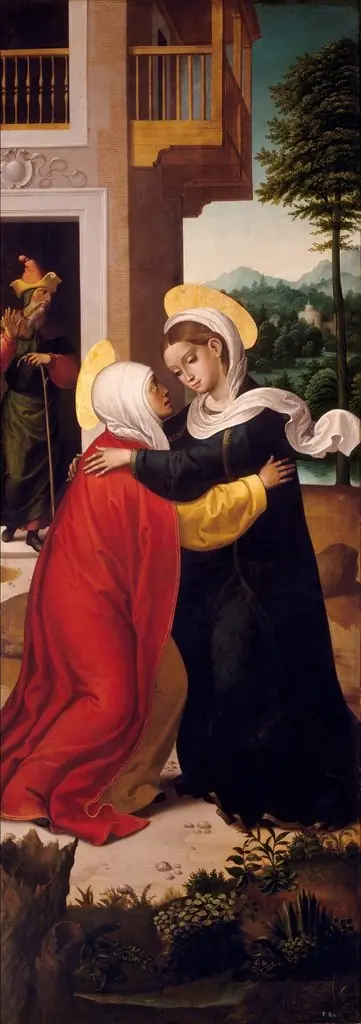
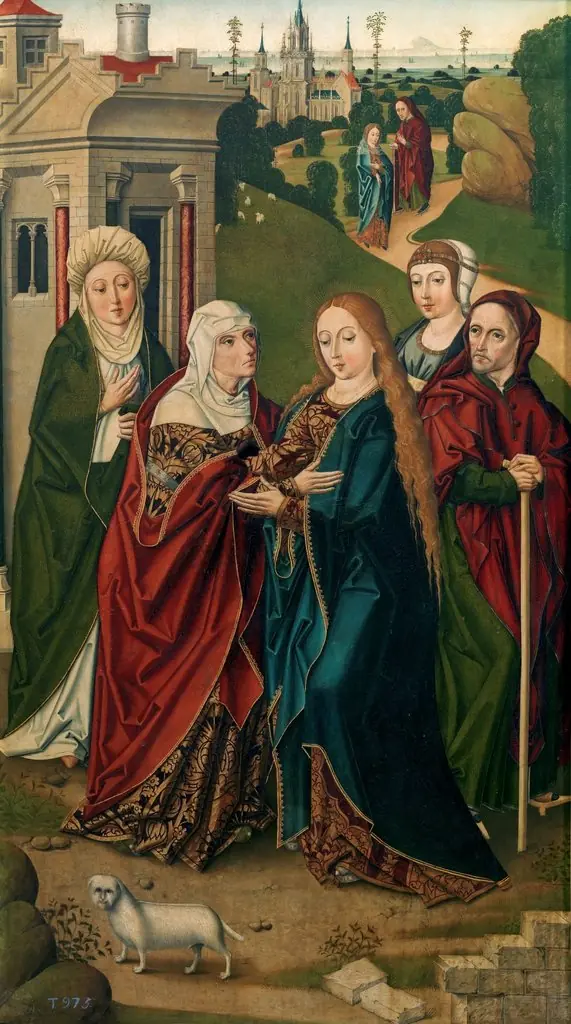
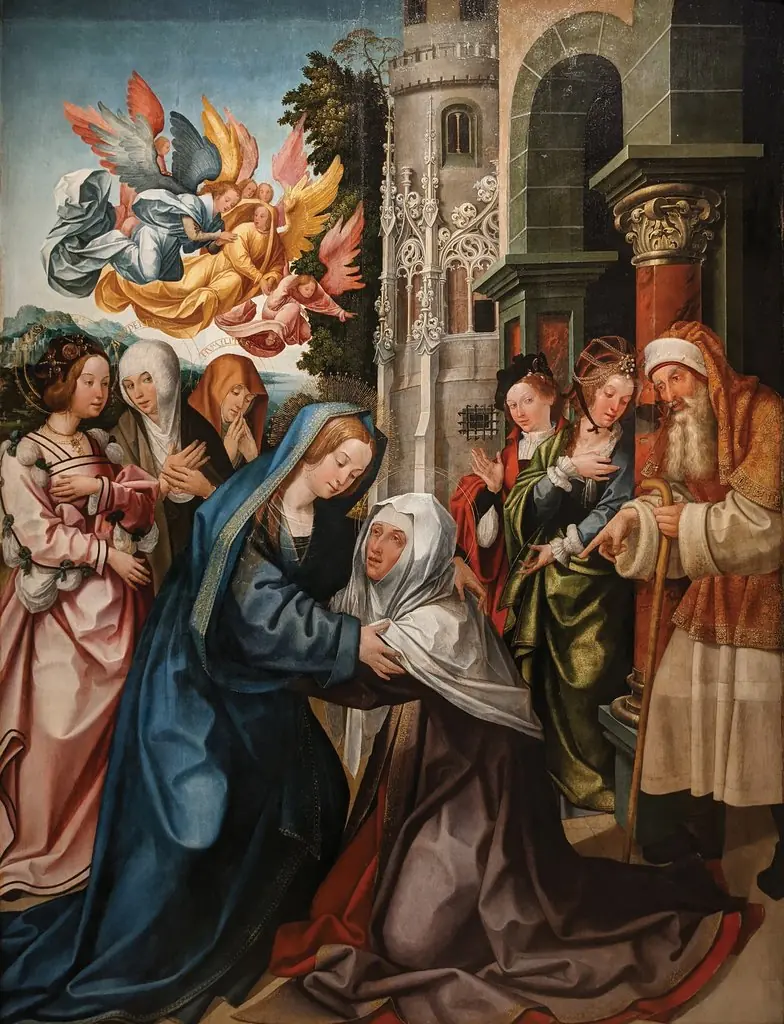
Visitation is an oil painting by the Early Baroque Italian artist Gregório Lopes. It dates from 1527 and is held in the collection of the National Museum of Ancient Art.
About this work
Overview
Painted in 1527 by Gregório Lopes, this oil-on-panel work illustrates the biblical Visitation, a moment when Mary visits her cousin Elizabeth. Executed in the Portuguese Renaissance style, the painting is part of the collection at the National Museum of Ancient Art in Lisbon. Its intimate scale and devotional tone reflect the spiritual priorities of early 16th-century Portuguese religious art.
Subject & Meaning
The absence of other figures and the calm setting emphasize personal faith over spectacle, aligning with contemplative devotional practices of the time.
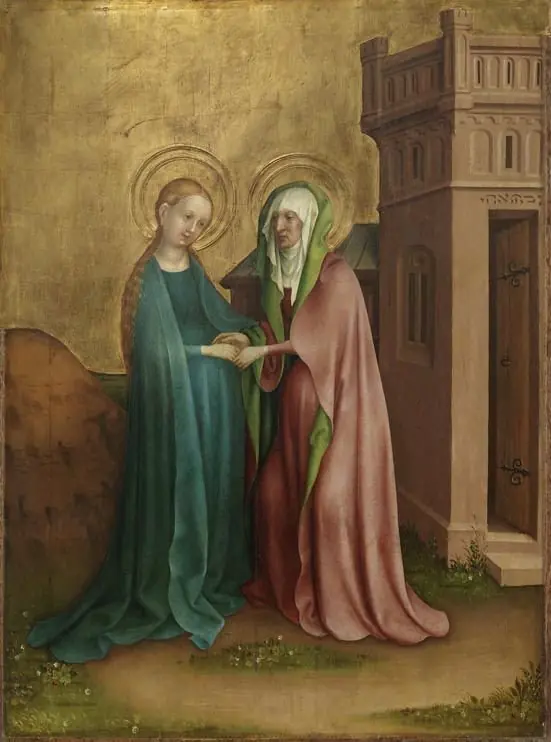
The scene captures Mary, dressed in red with a white headdress, reaching toward Elizabeth, who wears blue and rests a hand on her swollen abdomen. Their quiet gesture signifies the recognition of divine presence in both their pregnancies—Mary carrying Jesus, Elizabeth carrying John the Baptist. The absence of other figures and the calm setting emphasize personal faith over spectacle, aligning with contemplative devotional practices of the time.
Technique & Style
Lopes employs soft, warm tones and gentle lighting to unify the figures with their environment. The folds of the garments are rendered with careful attention, suggesting volume without excessive detail. Facial expressions are subdued, conveying reverence rather than drama. The background, with its simplified architecture and trees, frames the figures without distracting, characteristic of regional Portuguese painting’s restrained naturalism.
History & Provenance
The painting entered the collection of the National Museum of Ancient Art in the 19th century, likely originating from a Portuguese church or convent. Its survival through centuries of religious upheaval, including the dissolution of monasteries, suggests it was valued for its devotional quality. No documented commissions or patrons are known, but its quality implies it was commissioned by a wealthy or clerical patron.
Context
Created during Portugal’s Age of Discovery, the painting reflects a domesticated form of religious expression, distinct from the grandeur of Italian Renaissance altarpieces. While European centers embraced humanist ideals and perspective, Portuguese artists like Lopes maintained a more intimate, emotionally restrained approach, rooted in local liturgical traditions and devotional imagery.
Legacy
Gregório Lopes’s Visitation remains a key example of early Portuguese Renaissance painting, illustrating how regional artists adapted broader Christian themes with local sensibilities. It continues to be studied for its quiet emotional resonance and its role in documenting the spiritual life of 16th-century Portugal, rather than as a landmark of technical innovation.
Artist & collection