Artwork
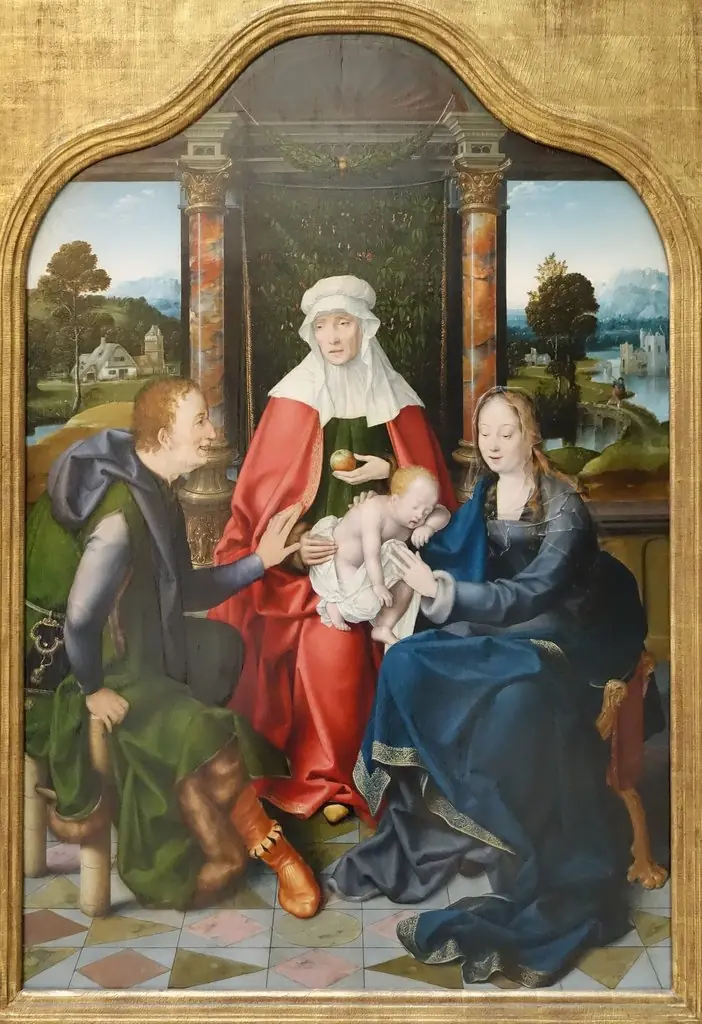
Saint Anne with the Virgin and Child and four saints (John the Baptist, Louis IX, Catherine and Barbara)
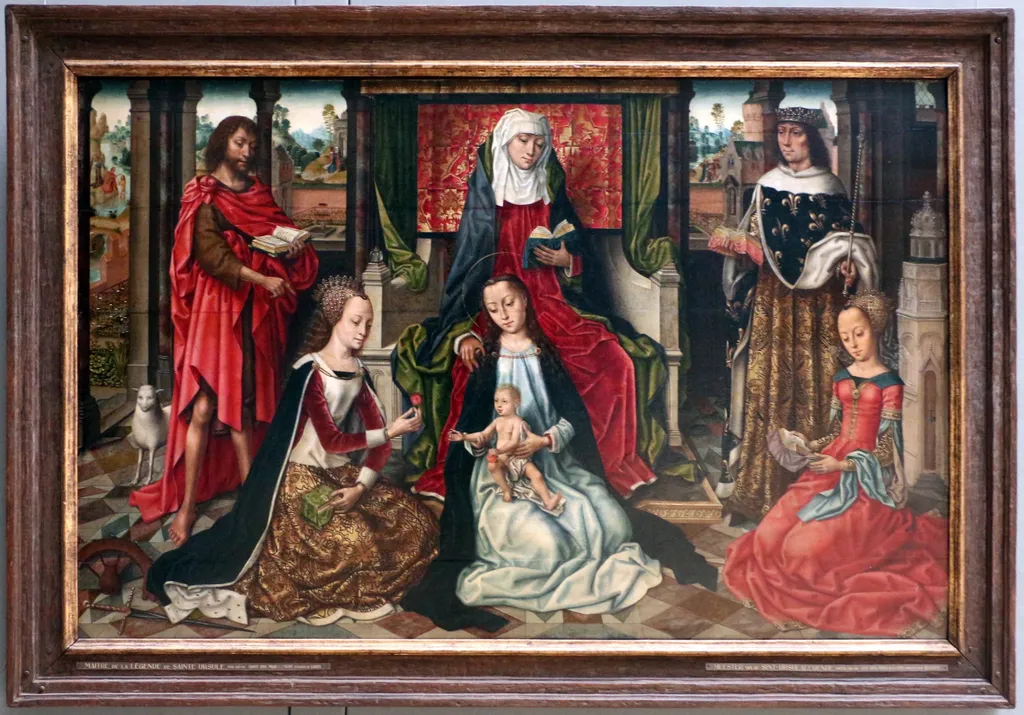
Saint Anne with the Virgin and Child and four saints (John the Baptist, Louis IX, Catherine and Barbara) is an oil painting by the Northern Renaissance artist Master of the Bruges Legend of St. Ursula. It dates from 1494 and is held in the collection of the Royal Museums of Fine Arts of Belgium. Created in 1494, this oil painting is attributed to the anonymous Master of the Bruges Legend of St.
About this work
Overview
Created in 1494, this oil painting is attributed to the anonymous Master of the Bruges Legend of St. Ursula, a Flemish artist active during the late fifteenth century. The work belongs to the Northern Renaissance and is part of the religious genre, depicting a devotional scene that centers on Saint Anne, the Virgin Mary, and the infant Christ, surrounded by four saints.
Subject & Meaning
At the composition’s heart, Saint Anne holds the infant Jesus, while the Virgin Mary stands beside them. Flanking the central trio are Saint John the Baptist, Saint Louis IX, Saint Catherine, and Saint Barbara, each rendered with their traditional attributes. The gathering conveys a theological lineage and intercessory power, linking the holy family with revered saints.
Technique & Style
Executed in oil on panel, the painter employs layered glazing to achieve luminous flesh tones and rich fabrics. The vivid reds, blues, and golds enhance spatial depth, while the tiled floor, columnar architecture, and a distant landscape visible through a window contribute to a realistic interior setting characteristic of Northern Renaissance detail.
History & Provenance
The painting entered the collection of the Royal Museums of Fine Arts of Belgium, where it remains on display. Its attribution to the Master of the Bruges Legend of St. Ursula links it to a body of work known for incorporating recognizable Bruges landmarks, such as the belfry of the Church of Notre‑Dame, into devotional scenes.
Context
The artist’s oeuvre frequently portrays episodes from the life of Saint Ursula, yet this work expands the narrative focus to the holy family and a quartet of saints, reflecting the period’s interest in complex, multi‑figure devotional imagery. The inclusion of local architectural details underscores the painter’s connection to Bruges and its civic identity.
Artist & collection
Artist
Master of the Bruges Legend of St. Ursula
The Master of the Legend of St. Ursula (1436–1505) was a Flemish painter active in the fifteenth century. His name is derived from a polyptych depicting scenes from the life of Saint Ursula painted for the convent of…

Museum
Royal Museums of Fine Arts of Belgium
Continue through works from the same source collection.
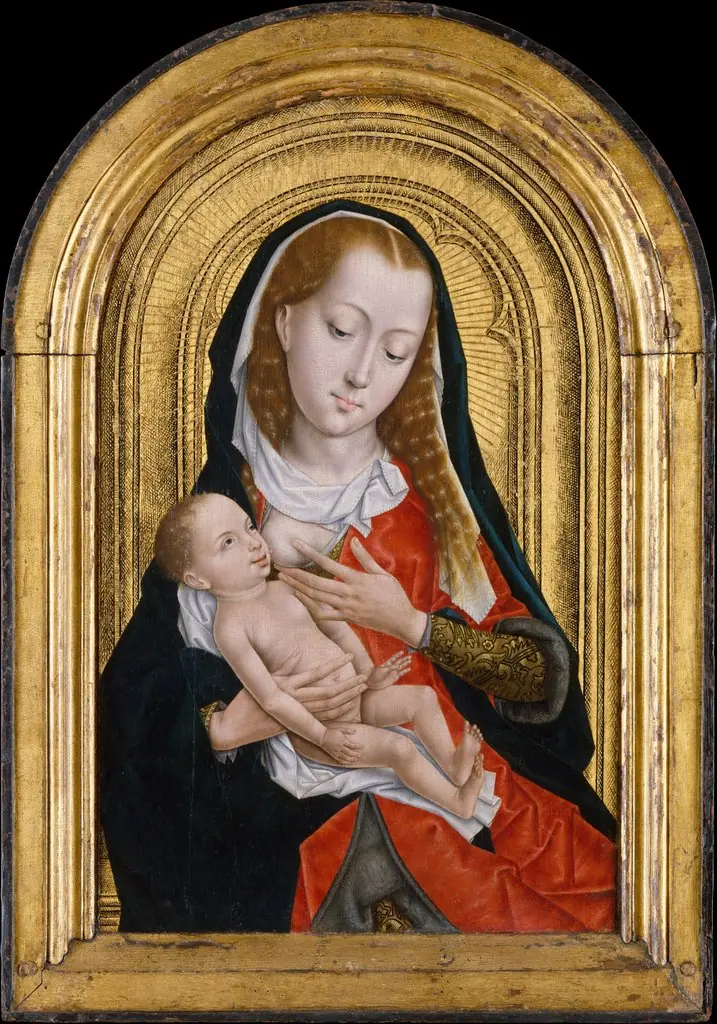 Virgin and Child
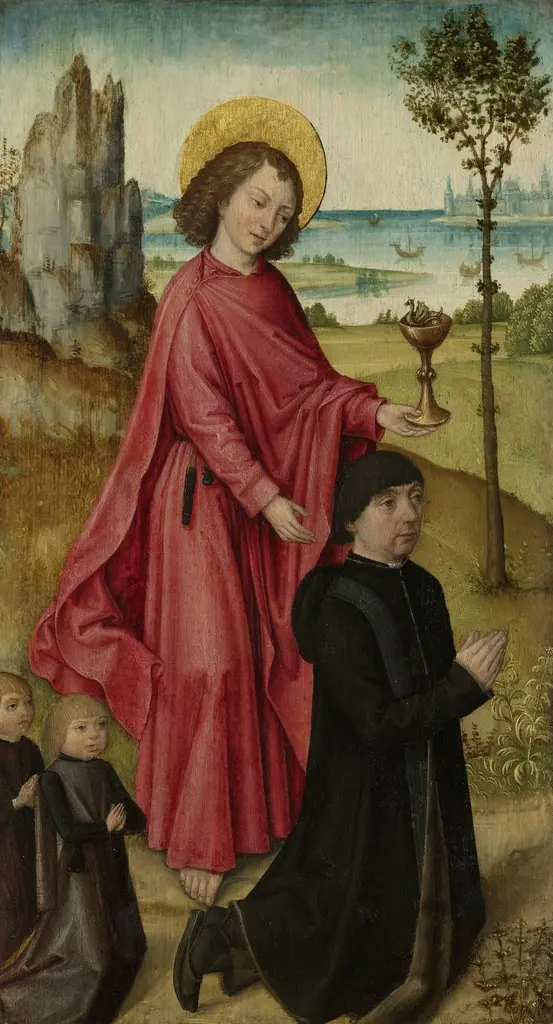 Inner left wing of a triptych with the donor, his two sons and St John the Evangelist
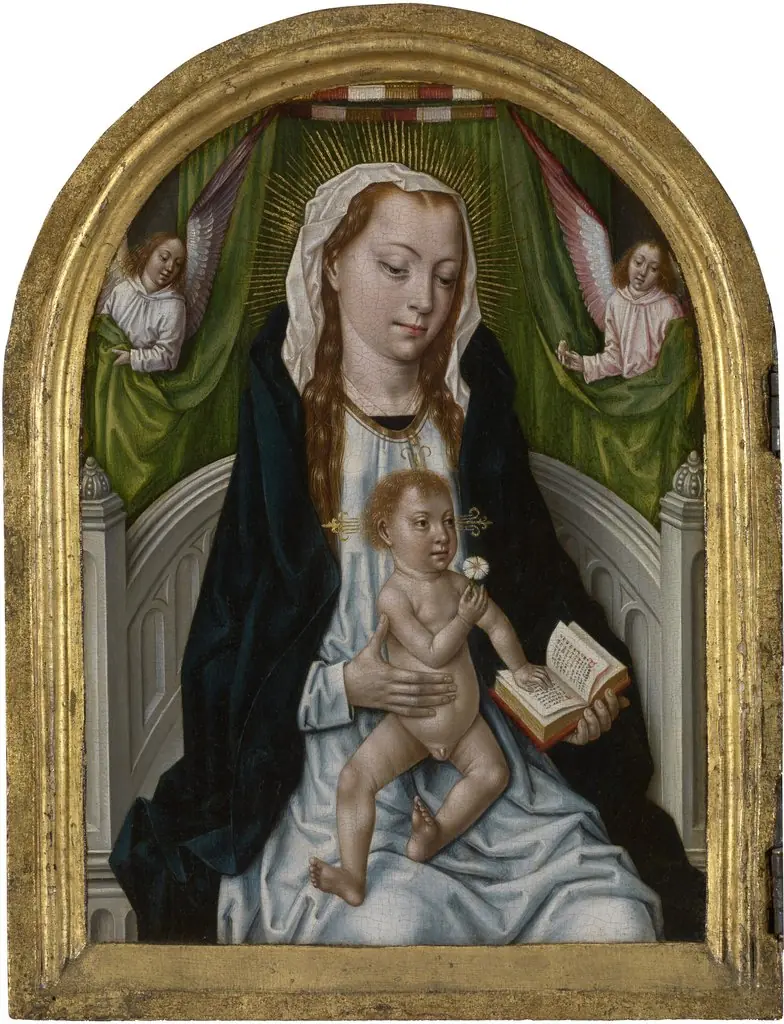 Virgin and Child with Angels
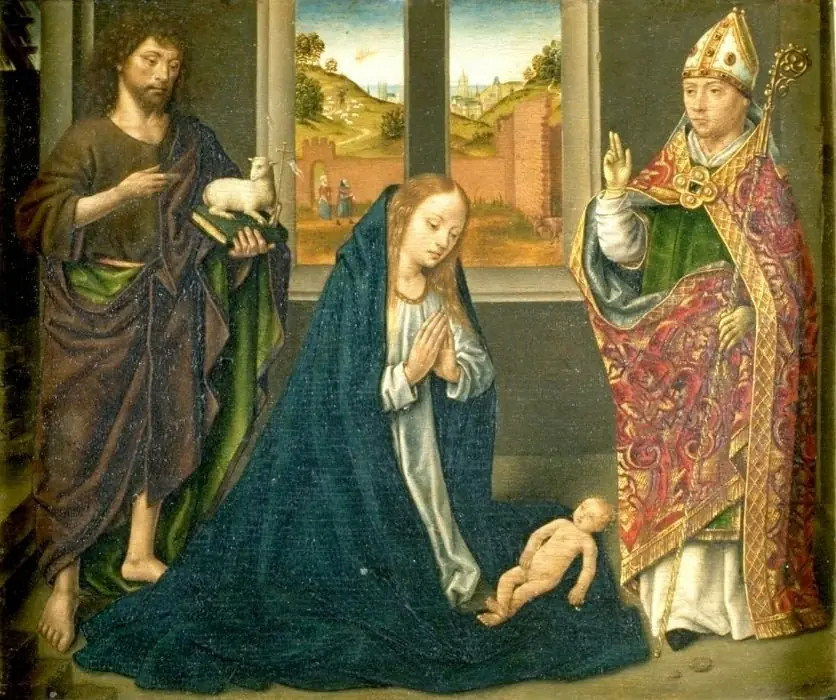 The adoration of the Christ-child and Saints John the Baptist and Donatius
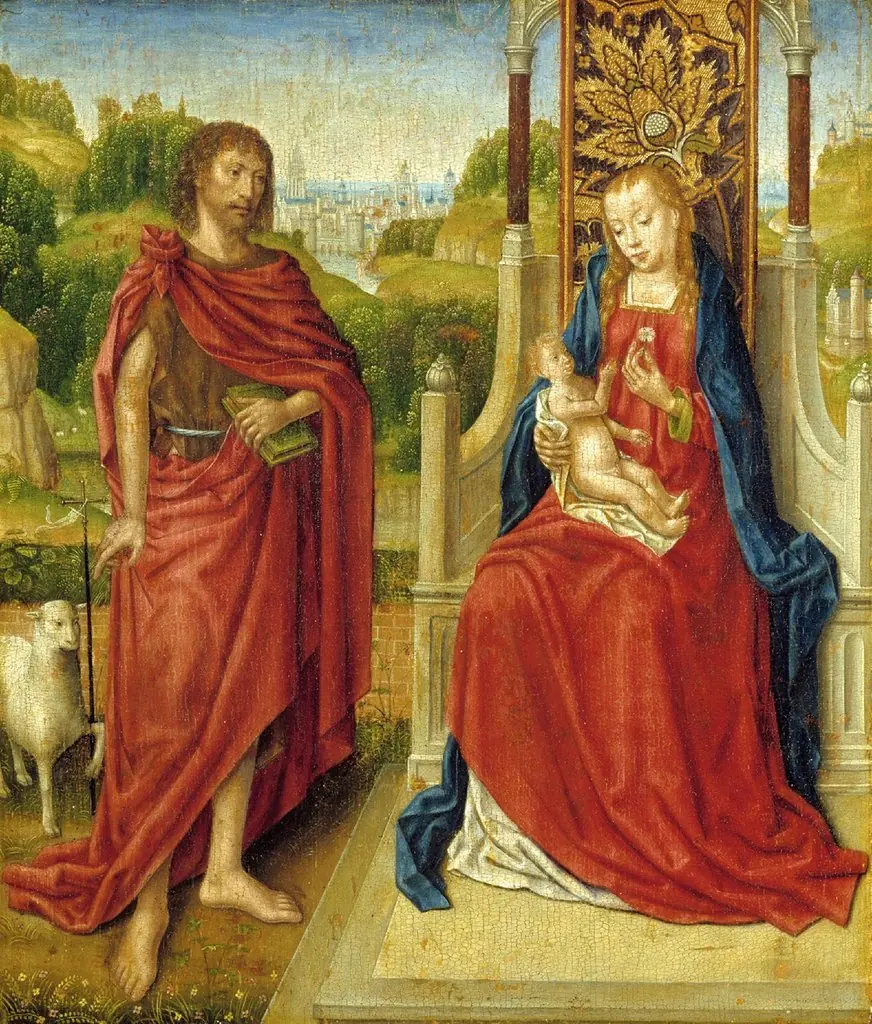 Virgin and Child and Saint John the Baptist
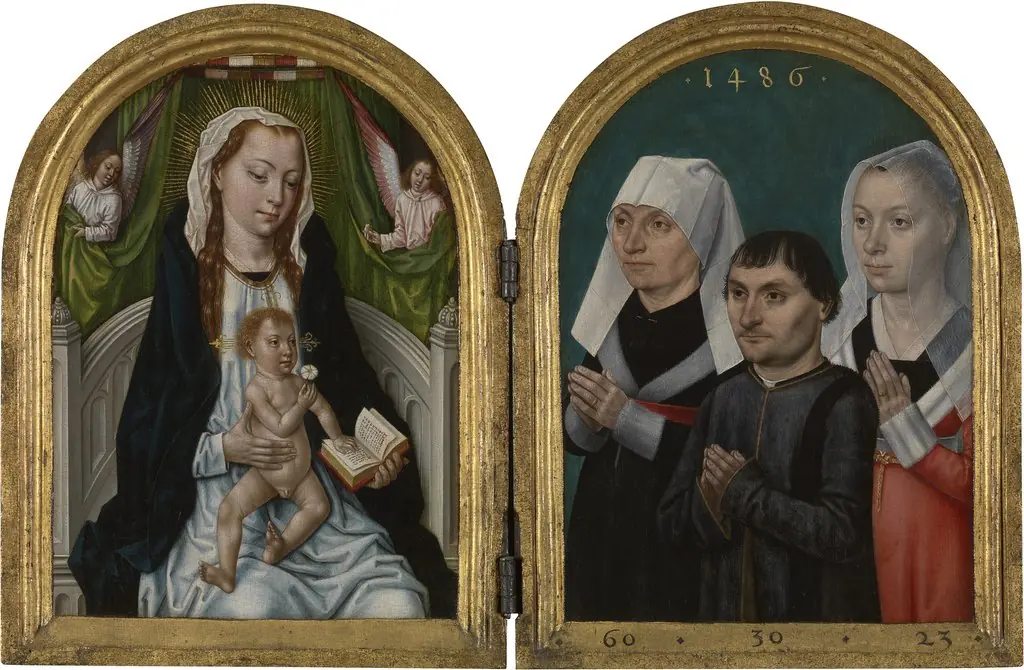 Diptych with the Virgin and Child and Three Donors
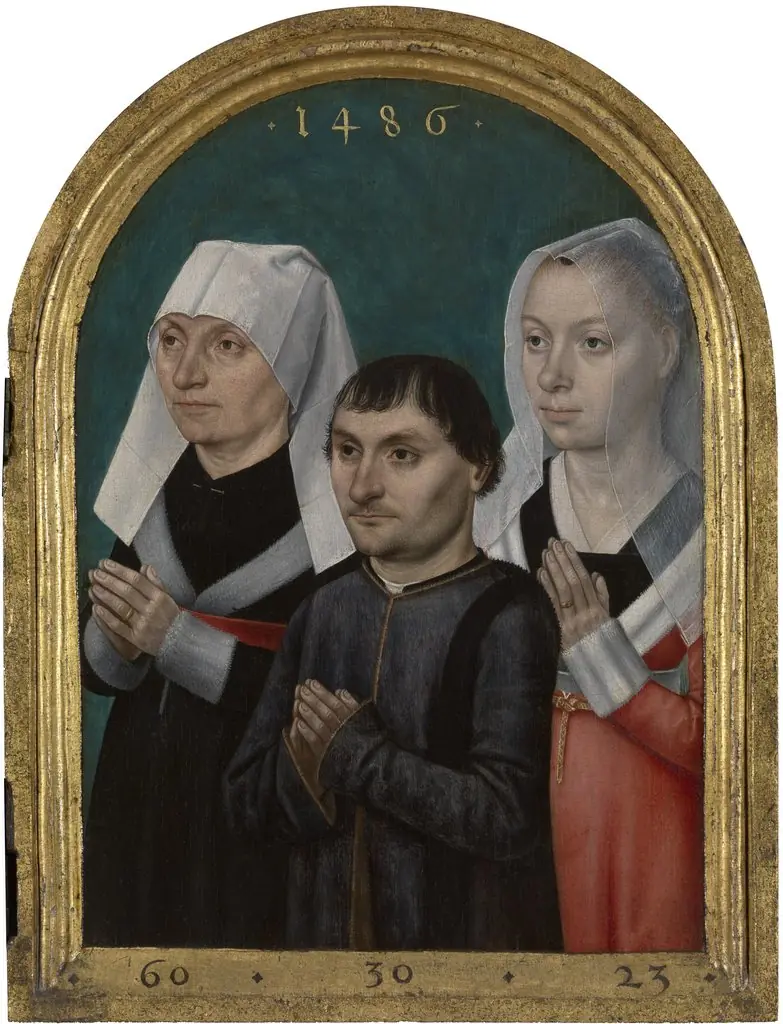 Three Donors
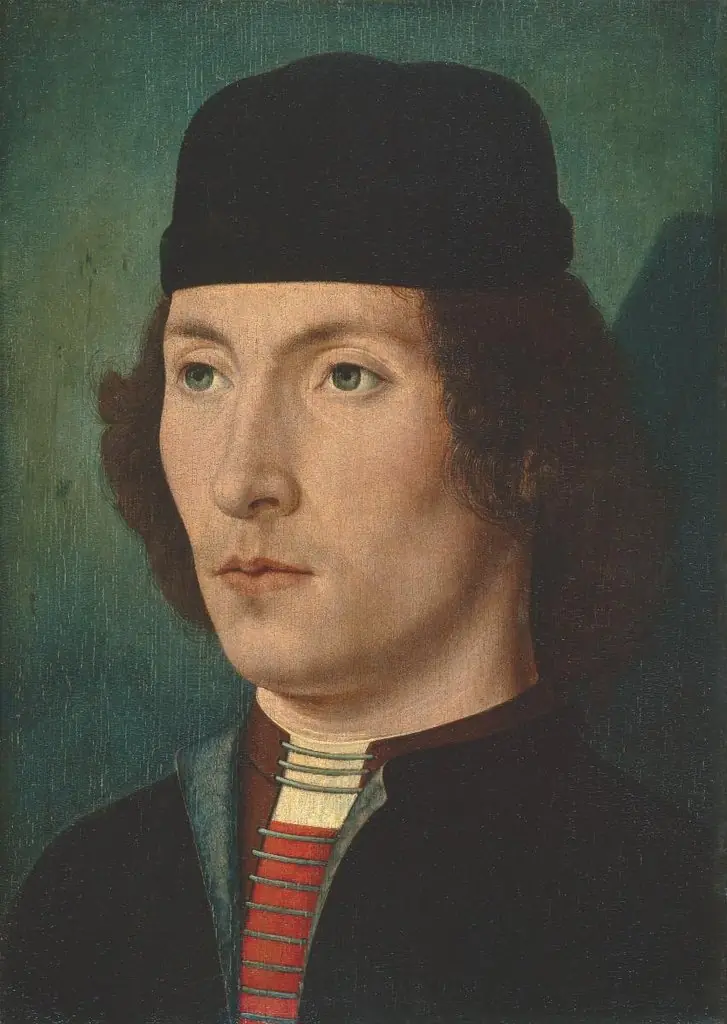 Portrait of a young man
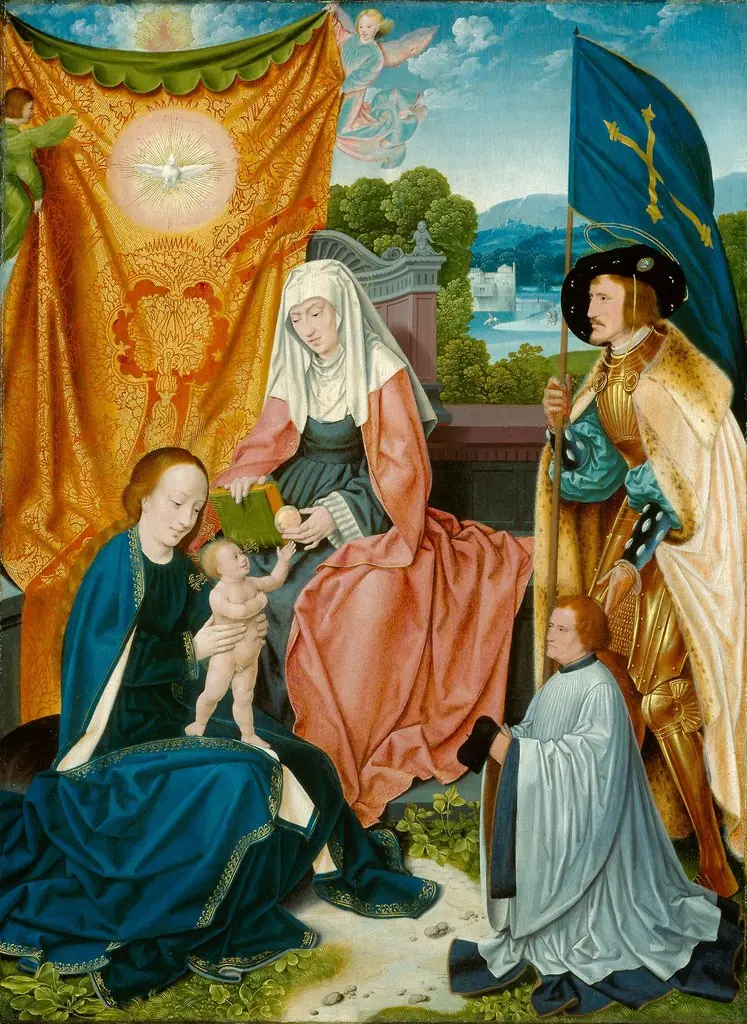 Virgin and Child with Saint Anne, Saint Gereon, and a Donor
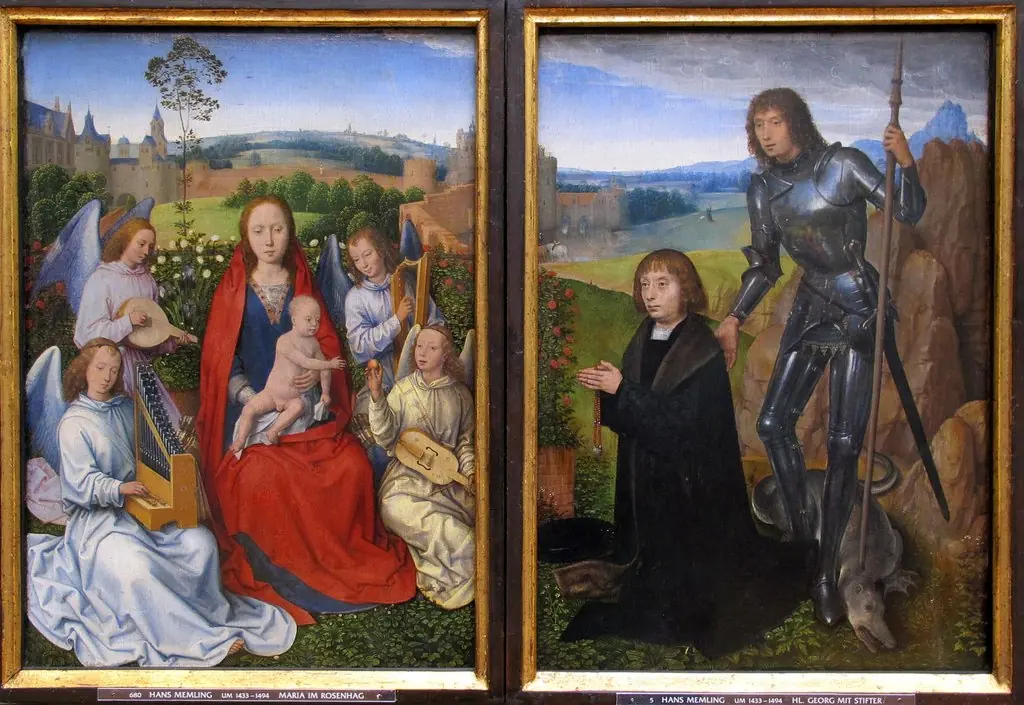 Diptych of Munich
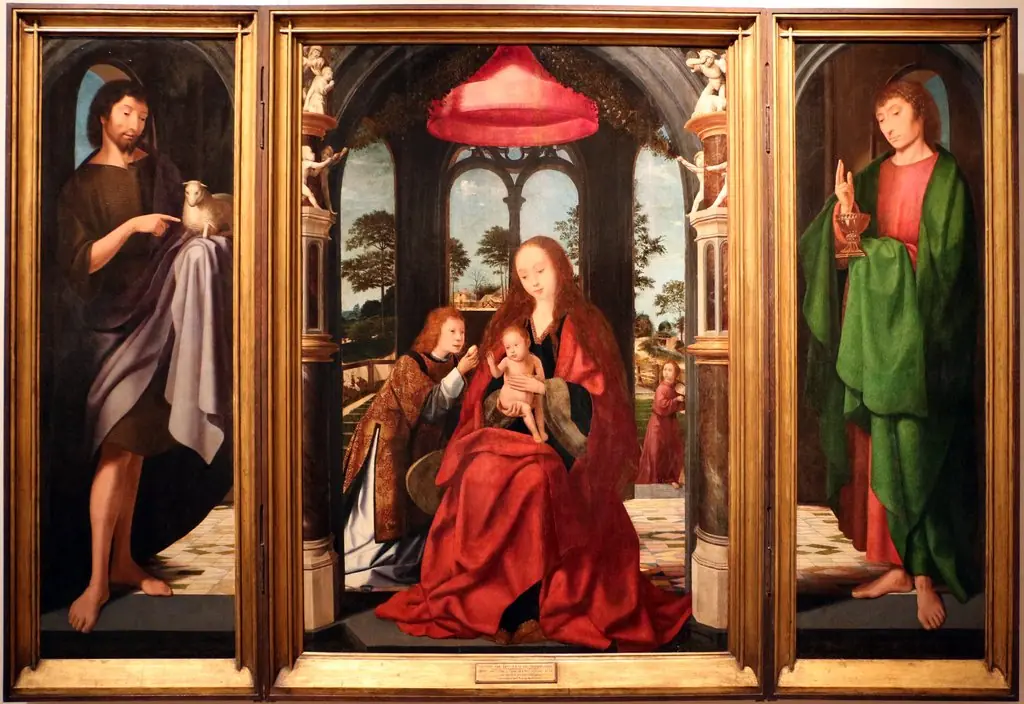 Triptych of the Virgin with the Child and Angels, St. John the Baptist and St. John the Evangelist
 Triptych of the Presentation of Jesus in the Temple
 Virgin and Child, with Saints Mary Magdalene, John the Baptist, Jerome, and Catherine of Alexandria
 Triptych of the Princes
 Portinari Triptych
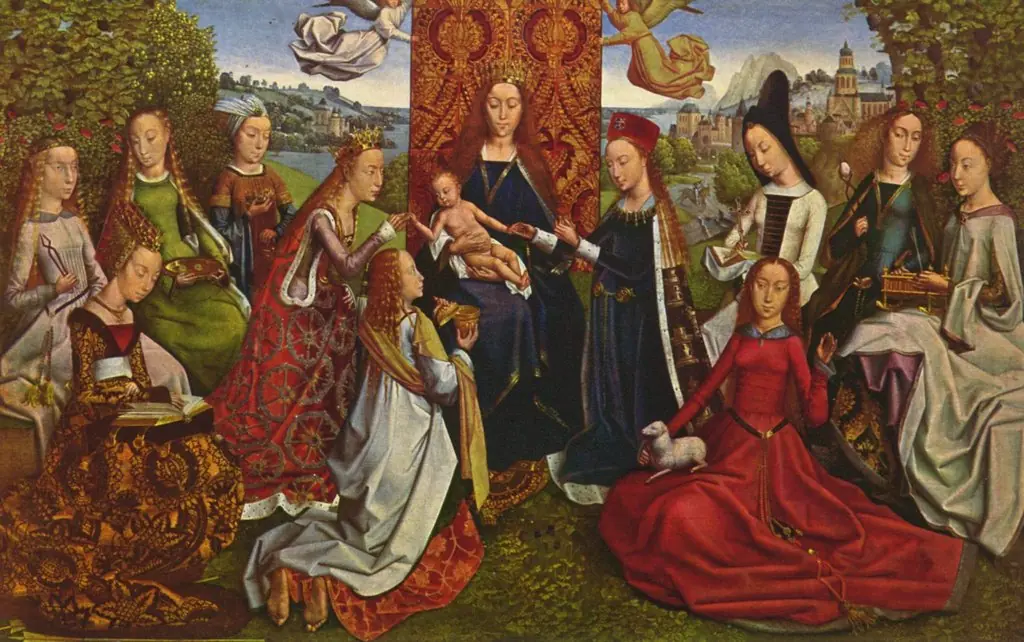 Virgo inter Virgines
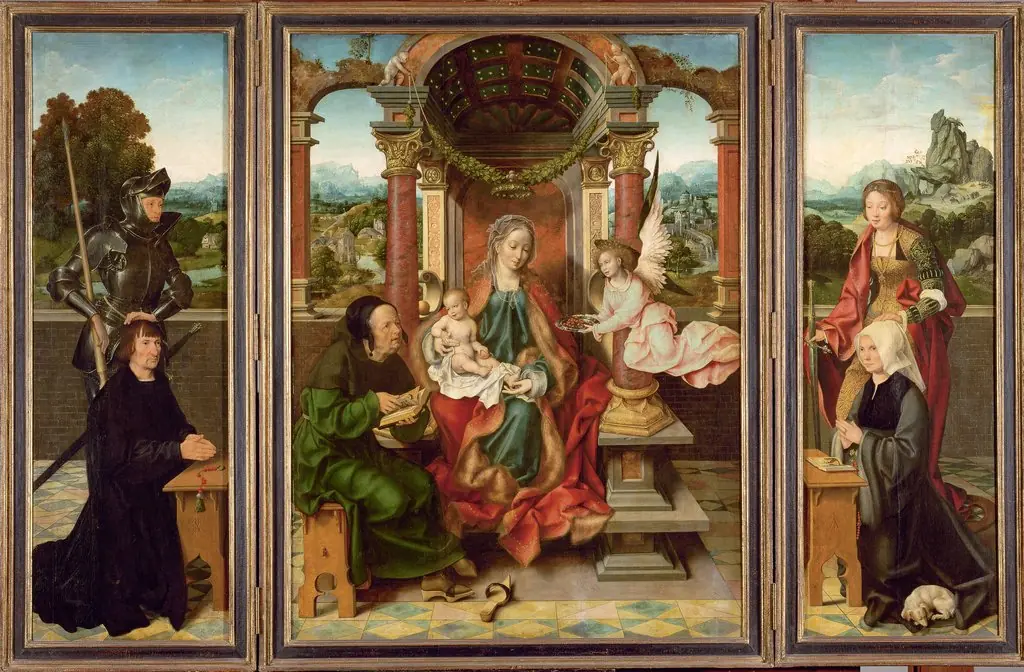 Winged Altar
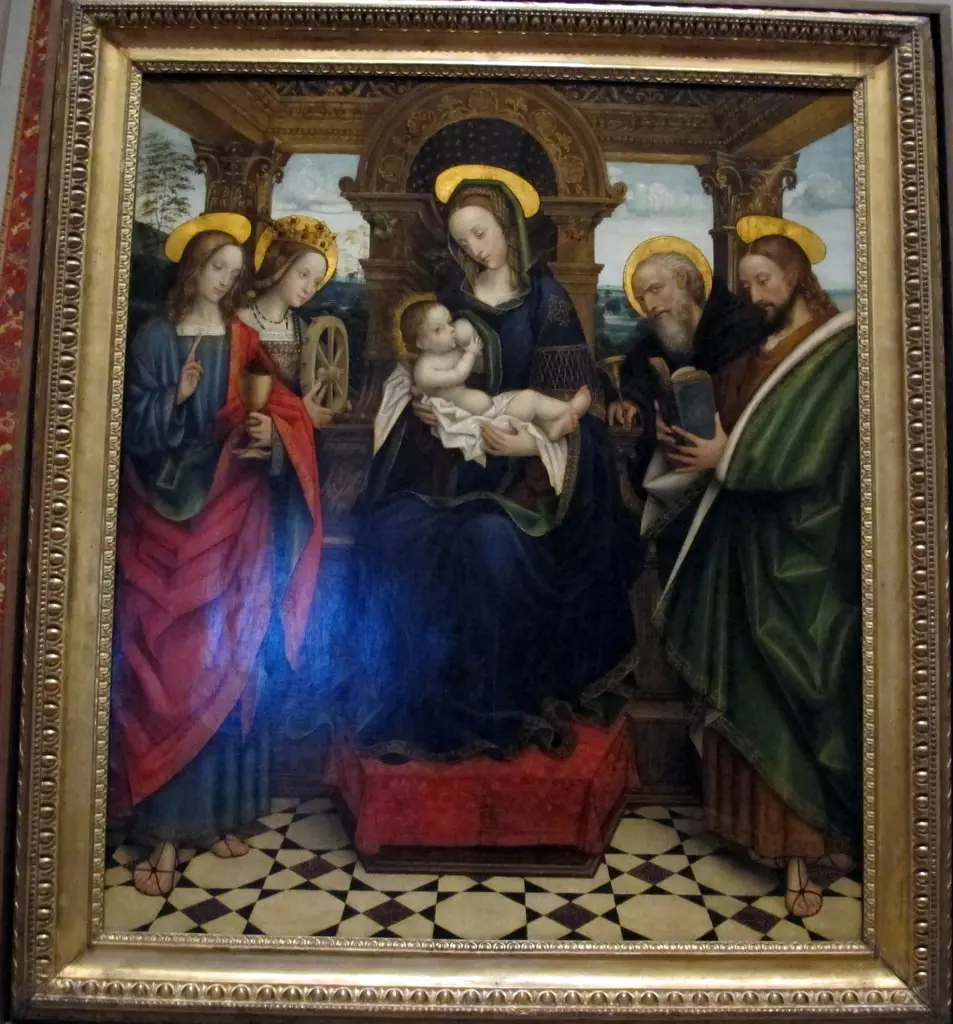 Enthroned Virgin and Child, with Saints John the Evangelist, Catherine of Alexandria, and Anthony Abbot, and a Saint Reading a Book
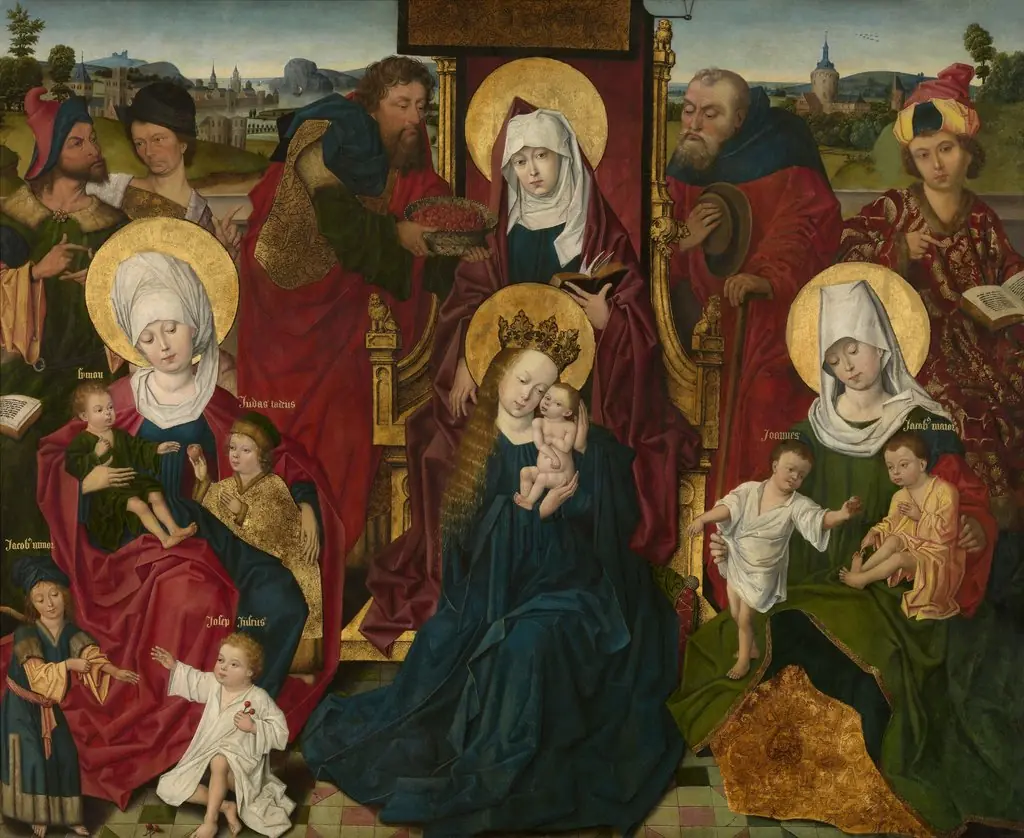 Holy Kinship
 Virgin and Child with Saints Anne and Joachim