Artwork
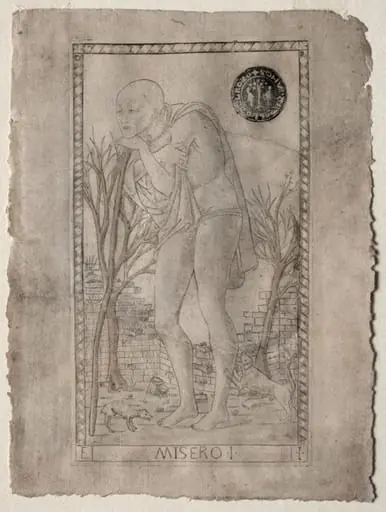
The Beggar (from the Tarocchi, series E: Conditions of Man, #1)
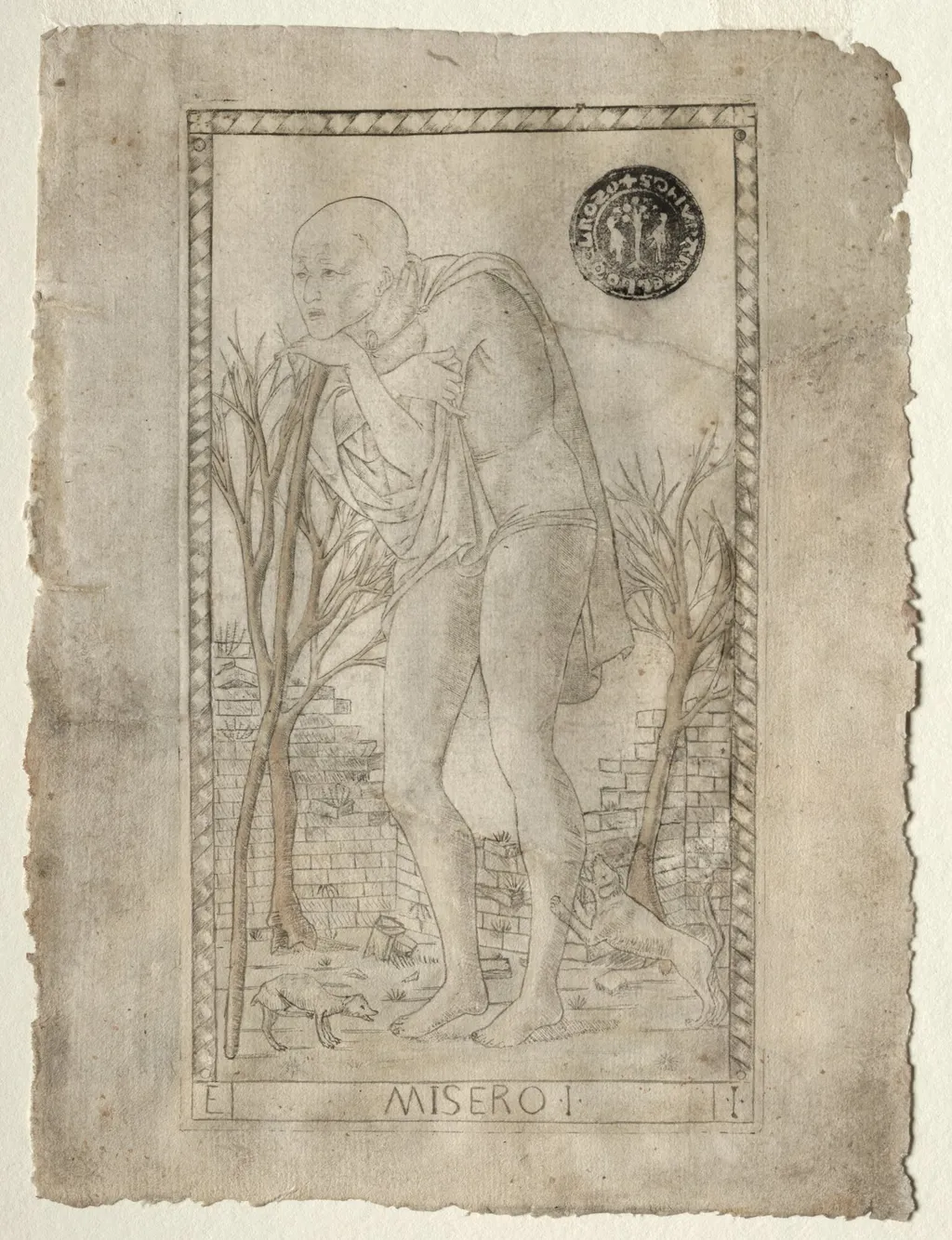
The Beggar (from the Tarocchi, series E: Conditions of Man, #1) is a print by the Renaissance artist Master of the E-Series Tarocchi. It dates from 1467 and is held in the collection of the Cleveland Museum of Art.
About this work
The Beggar is a man standing in a simple setting.
He's shown in a profile view, with few details around him.
This makes him the focus of the scene.
The Beggar is one of many figures in a series about social classes.
It shows how people were seen in the 15th century.
To learn more about this style, look up the technique of chiaroscuro.
Overview
The Beggar is a print from the Tarocchi series E, Conditions of Man, a hierarchical representation of social classes in 15th-century society, ranging from the lowest to the highest ranks.
Subject & Meaning
Depicting the lowest rung of society, The Beggar portrays a full-length male figure in a state of poverty, accompanied by two dogs in a desolate landscape, emphasizing his marginalized condition.
Technique & Style
The print utilizes chiaroscuro, evident in the contrast between the figure's detailed profile and the sparse, abandoned background, drawing focus to the subject. A later restoration added the lower portion of the figure with pen and ink, mimicking the original platemark.
History & Provenance
The print bears a large collector's stamp and shows damage, with the bottom third reconstructed by hand to match the original image, including a simulated platemark.
Context
Part of a series illustrating the social hierarchy of the time, The Beggar reflects 15th-century perceptions of poverty and class structure.
Artist & collection
Artist
Master of the E-Series Tarocchi
Master of the E-Series Tarocchi (b. 1400) was an Italian artist.

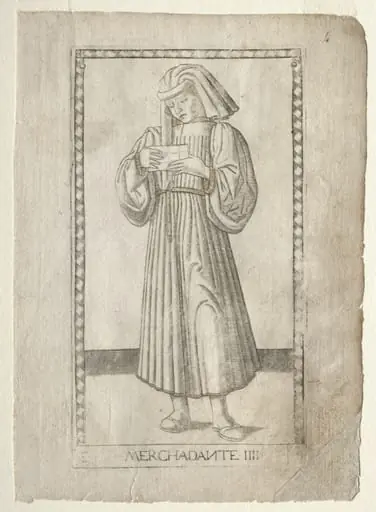 The Merchant (from the Tarocchi, series E: Conditions of Man, #4)
 Tarocchi
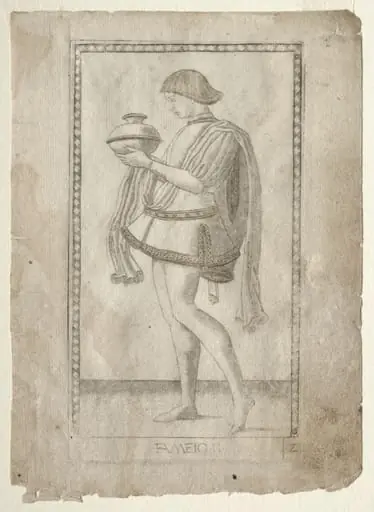 The Servant (from the Tarocchi, series E: Conditions of Man, #2)
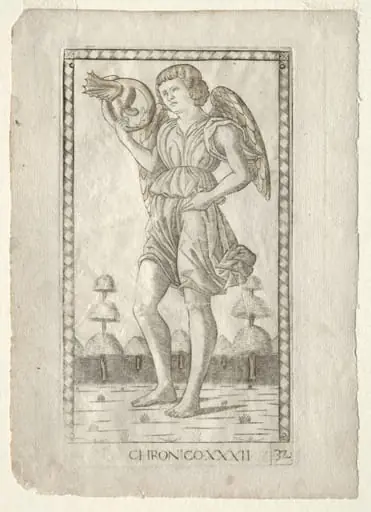 Genius of Time (from the Tarocchi, series B: Cosmic Principles & Virtues, #32)
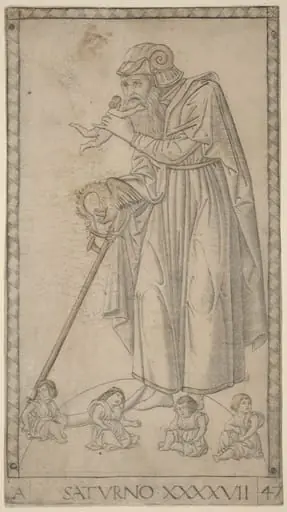
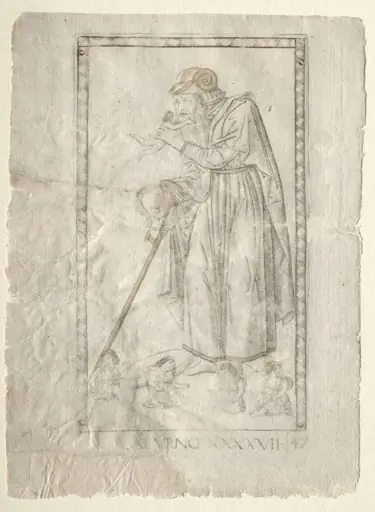 Saturn (from the Tarocchi, series A: Firmaments of the Universe, #47)
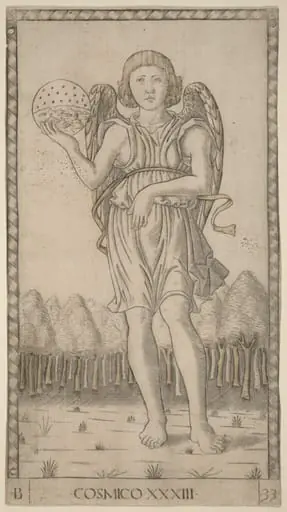
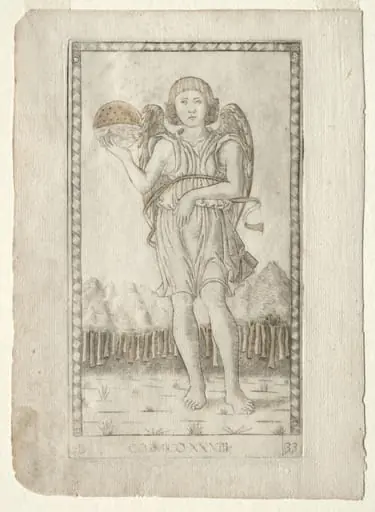 Genius of the World (from the Tarocchi, series B: Cosmic Principles & Virtues, #33)
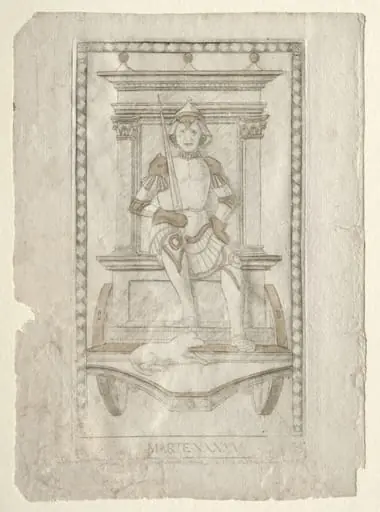 Mars (from the Tarocchi, series A: Firmaments of the Universe, #45)