Artwork
Entablature from the Church of Saint Bibiana, Rome
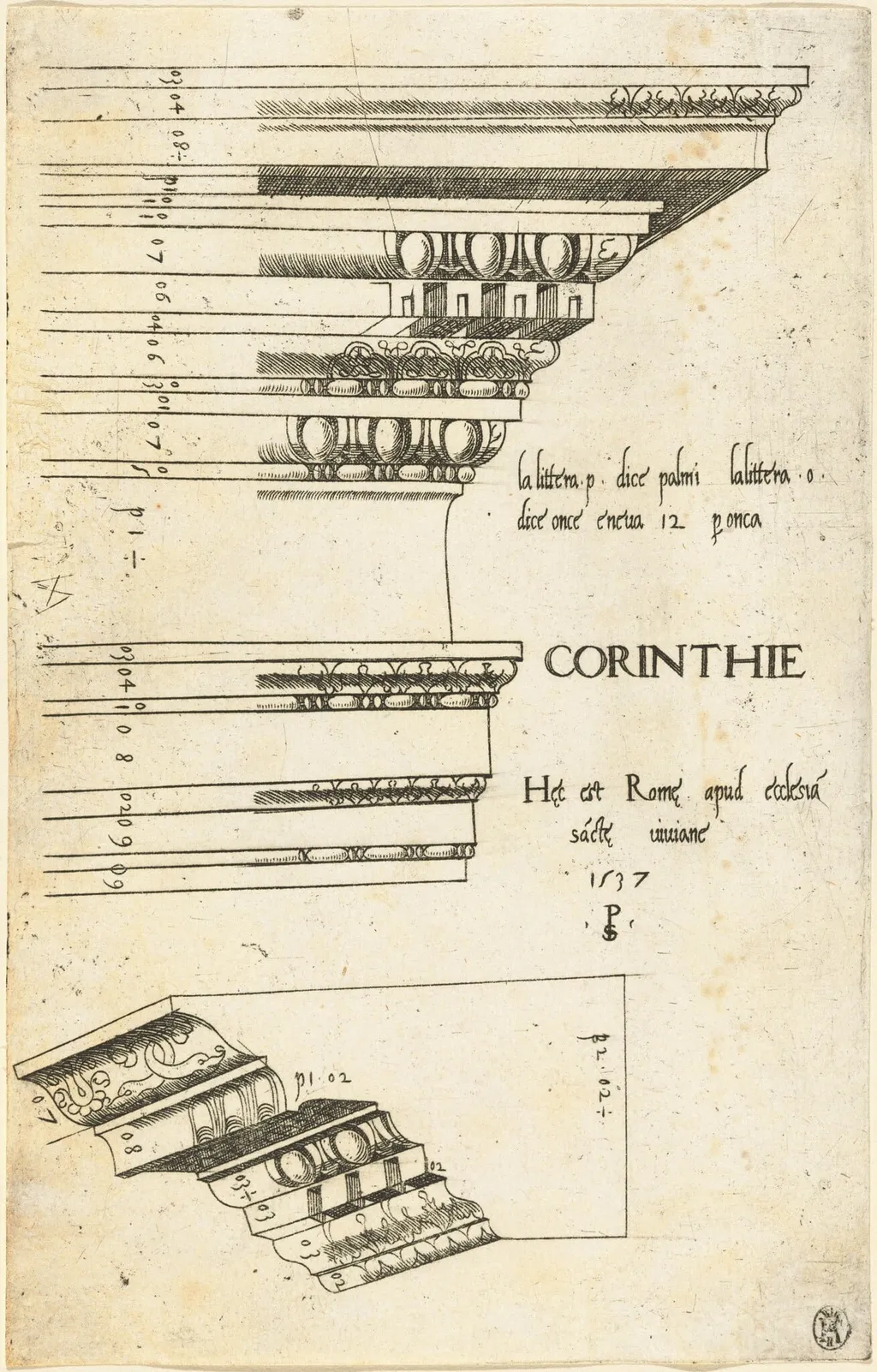
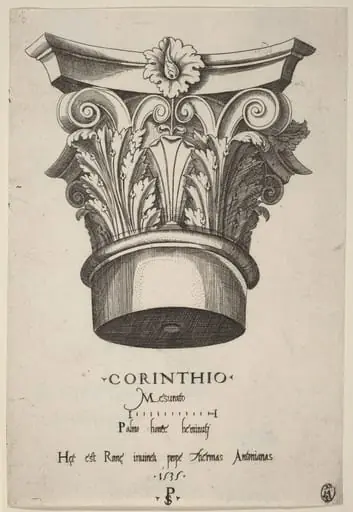
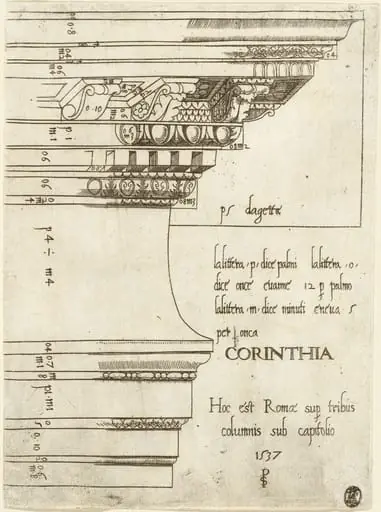
Entablature from the Church of Saint Bibiana, Rome is an ink print by the Renaissance artist Pseudo-Pier Francesco Fiorentino. It dates from 1537 and is held in the collection of the National Gallery of Art. This 1537 engraving by Master PS depicts an architectural fragment from the Church of Saint Bibiana in Rome.
About this work
Overview
The image functions as a measured record, likely intended for architectural study or replication, rather than as a devotional image.
This 1537 engraving by Master PS depicts an architectural fragment from the Church of Saint Bibiana in Rome. Rendered in fine linear detail, the work captures the uppermost structural element of the building—its entablature—using precise cross-hatching to suggest depth and texture. The image functions as a measured record, likely intended for architectural study or replication, rather than as a devotional image.
Subject & Meaning
The engraving presents a Corinthian-style entablature, identified by the label 'Corinthie' at its top. This references the classical Greek order characterized by ornate capitals and decorative moldings. The inclusion of measured notations suggests the artist aimed to document the form accurately, emphasizing its historical lineage and structural logic rather than its religious function within the church.
Technique & Style
Master PS employed meticulous line work and controlled cross-hatching to model the carved stone surfaces, translating three-dimensional relief into two-dimensional precision. The engraving avoids tonal gradation in favor of sharp, deliberate strokes, reflecting the technical discipline of Renaissance architectural drawing. Each element—fluting, acanthus leaves, and geometric bands—is rendered with uniform clarity, prioritizing legibility over expressive flourish.
History & Provenance
Created in 1537, the engraving emerged during a period of renewed interest in classical antiquity among Roman architects and antiquarians. It likely circulated among builders or scholars studying ancient and early Christian structures. While the original church remains, the engraving serves as a surviving record of its decorative details, possibly used to preserve or disseminate design knowledge before photography.
Context
In early 16th-century Rome, detailed architectural drawings were essential for the revival of classical forms. Master PS’s work aligns with a broader movement to catalog and emulate ancient Roman and Greek monuments. The inclusion of measurements indicates its utility in practical construction, bridging scholarly interest in antiquity with the needs of contemporary masons and designers.
Legacy
The engraving contributes to a corpus of Renaissance architectural documentation that helped standardize classical orders in later building practices. Though not widely known today, such works were foundational in transmitting knowledge of ancient design principles. Its precision and clarity make it a representative example of how technical drawing shaped architectural education and heritage preservation in the period.
Artist & collection

 Madonna and Child with the Infant Saint John the Baptist and Angels
 Virgin and Child
 The Annunciation to the Virgin
 Maria col bambino
 Entablature from the Temple of Castor and Pollux, Rome
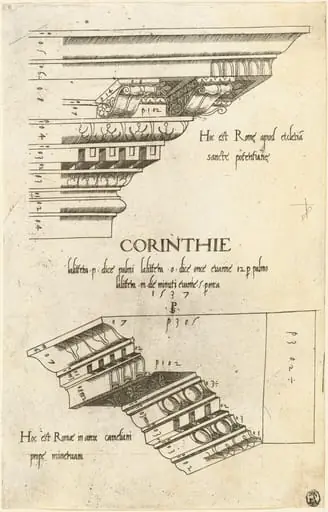 Entablatures from Santa Pudenziana and the Arch of Camigliano, Rome
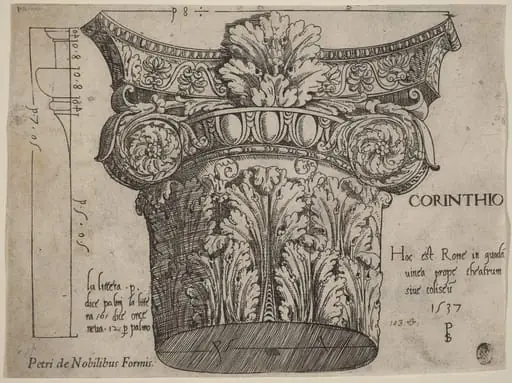 Capital from the Colosseum, Rome
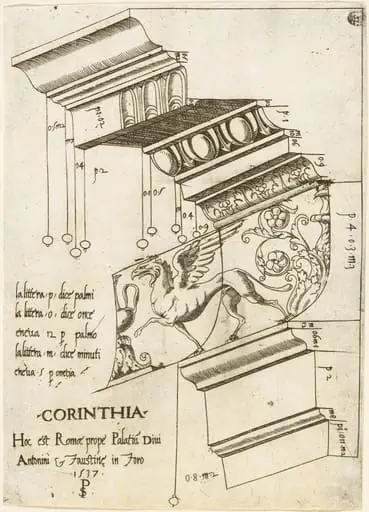 Entablature from the Temple of Antoninus and Faustina, Rome