Artwork
Entablatures from Santa Pudenziana and the Arch of Camigliano, Rome
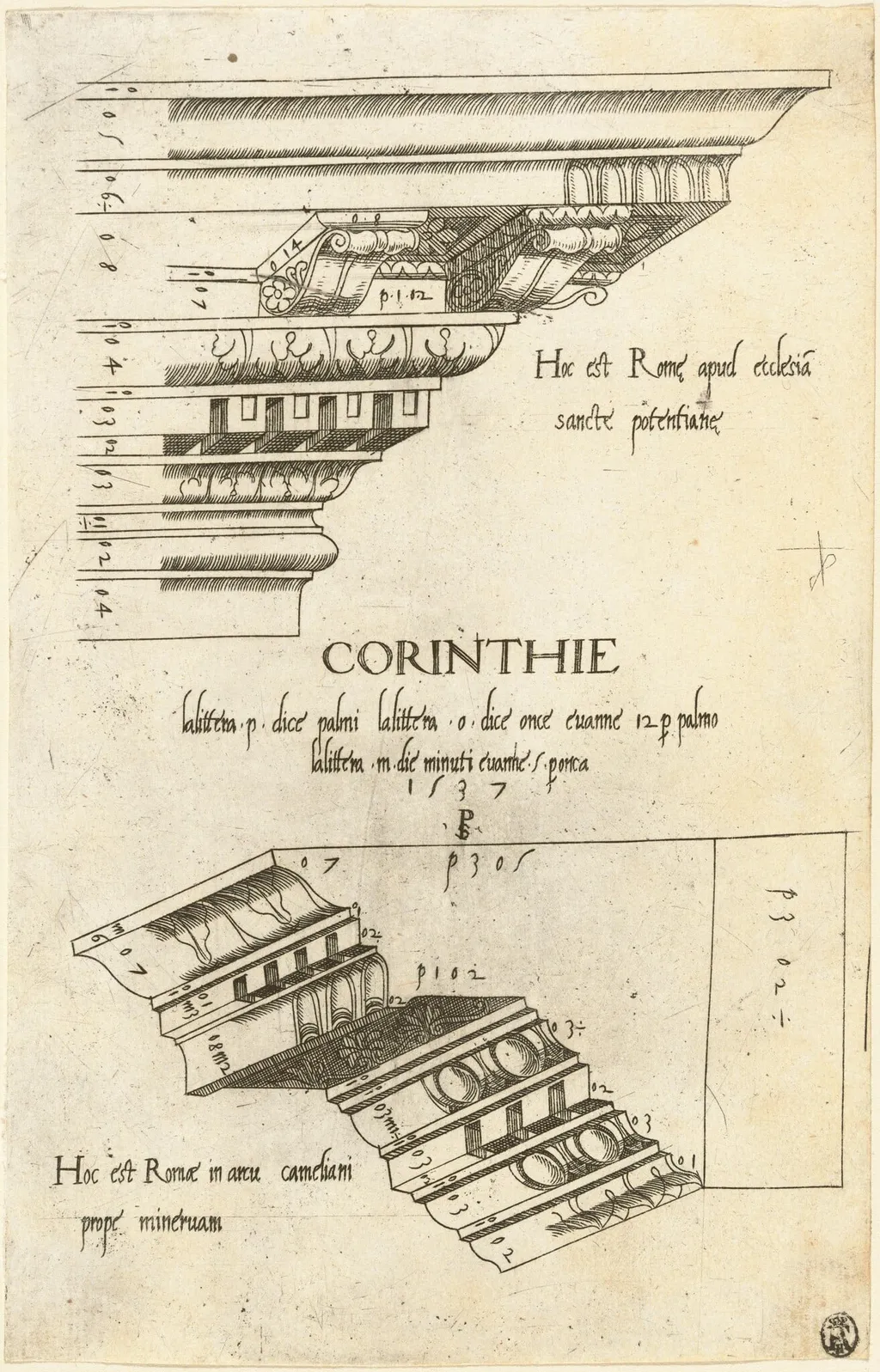
Entablatures from Santa Pudenziana and the Arch of Camigliano, Rome is an ink print by the Renaissance artist Pseudo-Pier Francesco Fiorentino. It dates from 1537 and is held in the collection of the National Gallery of Art.
About this work
Overview
Rendered in fine linear detail, the work presents two distinct stone elements side by side, each annotated with Latin terms and numerical markers.
Created in 1537 by the artist known as Master PS, this engraving documents architectural fragments from two Roman structures: the church of Santa Pudenziana and the Arch of Camigliano. Rendered in fine linear detail, the work presents two distinct stone elements side by side, each annotated with Latin terms and numerical markers. The plate functions as a measured record, reflecting Renaissance interest in classical remains through precise visual transcription rather than imaginative reconstruction.
Subject & Meaning
The engraving depicts two architectural components: one featuring a curved entablature with a small corbel, the other a series of arches pierced with circular openings. These fragments are identified by inscriptions such as 'Corinthie,' linking them to classical orders. The inclusion of Latin labels suggests an academic intent—to classify and compare structural forms from Rome’s ancient past, serving as reference material for architects and antiquarians studying Roman design principles.
Technique & Style
Master PS employed fine, controlled engraving lines to convey the texture and depth of weathered stone. The precision of the incised marks captures subtle variations in surface relief, from the smooth curves of arches to the rough-hewn edges of blocks. The composition is orderly and detached, prioritizing clarity over ornamentation. This restrained aesthetic aligns with the scholarly goals of documenting architectural details for study rather than aesthetic display.
History & Provenance
The engraving emerged during a period of heightened interest in Roman antiquities, when artists and scholars systematically recorded surviving structures. Though little is known of Master PS’s life, his work circulated among collectors and architects in mid-16th-century Italy. The specific sites—Santa Pudenziana and the Arch of Camigliano—were accessible landmarks in Rome, making them frequent subjects for antiquarian documentation during this era.
Context
This print belongs to a broader movement in Renaissance Rome, where architects and humanists sought to revive classical forms by studying their physical remnants. Engravings like this one functioned as portable archives, enabling the dissemination of architectural knowledge beyond the city. The annotations reflect a methodical approach, akin to archaeological fieldwork, emphasizing classification and typology over romanticized interpretation.
Legacy
Master PS’s engraving contributed to the growing corpus of architectural documentation that informed later studies of Roman design. Its methodical approach influenced subsequent generations of antiquarians and architects who relied on such records to reconstruct or emulate classical forms. Though not widely known today, it remains a representative example of how Renaissance scholars preserved and transmitted knowledge of ancient structures through precise graphic means.
Artist & collection

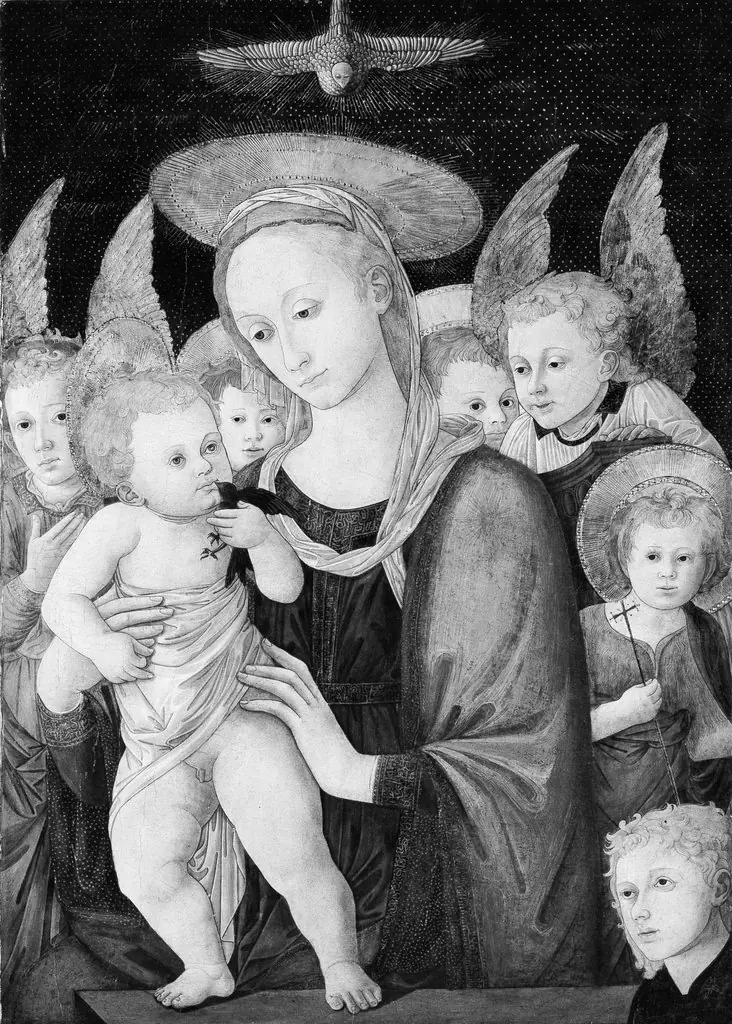 Madonna and Child with the Infant Saint John the Baptist and Angels
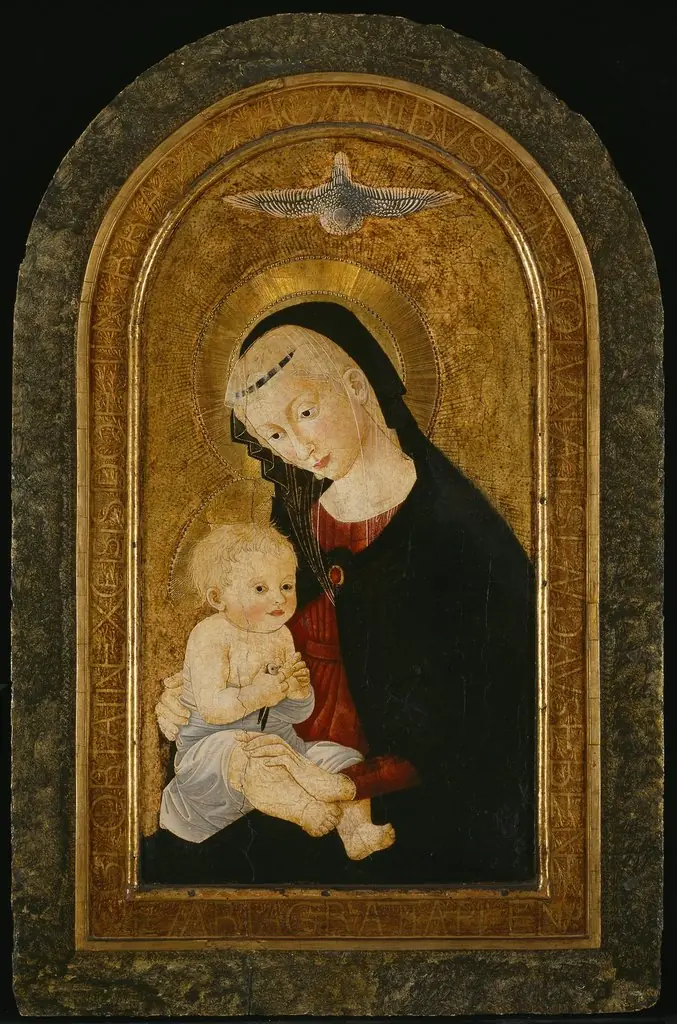 Virgin and Child
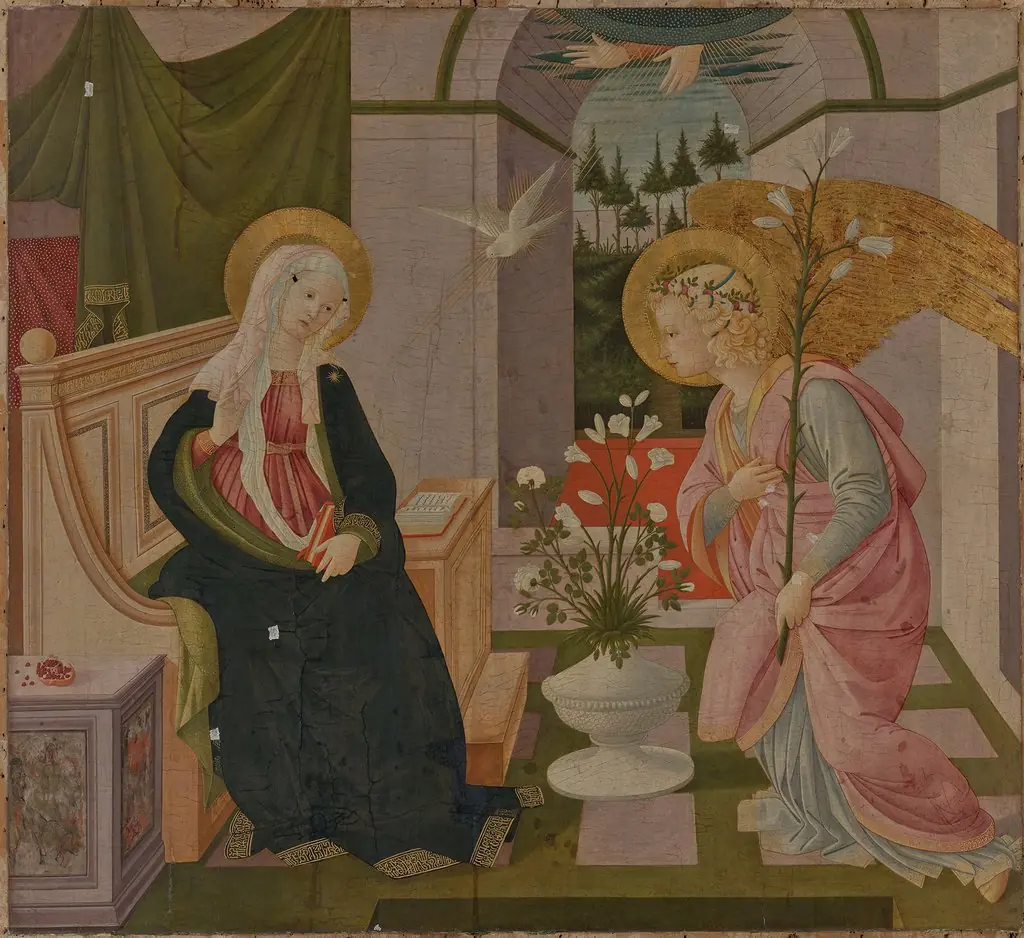 The Annunciation to the Virgin
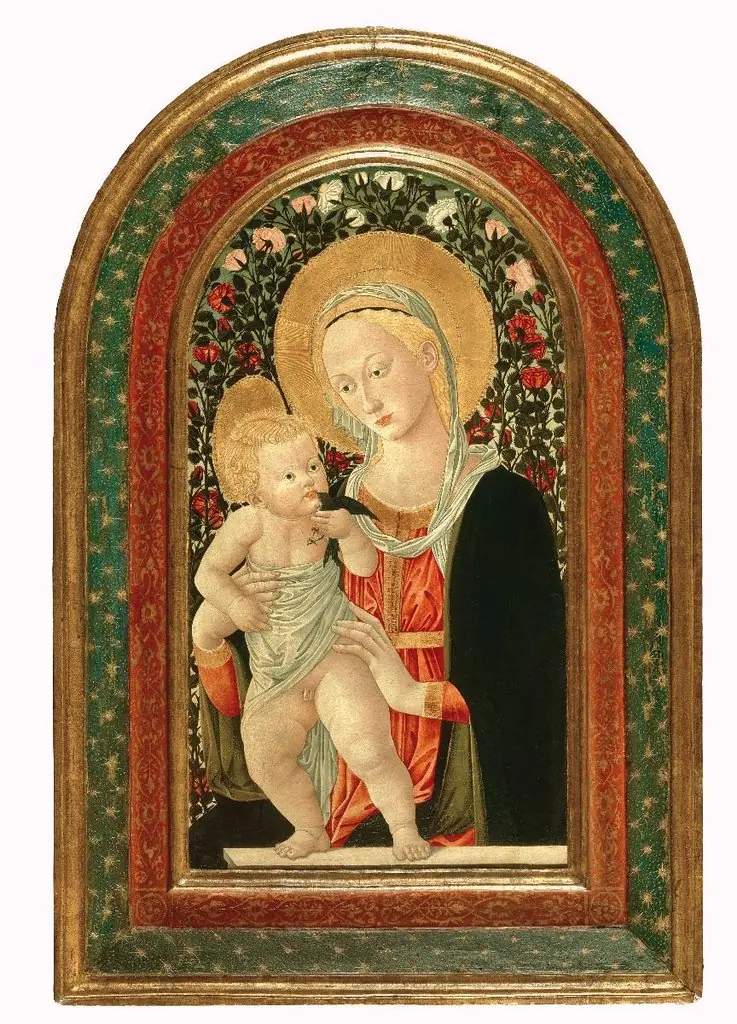 Maria col bambino
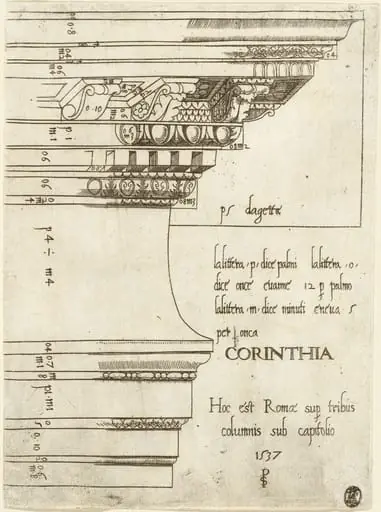 Entablature from the Temple of Castor and Pollux, Rome
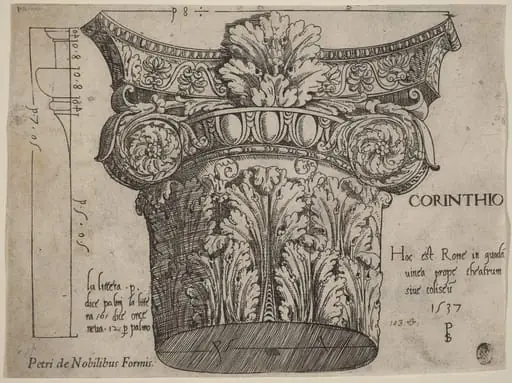 Capital from the Colosseum, Rome
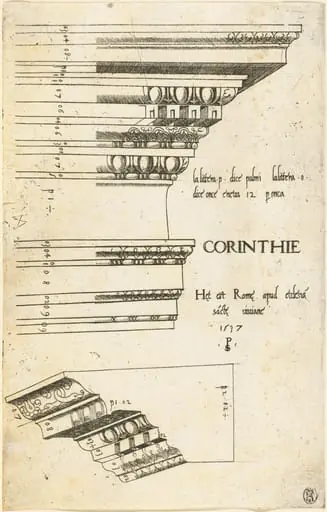 Entablature from the Church of Saint Bibiana, Rome
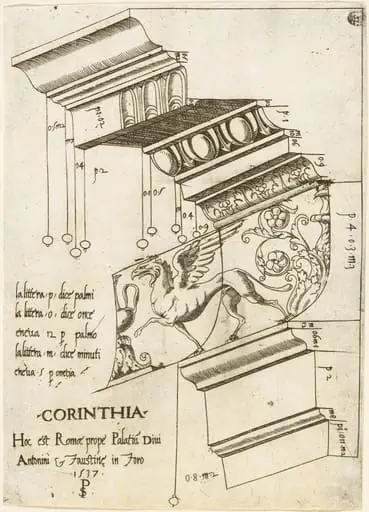 Entablature from the Temple of Antoninus and Faustina, Rome