Artwork
Entablature from the Temple of Antoninus and Faustina, Rome
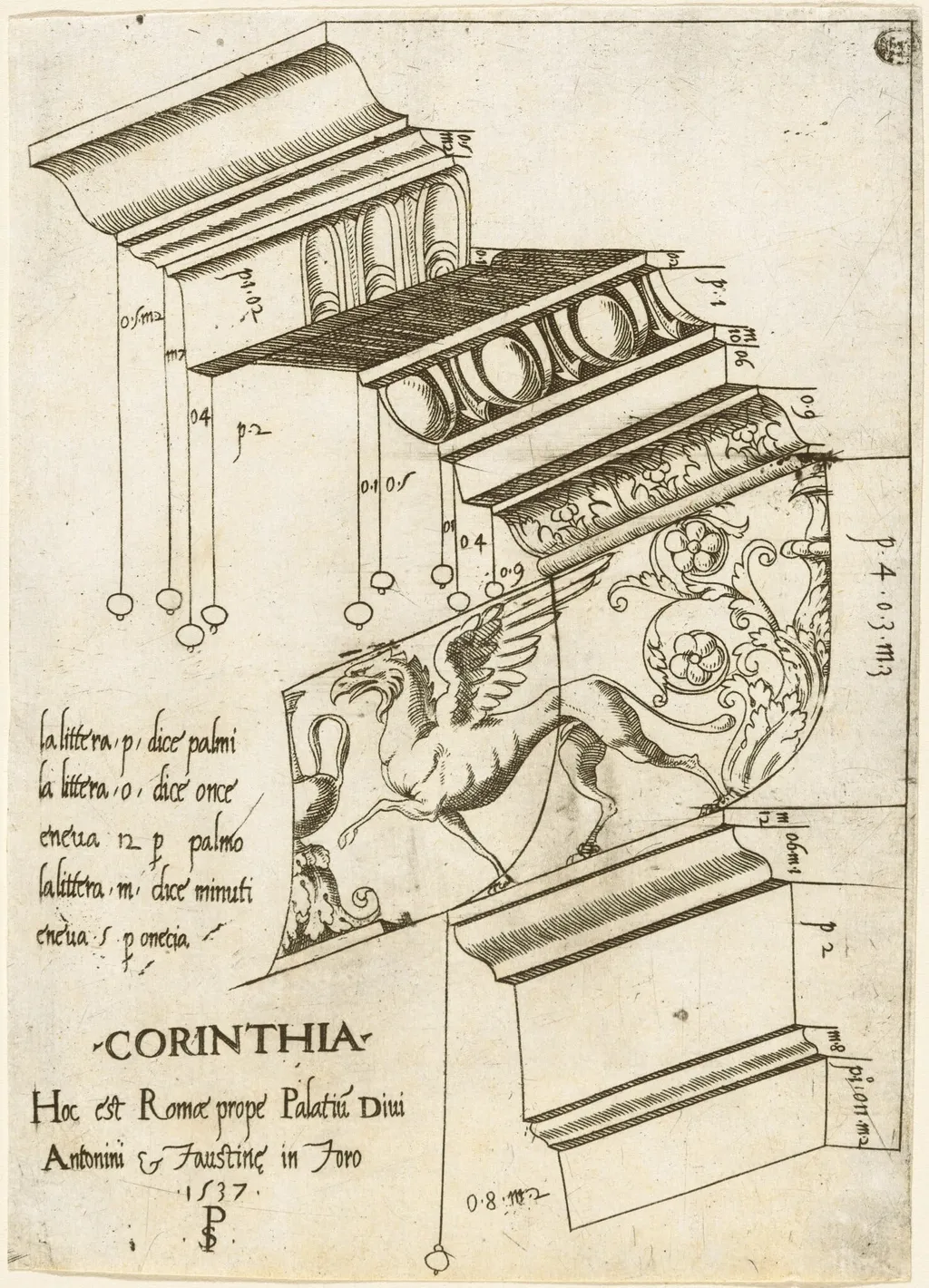
Entablature from the Temple of Antoninus and Faustina, Rome is an ink print by the Renaissance artist Pseudo-Pier Francesco Fiorentino. It dates from 1537 and is held in the collection of the National Gallery of Art.
About this work
This drawing shows a piece of ancient architecture—an entablature with three round windows and ornate carvings.
This drawing shows a piece of ancient architecture—an entablature with three round windows and ornate carvings. Below it, two winged lions stand on a ledge, facing different directions. The lines are precise, and the whole scene looks like a sketch of a building from long ago.
The word *CORINTHIA* is written under it, along with notes in Latin about measurements. The drawing is labeled with the year 1537, meaning it’s a Renaissance copy of an older Roman temple.
Next, look up engraving to see how artists used this technique to copy buildings.
Overview
The print, executed in 1537 by the anonymous hand known as Master PS, depicts a segment of the ancient Temple of Antoninus and Faustina in Rome. Rendered as an engraving, the image records the temple’s entablature, complete with its decorative elements and accompanying figures, serving as a Renaissance documentation of a classical ruin.
Subject & Meaning
The composition centers on a horizontal architectural band featuring three circular openings framed by intricate carvings. Flanking the lower edge, two winged lions stand on a ledge, each turned outward, a motif often associated with protective symbolism in Roman architecture.
Technique & Style
Executed with fine, controlled lines characteristic of 16th‑century engraving, the work emphasizes precision in architectural detail. The artist employed hatching to convey depth and texture, while the inclusion of Latin annotations and the term “CORINTHIA” reflects scholarly practice of recording measurements and site identification.
History & Provenance
Created during the High Renaissance, the print functions as a copy of an older Roman monument, illustrating the period’s interest in antiquarian study. The attribution to Master PS, a name assigned to an unidentified engraver active in the 1530s, situates the work within the broader tradition of Italian printmakers reproducing classical architecture for collectors and scholars.
Context
The Temple of Antoninus and Faustina, originally erected in the 2nd century CE, was a prominent example of imperial Roman architecture. By the 1500s, its ruins were a focal point for artists seeking authentic models of classical forms, and engravings like this one circulated such visual information across Europe.
Artist & collection

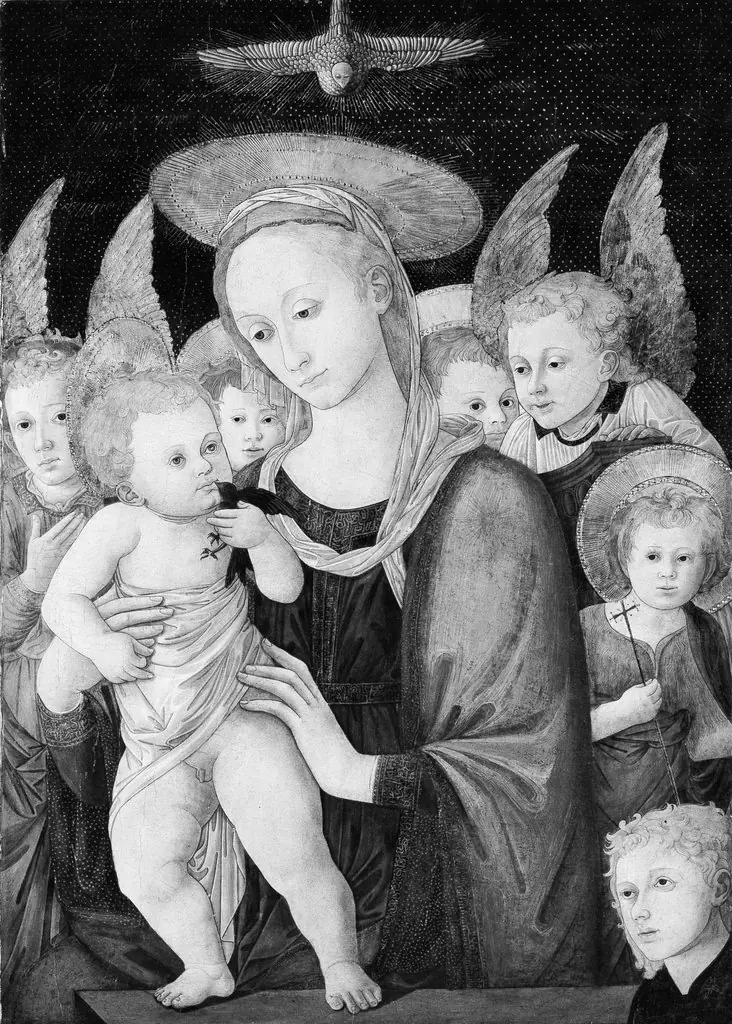 Madonna and Child with the Infant Saint John the Baptist and Angels
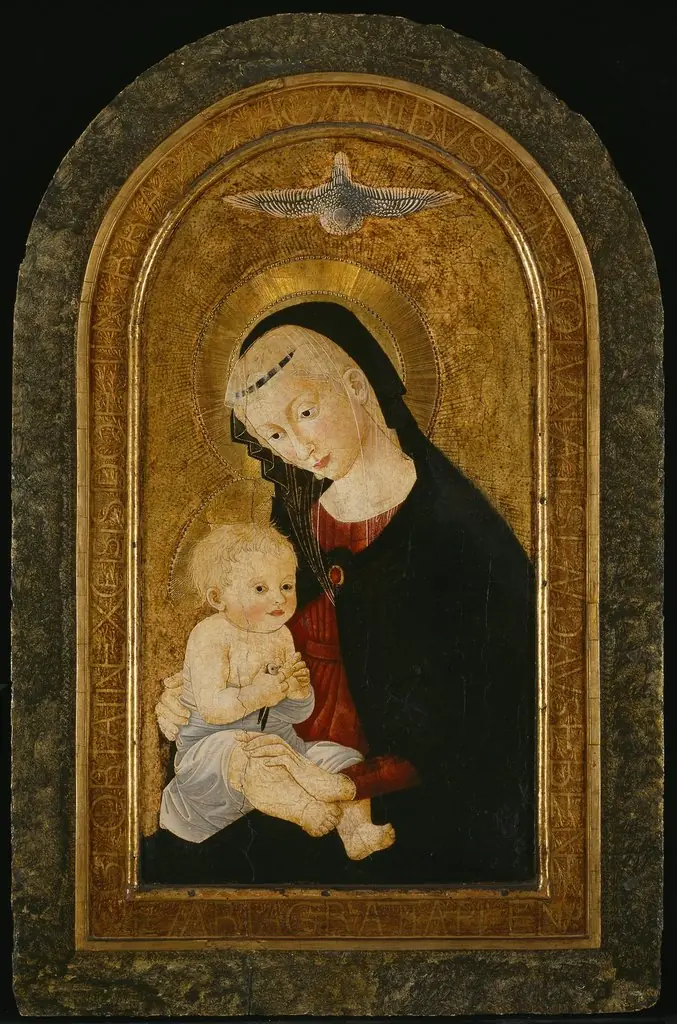 Virgin and Child
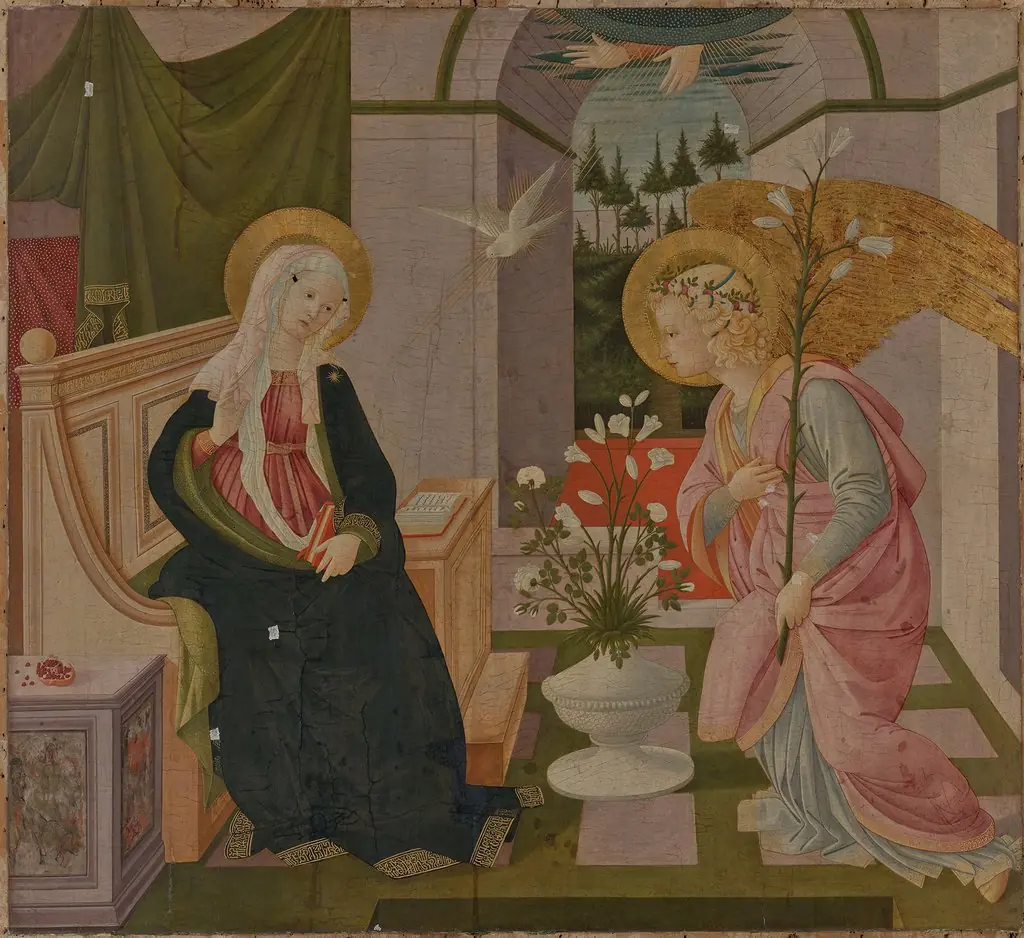 The Annunciation to the Virgin
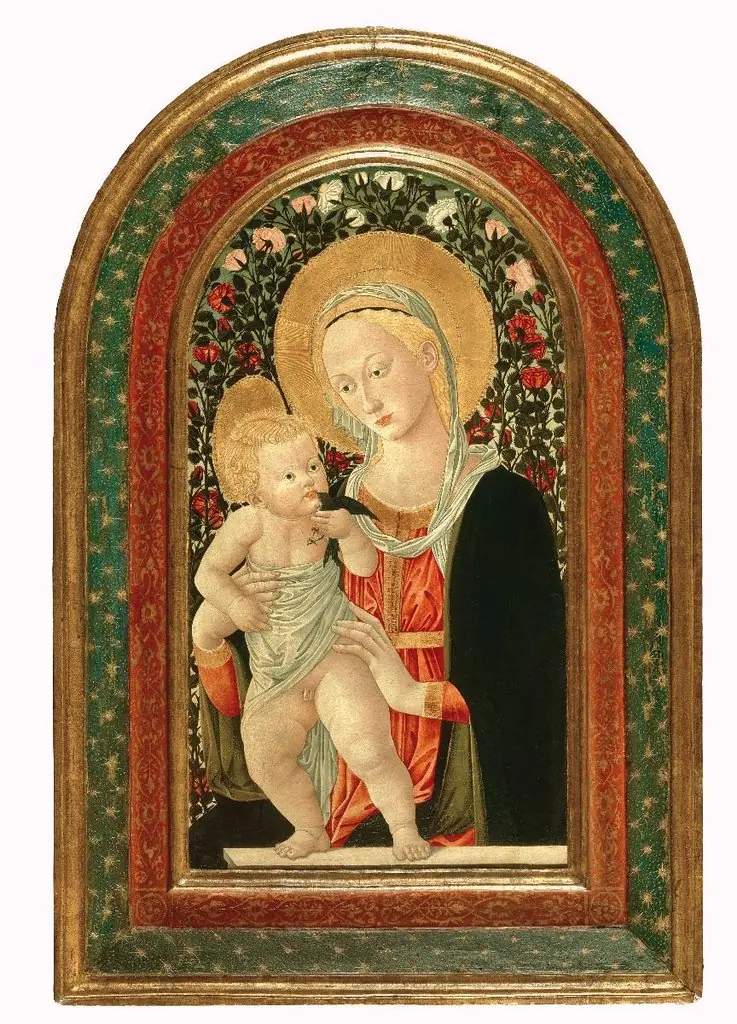 Maria col bambino
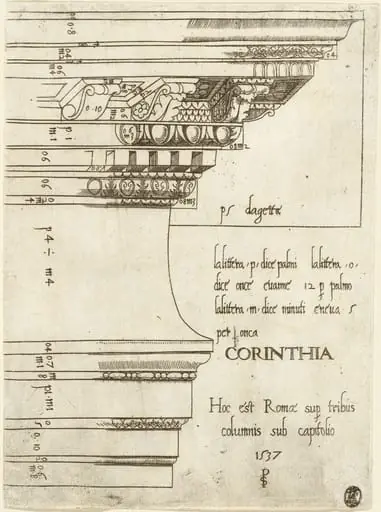 Entablature from the Temple of Castor and Pollux, Rome
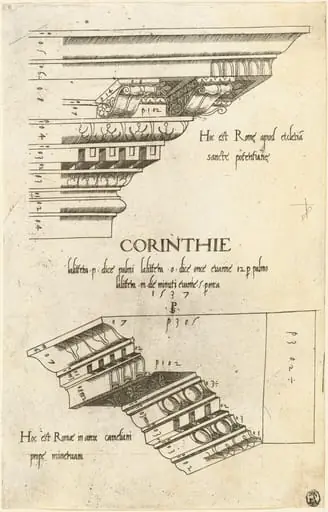 Entablatures from Santa Pudenziana and the Arch of Camigliano, Rome
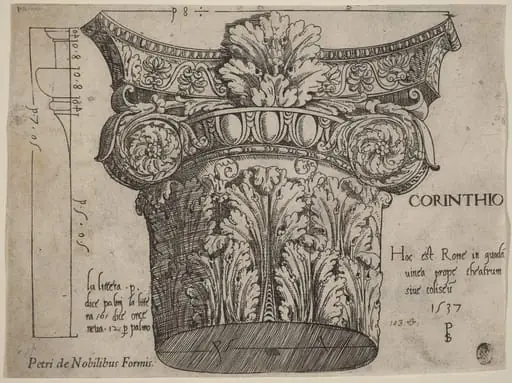 Capital from the Colosseum, Rome
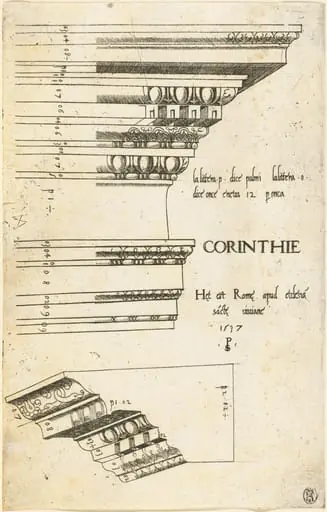 Entablature from the Church of Saint Bibiana, Rome