Artwork
Entablature from the Temple of Castor and Pollux, Rome
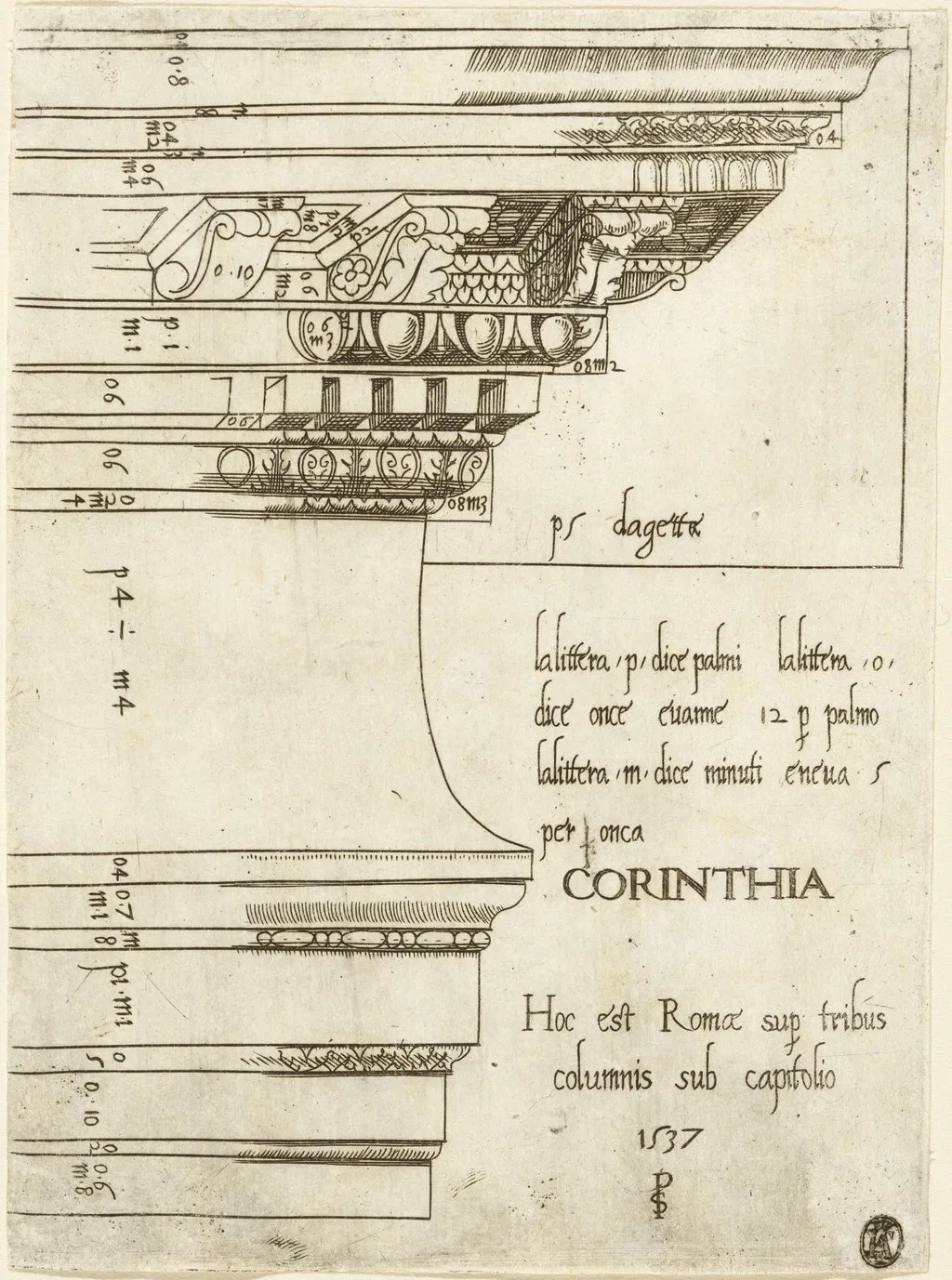
Entablature from the Temple of Castor and Pollux, Rome is an ink print by the Renaissance artist Pseudo-Pier Francesco Fiorentino. It dates from 1537 and is held in the collection of the National Gallery of Art.
About this work
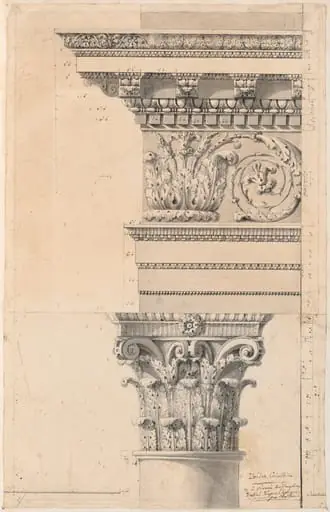
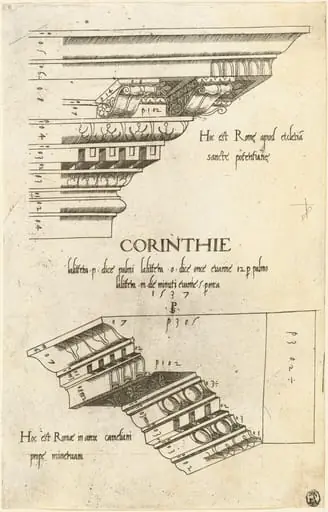
This engraving shows a detailed view of an ancient Roman entablature—the horizontal structure above columns.
This engraving shows a detailed view of an ancient Roman entablature—the horizontal structure above columns. It looks like a textbook diagram. The lines are crisp and clean, as if the artist used a sharp tool to carve every groove.
The artist, Master PS, made this in 1537. That’s early for this kind of exact drawing. Others at the time fancied fluffy clouds or saints. This guy? Just stone and rules.
See how the shadows are built with tiny lines? That’s cross-hatching. It gives depth without smudges. Want to try it yourself? Look up Master PS.
Overview
The engraving titled Entablature from the Temple of Castor and Pollux, Rome, was produced in 1537 by the artist known only as Master PS. Executed as a print, the work isolates the horizontal architectural band that crowns the columns of the ancient Roman temple, presenting it with a level of detail comparable to a scholarly illustration.
Subject & Meaning
Focusing exclusively on the stone entablature, the image functions as a study of classical architecture rather than a narrative scene. By stripping away surrounding context, the print emphasizes the proportional relationships and decorative motifs that defined Roman building practices, offering viewers a clear reference for the structural language of antiquity.
Technique & Style
The artist employed fine cross‑hatching to model shadows and convey depth, creating a crisp, almost diagrammatic surface. The lines are rendered with a sharp instrument, allowing each groove of the stone to be delineated with precision. This method contrasts with the more atmospheric or figurative prints common among contemporaries, highlighting a disciplined, analytical approach.
Context
Created in the mid‑sixteenth century, the engraving predates the widespread Renaissance interest in systematic architectural documentation. While many prints of the period depicted religious or mythological subjects, Master PS’s focus on a purely architectural element reflects an early shift toward empirical observation and the study of ancient ruins as models for contemporary design.
Artist & collection

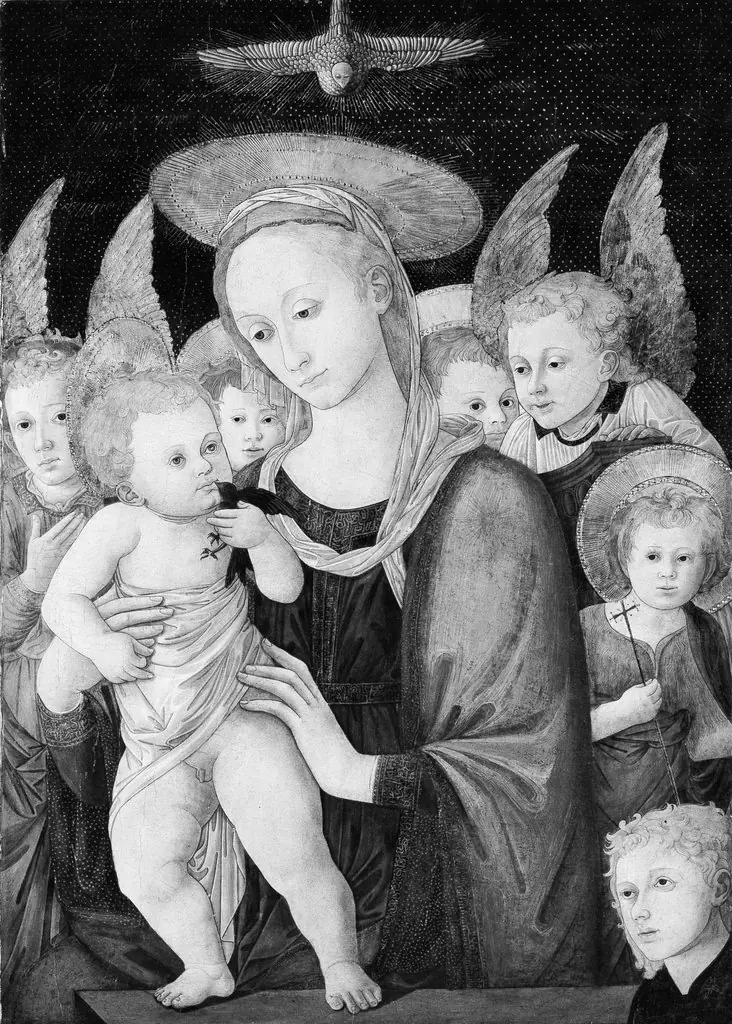 Madonna and Child with the Infant Saint John the Baptist and Angels
 Virgin and Child
 The Annunciation to the Virgin
 Maria col bambino
 Entablatures from Santa Pudenziana and the Arch of Camigliano, Rome
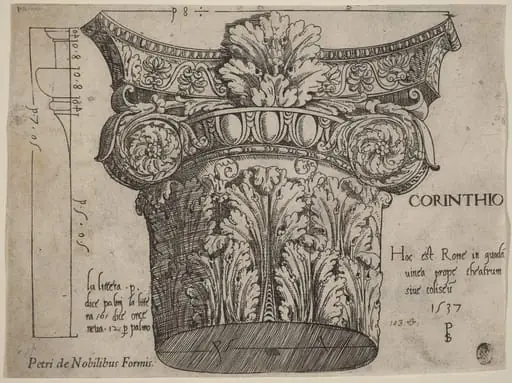 Capital from the Colosseum, Rome
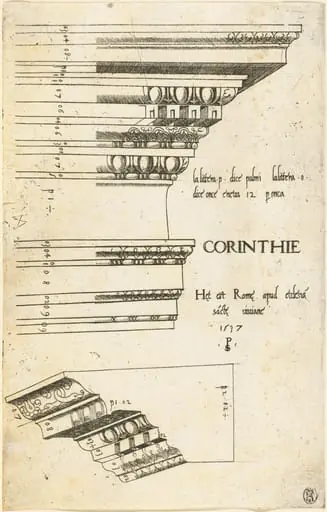 Entablature from the Church of Saint Bibiana, Rome
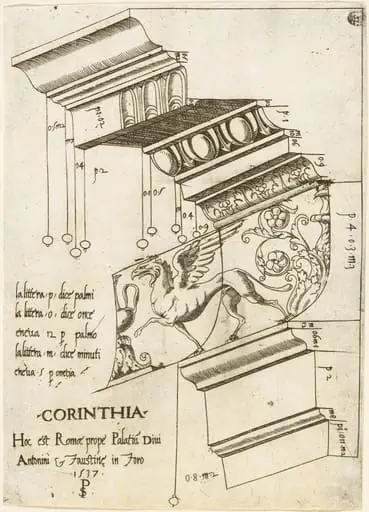 Entablature from the Temple of Antoninus and Faustina, Rome