Artwork
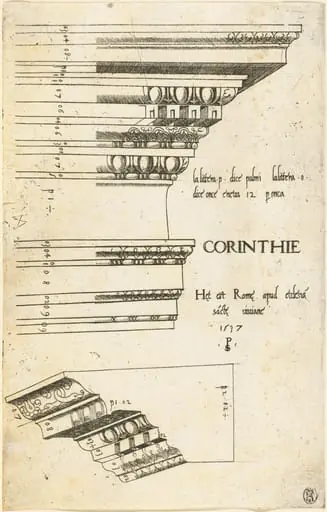
Entablature from the Temple of Vespasian, Rome
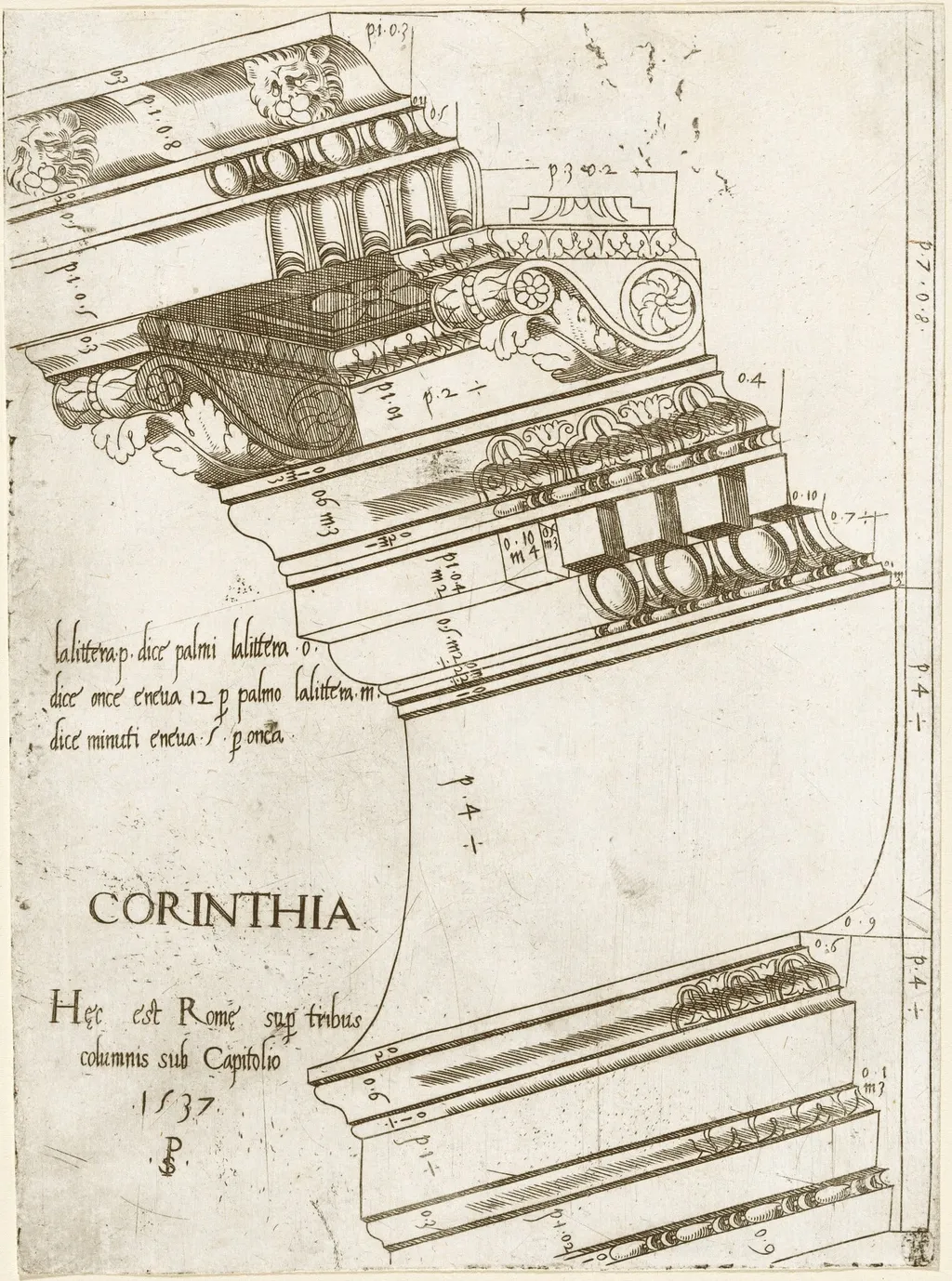
Entablature from the Temple of Vespasian, Rome is an ink print by the Renaissance artist Pseudo-Pier Francesco Fiorentino. It dates from 1537 and is held in the collection of the National Gallery of Art. The print is an engraving dated 1537, attributed to the artist known as Master PS.
About this work
The word "CORINTHIA" is written in the middle, and below it says "Rome" and "1537," hinting this is a real building’s design.
This drawing shows layers of stone-like blocks stacked in an "L" shape. The top edges have carved scrolls and flowers, almost like vines. Numbers and Latin notes are scribbled around the edges, marking measurements in what looks like old-style handwriting.
The word "CORINTHIA" is written in the middle, and below it says "Rome" and "1537," hinting this is a real building’s design. The lines are precise, with some areas filled in using tiny parallel lines for shading.
Next, check out how engraving works to see how artists create these detailed lines.
Overview
The print is an engraving dated 1537, attributed to the artist known as Master PS. It depicts the entablature of the Temple of Vespasian in Rome, rendered as a series of stone blocks arranged in an L‑shaped configuration. The composition includes carved scrolls and floral motifs along the upper edges, accompanied by handwritten Latin annotations and measurements surrounding the frame.
Subject & Meaning
The image records architectural details of the Vespian temple’s upper structure, emphasizing the decorative scrolls and vine‑like foliage that adorned the original stonework. The central inscription “CORINTHIA” identifies the order of the entablature, while marginal notes provide dimensions, suggesting the print functioned as a reference for scholars or craftsmen studying Roman architecture.
Technique & Style
Executed with fine, parallel hatching, the engraving achieves subtle shading and depth across the stone surfaces. Precise line work delineates the block edges and ornamental scrolls, while the hand‑written annotations appear in a contrasting, cursive script. The overall style reflects the meticulous draftsmanship typical of mid‑16th‑century printmaking, aimed at documenting architectural forms with clarity.
History & Provenance
Created in 1537, the print likely circulated among architects, antiquarians, and artists interested in classical models during the Renaissance revival of Roman design. The attribution to Master PS, an anonymous engraver active in the period, indicates the work was part of a broader tradition of disseminating measured drawings of ancient monuments for educational purposes.
Artist & collection

 Madonna and Child with the Infant Saint John the Baptist and Angels
 Virgin and Child
 The Annunciation to the Virgin
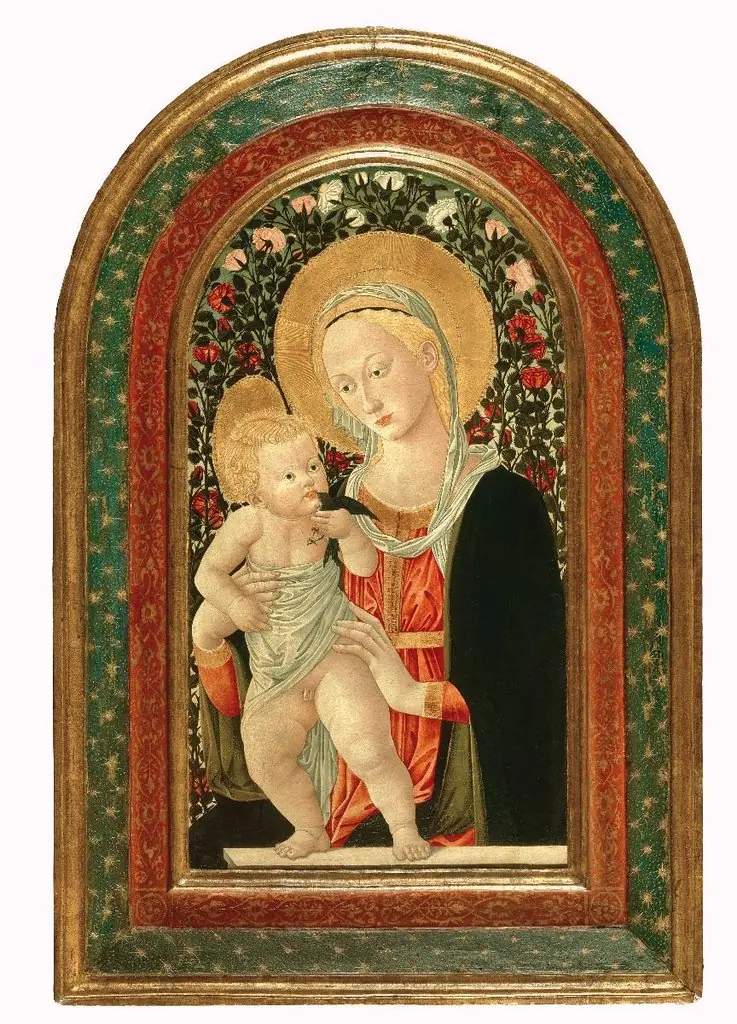 Maria col bambino
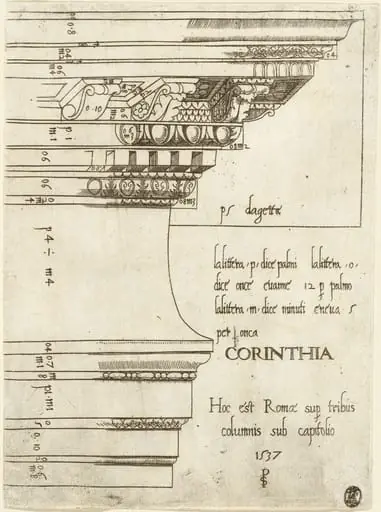 Entablature from the Temple of Castor and Pollux, Rome
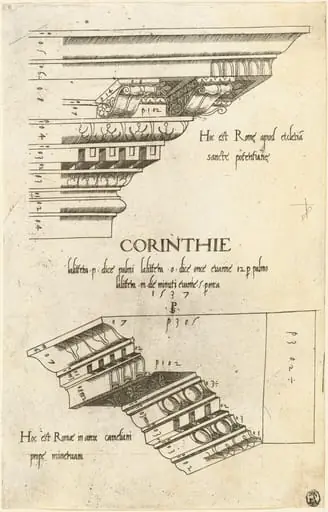 Entablatures from Santa Pudenziana and the Arch of Camigliano, Rome
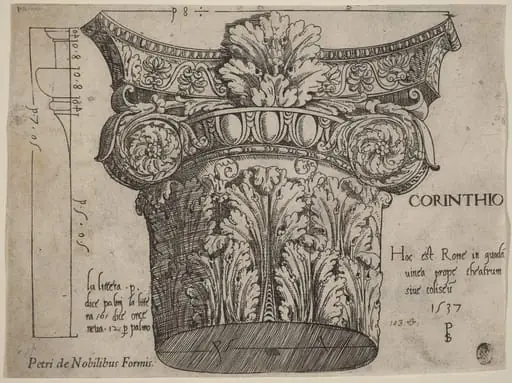 Capital from the Colosseum, Rome
 Entablature from the Church of Saint Bibiana, Rome
 Grotesque with a Satyr
 Panel of Ornament Inscribed Victoria Augusta
 Plan et elevation des plus beaux confessionnaux de Paris, tres fidelemant mesure
 Study for the 'Essequie' Conducted in San Lorenzo, Florence, in 1637 in Honour of Holy Roman Emperor Ferdinand II
 Architectural Motif with Three Shields
 Design for Decorative Hinges (recto)