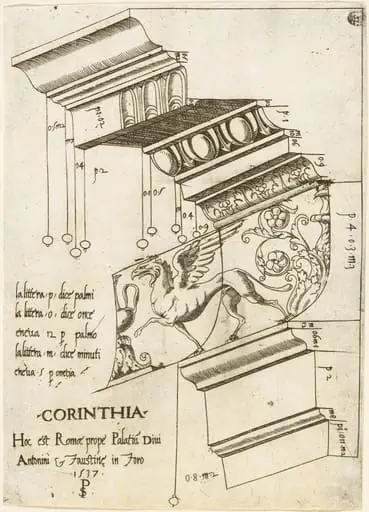
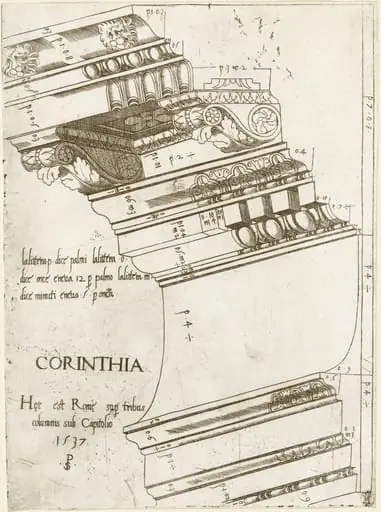
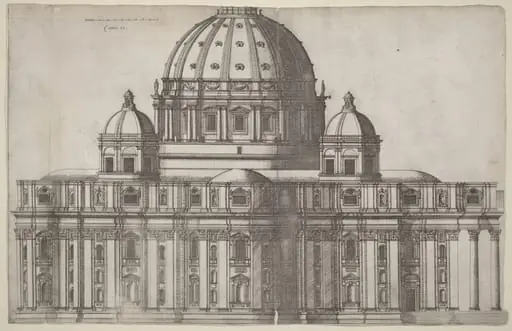
Artwork
Entablature from the Basilica Ulpia, Rome
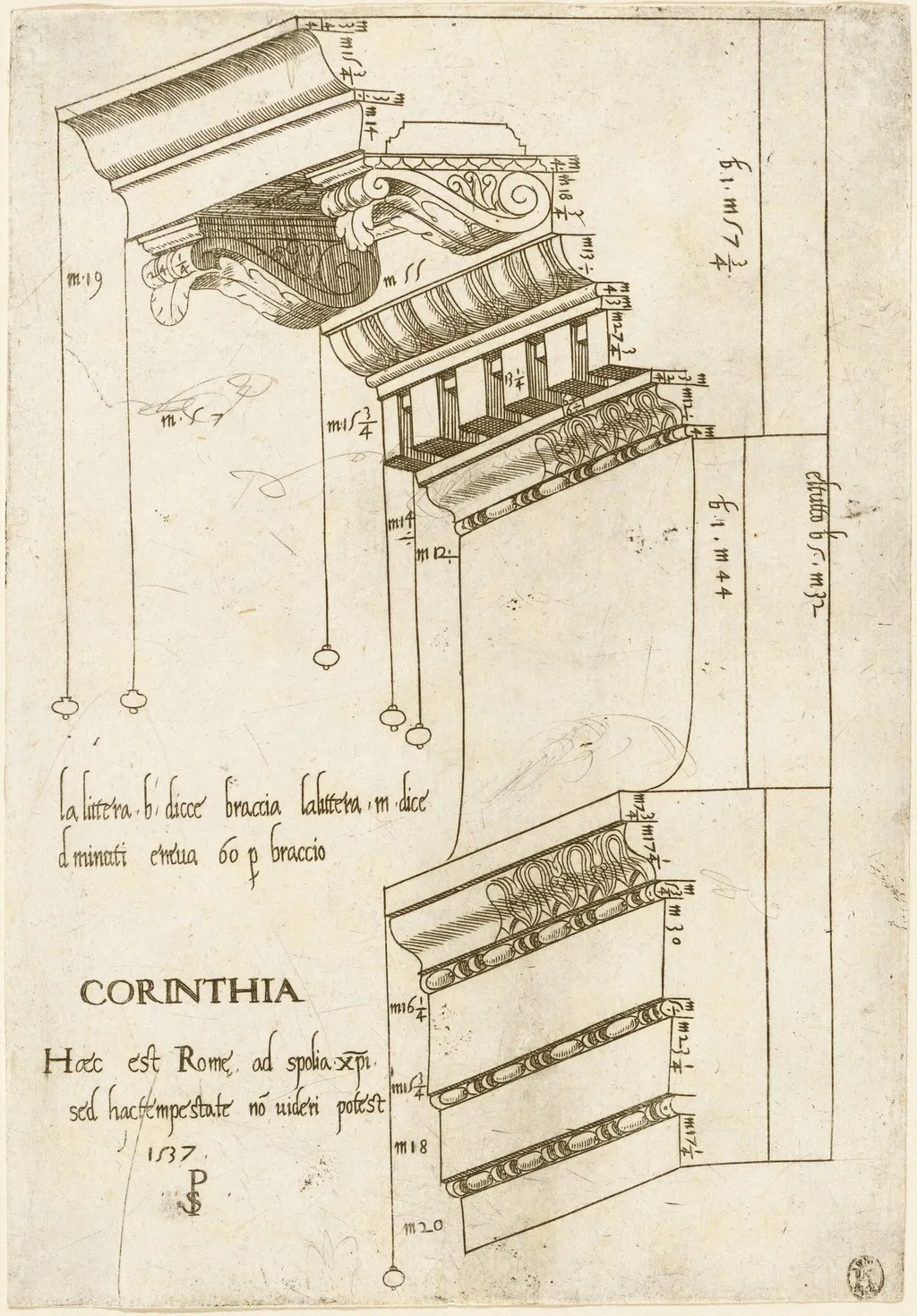
Entablature from the Basilica Ulpia, Rome is an ink print by the Renaissance artist Pseudo-Pier Francesco Fiorentino. It dates from 1537 and is held in the collection of the National Gallery of Art.
About this work
This drawing shows parts of an old Roman building—ornate stone ledges, columns, and flat roofs with carved edges.
This drawing shows parts of an old Roman building—ornate stone ledges, columns, and flat roofs with carved edges. The lines are precise, and the shading uses tiny parallel marks to show depth. Numbers and letters are scribbled around the edges, like measurements or notes for builders.
The text at the bottom says it’s from Rome and was made in 1537. The artist copied real ruins to study how they were built.
Look up engraving to see how artists use sharp tools to create these detailed lines.
Overview
This 1537 engraving by Master PS depicts fragments of the Basilica Ulpia’s architectural elements, including portions of the entablature, columns, and cornices. Executed with fine, controlled lines, the work serves as a documentary record rather than a decorative piece. The precision of the draftsmanship suggests a deliberate effort to capture structural details, likely for study or reference by architects and antiquarians of the period.
Subject & Meaning
The drawing focuses on the upper structural components of a Roman imperial basilica, emphasizing the carved moldings and horizontal bands that once crowned the building’s columns. These elements were not merely ornamental but conveyed hierarchical order and engineering sophistication. The inclusion of handwritten annotations around the margins implies an intent to analyze proportions and construction methods, aligning the image with Renaissance scholarly interests in classical antiquity.
Technique & Style
Master PS employed engraving techniques using a burin to incise fine, parallel lines into a metal plate, creating tonal gradations through density and direction. The shading is methodical, avoiding broad washes in favor of controlled hatching to suggest volume and texture. The crispness of the lines and the absence of freehand sketchiness reflect a disciplined approach, characteristic of technical drawings intended for accuracy over artistic expression.
History & Provenance
Created in 1537, the engraving emerged during a period of renewed interest in Roman architecture among Northern European artists and scholars. Master PS, likely active in Rome, produced this work as part of a broader movement to document ancient ruins before further decay. Its survival suggests it was circulated among architectural circles, possibly as a study aid or template for reconstruction projects in the early 16th century.
Context
In the early 1500s, Rome’s ruins became primary sources for architects seeking to revive classical forms. This engraving reflects a shift from idealized reconstructions to empirical observation. By recording the Basilica Ulpia’s surviving fragments with measured detail, Master PS contributed to a growing body of visual documentation that informed the development of Renaissance architectural theory and practice.
Legacy
Though not widely known today, such engravings by Master PS helped establish a precedent for archaeological recording in art. Their emphasis on accuracy over aesthetics influenced later antiquarian publications and architectural treatises. The work stands as an early example of how drawing functioned as a tool of scholarly inquiry, bridging the gap between artistic practice and historical preservation.
Artist & collection

 Madonna and Child with the Infant Saint John the Baptist and Angels
 Virgin and Child
 The Annunciation to the Virgin
 Maria col bambino
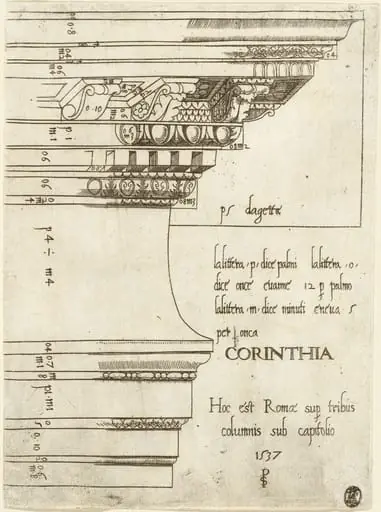 Entablature from the Temple of Castor and Pollux, Rome
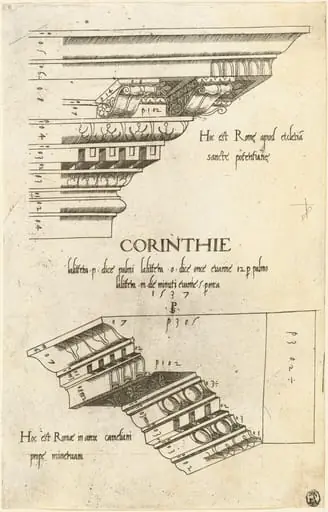 Entablatures from Santa Pudenziana and the Arch of Camigliano, Rome
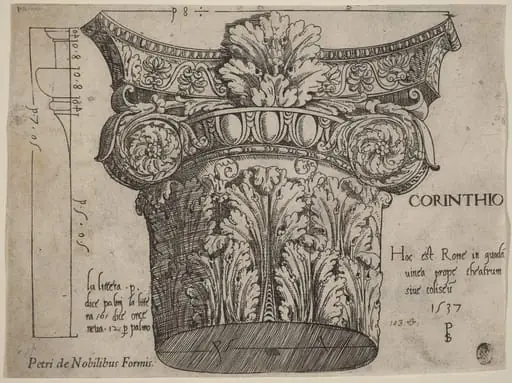 Capital from the Colosseum, Rome
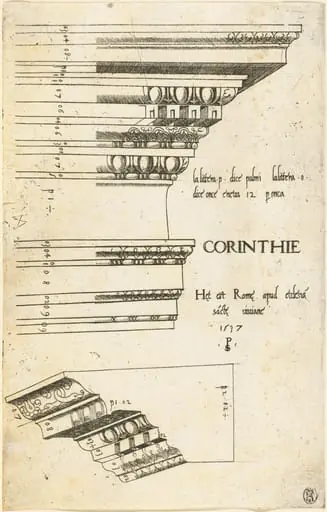 Entablature from the Church of Saint Bibiana, Rome