Artwork
The Adoration of the Kings
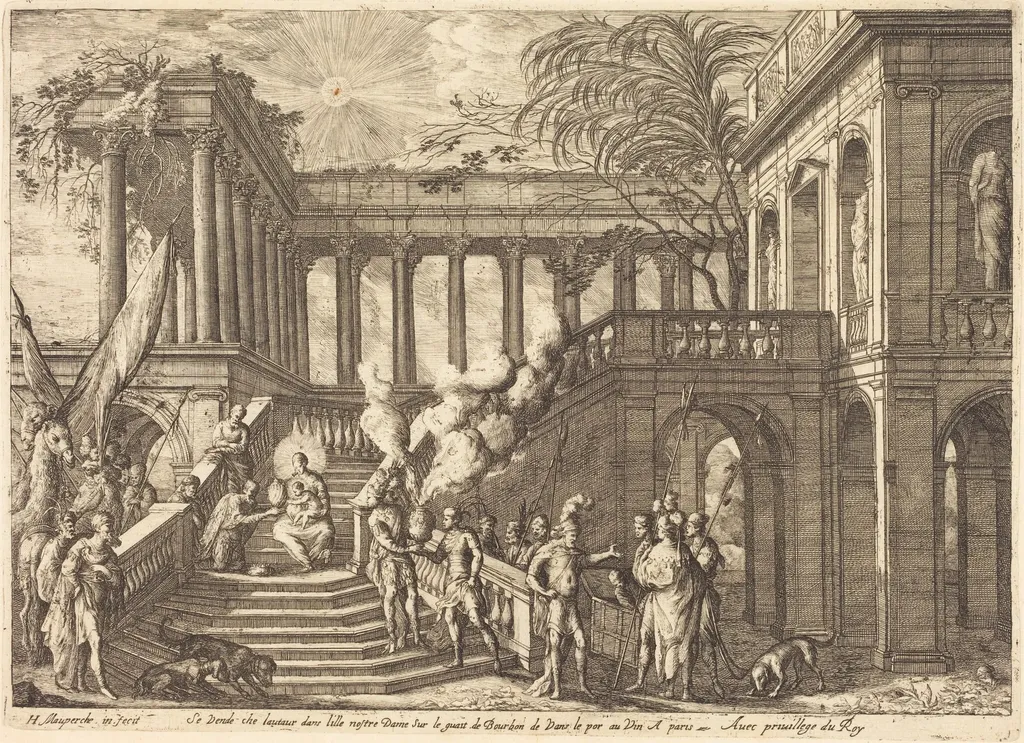
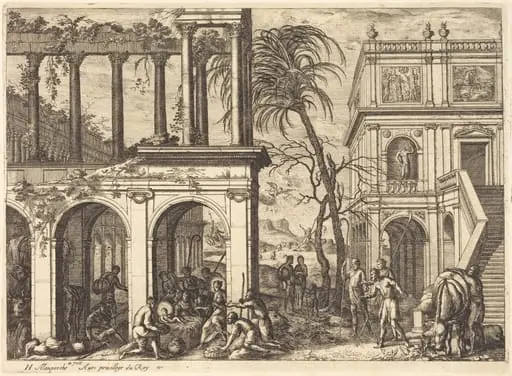
The Adoration of the Kings is an ink print by the Baroque artist Henri Mauperché. It dates from 1644 and is held in the collection of the National Gallery of Art.
About this work
Overview
Though primarily known for landscape and architectural prints, Mauperché applied his skill in tonal gradation and spatial composition to this religious subject.
Henri Mauperché created this etching in 1644, depicting the biblical moment when the Magi pay homage to the infant Christ. Though primarily known for landscape and architectural prints, Mauperché applied his skill in tonal gradation and spatial composition to this religious subject. The work is a black-and-white print, executed with fine, controlled lines that convey both detail and emotional gravity, reflecting his technical precision as an engraver in 17th-century Paris.
Subject & Meaning
The scene portrays the Adoration of the Magi, with the Virgin Mary seated on a throne-like chair holding the Christ Child, while three kings kneel in reverence. Figures surrounding them hold gifts and staffs, their gestures and postures signaling reverence and hierarchy. A radiant light descends from above, symbolizing divine presence. The composition emphasizes spiritual focus amid human solemnity, aligning with Counter-Reformation ideals that valued clear, emotionally resonant religious imagery.
Technique & Style
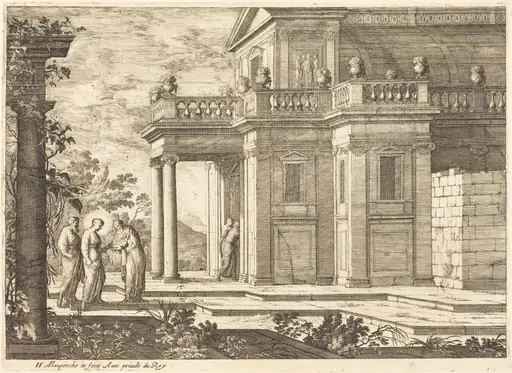
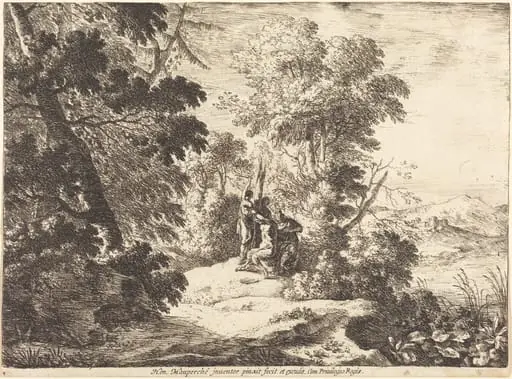
Mauperché employed etching to achieve fine, intricate lines that model form through contrast and shadow. The figures’ drapery is rendered with fluid, directional strokes, enhancing movement and texture. Architectural elements—columns, arches, and distant buildings—are rendered with geometric clarity, while trees and foliage add organic contrast. The interplay of light and dark, especially around the central group, creates a dramatic focal point, characteristic of his ability to merge naturalism with structured composition.
History & Provenance
Mauperché, born in Paris around 1602, spent his career in the city, producing prints and drawings primarily for local patrons and collectors. This etching was made during a period when religious imagery remained in demand despite growing secular interests. While no early ownership records are widely documented, the work aligns with the output of Parisian printmakers who catered to both devotional and artistic markets in the mid-17th century.
Context
In 1640s France, religious prints served both private devotion and educational purposes, especially in households without access to large-scale altarpieces. Mauperché’s approach—blending architectural precision with emotional narrative—reflected broader trends in French printmaking, where landscape sensibilities were adapted to sacred subjects. His work stood apart from Italianate grandeur, favoring restrained, intimate compositions grounded in observed detail.
Legacy
Though Mauperché is not among the most widely recognized printmakers of his era, his etchings demonstrate a refined synthesis of landscape and narrative traditions. This work exemplifies how French artists adapted religious themes through personal stylistic lenses, influencing later generations interested in combining naturalistic detail with symbolic clarity. His prints remain valuable for understanding the diversity of devotional imagery in early modern France.
Artist & collection
Artist
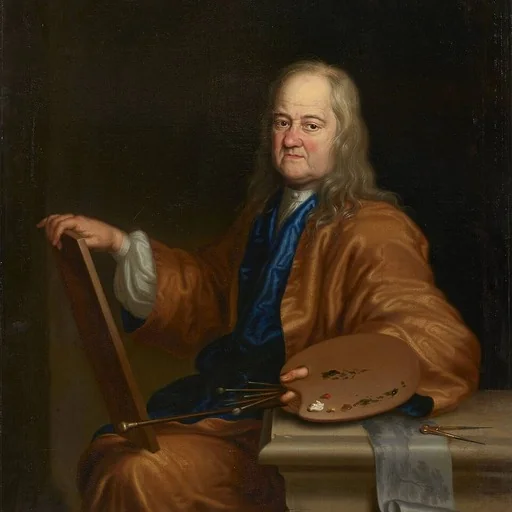
Henri Mauperché (c.1602, Paris – 26 December 1686, Paris) was a French landscape painter and engraver. His name is also given as Henri Maupercher and Henri Montpercher. Most of his landscapes are capriccios.

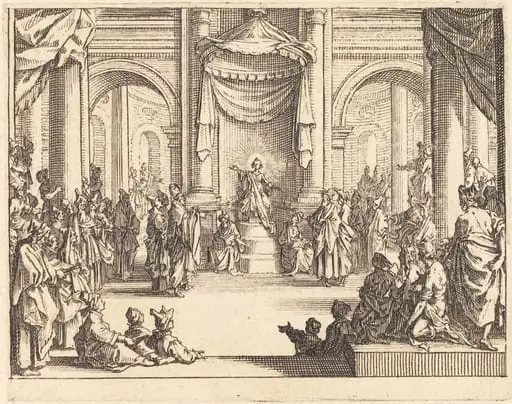 Christ Disputing with the Doctors
 Christ Disputing with the Doctors
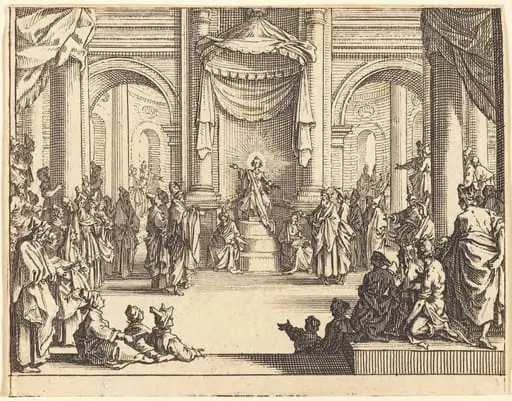 Christ Disputing with the Doctors
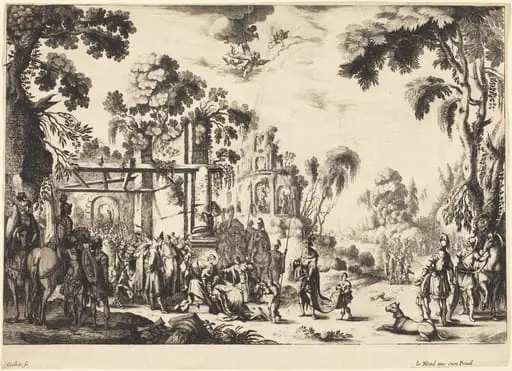 The Adoration of the Magi
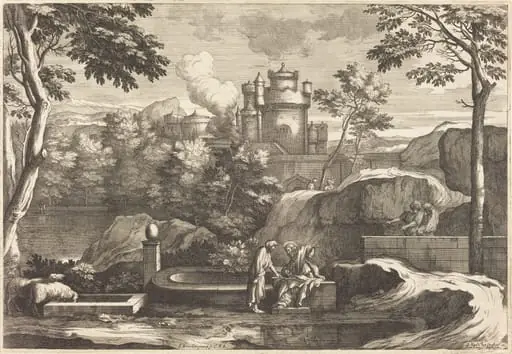 Jesus and the Samaritan
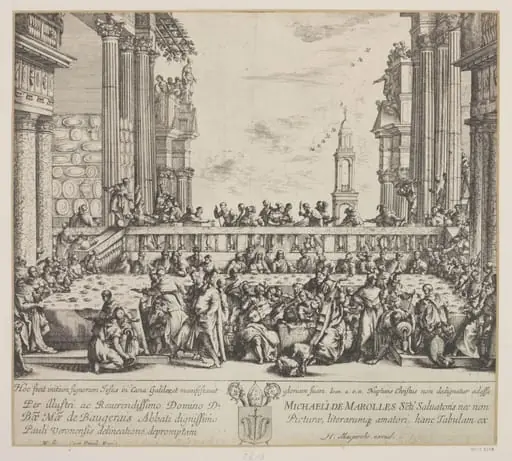 Marriage at Cana
 Il Greco in Troia: Plate 3
 The Prodigal Son's Father Orders the Best Robe and the Slaughter of the Fatted Calf
 The Four Seasons: Summer
 Monument to William Chancellor Cowper